Denarius (This Exhibit)
Material: Silver
Design on Obverse (Heads): Septimius Severus (193–211 CE)
Denarius
Reading Time: 0:25 min
The word denarius is derived from the Latin deni, which means “containing ten“, as its value was originally 10 asses.
The denarius (plural: denarii), was the standard Roman silver coin from its introduction in the Second Punic War (c. 211 BCE) to the reign of Gordian III (238–244 CE), when it was gradually replaced by the antoninianus.
The word for “money” descends from it in Italian (denaro), Slovene (denar), Portuguese (dinheiro), and Spanish (dinero). Its name also survives in the dinar currency.
Denarius | “Containing Ten” | Value: 10 Asses
Reading Time: 0:15 min
The value at its introduction was 10 asses, giving the denarius its name, which translates as “containing ten“. The denarius continued to be the main coin of the Roman Empire until it was replaced by the antoninianus in the early 3rd century CE.
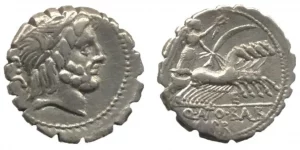
The denarius, depicting Quintus Antonius Balbus and struck in 82 BCE, was issued in the same year that Quintus Antonius Balbus was appointed praetor in Sicily.
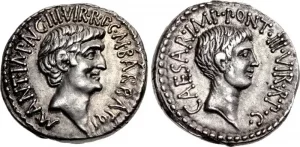
The denarius, depicting Mark Antony and Octavian and struck in Ephesus in 41 BCE, commemorated the defeat of Brutus and Cassius the year before.
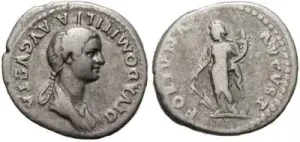
The denarius, depicting Flavia Domitilla and struck in the 1st century CE, commemorates the Roman noblewoman who lived in the same century and was married to the consul Titus Flavius Clemens.


