Inlaid Chest, Dated 1791
Reading Time: 1:20 min
Inlaid Chest | Craft Techniques
Cabinetmaking (joinery) involved the construction of the carcass, lid, base, and overall structural framework of the chest.
Veneering and marquetry (inlay work) provided the decorative surface, achieved through the application of fine, contrasting wood veneers arranged in geometric frames and central cartouche motifs.
Metalworking (brass fitting) produced the escutcheon and lock plate, ensuring both functionality and security.
Turning (turnery) was used to shape the bun feet, contributing to the chest’s stable support and aesthetic form.
Surface finishing (polishing) smoothed and protected the wood, enhancing the natural grain and tonal contrasts of the veneers.
Inlaid Chest, Dated 1791
Short Description
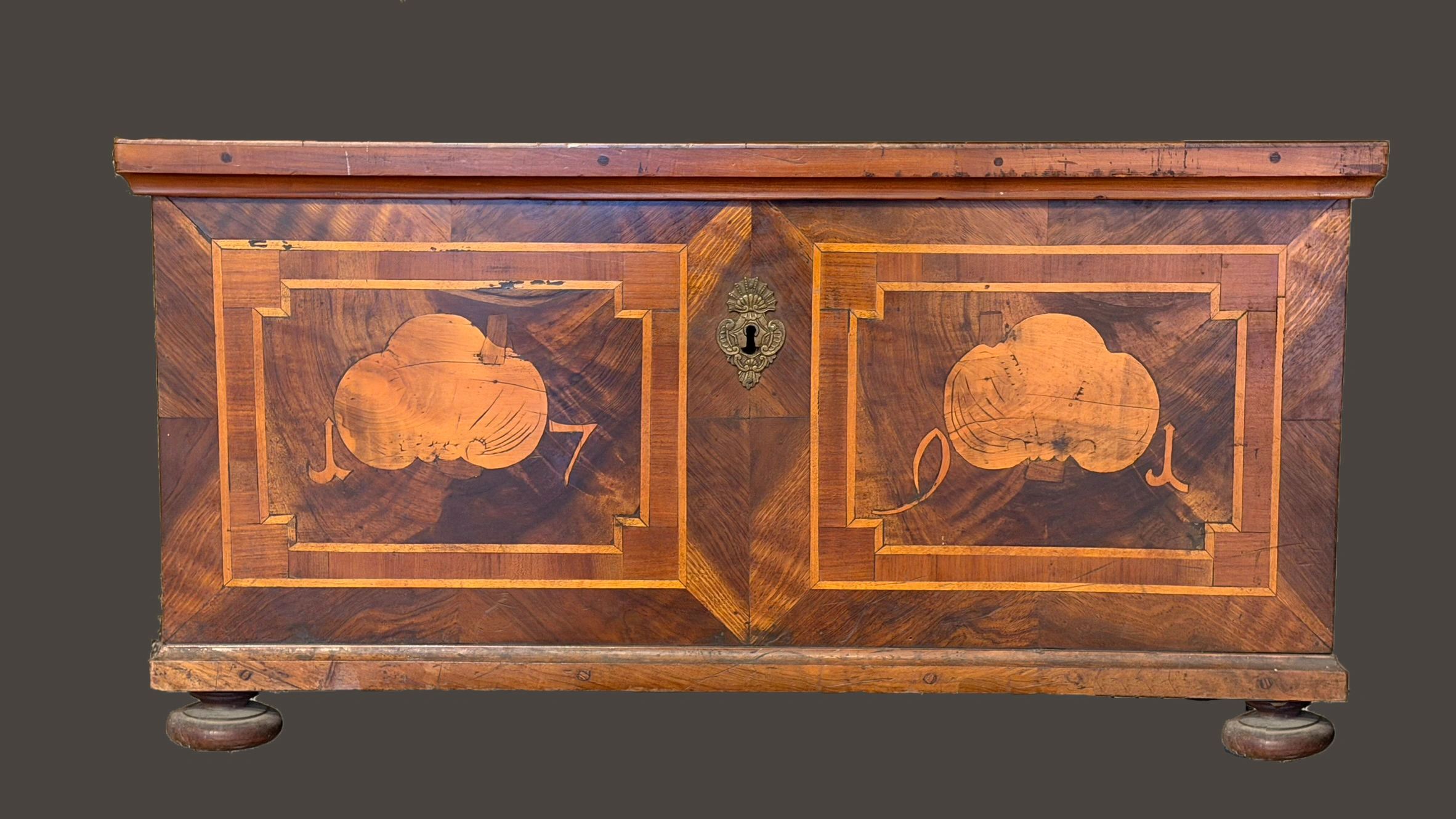
This inlaid chest, dated 1791, exemplifies refined late-18th-century craftsmanship.
Its rectangular form is enriched with carefully composed marquetry panels, featuring contrasting wood veneers arranged in geometric frames and central cartouche motifs.
Originally intended for the storage of textiles, valuables, or documents, the chest combines utility with decorative appeal.
The brass escutcheon and robust construction emphasise its function as a secure container, while the elegant inlay work reflects contemporary taste and the high level of skill achieved by cabinetmakers of the period.
Detailed Features of the Chest
Form
Rectangular Coffer Form
The chest has a horizontal rectangular shape, typical of storage chests.
Front Decoration and Surface
Fine Wood Marquetry
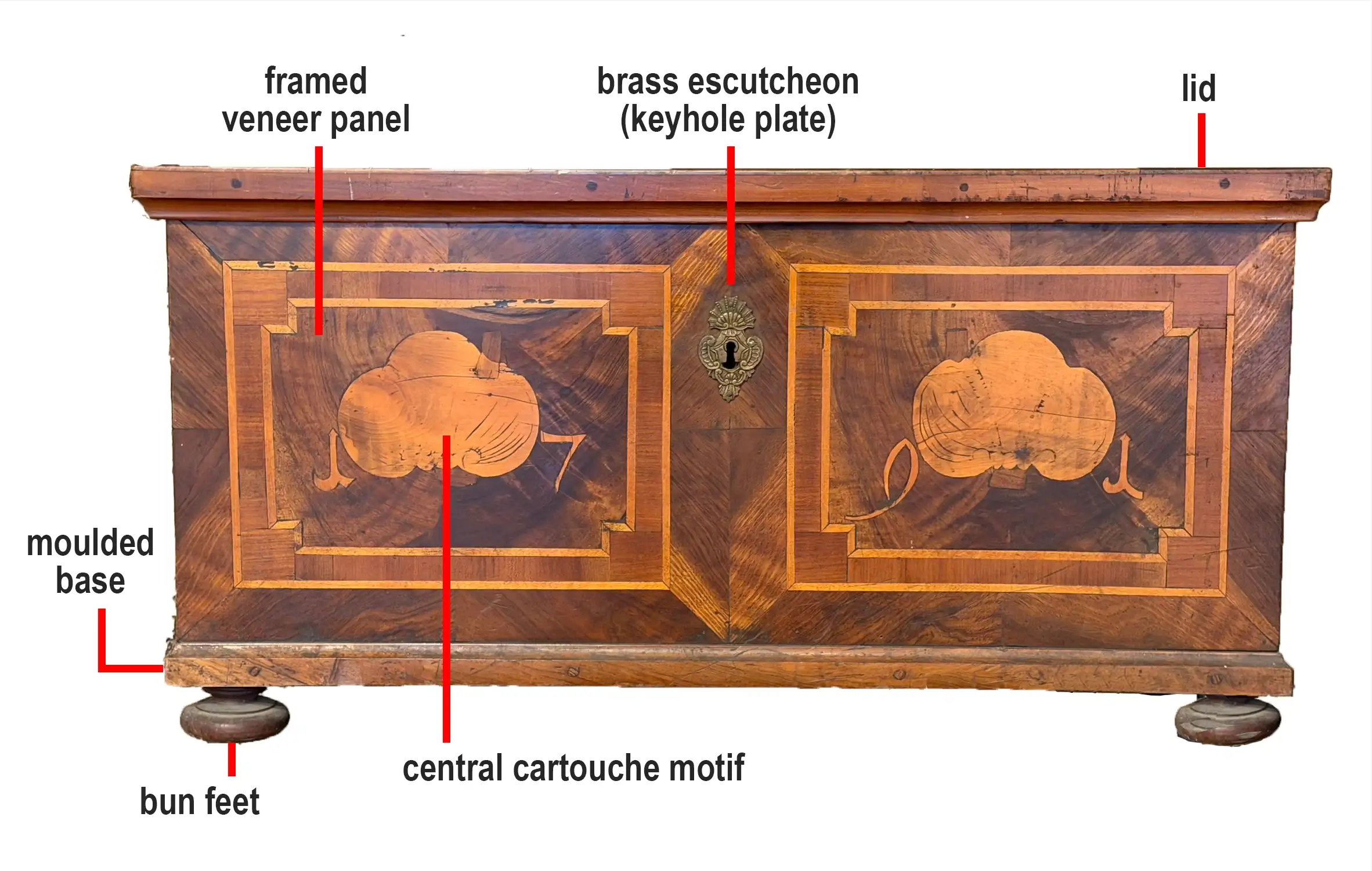
Fine wood marquetry is visible across the entire front face and is composed of carefully arranged veneer pieces forming decorative patterns.
Framed Veneer Panels
Two large rectangular panels dominate the front, one on the left and one on the right, each bordered by lighter wood frames.
Central Cartouche Motifs
Located within each of the two main panels, these lighter inlaid motifs are positioned centrally in the left and right fields.
Hardware
Brass Escutcheon (Keyhole Plate)
The brass escutcheon (keyhole plate) is positioned at the centre of the chest, between the two main panels.
Upper Section
Lid
The flat top panel runs across the full width at the very top.
Lower Section
Moulded Base Edge
The moulded base edge runs horizontally along the bottom of the chest, just above the feet.
Bun Feet
The bun feet are small, rounded feet located at the lower corners, lifting the chest slightly off the ground.