
Late-Gothic Donor Painting
Reading Time: 1:11 min
The Late-Gothic donor painting depicts the Madonna on the Crescent Moon, after a print by Albrecht Dürer.
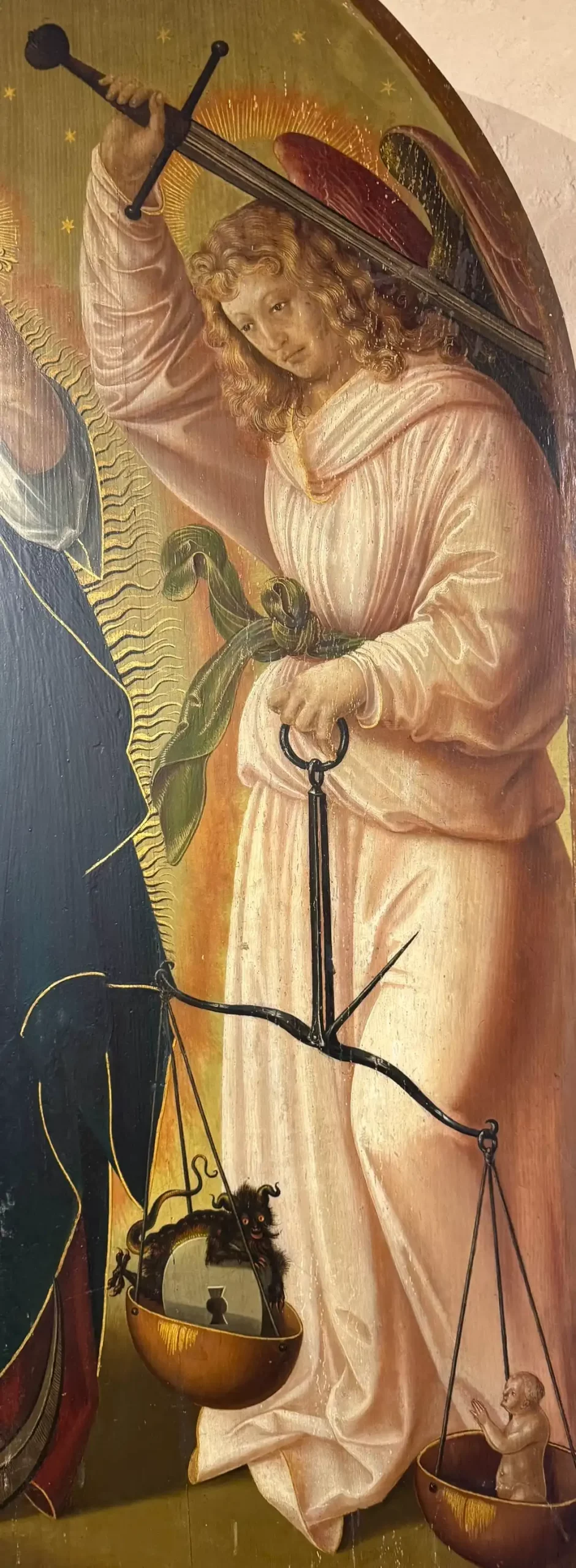
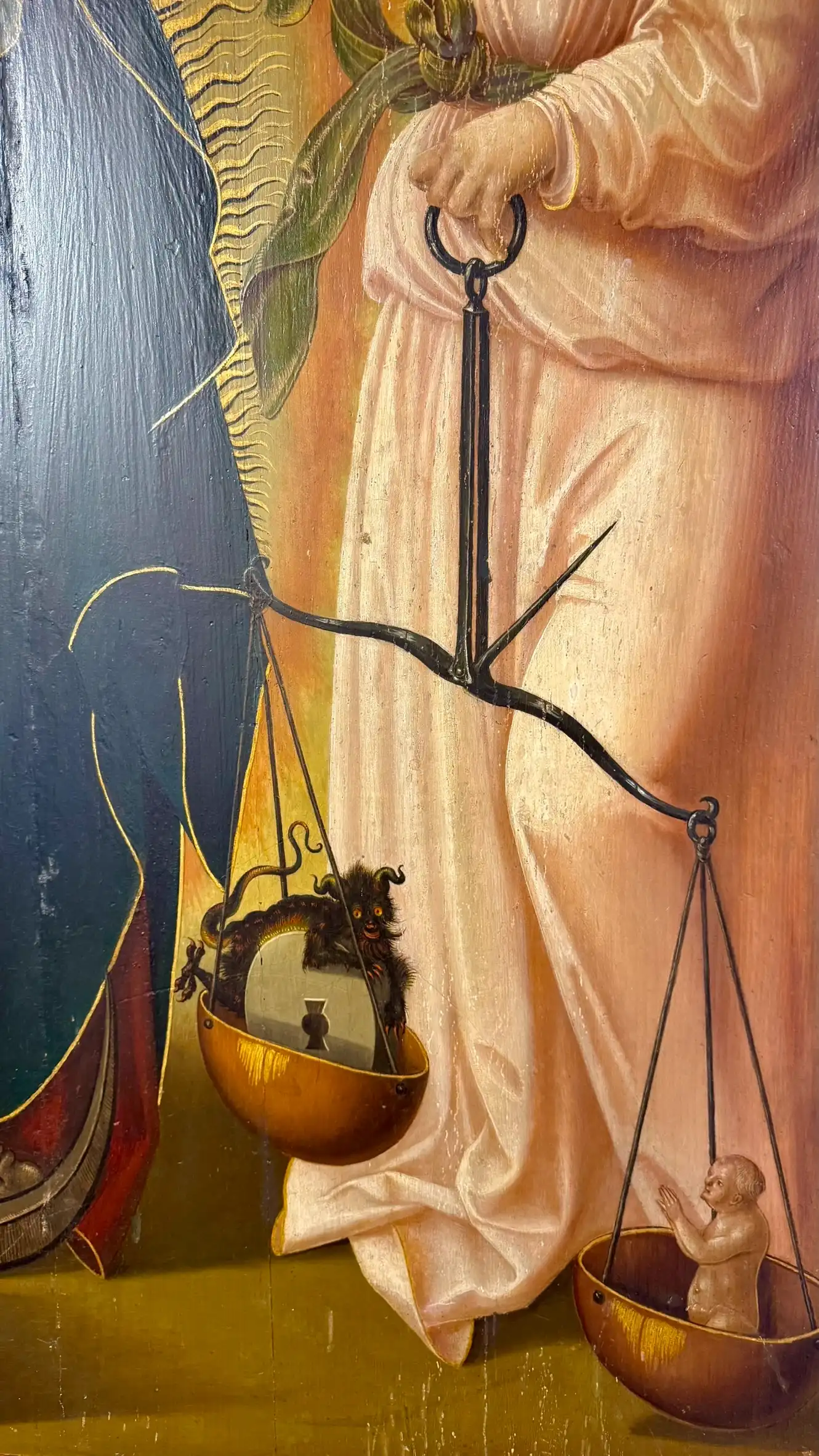
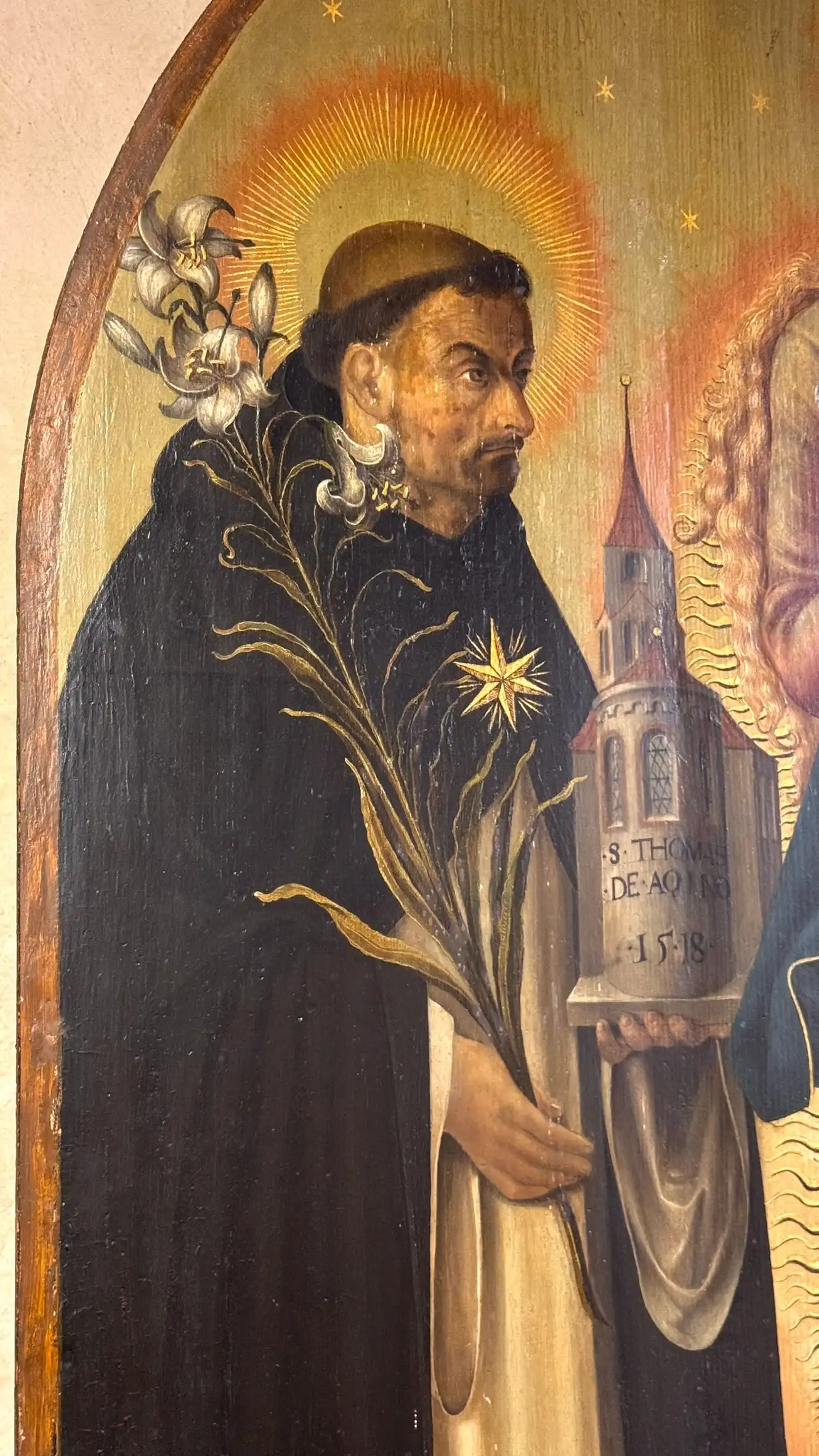
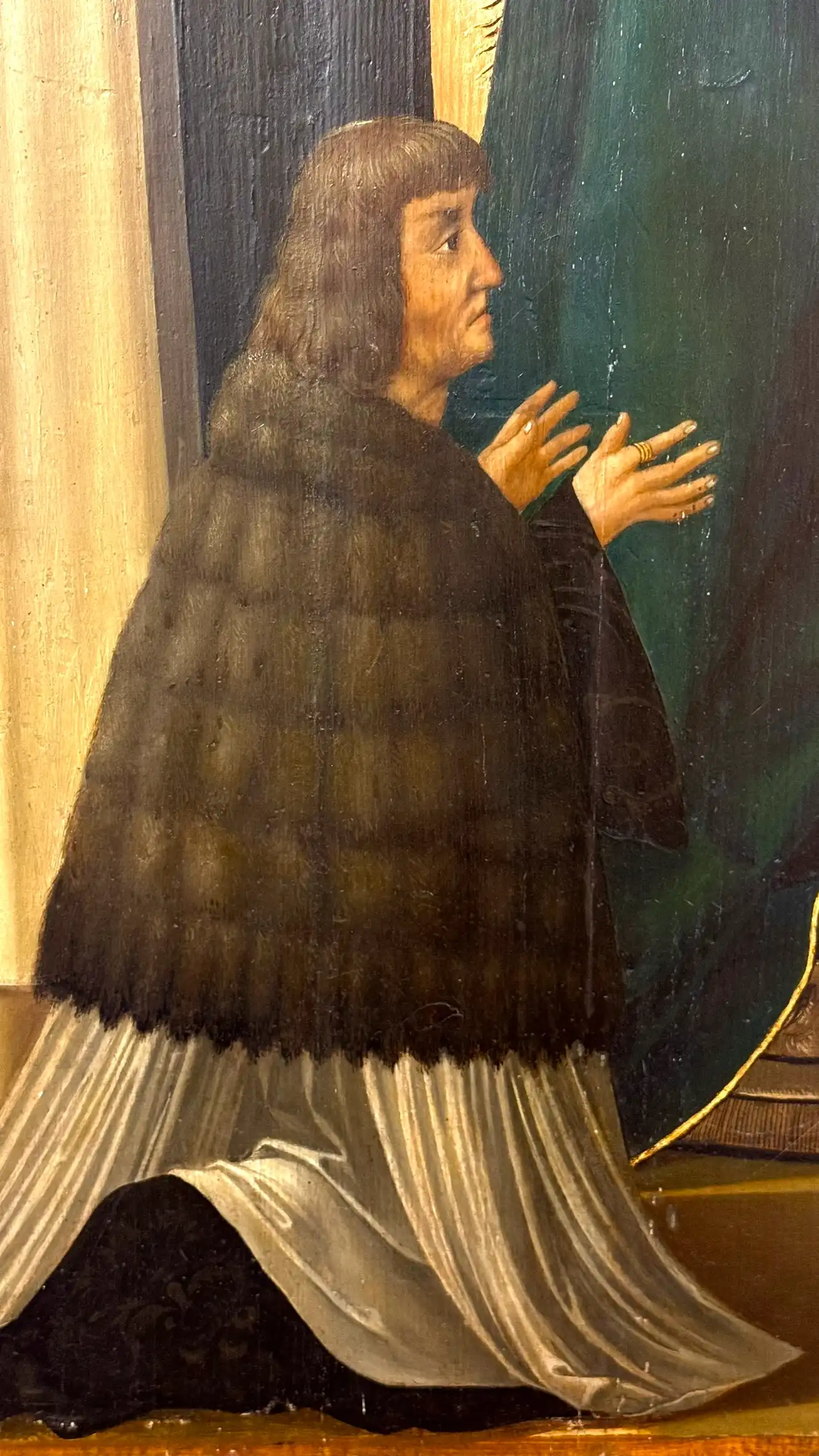
It also shows Thomas Aquinas, the soul-weigher Michael, and a kneeling donor.
The work is dated 1518 and was executed in oil on wood. It was overpainted in the 19th century.
This object is on loan from the Dominican Convent, Friesach.
Explanatory Notes
Madonna on the Crescent Moon
The Madonna on the Crescent Moon is a common motif in ecclesiastical art, symbolising the Virgin Mary’s purity and her triumph over sin.
Soul-Weigher Michael
Archangel Michael as “soul-weigher” appears in ecclesiastical art, judging souls at the Last Judgment. He often holds scales to weigh good and evil deeds.
Thomas Aquinas
Thomas Aquinas (1225–1274) was a Dominican theologian and philosopher whose teachings shaped Catholic doctrine. In art, he is often depicted with a book or in contemplative poses, symbolising divine wisdom.
Kneeling Donor
Kneeling donors were included in ecclesiastical paintings to show piety and devotion. In the 16th century, commissioning religious art was a way to demonstrate faith, status, and support the Church.
Albrecht Dürer
Albrecht Dürer (1471–1528) was a German painter, printmaker and theorist of the Renaissance, known for his detailed engravings and influence on European art.
Oil on Wood
Oil on wood panels was widely used in the 16th century for its durability and capacity to hold detailed, luminous paint layers, making it ideal for devotional images.
Overpainting in the 19th Century
Overpainting of medieval ecclesiastical works occurred when older images were altered or restored, often to suit changing tastes. New layers of paint were applied over the original, which obscured the original technique and colours and presented challenges for conservation.