Skip to content

Half-Armour | 16th Century
Reading Time: 0:50 min

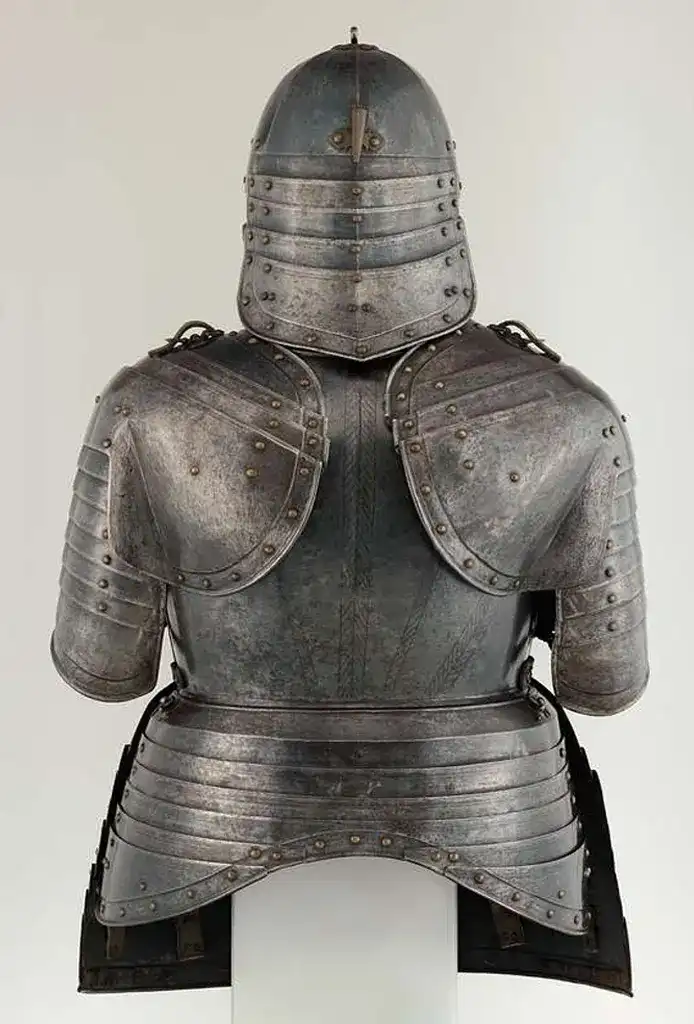
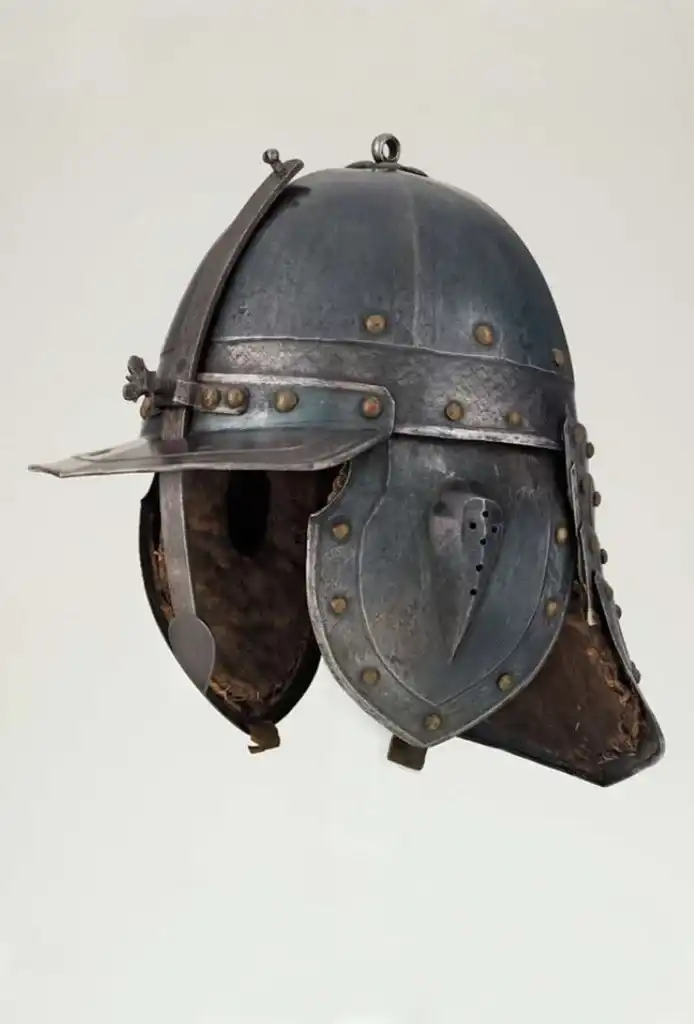
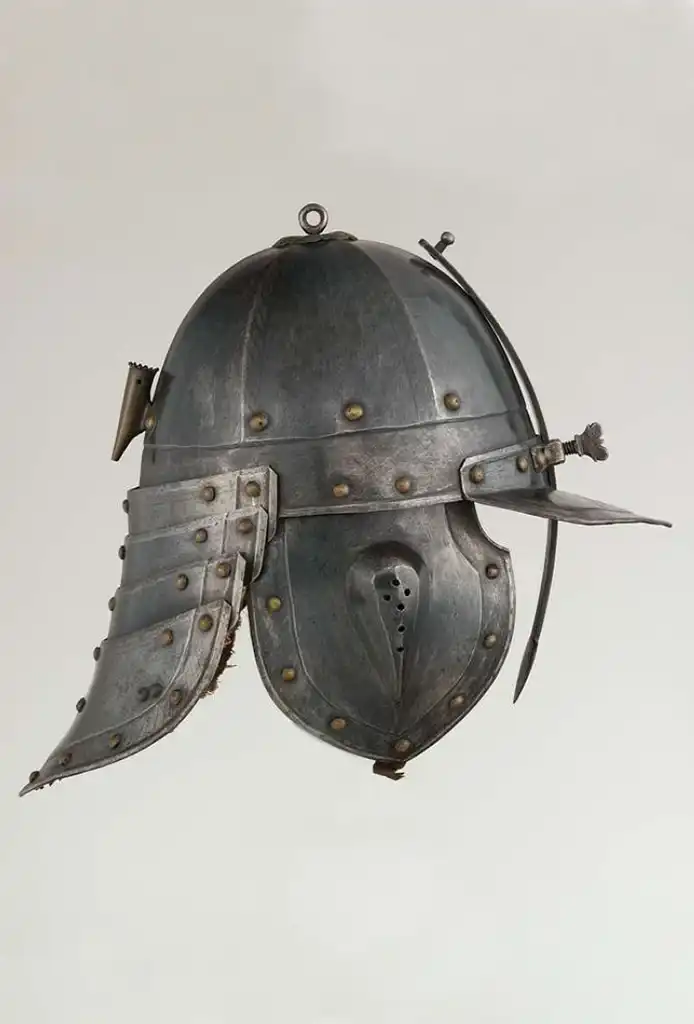
The half-armour (breastplate) has a front with short crab armour and chainmail and dates back to the 16th century. It is on loan from the Carinthian State Museum.

Half-Plate Armour Described

Half-plate armour was a type of protective gear that offered a balance between full-plate armour and lighter protections, like chainmail. It typically covered the torso, including the chest, back, and sometimes the shoulders, while leaving the limbs more exposed or protected by lighter armour.

Used mainly in the late Middle Ages and early Renaissance, half-plate allowed greater mobility than full-plate, which encased the body completely. It provided solid protection while enabling more freedom of movement in battle.

Half-plate armour consisted of metal plates, often steel, shaped to fit the body and fastened with leather straps or buckles. It was typically worn over a padded garment like a gambeson for added comfort.

A set usually included a breastplate, backplate, and sometimes shoulder guards or vambraces, with lighter armour for the arms and legs.

Popular in the 15th and 16th centuries, half-plate was commonly worn by foot soldiers, mercenaries, and some knights who needed to balance protection with agility in combat. Though not as protective as full-plate, it was a practical solution for maintaining mobility on the battlefield.

Who wore half-plate armour?
Reading Time: 0:25 min

Half-plate armour refers to plate armour in which leg protection is entirely absent. This was often the best protection a common foot soldier could afford. Simple half-plate armour was produced in large quantities and was not nearly as intricately crafted as the custom-made armour for the nobility. However, the majority of foot soldiers were typically equipped with some form of scale armour (brigantine) or similar inexpensive armour.

In the 16th century, it also became common for infantry officers to wear half-plate armour. Some nobles had particularly elaborate half-plate armour forged for ceremonial purposes.