
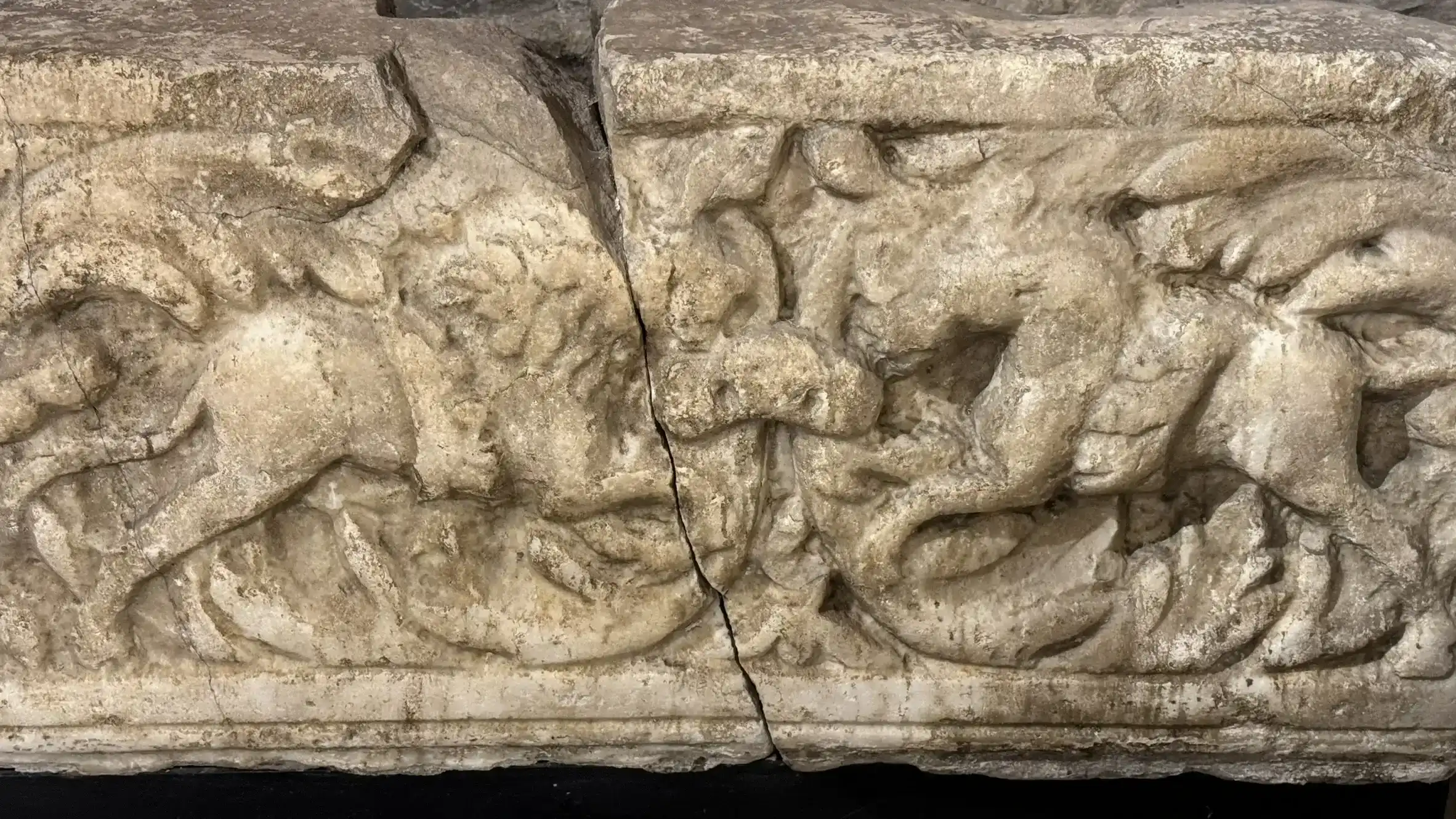

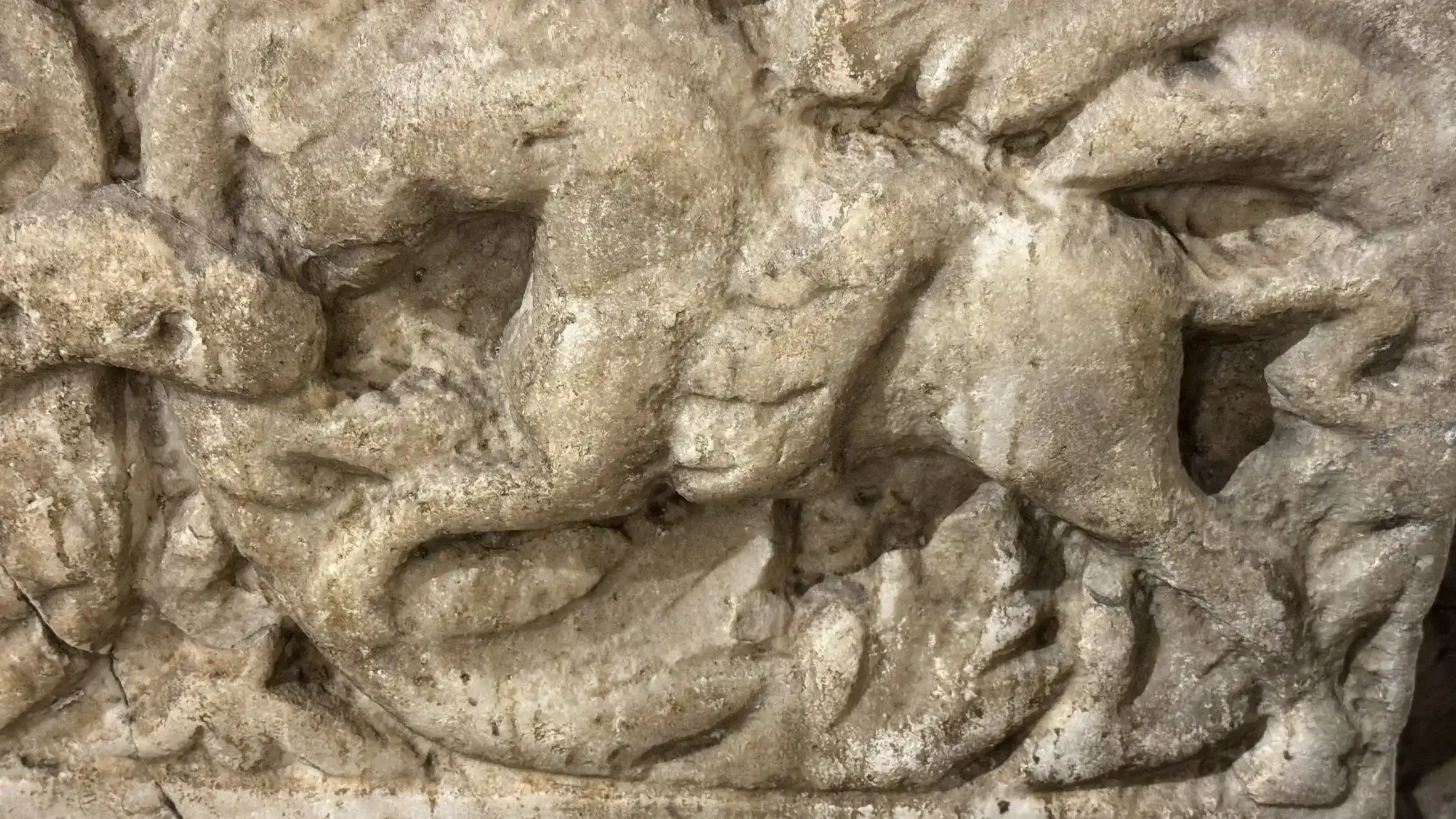
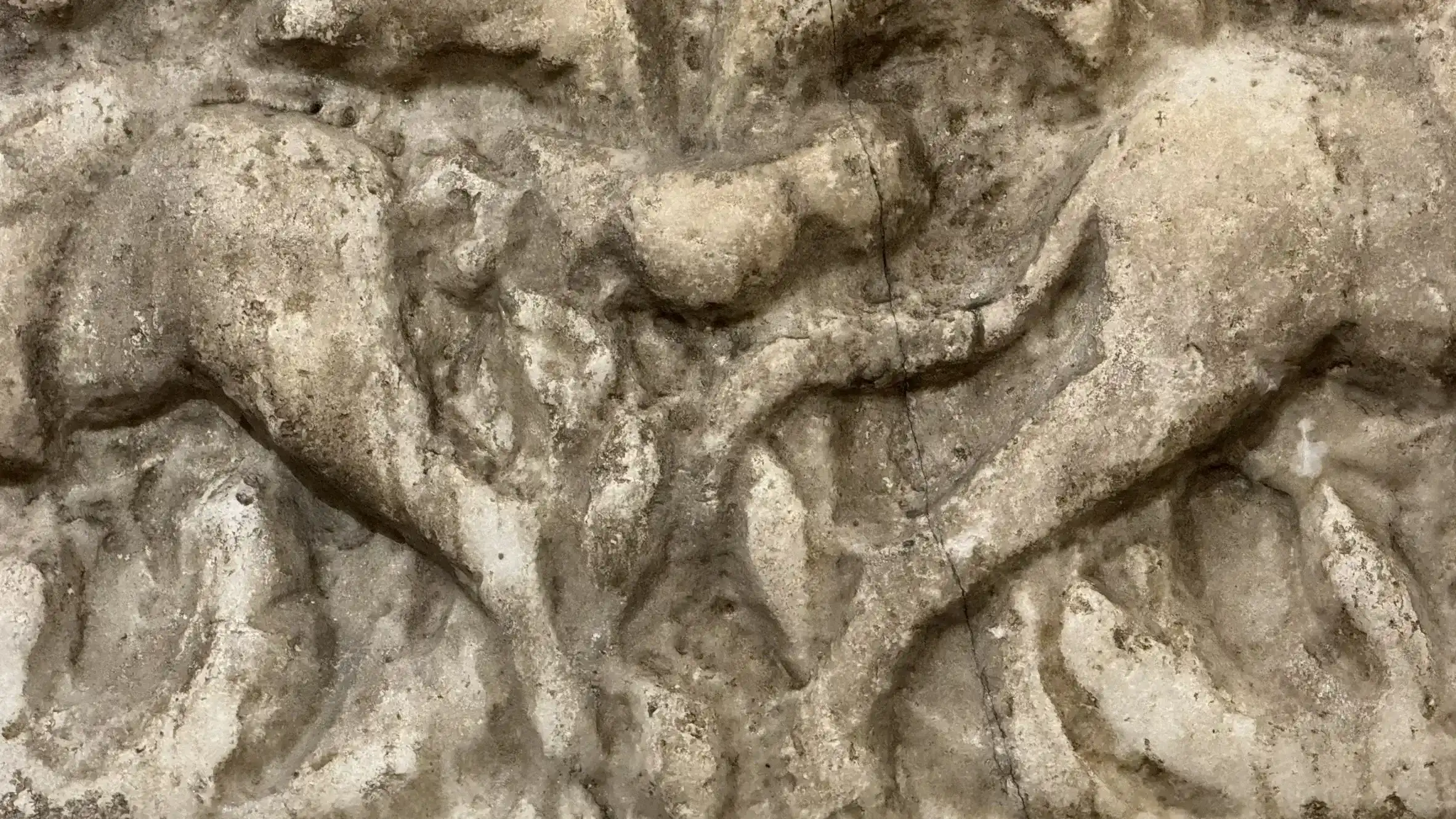
Scenic Frieze and Architrave of a Roman Tomb
Dated: 2nd century CE
Architrave in Ancient Roman Architecture
Reading Time: 0:35 min
An architrave in ancient Rome was the main horizontal beam that rested directly on top of the columns in a building. It was part of the horizontal structure (called entablature) that supported the roof or upper floors.
It was one of the key elements in classical architecture, particularly in temples and other important buildings.
Some architraves were simple and unadorned. Others had decorative features, such as carvings or inscriptions, to make them look more elegant.
The architrave’s purpose was both functional, in bearing weight, and aesthetic, contributing to the harmonious proportions and order of classical architecture.
Entablature | Architrave | Frieze
The entablature is the horizontal section above the columns. The architrave forms the lowest part of the entablature and sits just below the frieze.
Scenic Frieze in Ancient Roman Architecture
Reading Time: 0:25 min
In Ancient Rome, a scenic frieze was a decorative, horizontal band that ran along the upper part of a building’s walls, typically above the columns. It was often sculpted or painted with continuous scenes, depicting mythological, historical, or ceremonial events. Scenic friezes served both artistic and narrative purposes, enhancing the visual appeal of structures such as temples, public buildings, and monuments. They were part of the entablature, contributing to the overall grandeur and storytelling of Roman architecture.