Lobster-Tailed Pot Helmet
Dated: 17th century CE
Reading Time: 1:10 min
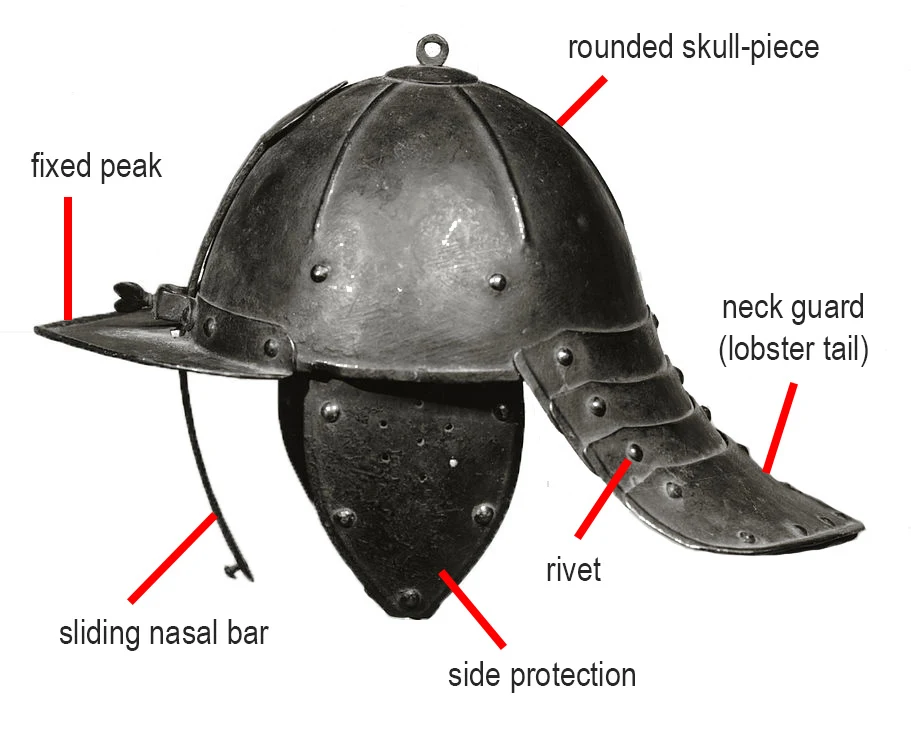
A lobster-tailed pot helmet was used in the 17th century CE in Central Europe, primarily by cavalrymen and officers. The helmet had a laminated guard to protect the back of the head and neck. This laminated guard resembled the tail of a lobster.
The main parts of a 17th-century lobster-tailed pot helmet included:
– Bowl: The rounded, metal body of the helmet, which covered the top and sides of the head. It was usually made of steel or iron and designed to deflect blows from above.
– Neck Guard (Lobster Tail): The distinctive tail-like extension at the back of the helmet, which provided added protection for the neck, back of the head, and shoulders. This feature was a hallmark of the “lobster-tailed” design and often had articulated plates to allow some movement while ensuring full protection.
– Front Peak: A short peak in front of the helmet that shielded the face from frontal blows or falling debris.
– Chin Strap: A leather strap attached to the helmet to keep it securely in place during battle. This could be fastened under the chin.
– Rivets: These were metal fasteners used to join the different parts of the helmet, such as the faceplate, neck guard, and the bowl. The rivets were crucial in ensuring the helmet’s stability and strength.
– Optional Visor or Faceplate: An optional hinged or fixed faceguard covered the face, sometimes equipped with narrow slits or holes for vision and ventilation. In some variations, the faceplate could be lifted or removed entirely.