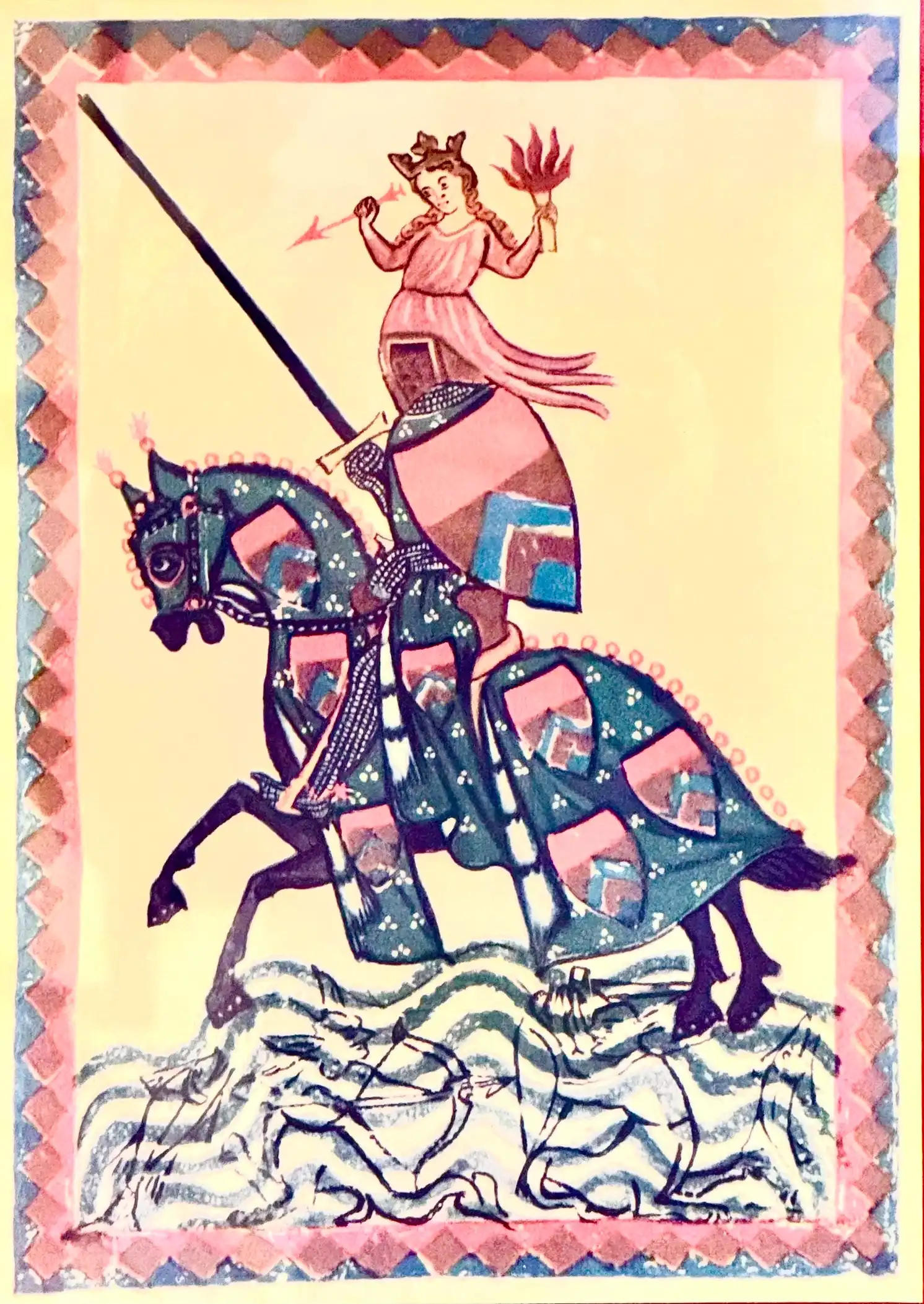
Ulrich von Liechtenstein
(c. 1200–1275)
Knight, Poet, and Courtly Idealist
Reading Time: 1:12 min
Early Life and Background
Ulrich von Liechtenstein was born around 1200 into a noble Styrian family at Murau in present-day Austria. He belonged to the lower nobility and served as a page and later as a squire at the court of Duke Leopold VI of Austria. His upbringing followed the ideals of chivalry and courtly culture, which deeply shaped his later writings.
Career and Service
As a knight, Ulrich held several public offices, including that of Landrichter (district judge) and later Landmarschall of Styria. He participated in political and diplomatic duties for the Styrian and Austrian nobility, balancing his worldly responsibilities with his poetic ambitions.
The Poet and His Works
Ulrich’s fame rests mainly on his literary works, written in Middle High German. His most renowned composition, Frauendienst (“Service of Ladies,” c. 1255), is a semi-autobiographical poem describing his idealised devotion to a noble lady. The work combines elements of autobiography, courtly romance, and moral reflection.
Another significant text, Frauenbuch (1257), takes the form of a dialogue between Ulrich and a woman, exploring questions of gender, honour, and virtue in courtly society.
Chivalric Persona and Symbolism
Ulrich famously undertook elaborate Minnefahrten—symbolic journeys in the service of love—during which he appeared disguised as figures such as Venus, the goddess of love. These performances reflected the blend of idealism, theatricality, and moral instruction characteristic of medieval knighthood.
Later Life and Legacy
Ulrich von Liechtenstein died around 1275, probably at his estate in Styria. His life and writings remain among the finest expressions of medieval Austrian chivalric culture. Through his poetic voice, he celebrated love, virtue, and honour as guiding ideals for both knights and society.