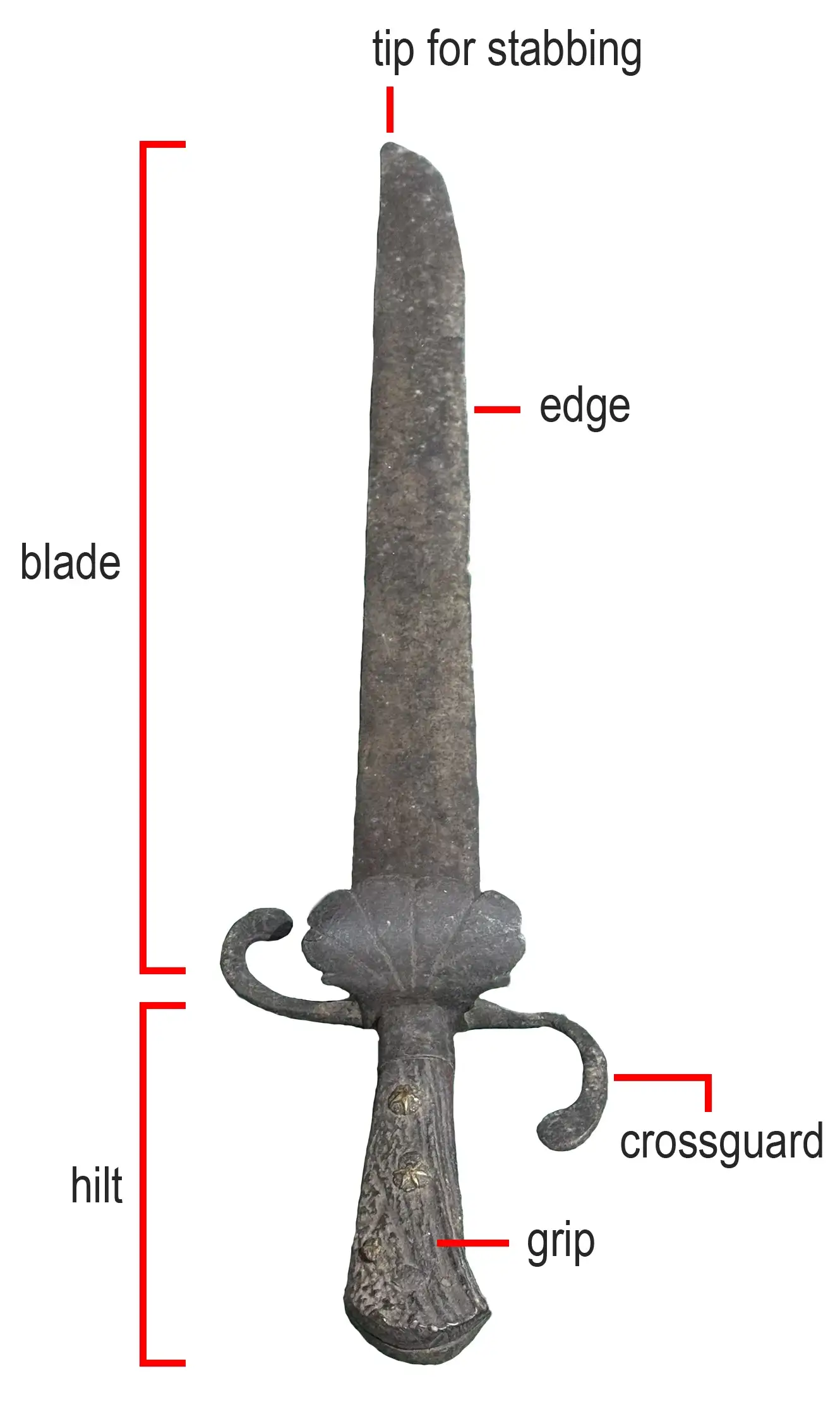
Hunting Sword (Hirschfänger)
Dated: Second half of the 17th century CE
Hunting Sword
Reading Time: 1:20 min
The medieval Hirschfänger, or hunting sword, was a distinctive weapon designed for use in hunting, particularly for dispatching large game like deer, a practice common in the forests of the Carinthian region. These swords were typically characterised by their robust and functional design, combining both utility and a degree of artistry befitting the noble hunters who carried them.
Blade
The blade of a Hirschfänger was often long, broad, and slightly curved, ideal for delivering powerful thrusts or slashes, designed to penetrate the tough hides of animals. The edge was sharpened for both cutting and stabbing, with the pointed tip providing precision for a clean strike. The blade itself featured decorative elements such as etchings or inscriptions, although it remained primarily a practical weapon for hunting rather than a purely ornamental piece.
Hilt
The hilt of the Hirschfänger was typically sturdy, with a crossguard that provided balance and protection for the hand. The grip was often made from wood, leather, or ivory, offering a secure and comfortable hold during a chase. The pommel at the base of the grip was usually heavier, balancing the blade and ensuring better thrusting capability.
Crossguard
One of the most distinctive features of the Hirschfänger was its large, often curved crossguard, which could be elaborately decorated with metalwork or engravings, adding a touch of nobility to the functional weapon.
Hooks or Notches
Some variations included hooks or notches along the spine of the blade, designed to assist in catching or immobilising an animal, further enhancing its utilitarian purpose.
The Hirschfänger was more than just a weapon; it was a symbol of the noble hunter’s status, blending practicality with craftsmanship. Its design, while rooted in the practical demands of hunting, still reflected the aesthetics of medieval Carinthian society.