Liturgical Colours
Reading Time: 1:15 min
What do the different colours of liturgical vestments signify?
As outlined by the Church, different colours represent different liturgical seasons.
Since around the sixth century, the primary liturgical colours have been green, white, purple, red and black.
Green signifies Ordinary Time in the Church.
Purple is worn during Advent and Lent.
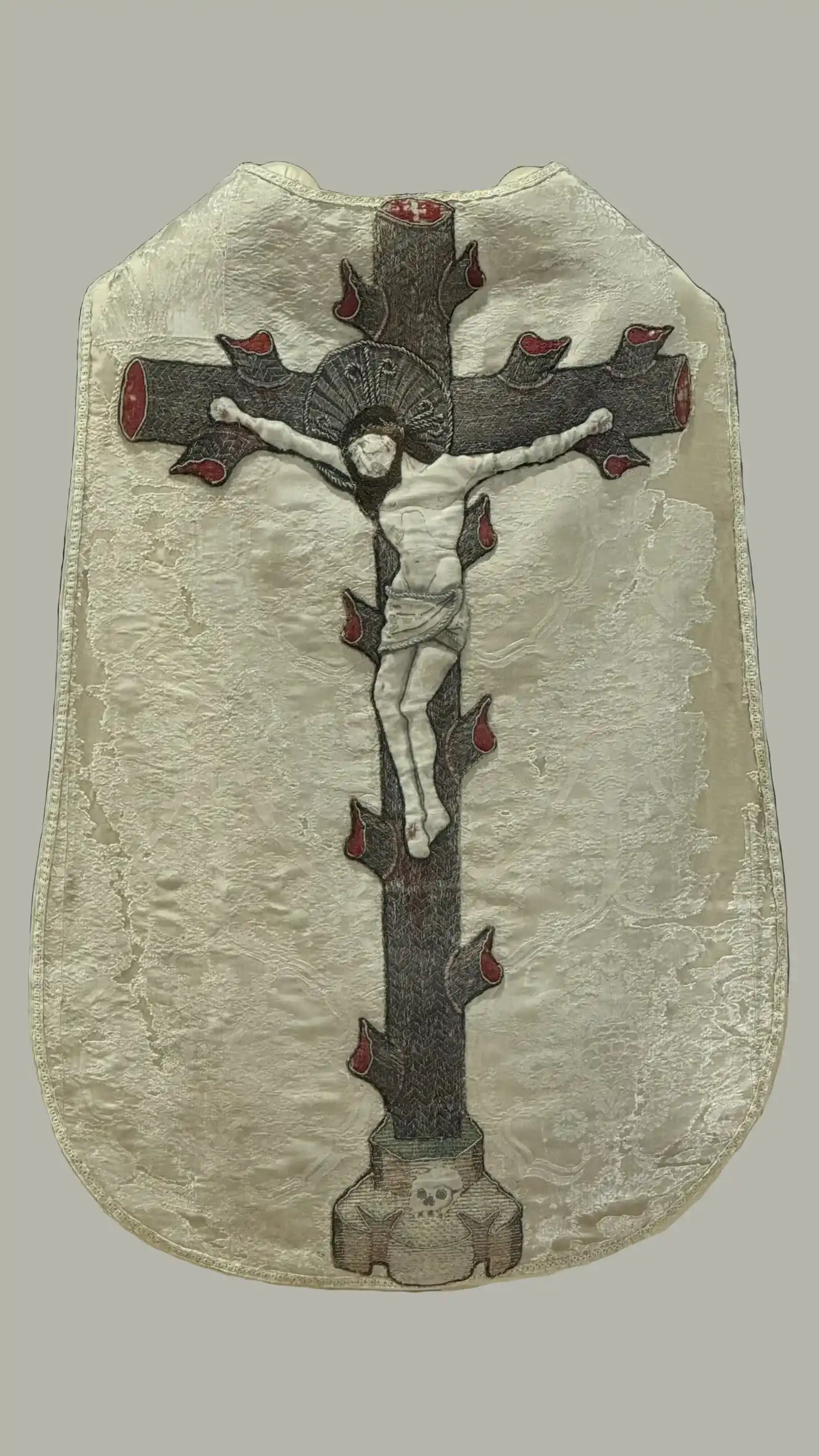
White is worn during the Christmas and Easter seasons. White vestments are also worn at baptisms and weddings.
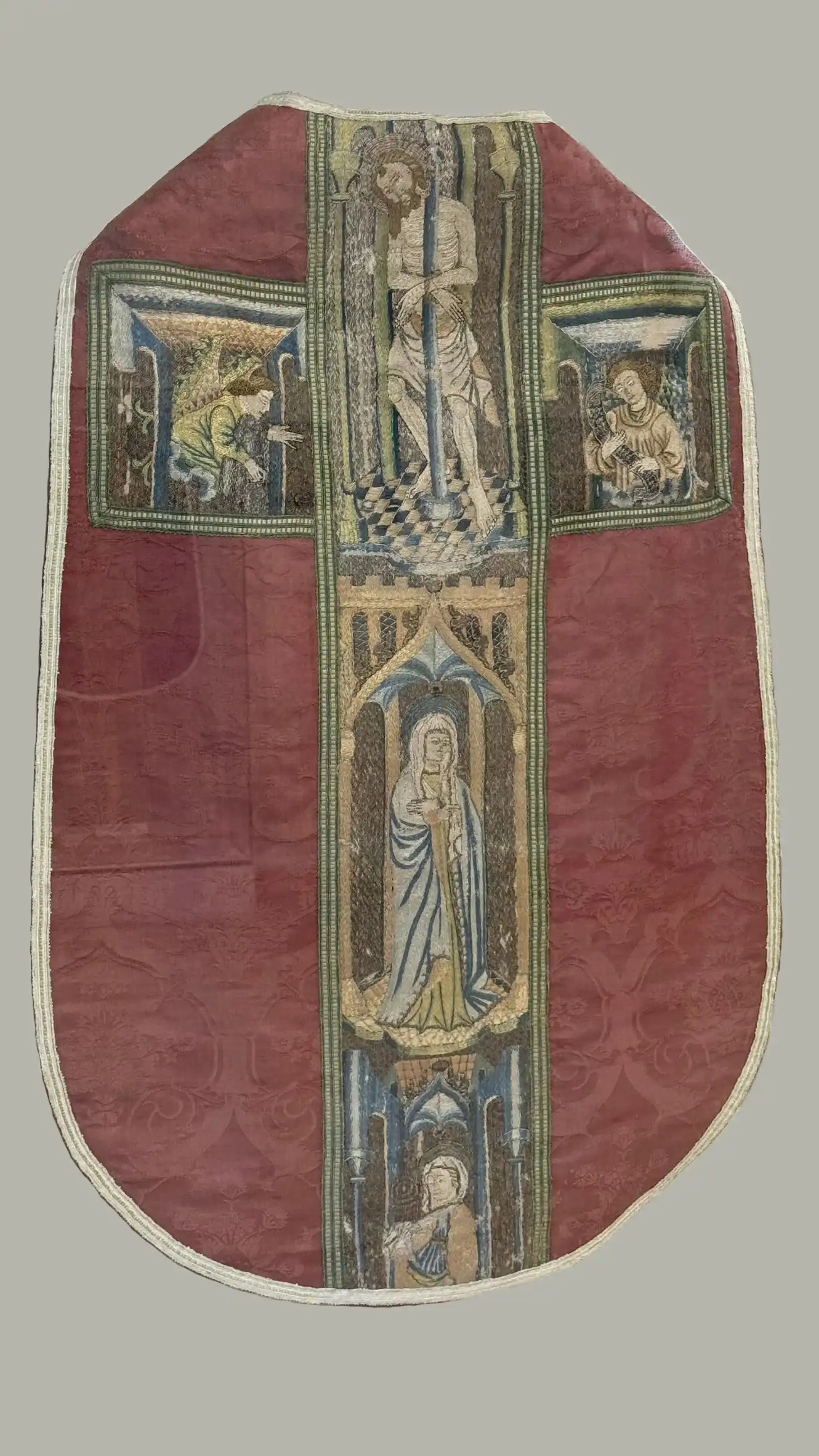
Red implies the blood of Christ, the Holy Spirit and the martyrs. It is put on by the priest on Pentecost and for confirmations.
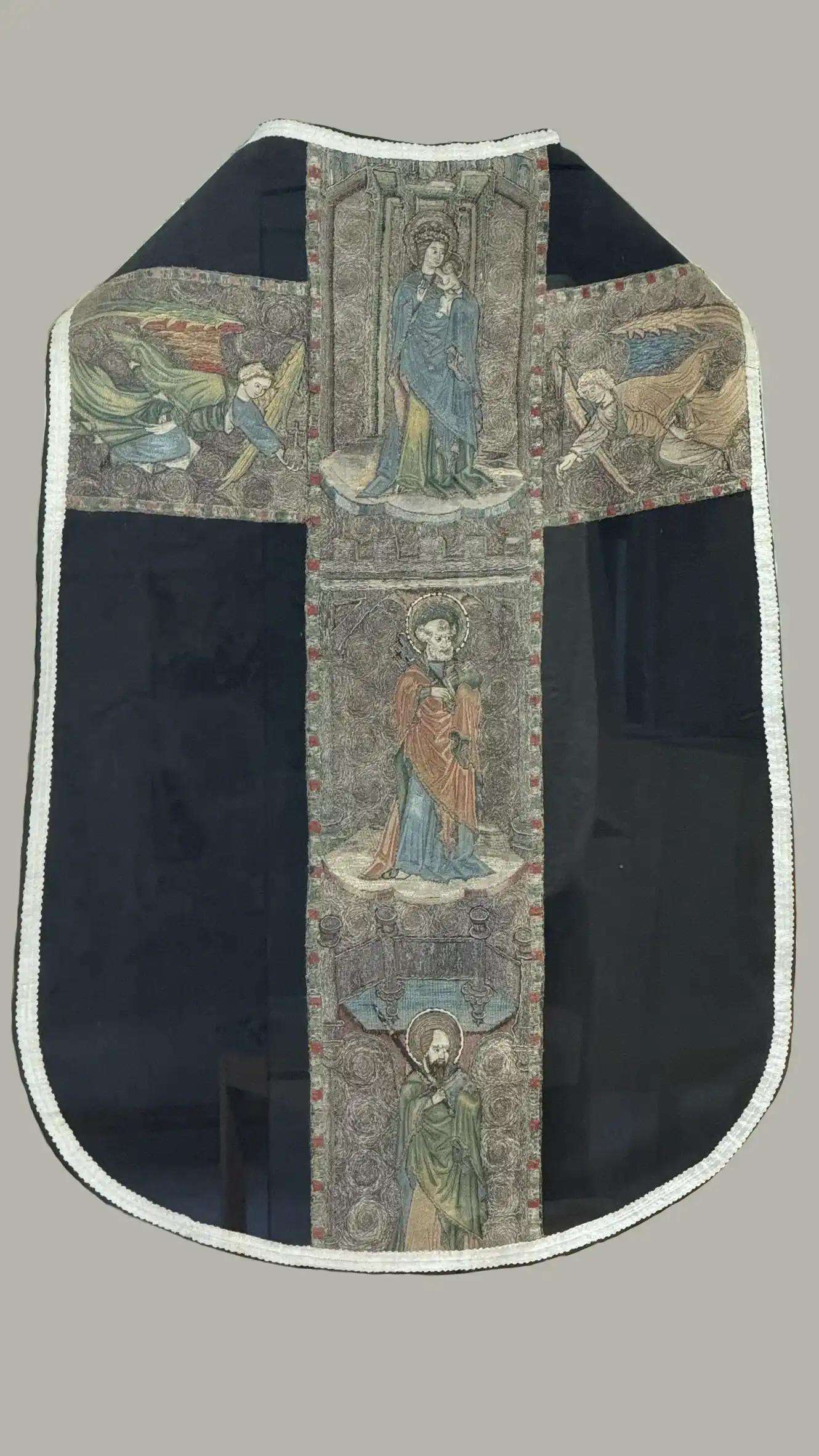
Black, rarely seen, can be worn during the Office of the Dead. It may also be worn on Good Friday.
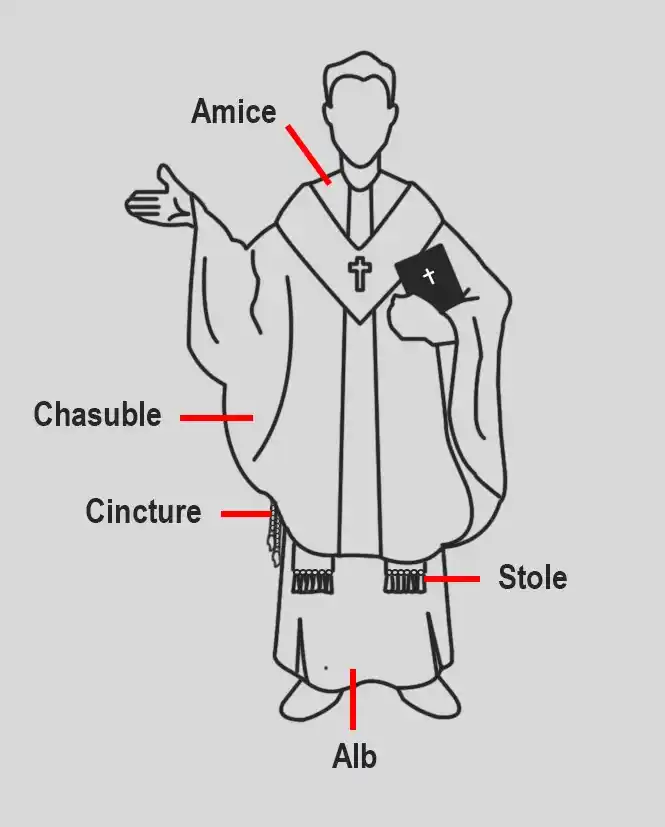
Catholic Liturgical Vestments
Amice
This is a rectangular neck cloth which serves to protect the valuable chasuble and stole, but is used only if the alb does not cover the ordinary clothing at the neck.
Alb
This is a long white garment worn by the priest to represent the new and immaculate vestment that has been received through baptism.
Cincture
This is a cord used as a belt to tighten the alb, symbolising the virtue of chastity and continence. It is the same colour as the chasuble.
Stole
This is a long narrow band, several centimetres wide and about 200 cm long (and of the same colour as the chasuble). The stole is worn as a sign that the priest is serving in his official liturgical role.
Chasuble
The final vestment of the priest that is worn over all the others and symbolises the virtue of charity and the yoke of unselfish love.