


Mary as the Throne of Solomon
Reading Time: 0:50 min
Prophecy and Fulfilment
Mary acts as the living link between the Old and New Testaments.
She fulfils the prophecies of the Hebrew Scriptures, which foretold that a virgin would bear a son, the Messiah, Israel’s ruler and saviour.
The Living Throne of Solomon
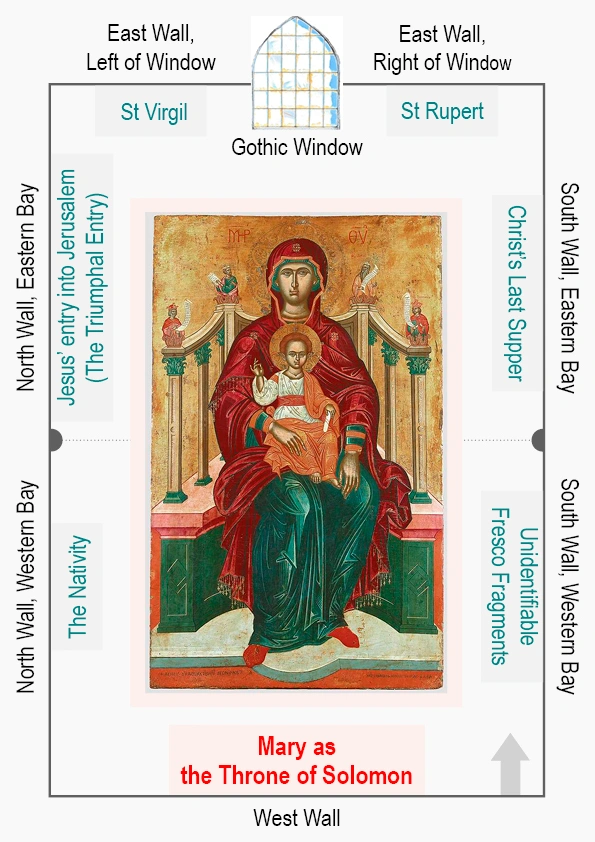
In the fresco, Mary holds the Christ Child on her lap and becomes the living Throne of Solomon, recalling the biblical throne, a symbol of wisdom, authority, and divine guidance.
Iconography
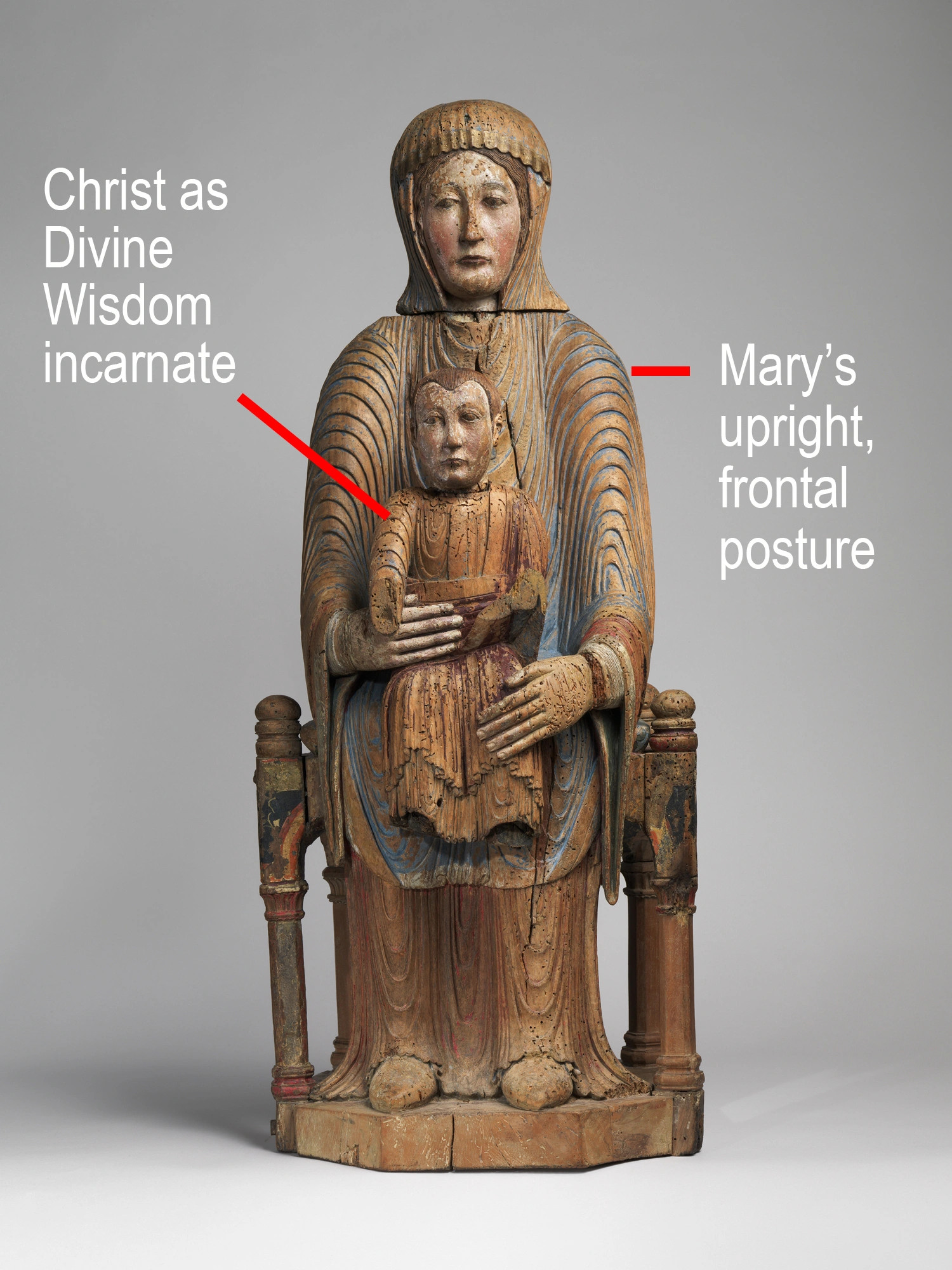
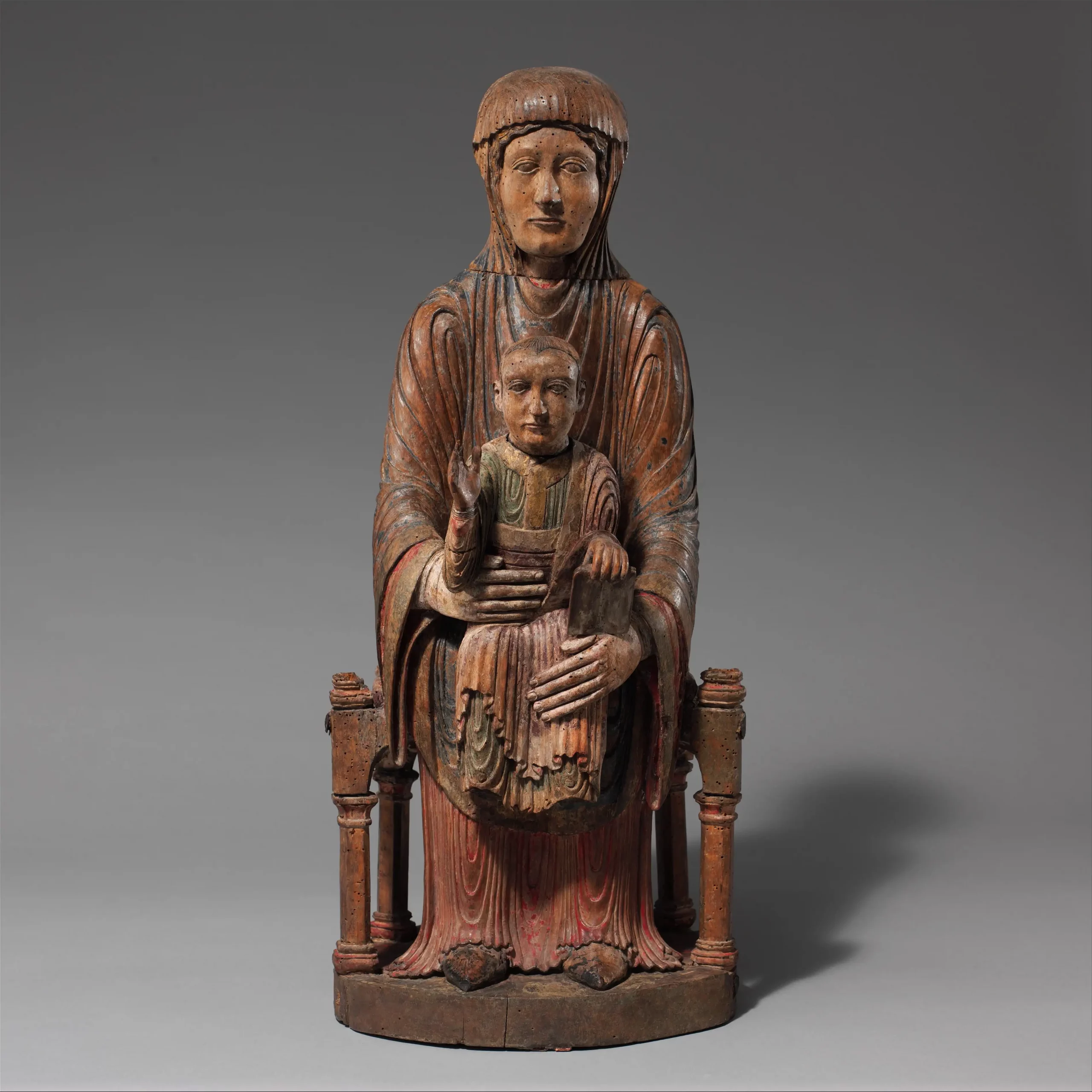
Her upright, frontal posture emphasises sacred authority rather than maternal tenderness, making her a stable and visible support for Christ. He sits solemnly, often blessing with one hand and holding a book in the other, signifying him as Divine Wisdom incarnate, the rightful teacher and ruler. Every gesture, gaze, and placement in the fresco reinforces this message.
Meaning for Medieval Viewers
For medieval viewers, this image communicated the realisation of God’s plan in Christ, the fulfilment of Old Testament promises, and Mary’s key role in salvation history.
It also illustrated the continuity between biblical prophecy and its fulfilment, making the sacred story visible, tangible, and understandable within the church space.
The motif combines theological meaning with visual clarity, guiding viewers’ devotion and reflection.
1 | Mary becomes the living Throne of Solomon
2 | Adult features of the Christ Child
3 | Mary holds the Christ Child on her lap
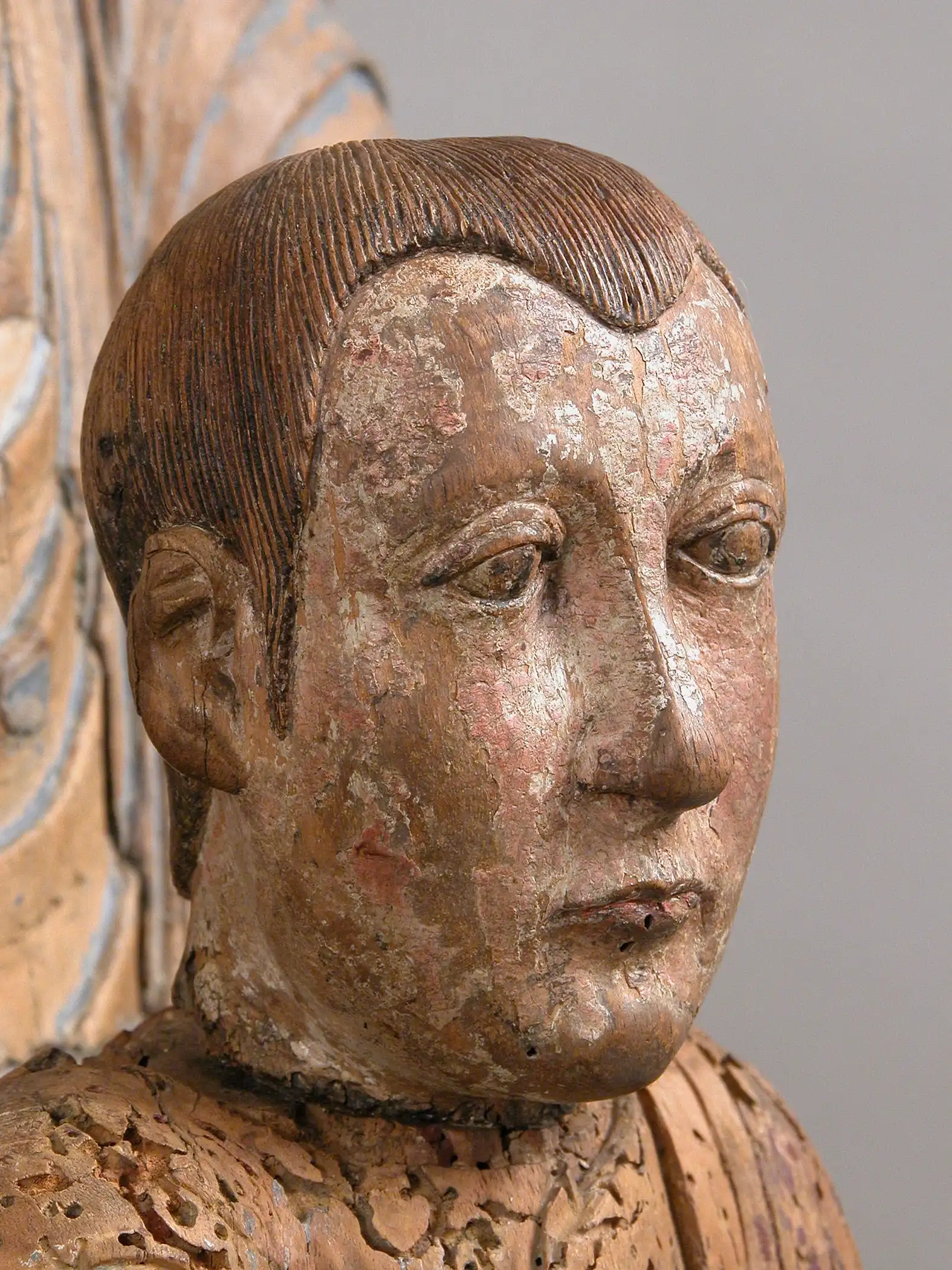
Mary’s Expression
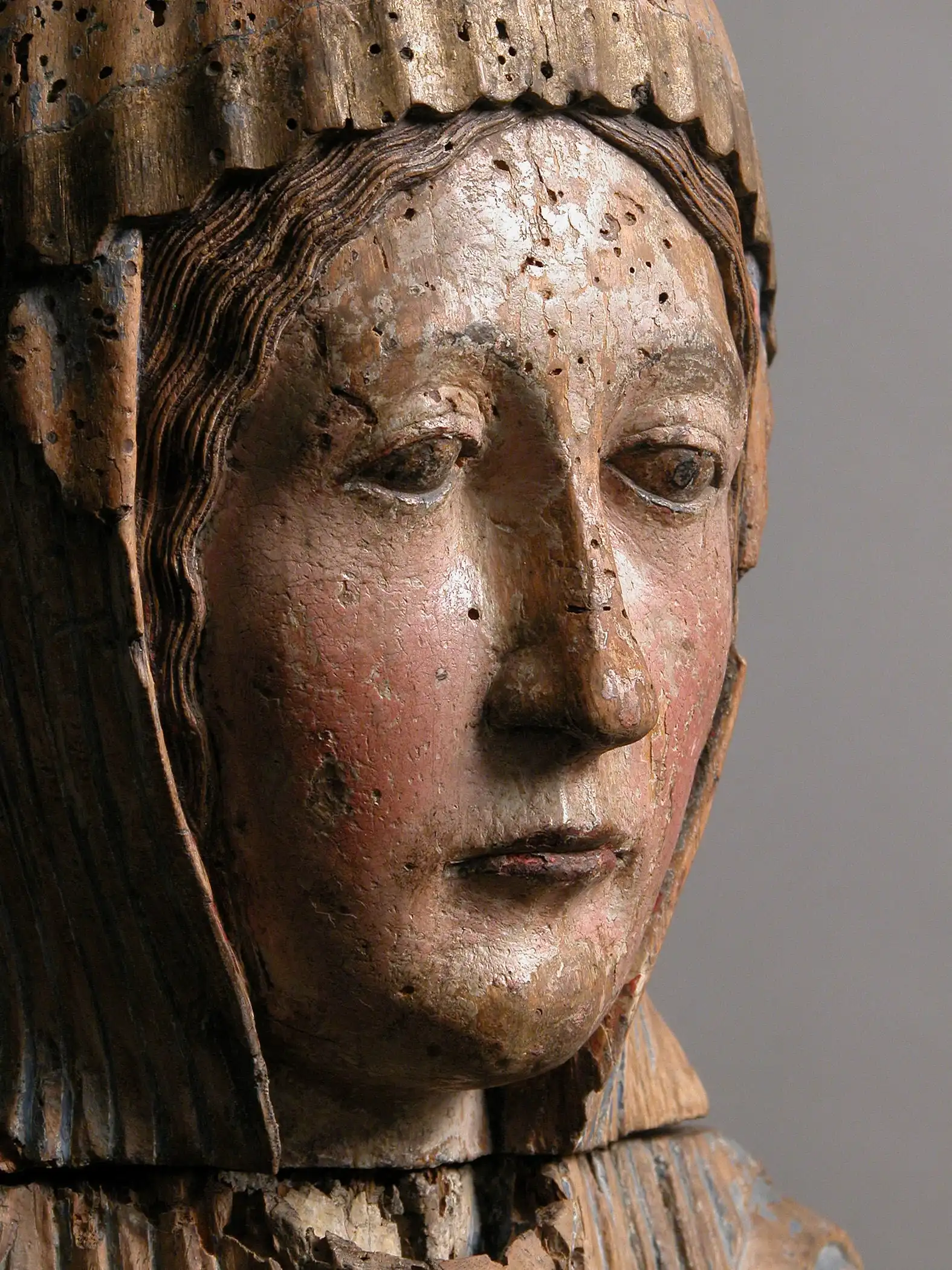
Mary’s expression is calm, restrained, and inward-looking. Her downcast eyes and closed mouth convey serenity rather than emotion, avoiding both joy and sorrow. The face is idealised and impersonal, with smooth planes and minimal modelling, emphasising stillness and permanence. This lack of overt feeling is intentional: it suppresses individual psychology in favour of timeless authority and spiritual composure.
Ecclesiastical Significance
Such an expression is characteristic of Romanesque and Early-Gothic Marian imagery, especially in representations of Mary as the Throne of Solomon. Mary is not shown as a tender mother but as a vessel of divine order, whose role is to bear and present Christ. Her impassive gaze reinforces her function as a theological figure rather than a narrative character.
The quiet gravity of the face supports the image’s doctrinal meaning:
– Mary embodies obedience and stability.
– Her stillness reflects the unchanging nature of divine truth.
– Her composed expression directs attention away from herself and toward Christ as Divine Wisdom.
Overall, the face communicates authority, humility, and contemplative presence, guiding the viewer toward reverence rather than emotional identification.
Christ Child’s Expression
The expression is solemn, restrained, and adult-like, lacking any signs of childhood spontaneity or emotion. The gaze is steady and slightly distant, the mouth closed and composed.
The facial features are simplified and stylised, conveying calm authority rather than innocence. This intentional seriousness suppresses naturalism in favour of timeless gravity.
Ecclesiastical Significance
This type of expression is characteristic of medieval depictions of the Christ Child as ruler and teacher, not as an infant in a domestic sense. In the context of Mary as the Throne of Solomon, Christ is presented as Divine Wisdom incarnate, already possessing full authority and knowledge.
The mature, impassive face communicates key theological ideas:
– Christ’s divinity and sovereignty are present from birth.
– His wisdom is eternal and unchanging, not acquired through age.
– Emotional restraint directs the viewer toward reverence and contemplation, rather than empathy.
Overall, the image emphasises Christ’s kingship and doctrinal role, reinforcing the sculpture’s function as a visual expression of divine order and authority rather than a narrative scene of childhood.