Cup Stones (Schalensteine)
Reading Time: 1:00 min
Cup Stones or Bowl Stones
Stones with artificial hollows or bowls – commonly known as bowl stones in German-speaking areas – date back to pre-Christian times, the Middle Ages, and the early modern period.
Medieval bowl stones are found far beyond the Alpine region and are usually located in churches and ossuaries. They are often located near the entrance or attached to the walls inside, or placed in niches. When placed in these locations, they had a clear ritual significance: they were used as light sources for the souls of the dead and as symbols of eternal life. Christian customs, such as All Souls’ Light and Eternal Light, have survived to this day.
In Carinthia, around 30 stones are known, some of which have been lost or walled up.
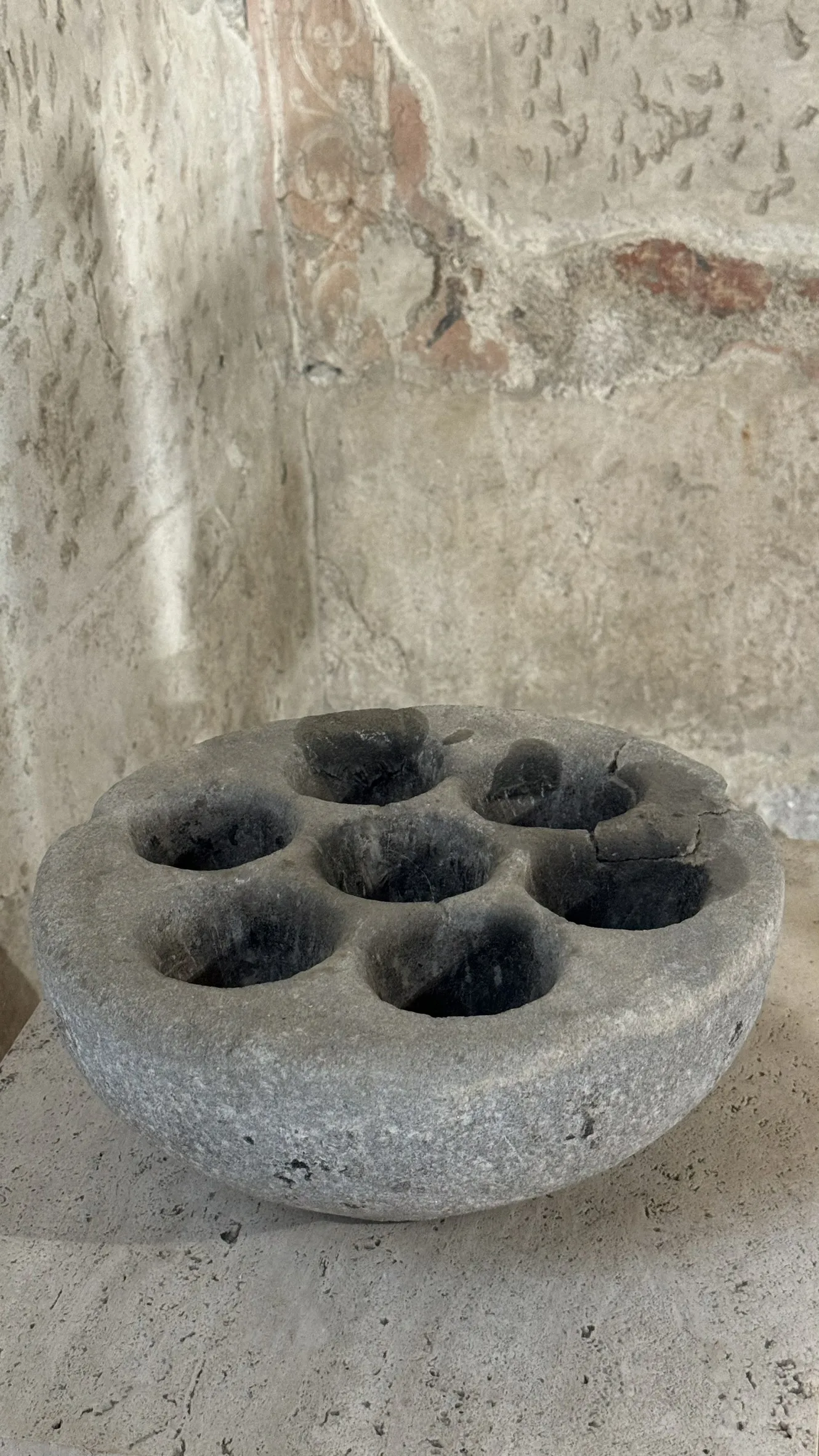
The material of the carved stones is slate, granite, marble, or limestone.
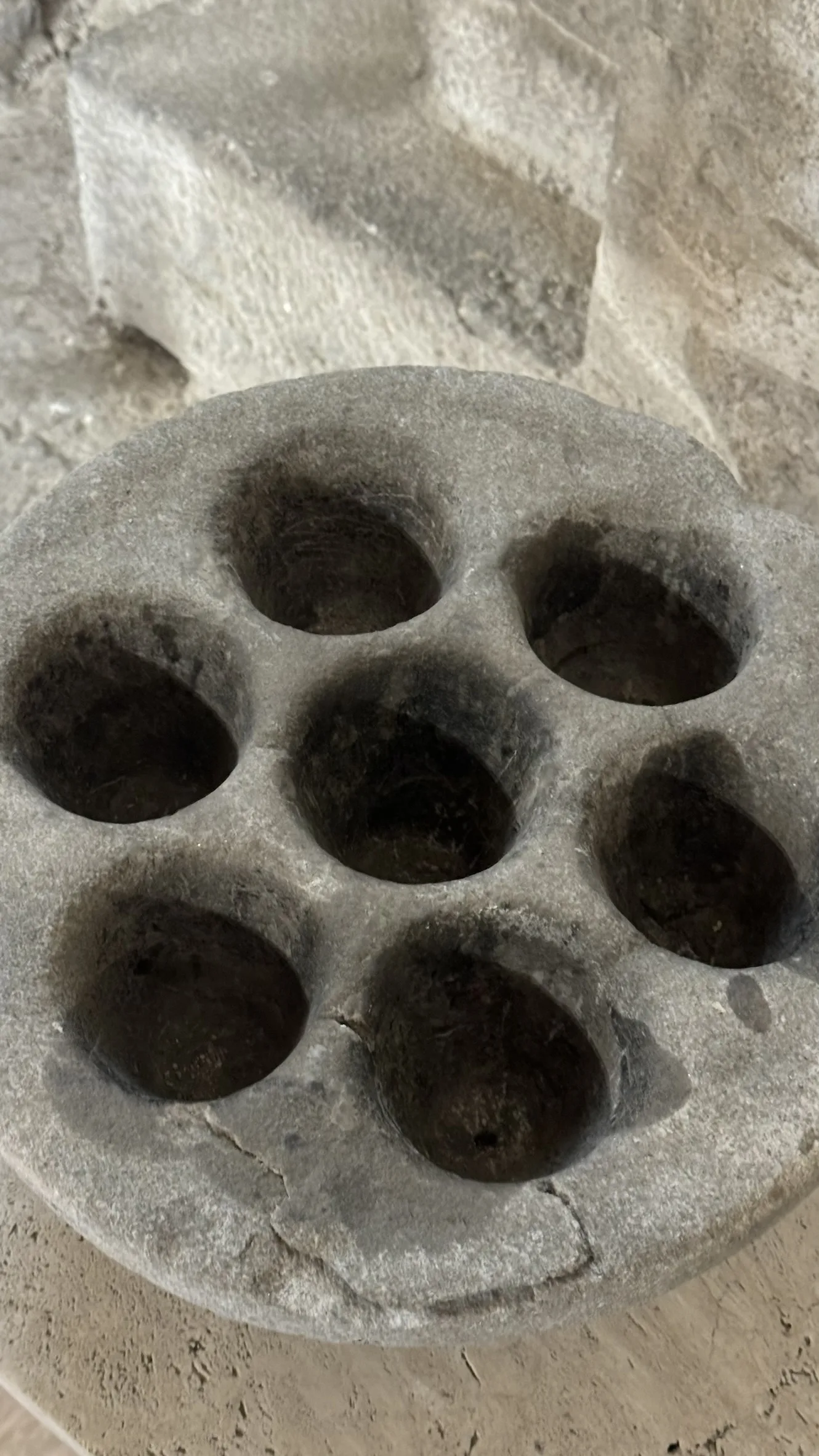
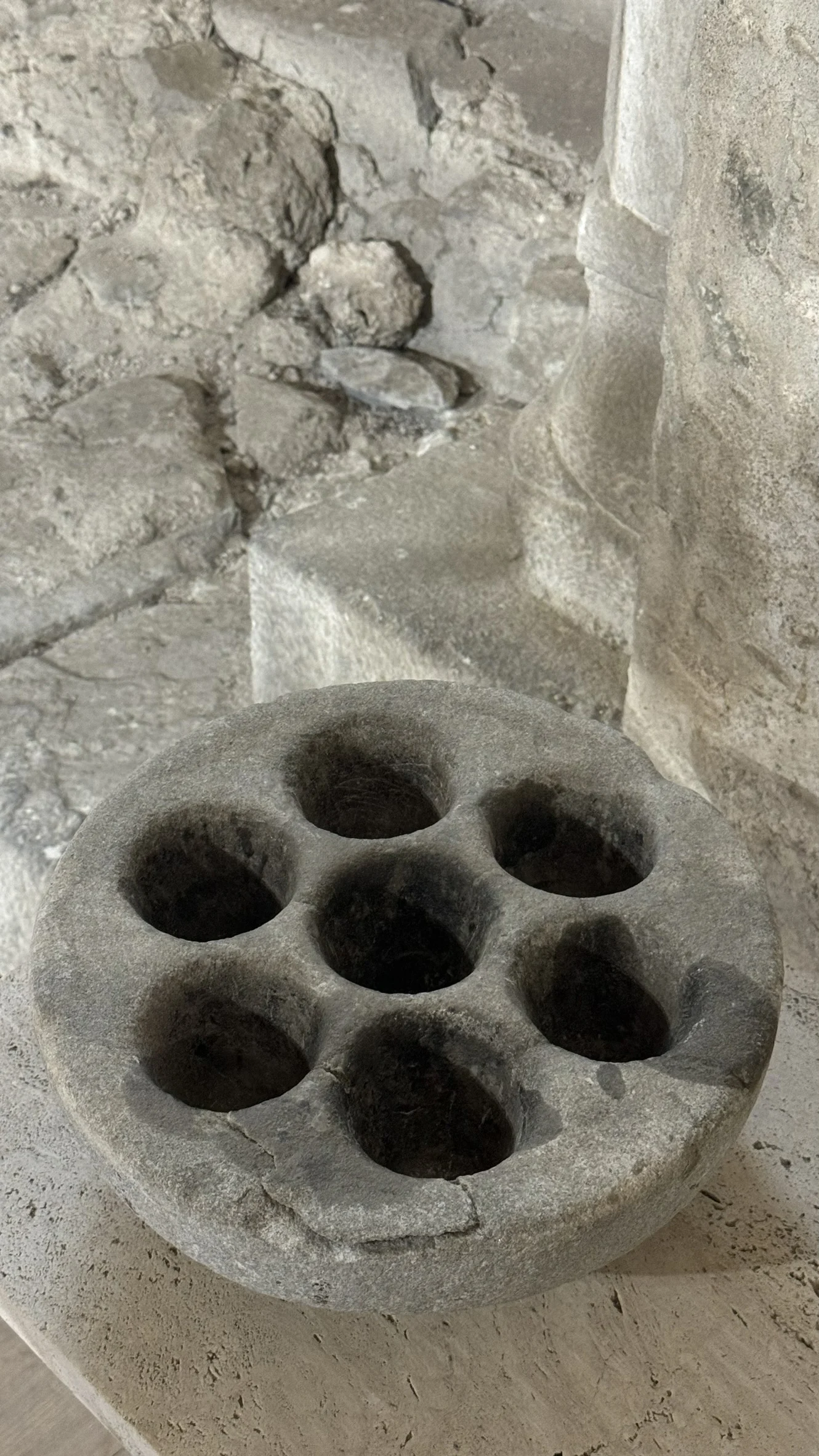
Their shapes are mostly round or polygonal, rarely hemispherical, with 4 to 12 (most often seven regularly arranged) bowls, varying in diameter and depth.
The bowls were filled with a flammable substance (oil or fat) and burned slowly using a wick.
Hollowed-out turnips were also used as Poor Souls’ Lights in some areas of central Carinthia until the 1970s.