Romanesque Columns
Reading Time: 0:10 min
Romanesque columns, which were a prominent feature in architecture from the 10th to the 12th century CE, played both functional and decorative roles in the design of churches, monasteries, and cathedrals.
Functions of Romanesque Columns
Reading Time: 0:30 min
Structural Support
The primary function of Romanesque columns was to support the weight of the building, particularly the heavy stone ceilings and the thick walls typical of the Romanesque style. They were crucial in transferring loads from the roof or upper levels to the foundation.
Division of Space
Columns also served to divide the interior space of churches and basilicas. They were frequently arranged in rows, creating aisles or supporting arcades, thus organising the layout of the nave, transepts, and other spaces.
Support for Arches
Romanesque columns often supported the rounded arches that were characteristic of the period. These arches were a key architectural element, and columns helped to bear their weight.
Romanesque Architecture
Reading Time: 0:55 min
Thick and Sturdy Design
Romanesque columns were typically short, thick, and sturdy. This massive form was intended to support the weight of the heavy stone vaults above.
Round Shafts
The shafts of Romanesque columns were almost always round in cross-section, following the classical tradition.
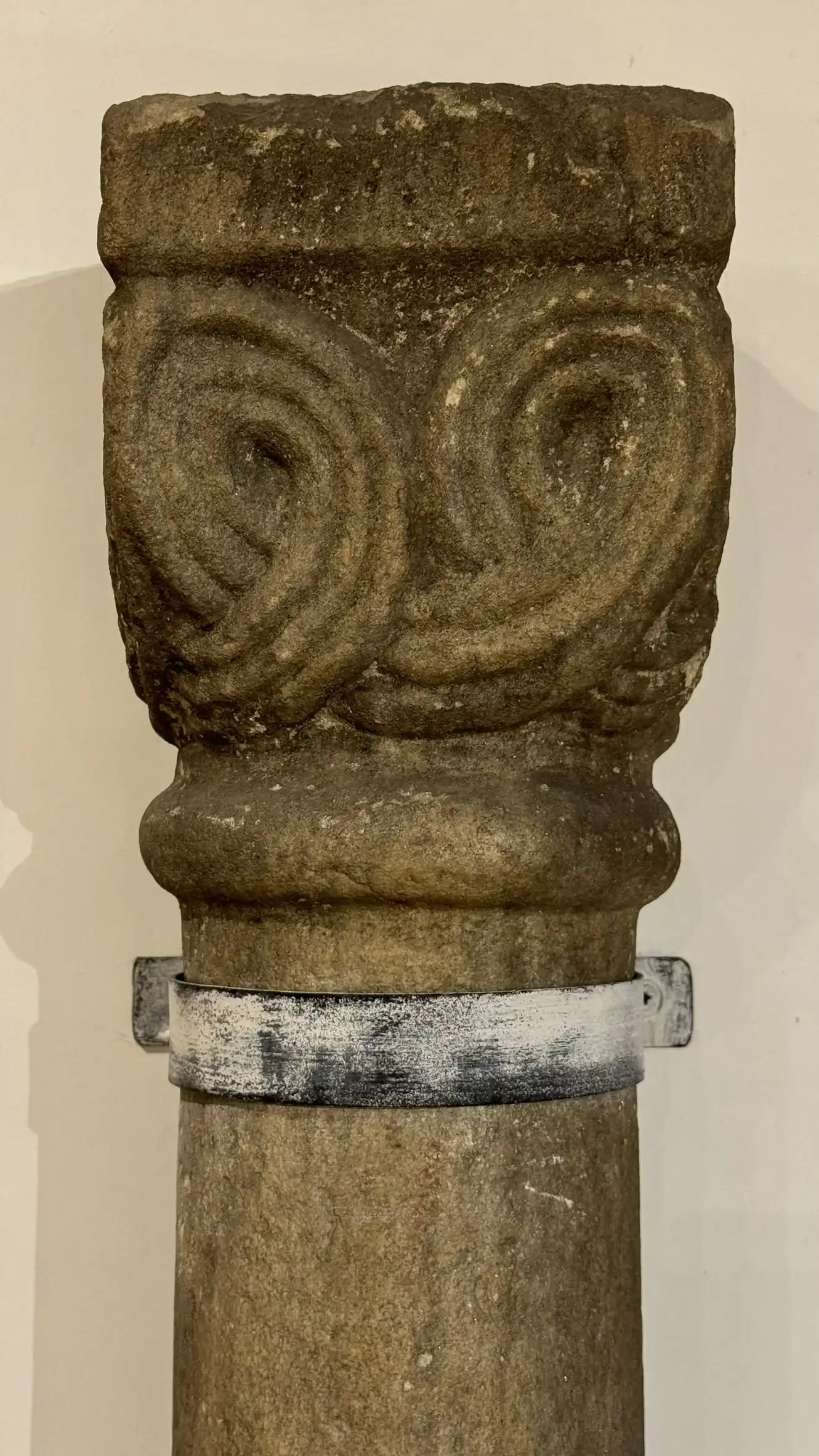
Capitals
The capitals of Romanesque columns were often richly decorated with sculptural reliefs, though the style of decoration varied. Some capitals featured geometric patterns, while others depicted biblical scenes, animals, foliage, or mythological motifs. These carvings helped to convey religious narratives and symbolisms to the largely illiterate population.
Rounded Arches
The columns supported the characteristic rounded arches of the Romanesque style. These arches, often quite wide and thick, were used to create arcades, galleries, or windows.
Use of Local Materials
Columns were typically made from local stone or marble, often with a rough, unfinished surface. In more important buildings, such as cathedrals or abbeys, columns could be constructed from more polished materials, sometimes with decorative carvings or painted surfaces.
Pedestals and Bases
Romanesque columns often rested on large, square or circular pedestals, which added to the massiveness of the design. The bases were sometimes decorated with simple motifs or relief carvings, enhancing the visual impact.