Ulrich von Liechtenstein and the Tournament at Friesach
Ulrich’s poetic romance “The Service of Ladies” (German: Frauendienst; c. 1255)
Reading Time: 1:10 min
Stanzas by Ulrich von Liechtenstein for the Knightly Tournament in Friesach:
In his poetic romance Frauendienst (“Service of Ladies”), written around 1255, the Carinthian nobleman Ulrich von Liechtenstein describes his journeys and tournaments across the Alpine lands. One of the most vivid episodes recalls a grand tournament held in Friesach, then one of Carinthia’s most important medieval towns.
Original (Middle High German):
“Ze Frisach was manic ritter guot, di mîn dâ piten durch hôhen muot, und durch diu reinen süezen wîp was dâ der hôch gemuoten lîp.”
Modern English translation:
“In Friesach were many noble knights, who awaited me there with high courage; and through the pure and gracious ladies there reigned a spirit of noble joy.”
Purpose of the Stanzas:
Ulrich’s verses were not merely reports of tournaments — they were poetic celebrations of knightly virtue and courtly love. By describing the tournament in Friesach, he honoured the ideals of courage, honour, and devotion that defined the chivalric world.
Literary and Narrative:
The stanzas gave structure and rhythm to his tale, transforming real events into scenes of heroic splendour.
Expression of Chivalric Identity: Ulrich presented himself as the perfect knight — brave in battle, refined in manners, and devoted to his lady in accordance with the ideals of minne (courtly love).
Commemoration and Prestige:
His verses preserved the memory of great gatherings of knights and nobles, enhancing both his own reputation and that of Carinthia’s chivalric culture.
Festive and Political Meaning:
The Friesach tournament also had ceremonial and political importance, bringing together noble houses and regional rulers. Ulrich’s poetry turned this historical event into a lasting cultural monument.
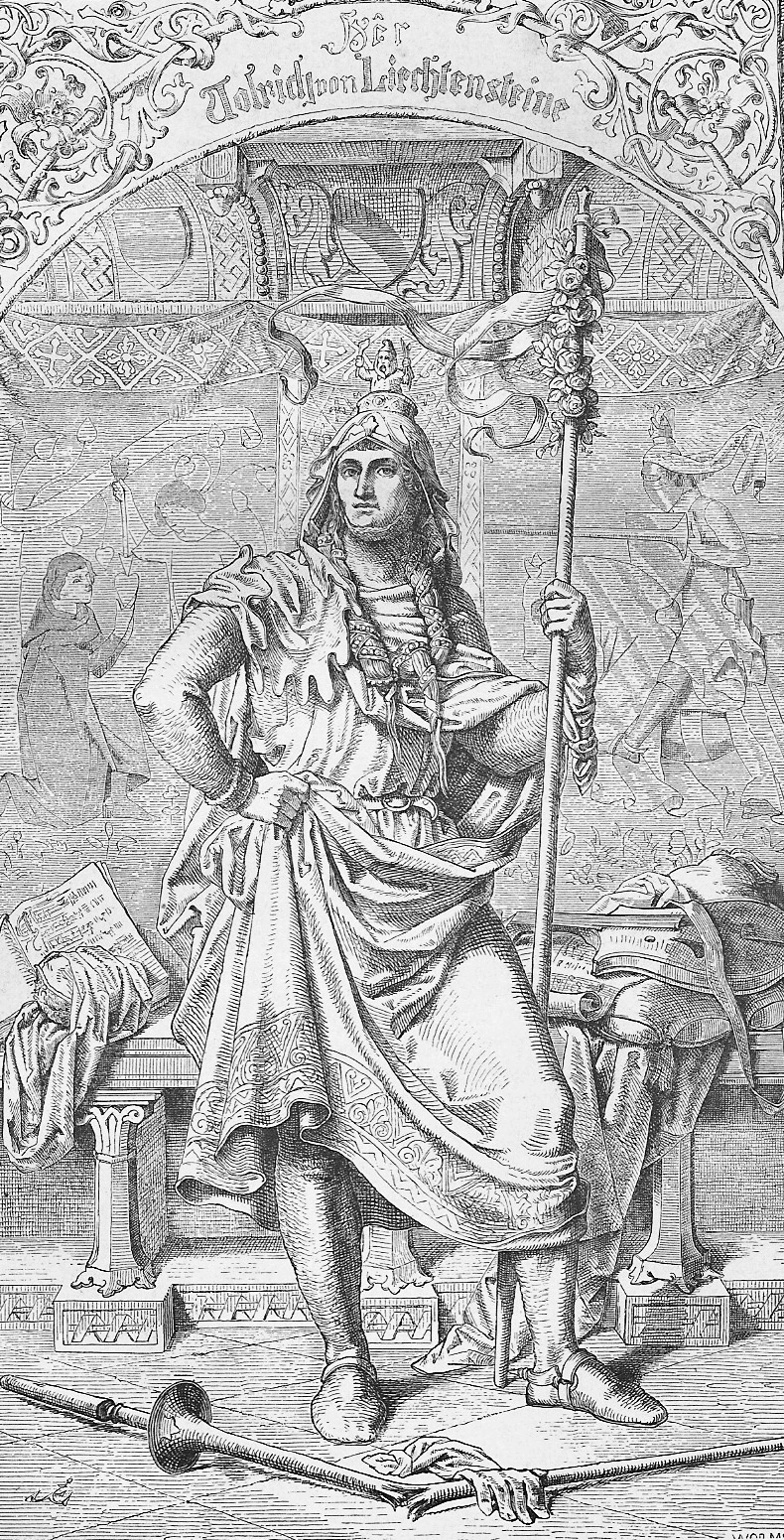

The First Ten Stanzas
by Ulrich von Liechtenstein
for the Knightly Tournament in Friesach
Reading Time: 2:20 min
Introduction
Ulrich von Liechtenstein, a Styrian knight and poet of the 13th century, describes in his allegorical work The Service of Ladies (Frauendienst) his chivalric deeds performed in devotion to “Queen Venus”, the symbol of courtly love.
Among the most vivid and celebrated episodes is the Tournament at Friesach, where Ulrich, disguised as the “Servant of Venus”, took part in numerous jousts. His account unites historical fact with poetic imagination, offering a lively picture of medieval ideals of honour, courage, and refined love.
The Knights’ Tournament | Stanza 1
Outside the walls of Friesach, more than thirty knights assembled – their armour gleaming, their horses restless and eager for the contest. Spurs flashed in the sunlight, and the clashing of lances filled the air. Each man sought to prove his bravery and win renown through valiant combat.
The Splendour of Armour | Stanza 2
A knight from the North rode forth with proud bearing. His armour shone brightly, the bells on his bridle rang clear, and the silk decorations of his harness shimmered in red, green, and gold. No other knight equalled him in splendour.
The Charge | Stanza 3
In his hand he held a finely ornamented lance, hung with small silver bells. Confident and composed, he prepared for the tilt. Pressing his spurs, he sent his horse charging forward – a magnificent sight of strength and grace.
The Impact | Stanza 4
With a tremendous blow he struck my shield, tearing the straps apart as if thunder had struck. Splinters flew through the air; my own lance broke upon his shoulder like dry wood. The crash echoed across the field, and for a moment all fell silent.
The Close of Combat | Stanza 5
The bells on his lance rang out across the field as shields splintered and the joust continued. I rode against four more challengers and won five golden rings as prizes. Many spectators wished me luck for my onward journey.
The Lodging | Stanza 6
After the tournament I returned to my lodging and sent each knight a small token of thanks – golden rings in honour of the noble contest. That day I had broken twenty lances – a proud mark of skill and fortune.
New Attire | Stanza 7
After a brief rest, I changed my garments: a fresh cloak and a new doublet of fine fabric. Thus prepared, I continued my journey with dignity and pride.
Journey Onward | Stanza 8
From Glemaun I rode further on. Most knights took their leave, yet three faithful companions remained – Sir Heinrich of Lienz and two valiant noblemen from Italy, steadfast and true.
Meeting the Duke | Stanza 9
At dawn I departed from Thörl. On a green meadow nearby, the Duke had gathered with a hundred knights for a grand feast. As I approached their shining company, I ordered a fanfare to be sounded – its call echoing far across the valley.
The Welcome | Stanza 10
Hearing the music, the Duke asked in surprise, “Who approaches us there?” – “It is Queen Venus, as announced in her letters,” came the reply. “Then she is most welcome,” declared the Duke. “We shall receive her in splendour”.