

Flintlock and Percussion Pistols
18th and 19th Centuries
Reading Time: 1 min 20 sec
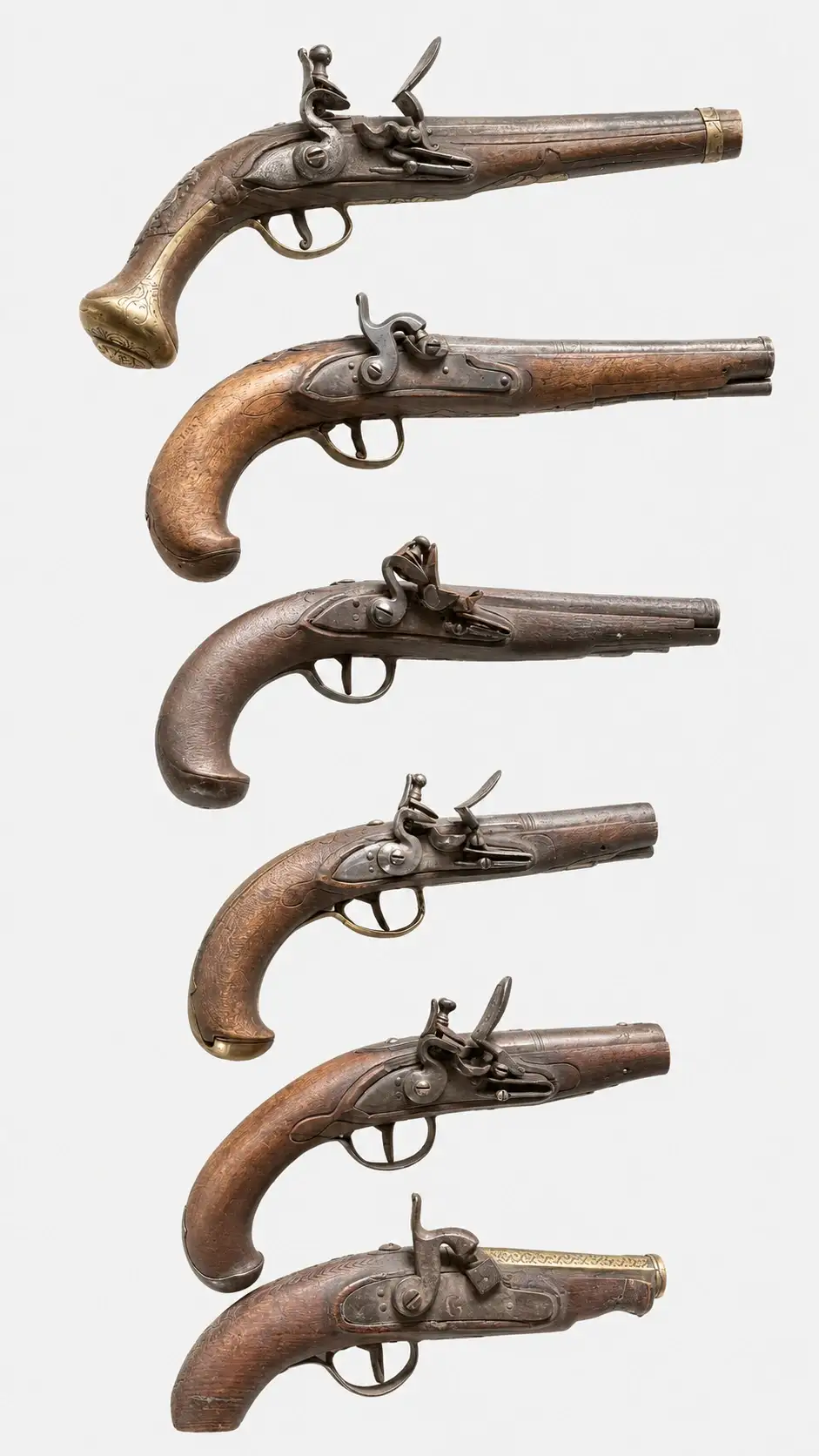
The six flintlock and percussion pistols exhibited date from the 18th and 19th centuries.
How Flintlock and Percussion Pistols Work
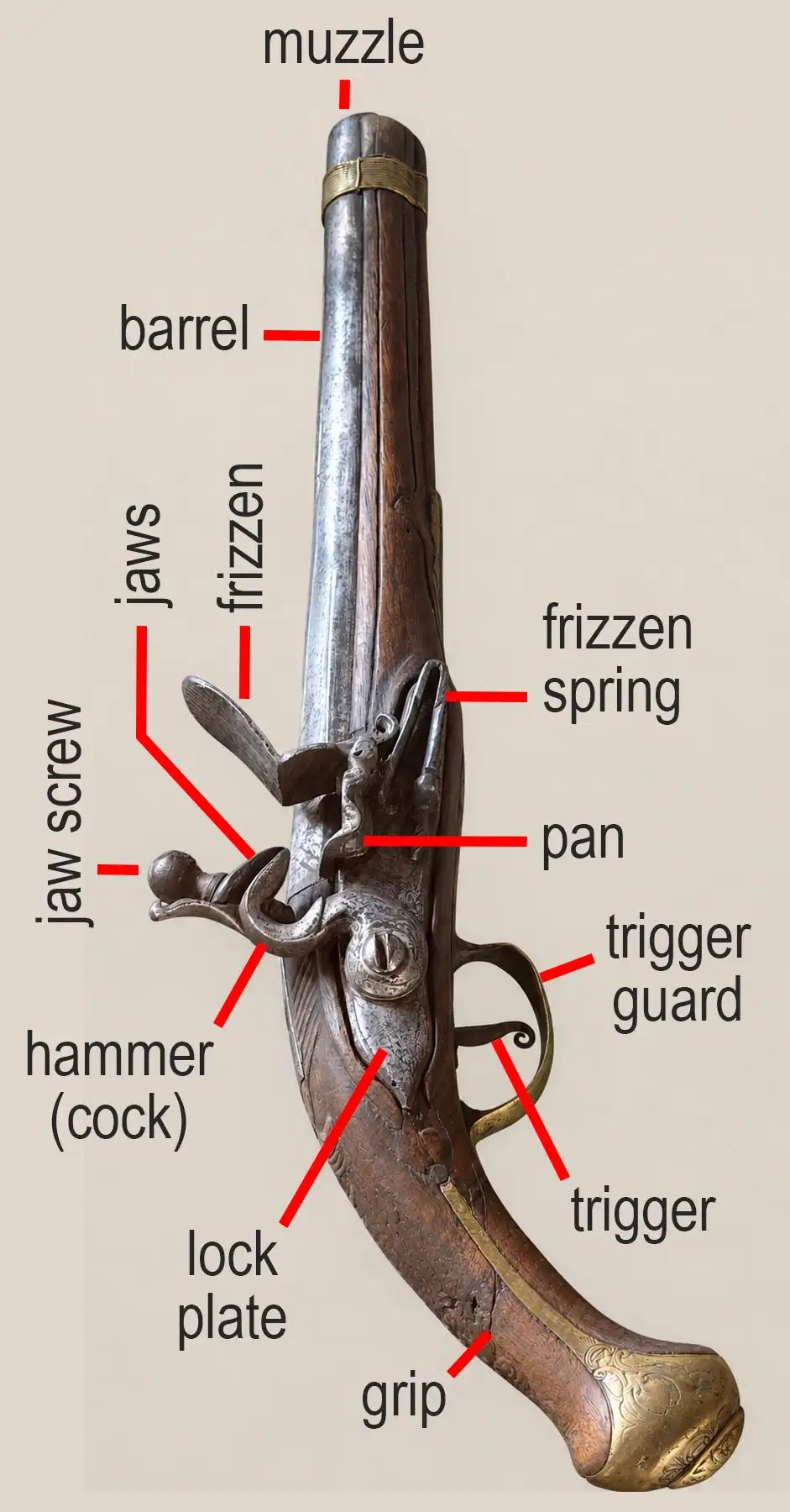
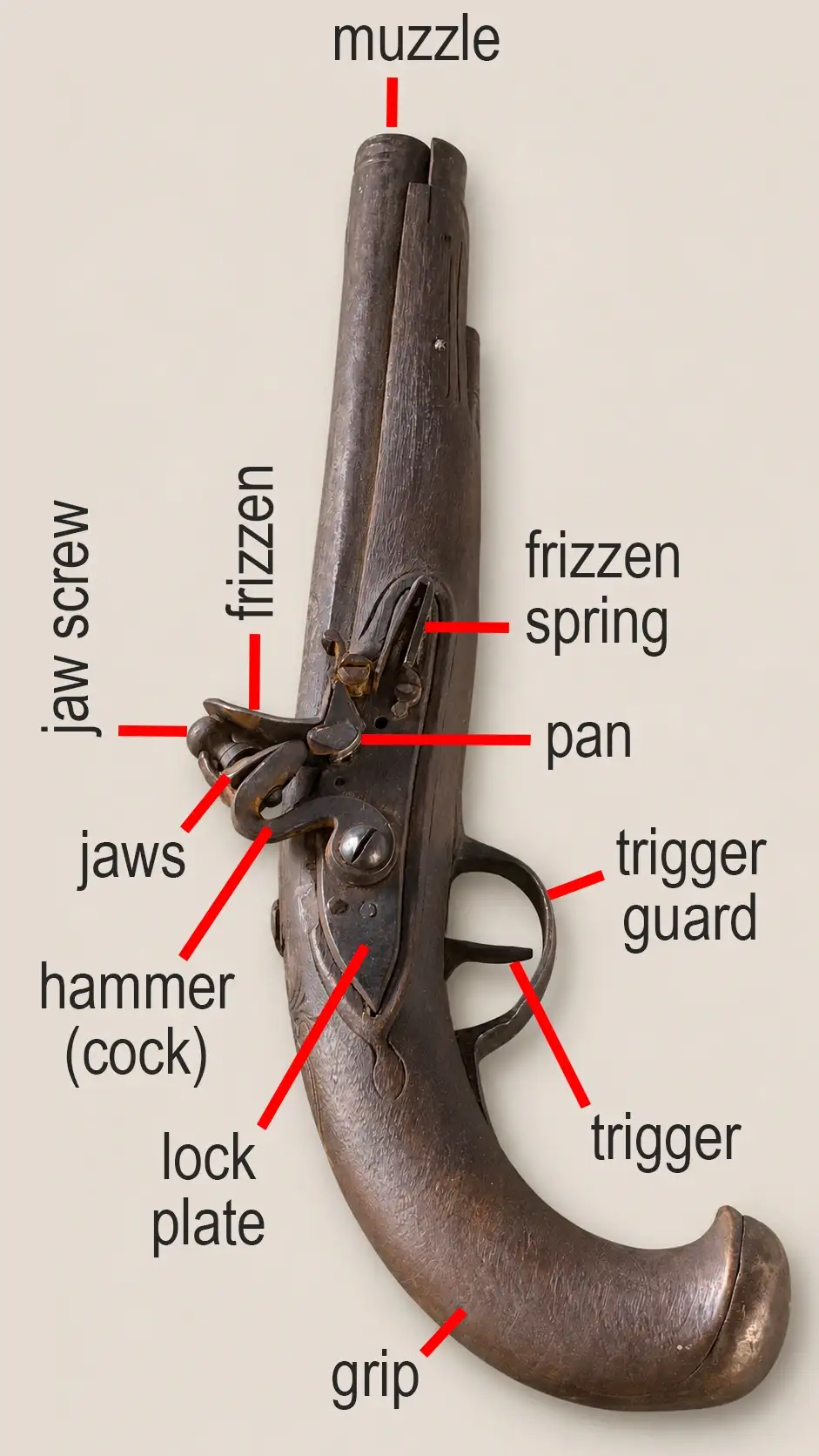
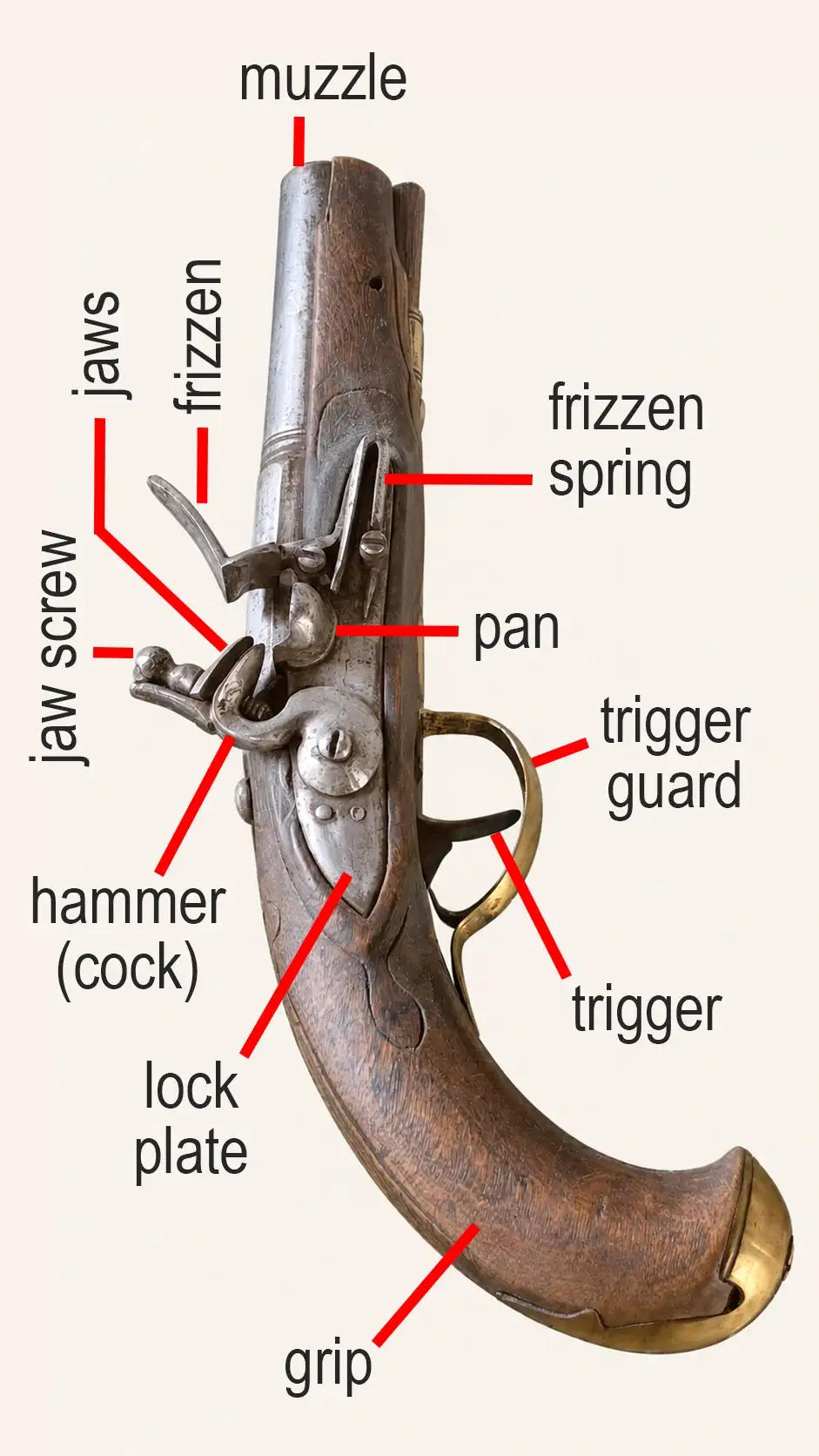
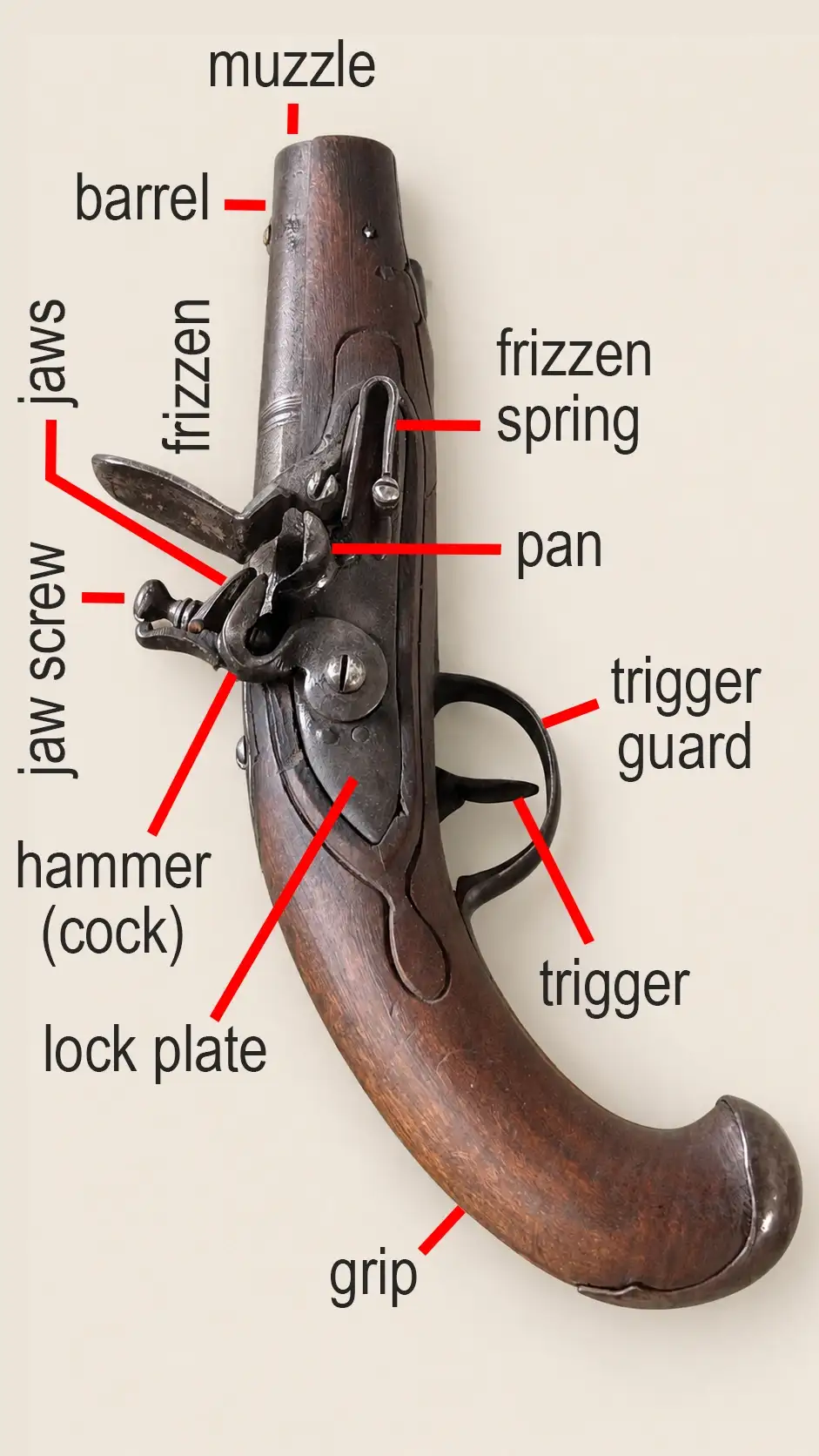
Flintlock Pistol
A flintlock pistol uses sparks to ignite the powder.
When the trigger is pulled, the cock holding a piece of flint snaps forward.
The flint strikes the steel frizzen, creating sparks.
At the same time, the frizzen opens and exposes the priming pan.
The sparks ignite the fine priming powder in the pan.
The flame then passes through a small touch-hole into the barrel and sets off the main powder charge.
This drives the ball out of the barrel.
Percussion Pistol
A percussion pistol uses a small percussion cap instead of a flint, frizzen and priming pan.
The cap is placed on a small metal tube called a nipple or cone.
When the trigger is pulled, the hammer strikes the cap.
The cap ignites and sends a flame through the nipple into the barrel.
This sets off the main powder charge and fires the ball.
Main Difference
The flintlock depends on an exposed pan of priming powder and sparks from flint and steel.
The percussion system uses a closed cap ignition, so it was usually quicker, simpler and more reliable, especially in damp weather.