Eight Illustrations of Structures in Friesach
Reading Time: 2:30 min
Historical illustrations, engravings and lithographs provide essential visual evidence for the original form and architectural character of historical structures. They record features that have since been altered or lost and offer reliable indications of proportions, materials, and decorative elements. By depicting the building within its historical surroundings, they support an accurate understanding of its context and function.
When compared with archaeological findings, archival sources, and early photographs, they help clarify construction phases and stylistic developments. They therefore remain indispensable tools for conservation, restoration, and scholarly research.
Virgilienberg Fortified Church
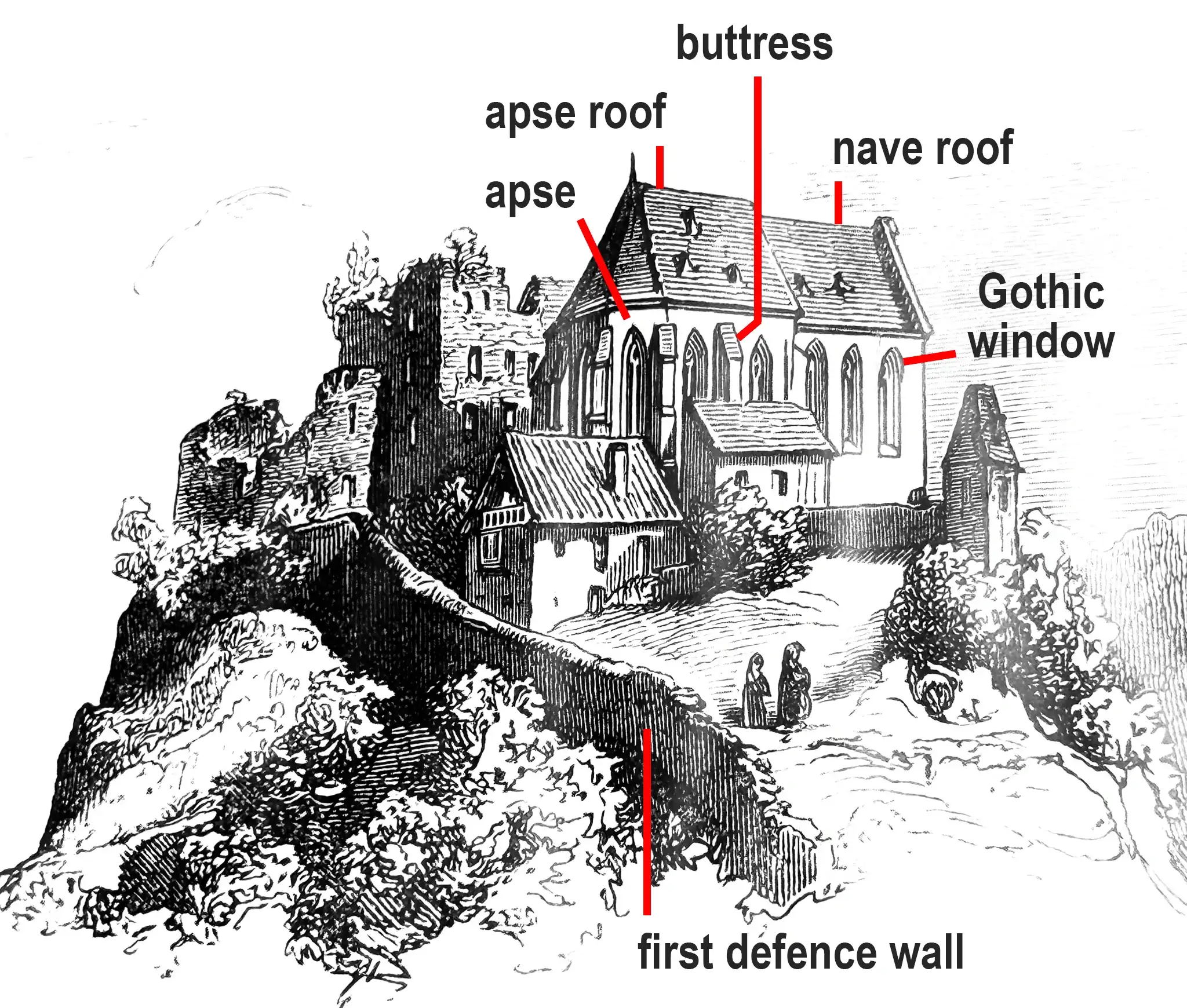
The labelled illustration clearly highlights the distinction between the apse and the nave. The apse roof is higher than the nave roof.
The surrounding defensive walls that once protected the church are depicted.
The tall Gothic windows are particularly striking, and the image conveys the structure’s original appearance.
Today, only the ruins of the church survive.
Triumphal Arch | Virgilienberg Ruins
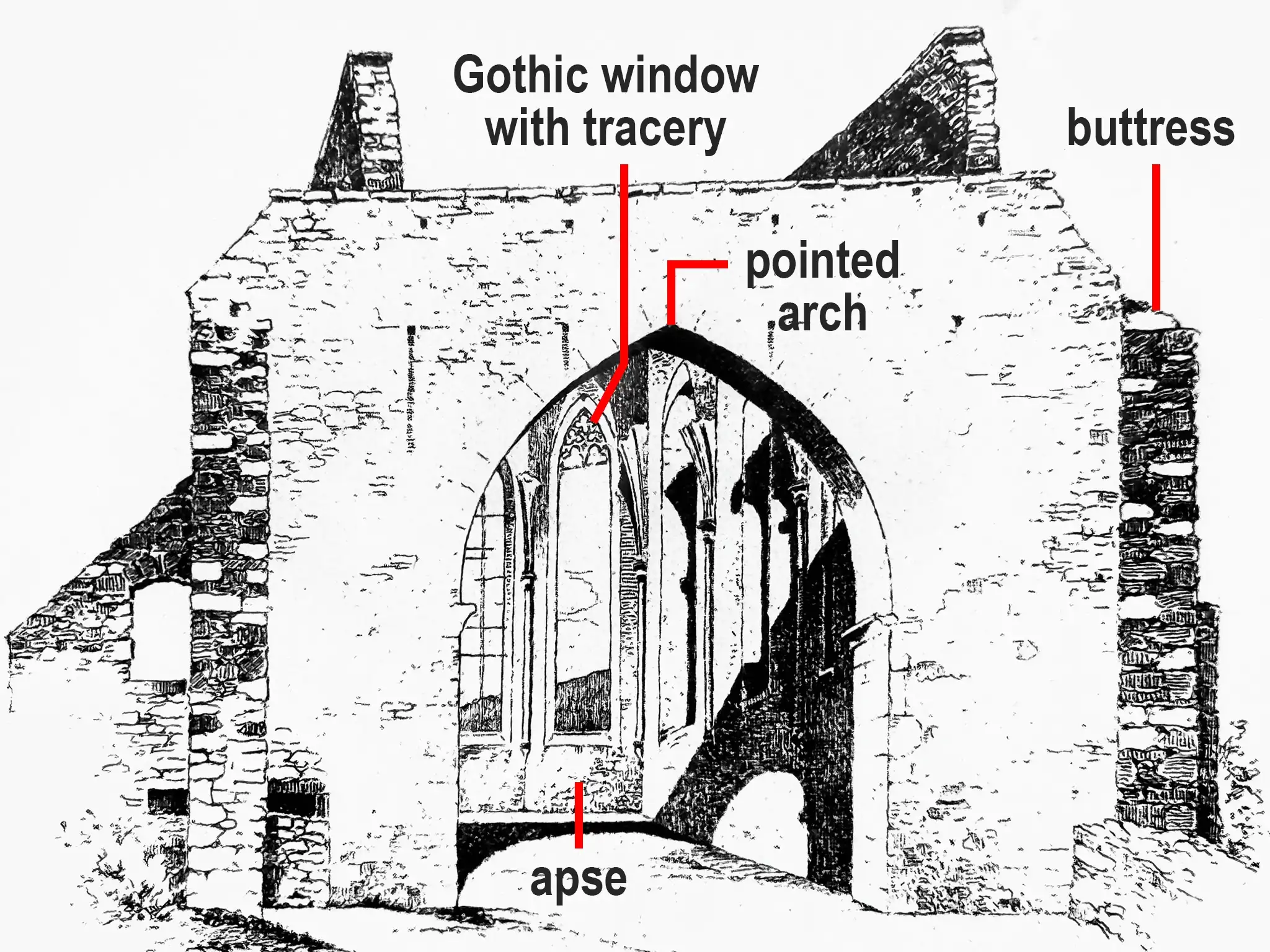
The final decay of the Virgilienberg Church began after the last fire in 1816.
The triumphal arch (Triumphbogen), shown in this image, collapsed in 1926.
Today, the remains of the Virgilienberg church include:
– parts of the apse wall with intact Gothic window frames and their traceries
– buttresses supporting the apse wall.
Olsator (Fortified Gate Tower)
This labelled image shows the defensive features that safeguarded the eastern section of the curtain wall.
Anyone attempting to approach the fortifications had to pass through several successive defensive barriers, moving from the outer perimeter towards the inner structures, as listed below:
– outer moat wall
– water-filled moat
– outer zwinger wall
– zwinger
– curtain wall and Olsator gate tower.

Olsator Bridge
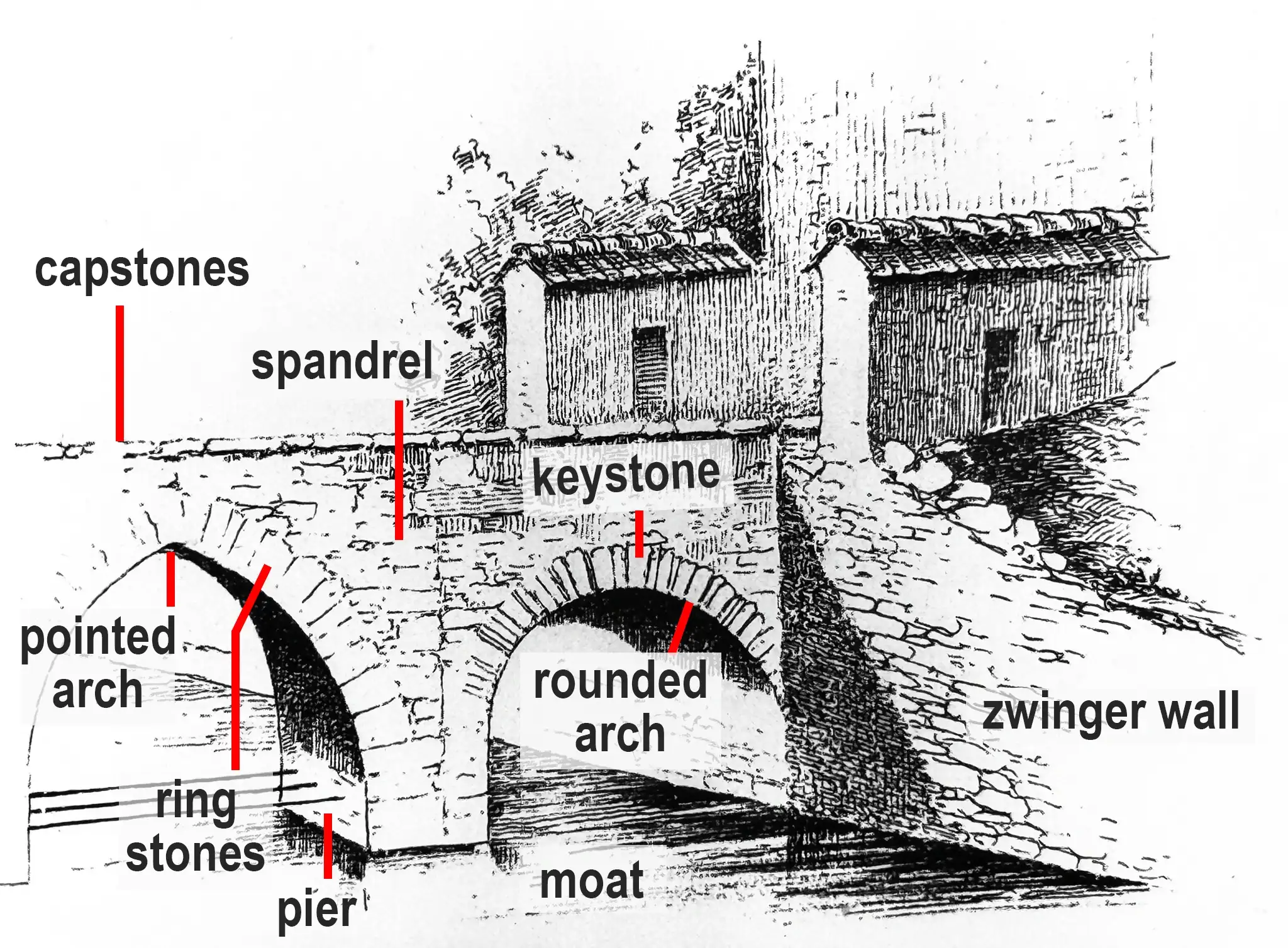
The Olsator stone arch bridge spans the eastern section of the moat.
This labelled image shows a sturdy pier.
The keystone of the rounded arch is clearly visible.
The water-filled moat played a major role in the defence of medieval Friesach.
Rotturm Ruins
Rotturm means Red Tower in English.
The Rotturm, or Red Tower, was part of the town fortifications of Friesach.
It was built at the beginning of the 14th century CE as part of the strengthening of the western defence wall and fortifications.
The Rotturm was positioned at the site from where King Ottokar captured the town in 1263. It originally consisted of four defence towers and a curtain wall.
Remains of three towers and parts of the curtain wall have survived.
Lavant Castle
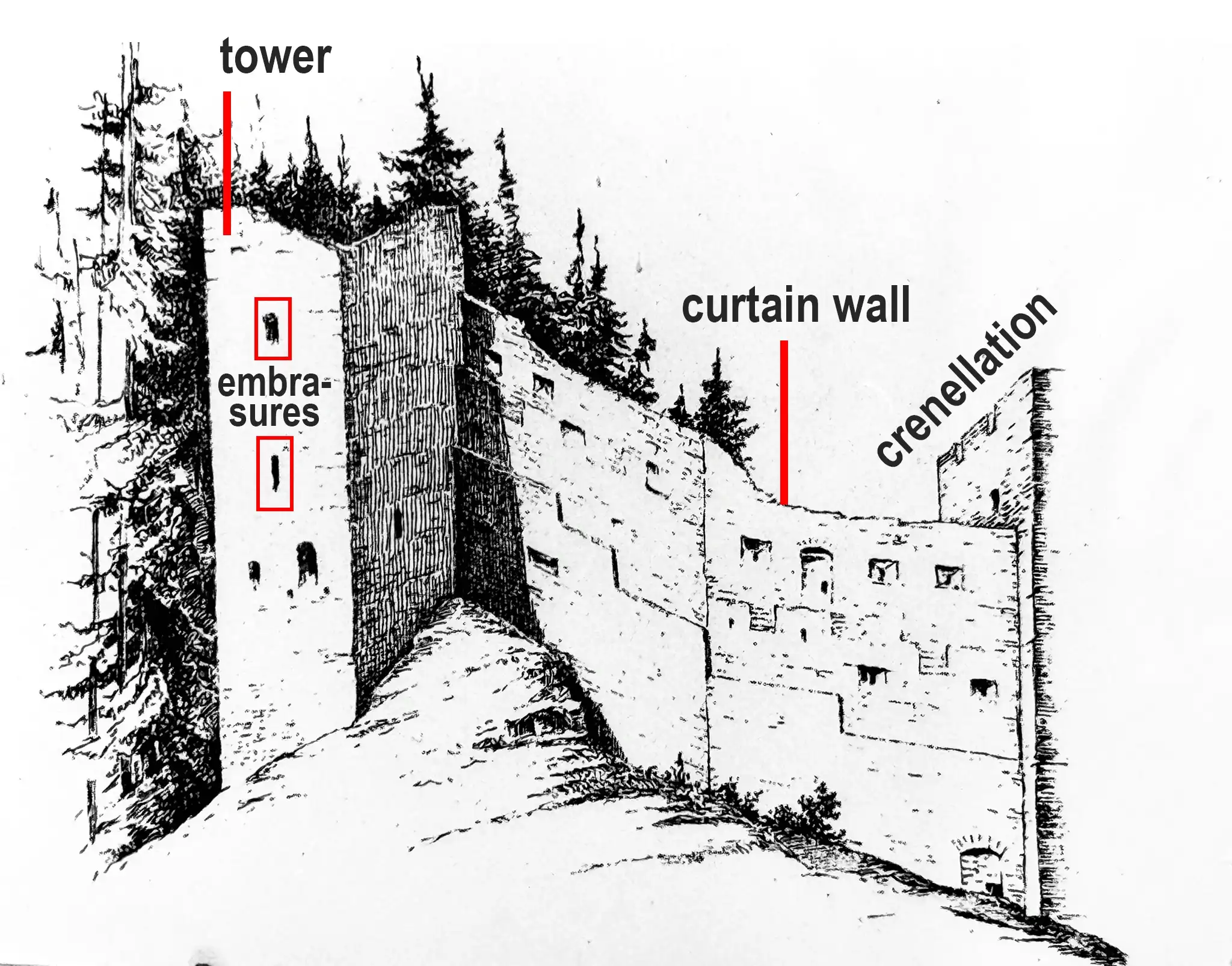
The diocese of Lavant was founded in 1228 CE. The Lavant bishops were loyal vassals of the Archbishop of Salzburg. Lavant Castle was first mentioned in a document in 1293.
The Lavant bishops resided mainly in Friesach in the 14th century and managed all affairs on behalf of Salzburg.
In 1561, Bishop Martin Herkules Rettinger rebuilt the Lavant Castle. His coat of arms, together with the date, can be seen above the entrance to the outer bailey.
In the 16th and 17th centuries, it was managed by caretakers. Following the town fire of 1673, the castle was not rebuilt.
Today, the castle is privately owned.

Geiersberg Castle
The “Geiersburg” was first mentioned in a document in 1271 CE.
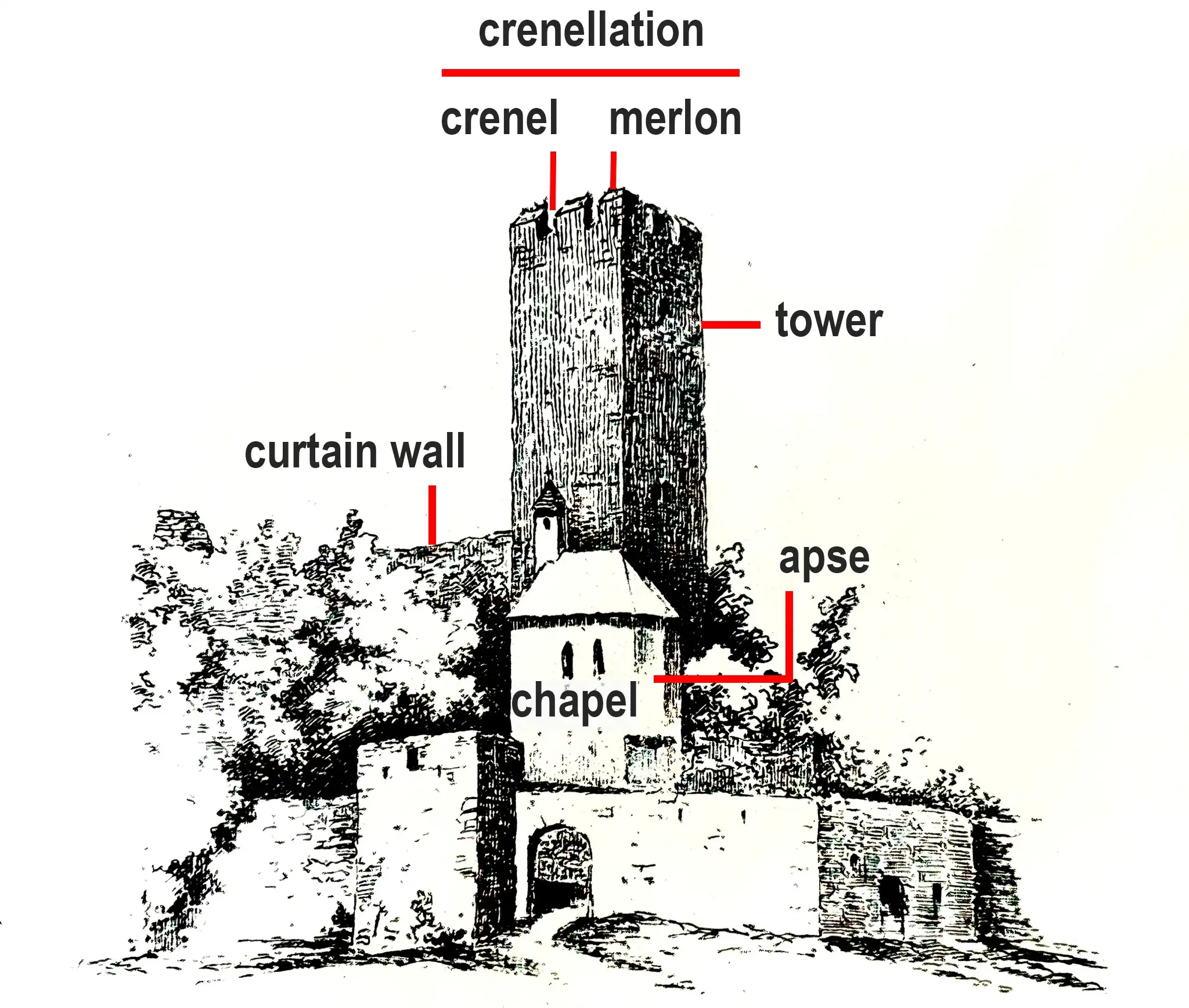
Geiersberg Castle stands on a hill to the north of the medieval town. The keep was originally integrated into the earlier town wall in the beginning of the 13th century.
In the 14th century, the Anna Chapel was built on the upper floor of a gate tower in the curtain wall.
Geiersberg had numerous fiefholders. It was repaired after a fire in 1690.
After that there were frequent changes of ownership. The castle remained uninhabitable from 1750 to 1911. It was subjected to extensive restoration in 1911.
Today’s residential wing, which is attached to the Romanesque keep, is a new building in a historicised form.
The castle complex is privately owned.
Fortified Town Wall (Southern Section)
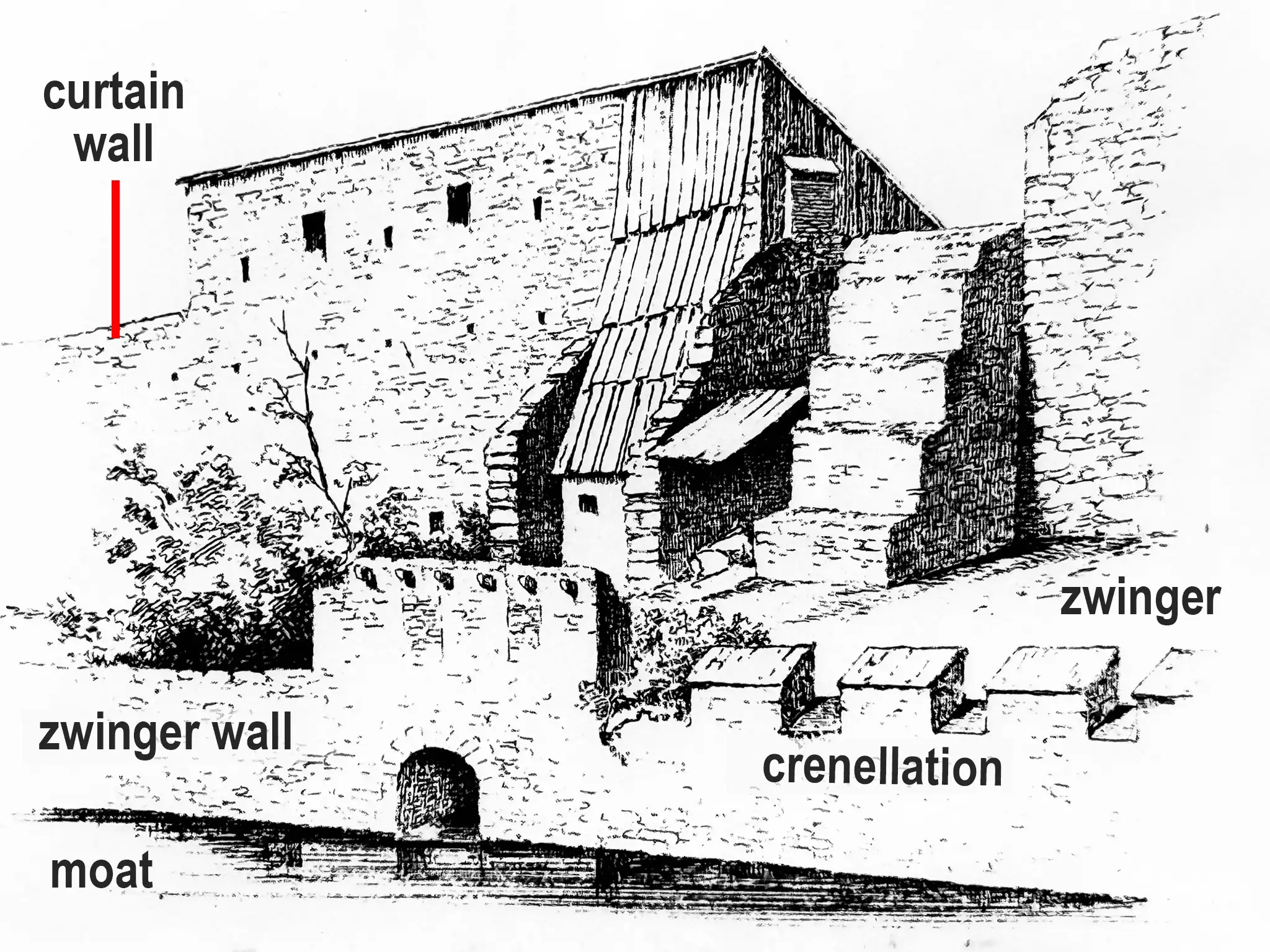
This image depicts the southern section of the moat and zwinger wall.
The crenellation on the zwinger wall shows prominent crenels and merlons.
The broad zwinger between the zwinger wall and the curtain wall was a deadly trap for the attacking enemy.
The curtain wall shows some features of later refunctioning.