St Virgil of Salzburg
Reading Time: 1:00 min
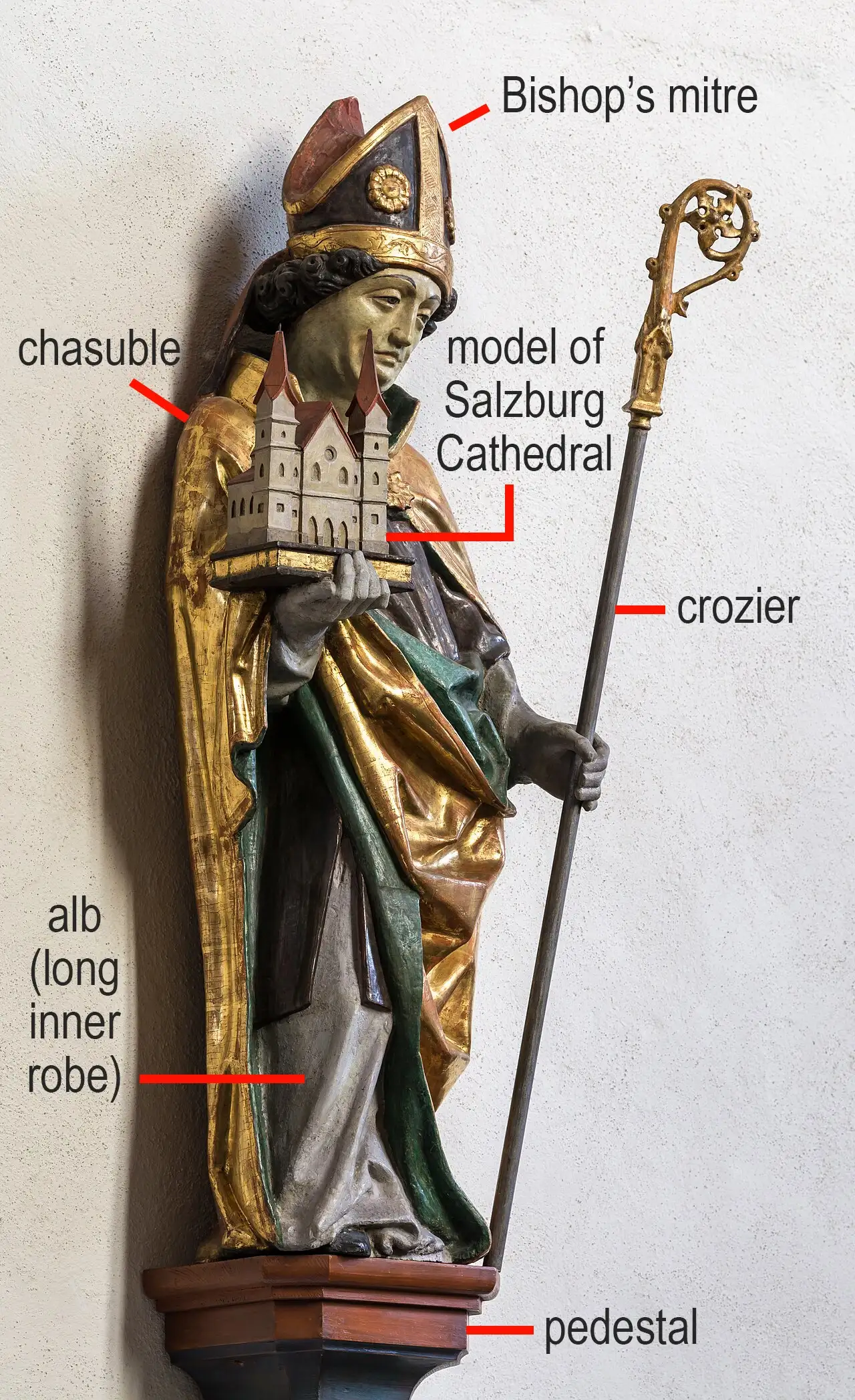
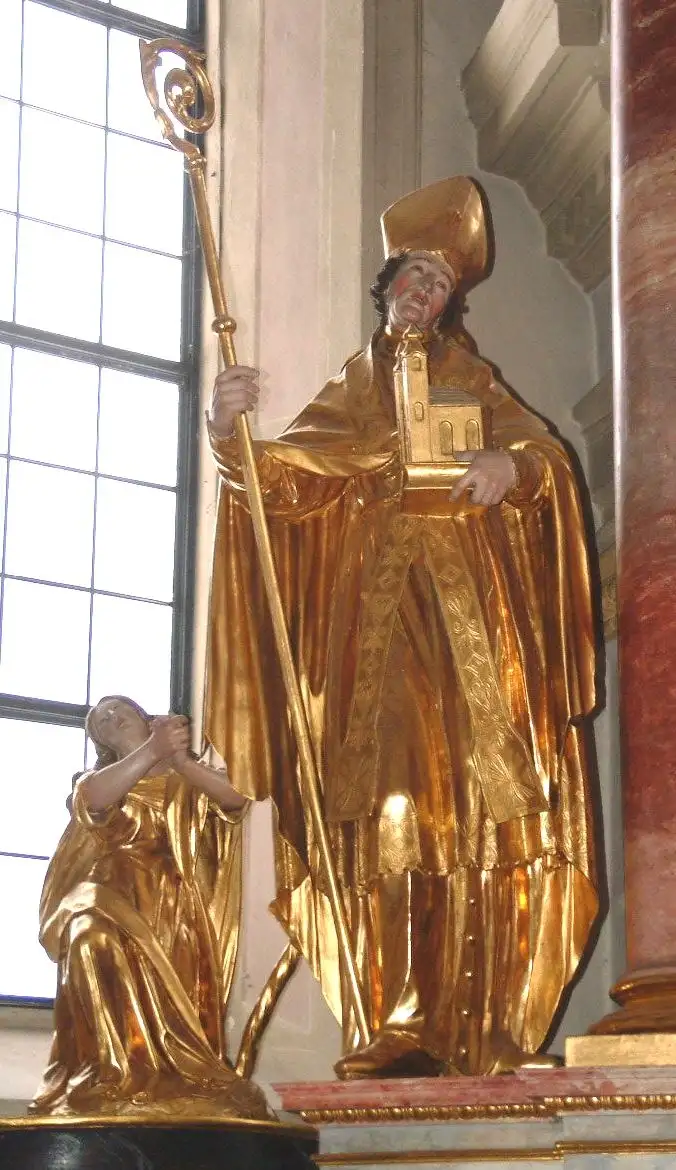
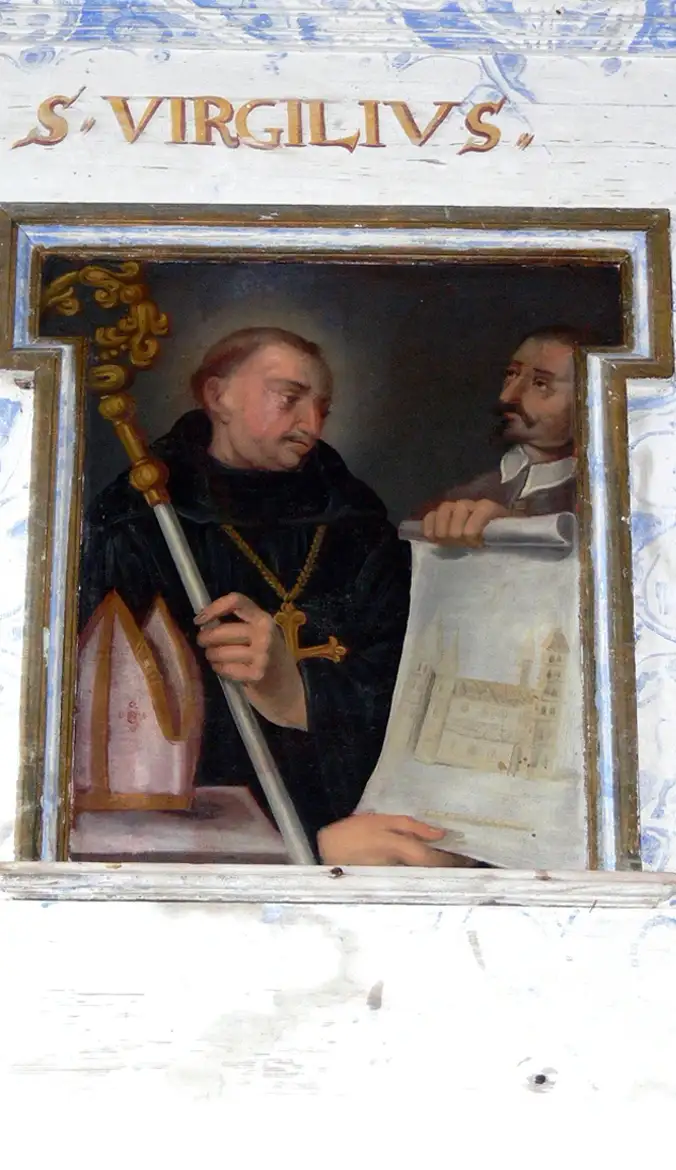
Saint Virgil of Salzburg (c. 700–784), an Irish missionary and bishop, is known for his deep learning, particularly in astronomy and geography, earning him the nickname “the Geometer” and a reputation for believing in the antipodes (people living on the other side of the spherical Earth). This was the cause of a controversy with St Boniface but was ultimately accepted by the Pope.
His life narrative highlights faith and reason coexisting, featuring acts such as rebuilding Salzburg Cathedral and evangelising Carinthia.
Key Aspects of his Hagiography
Scientific Curiosity and Faith: His advanced understanding of the spherical Earth and the antipodes, derived from astronomical observation, is a central theme, portraying science as a path to worship.
“The Geometer”: This epithet reflects his skill in measuring and understanding the spherical Earth.
Conflict & Vindication: His scientific views led to conflict with St Boniface but were eventually supported by papal authority, validating his learning.
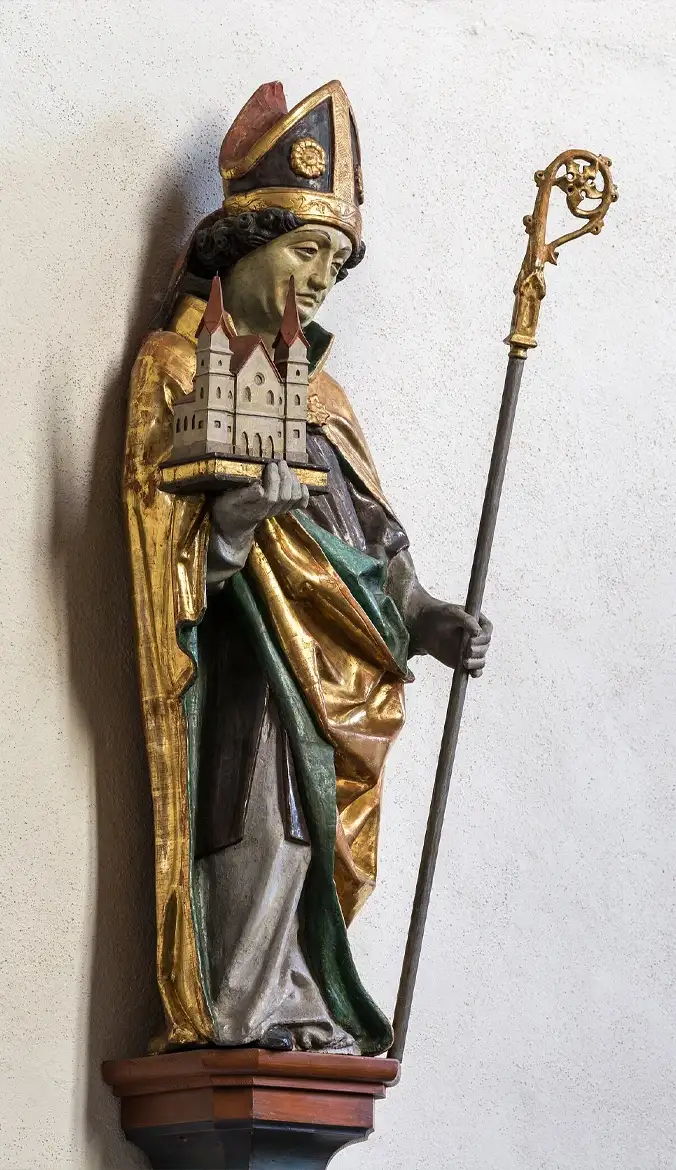
Missionary Zeal: As the “Apostle of Carinthia,” he rebuilt Salzburg Cathedral and spread Christianity, demonstrating his practical holiness.
Legacy: He was canonised by Pope Gregory IX in 1233.
What is Hagiography?
Hagiography is the writing of the lives of saints, from the Greek hagios (holy) and graphia (writing).
These biographies, like those of St Virgil, blend historical facts with miraculous or idealised elements to edify readers, often highlighting a saint’s virtues, miracles, and impact, and functioning similarly to medieval biographies of holy figures.
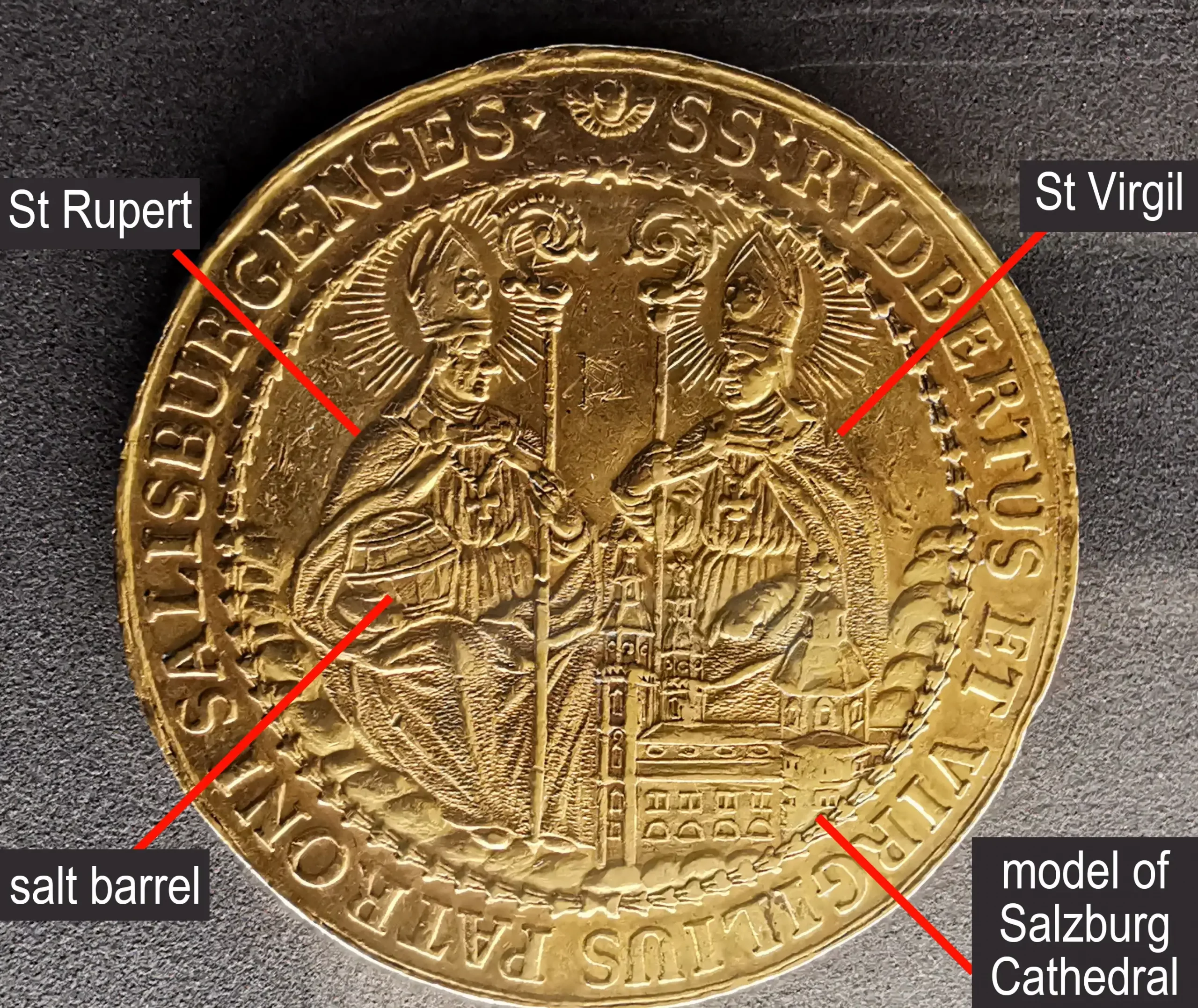
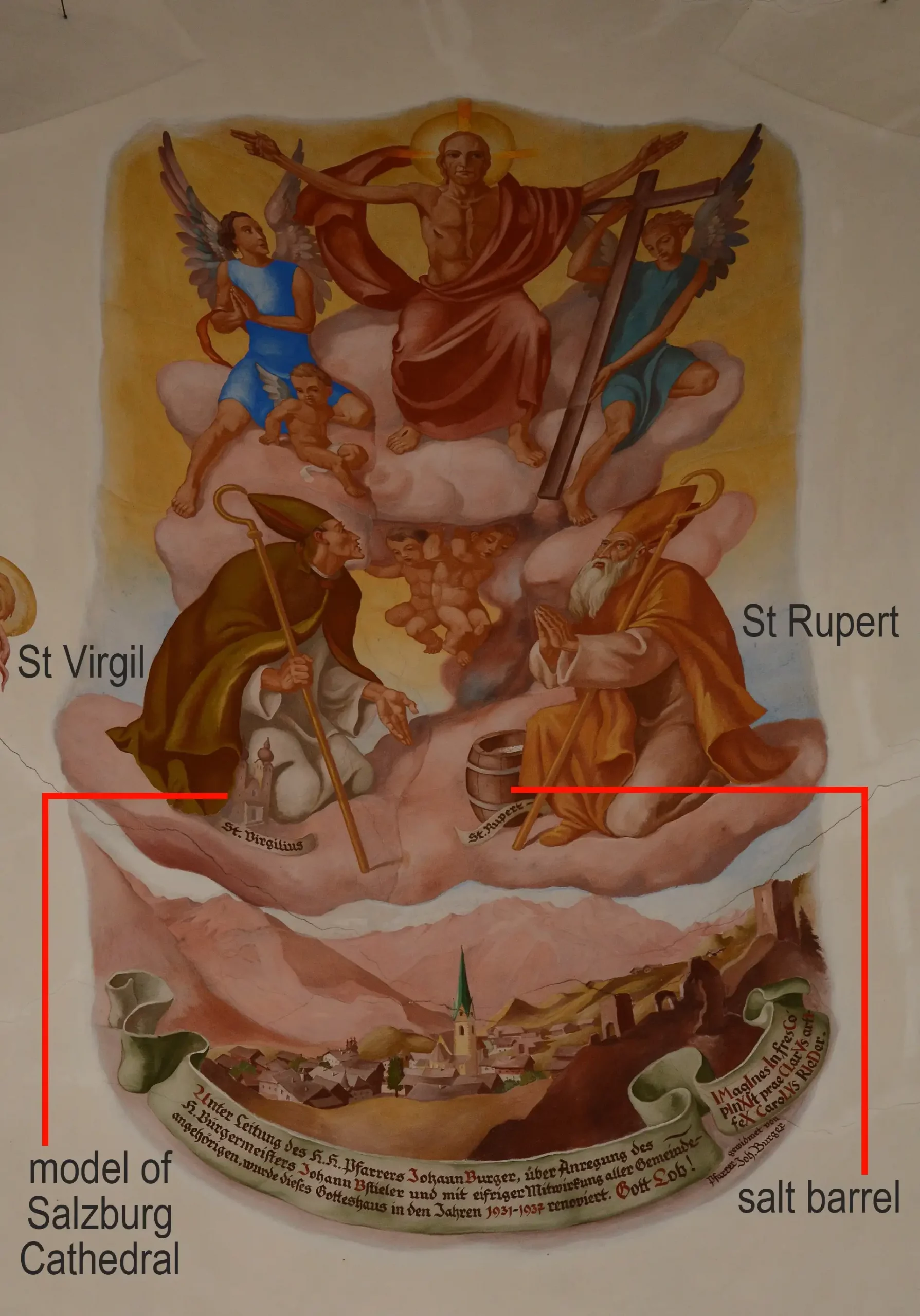
St Rupert and St Virgil | Joint Depiction
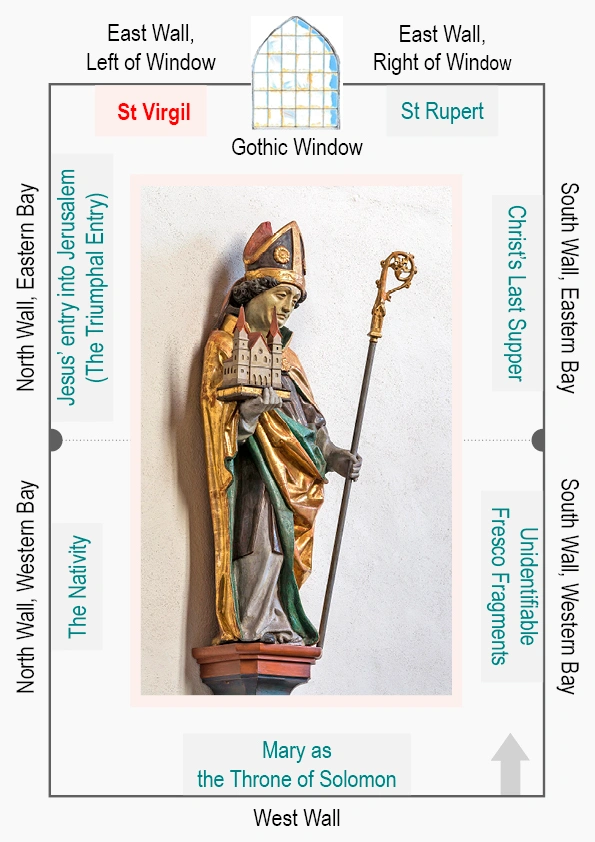
In the Rupert’s Chapel of the Kapellenturm (Chapel Tower) in Friesach, the frescoes of St Rupert and St Virgil are painted together on the eastern wall for the following reasons:
Joint Patronage: St. Rupert and St. Virgil are the primary patron saints of the Archdiocese of Salzburg. Since Friesach was a significant administrative and religious centre for the Archbishops of Salzburg in the Middle Ages (as their oldest city in Carinthia), the chapel honours the archdiocese’s foundational figures.
Historical Succession: St Rupert is regarded as the founder of Salzburg (c. 696), while St Virgil was his most significant successor who completed the first cathedral in 774 and transferred Rupert’s relics there. This historical “bridge” represents the continuity and establishment of the church in the region.
Missionary Legacy in Carinthia: St Virgil is specifically known as the “Apostle of Carinthia” (Apostel Karantaniens) because he initiated the missionary work that expanded the Salzburg diocese’s influence into the Carinthian territory where Friesach is located.
Symbolic Alignment: On the eastern wall, which is traditionally the most sacred part of a chapel (facing the rising sun and the altar), their pairing symbolises the union of the missionary founder (Rupert) and the master builder (Virgil) of the Salzburg Church.
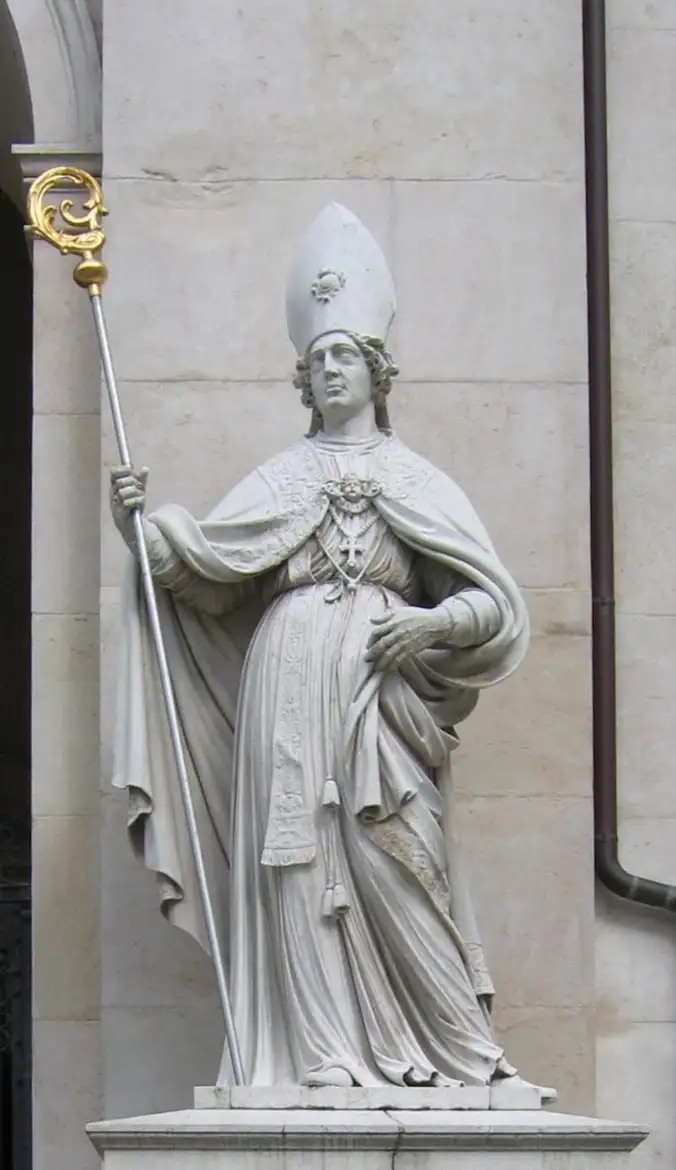
Iconographic Tradition: In Austrian and Salzburg art, the two are almost always depicted as a pair: