Roman Button
Material: Bronze
Dated: Late Roman
Reading Time: 0:30 min
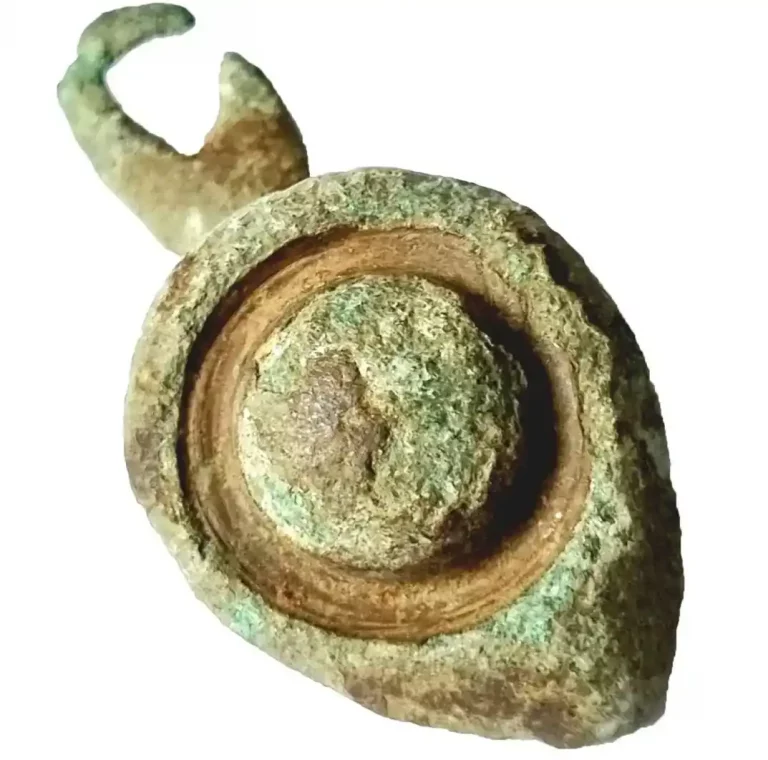
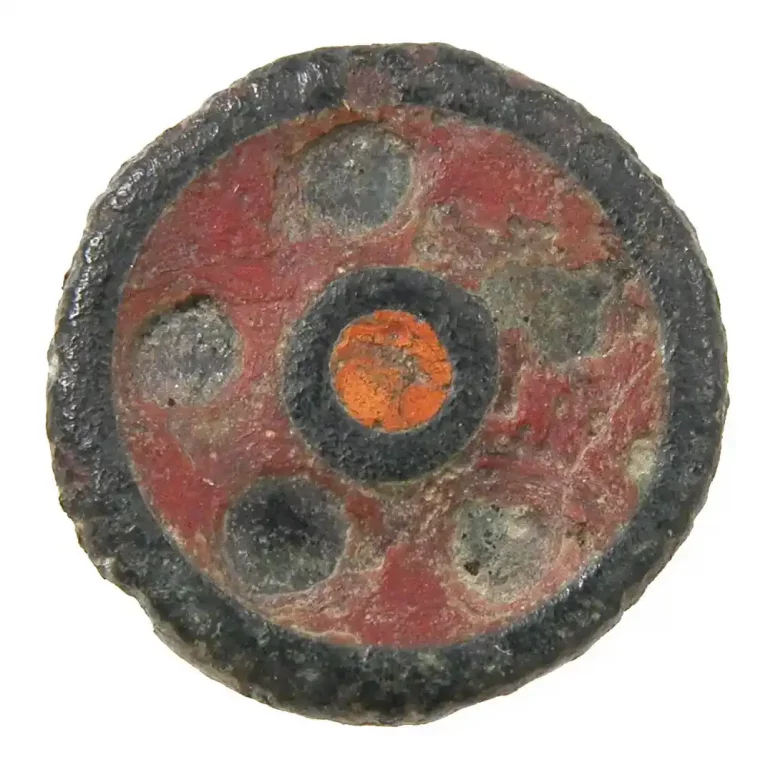
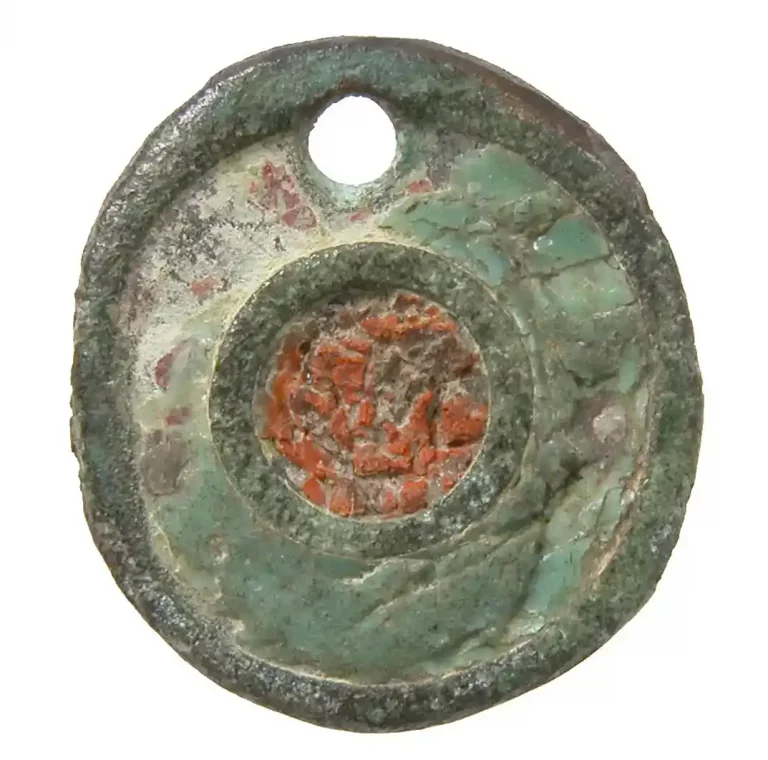
Bronze buttons from the late Roman period (3rd to 5th centuries CE) were typically used to fasten garments and could also serve decorative purposes.
Made from cast bronze, they were usually small, ranging from 1 to 3 cm in diameter.
Common shapes included round, oval, and square, with some featuring intricate designs like geometric patterns, animals, or raised bosses.
The back often had a shank or loop for attachment.
These buttons were used on tunics, cloaks, and military garments, with wealthier individuals often wearing more decorated versions. They were also found as part of personal adornment or ceremonial attire.
History of Clothes Fasteners in Ancient Rome
Reading Time: 0:40 min
During the early Roman period (1st century BCE – 1st century CE), fibulae were the primary fasteners used to secure garments such as cloaks and tunics. Made from materials like bronze, iron, and brass, these brooch-like clasps evolved in design, becoming more decorative over time.
In the mid-Roman period (2nd-3rd century CE), toggles and buttons began to appear, though buttons were still uncommon. Toggles, made from bone, wood, bronze or brass, were typically used for fastening certain garments, particularly at the neckline or wrists.
By the late Roman period (4th-5th century CE), buttons became more widespread, especially in military and civilian dress, often made from brass. While fibulae remained in use, buttons started to dominate as the preferred fastener, reflecting the advancements in Roman fashion and metalworking.