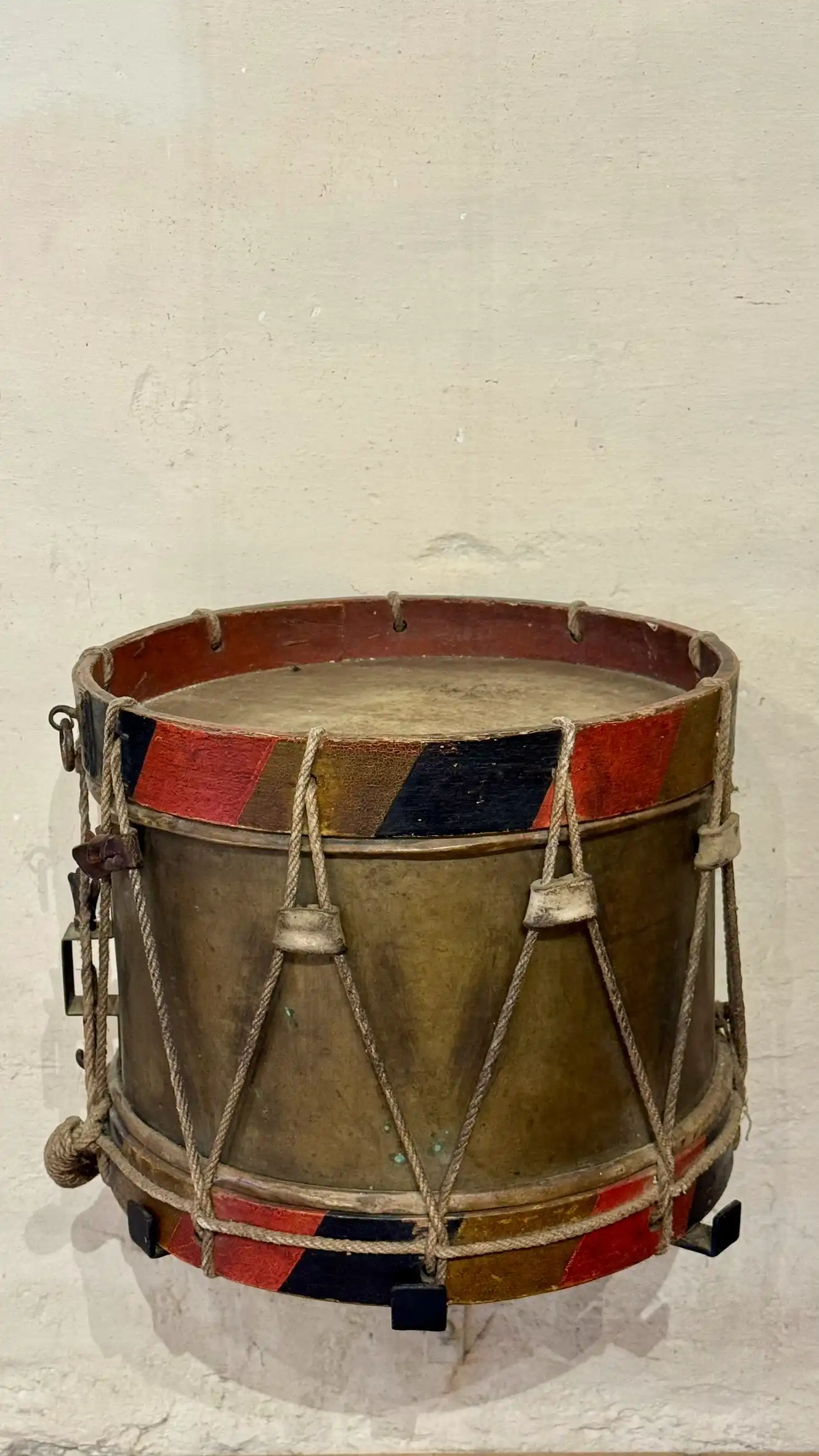
Drum of the Friesach Citizens’ Guild, 19th Century
Reading Time: 2:10 min
What were citizens’ guilds?
Citizens’ guilds were associations formed by townspeople – often property-owning citizens, craftsmen or traders – who came together to manage urban life, regulate economic activity and represent civic interests.
Unlike purely craft guilds, citizens’ guilds often had a broader membership and purpose. They looked after communal assets, oversaw ceremonial functions and acted as a body for mutual support and civic representation.
What was the role of citizens’ guilds in 19th-century Carinthia?
In 19th-century Carinthia, such guilds adapted to social and economic change following the Habsburg reforms and the emancipation of trade and civic rights. While their medieval regulatory powers declined, they retained an important role in local identity and civic ceremony.
They participated in town governance, contributed to social welfare, managed communal properties, and upheld local traditions that strengthened bourgeois civic pride.
Why were traditional ceremonial roles combined with social and charitable functions?
As the economic and administrative structures of towns evolved, guilds combined their ceremonial functions – such as processions, public gatherings and symbolic displays – with social and charitable activities.
By supporting needy members, funding apprenticeships, or aiding widows and orphans, they ensured continued relevance and public respect.
This dual role reinforced both visibility and civic purpose.
Who could become a member of the citizens’ guilds?
Membership required being a recognised citizen of the town – usually a householder, property owner, or established craftsman or trader.
Members paid dues, took part in guild activities, and enjoyed certain rights and responsibilities within the community.
Those without civic rights, such as labourers or transient workers, were generally excluded.
What was the role of the drum in local rituals and pageantry?
The drum was a key symbol of the guild’s identity. Used in processions, civic gatherings, and guild meetings, it provided rhythm, announced the guild’s presence, and expressed unity.
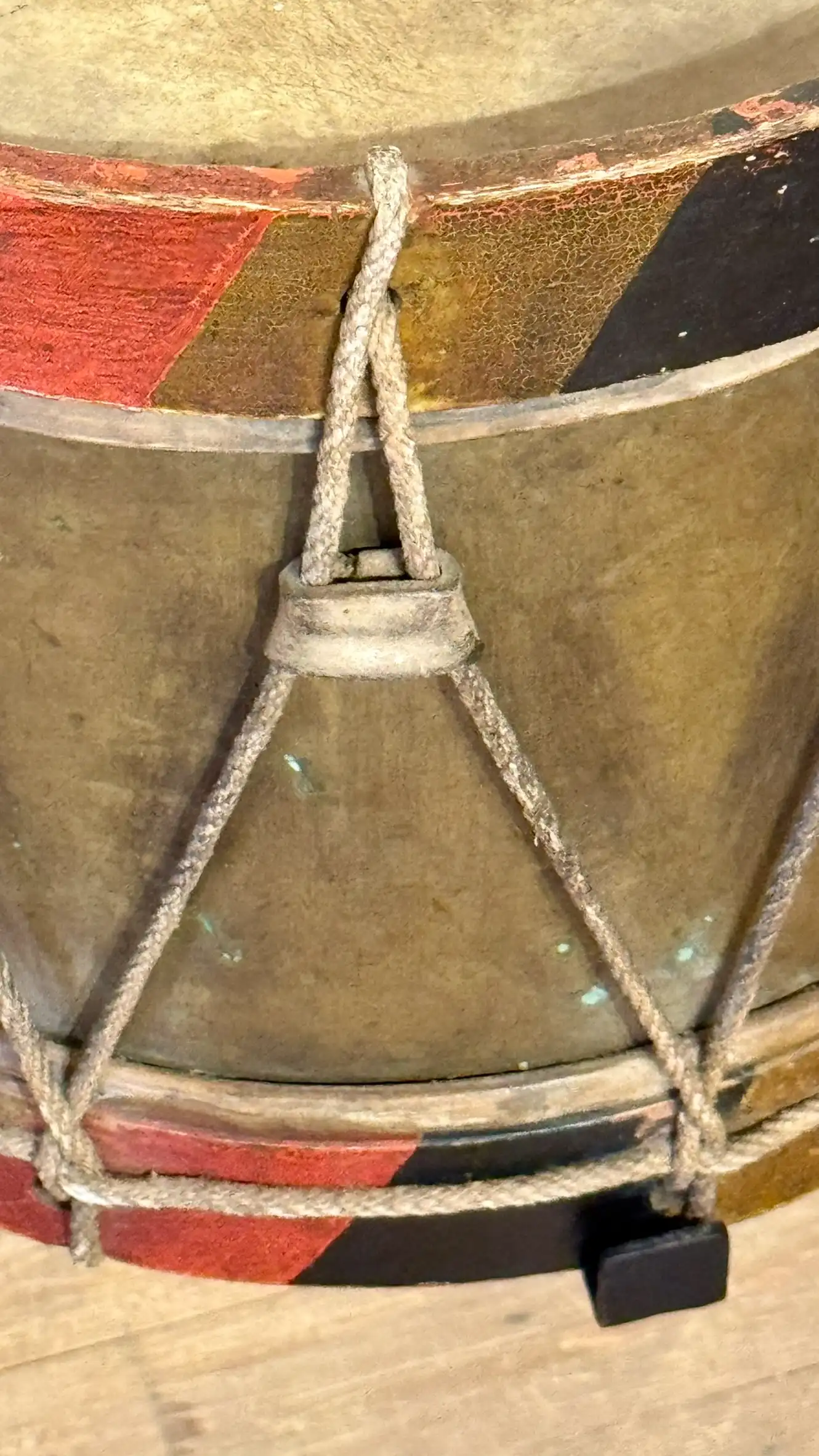
Its painted surface and decorative fittings showed that it was not merely an instrument but a ceremonial emblem of authority and tradition.
Who was the drummer?
The drummer was usually a designated guild member or hired servant responsible for beating the drum during official occasions. Wearing the guild’s insignia, he maintained the instrument and ensured its ceremonial use. In towns like Friesach, the drummer’s performance made the guild both visible and audible in the public sphere.
What was the difference between craft guilds and citizens’ guilds?
The main difference between craft guilds and citizens’ guilds lay in their membership, purpose, and scope of activity:
Craft guilds were professional associations of people practising the same trade or craft – such as blacksmiths, weavers, or bakers. Their primary aim was to regulate production, control quality and prices, train apprentices, and protect the economic interests of their members. They maintained strict admission rules and followed a hierarchical structure of apprentices, journeymen, and masters.
Citizens’ guilds, by contrast, were broader civic organisations formed by townspeople rather than members of a single trade. Their purpose was to represent urban interests, organise public ceremonies, and support charitable and social causes. They expressed local identity, loyalty, and communal pride, rather than focusing on professional regulation.
In short:
Craft guilds – trade-based, economic, and professional functions.
Citizens’ guilds – civic-based, social, and ceremonial functions.