

Baroque Tabernacle Cabinet, c. 1750
Reading Time: 0:25 min
Baroque Tabernacle Cabinet
Craft Techniques
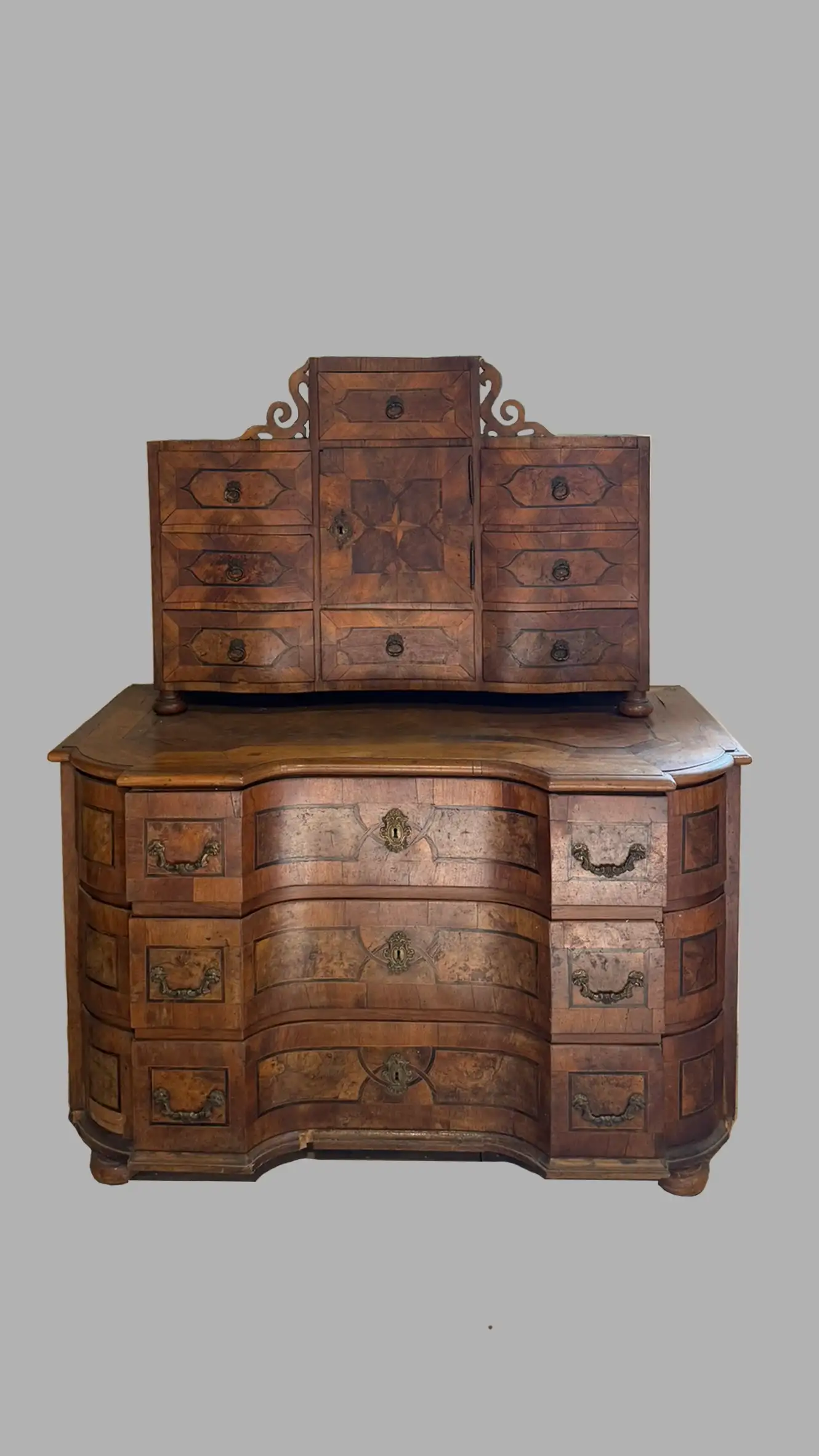
A Baroque tabernacle cabinet dating from 1750 was created through the combination of several specialised crafts.
– Cabinetmaking (joinery) involved the construction of the carcass, drawers, and bombe-shaped form using skilled woodworking techniques.
– Veneering and marquetry entailed the application of fine wood veneers and inlaid decorative patterns.
– Wood carving provided the shaping of mouldings and ornamental details.
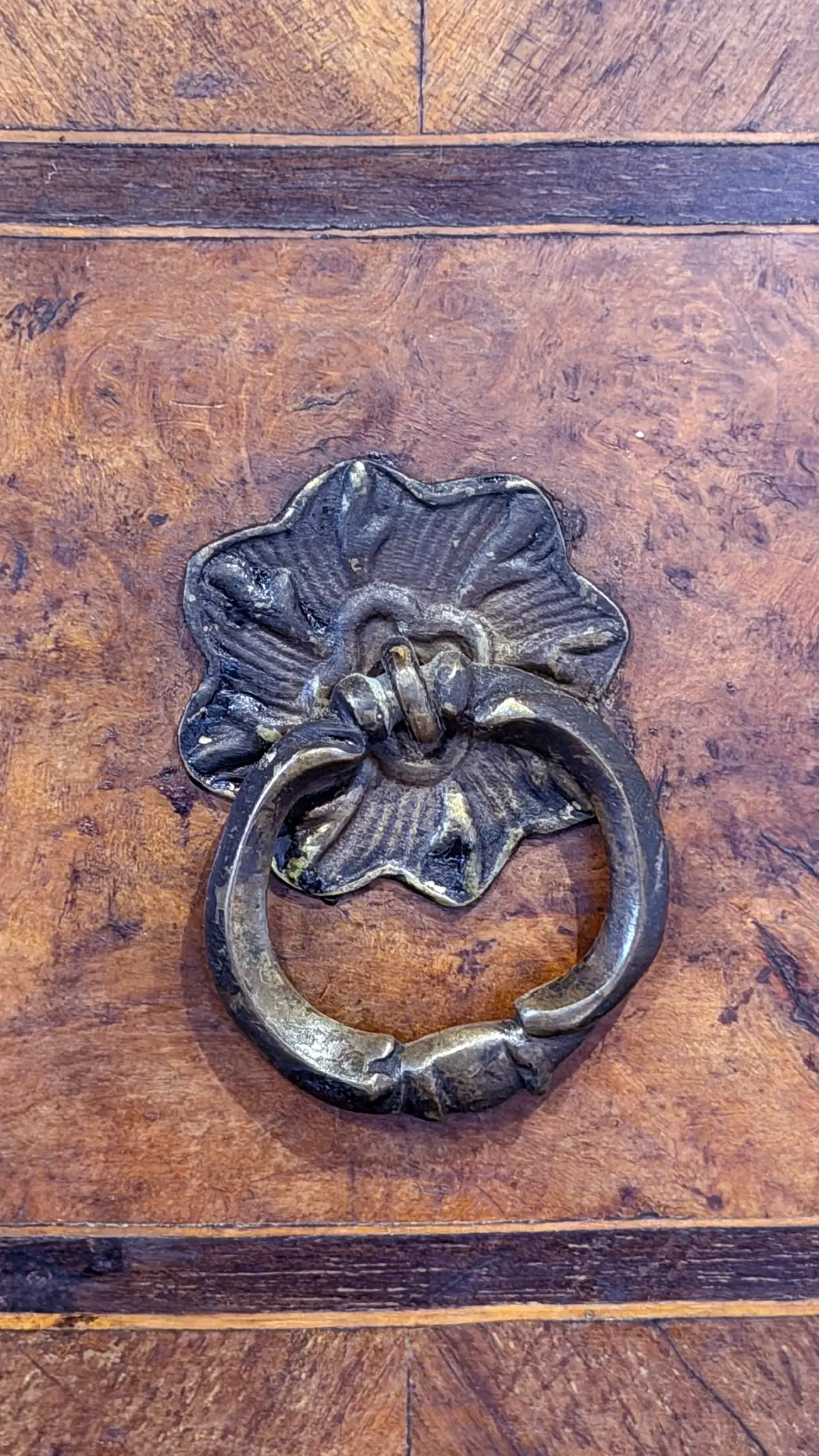
– Metalworking produced the brass handles, escutcheons, and fittings.
– Surface finishing included polishing and varnishing to enhance the wood’s appearance.
Together, these crafts produced a structurally refined and richly decorative piece.
Baroque Tabernacle Cabinet, c. 1750
Short Description
Reading Time: 0:25 min
This Baroque tabernacle cabinet, dating from around 1750, is a finely crafted piece of domestic furniture that combines storage with display.
Its upper section forms a tabernacle-like cabinet with a central door, likely intended for treasured objects or devotional use, flanked by an arrangement of small drawers.
Below, the bombe-shaped body with serpentine drawer fronts reflects the dynamic forms typical of Baroque design.
Richly patterned marquetry veneers and ornate brass fittings enhance its decorative appeal, while the overall composition demonstrates both technical skill and a refined sense of balance.
Detailed Features of the Baroque Tabernacle Cabinet
Reading Time: 1:05 min
Upper Section
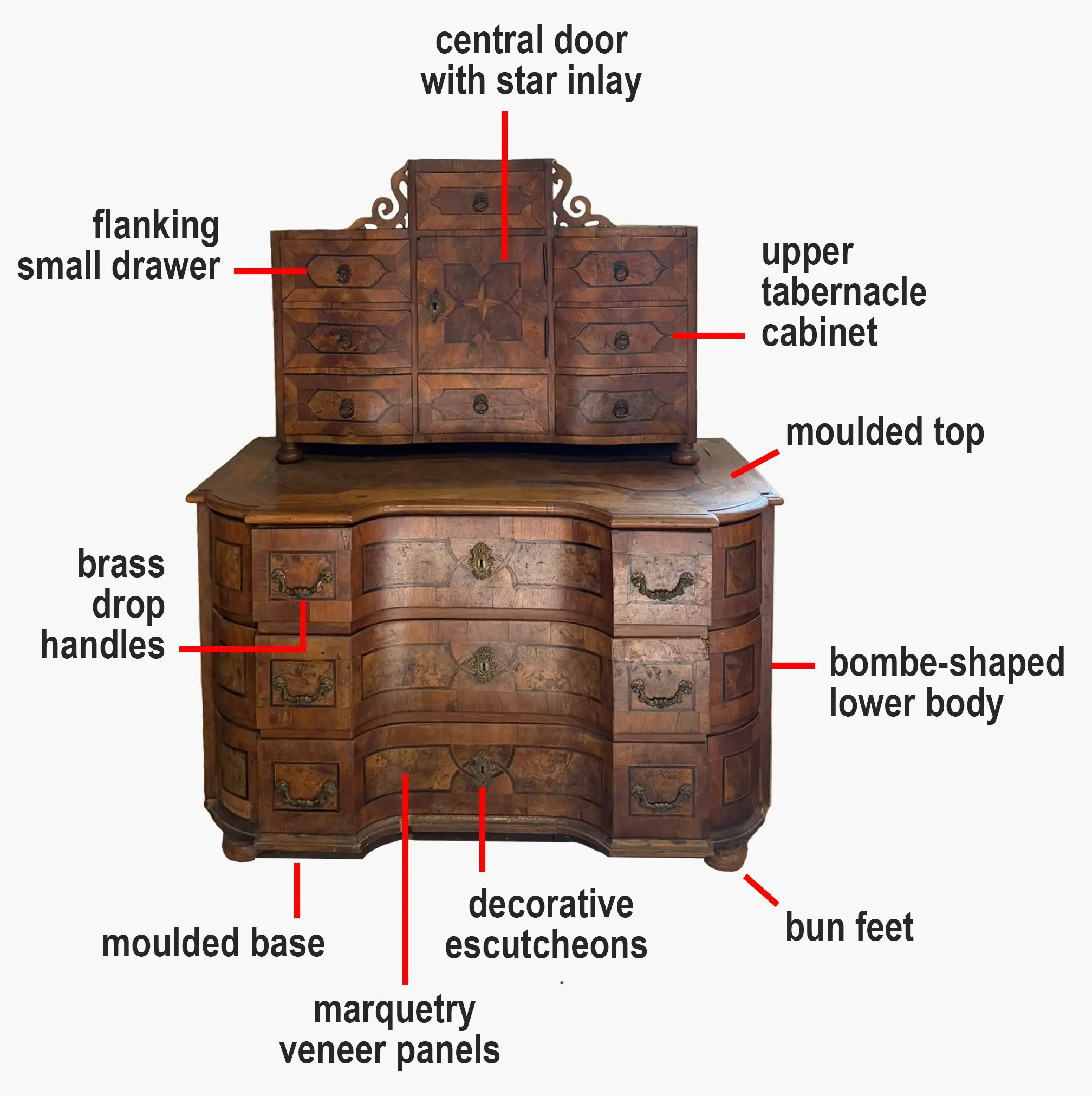
The upper tabernacle cabinet is the small, elevated cabinet sitting on top of the chest, forming the uppermost tier of the piece.
The central door with star inlay is the single door in the middle of the upper cabinet, identifiable by its geometric star-shaped marquetry motif.
The flanking small drawers are the sets of small drawers arranged symmetrically on both sides of the central door in the upper cabinet.
The stepped superstructure forms the tiered arrangement of the upper cabinet, rising in levels towards the centre where the clock is placed.
Lower Section (Main Chest)
The moulded top consists of a shaped horizontal moulding forming the top edge of the lower chest, just beneath the upper cabinet.
The bombé-shaped lower body forms the main lower part of the chest and is characterised by its outward-curving, bulging front and sides.
The serpentine drawer fronts are the drawer faces of the lower section, which curve in and out in a flowing, wave-like profile.
The marquetry veneer panels are the decorative wood veneer surfaces on the drawer fronts and cabinet door, showing patterned inlaid designs.
The brass drop handles are the curved metal handles attached to the drawers, hanging loosely from their mounts.
The decorative escutcheons are the shaped brass keyhole plates centred on the drawers and the upper cabinet door.
Base and Support
The moulded base is at the very bottom of the piece.
The bun feet are the rounded feet at the four corners of the base.
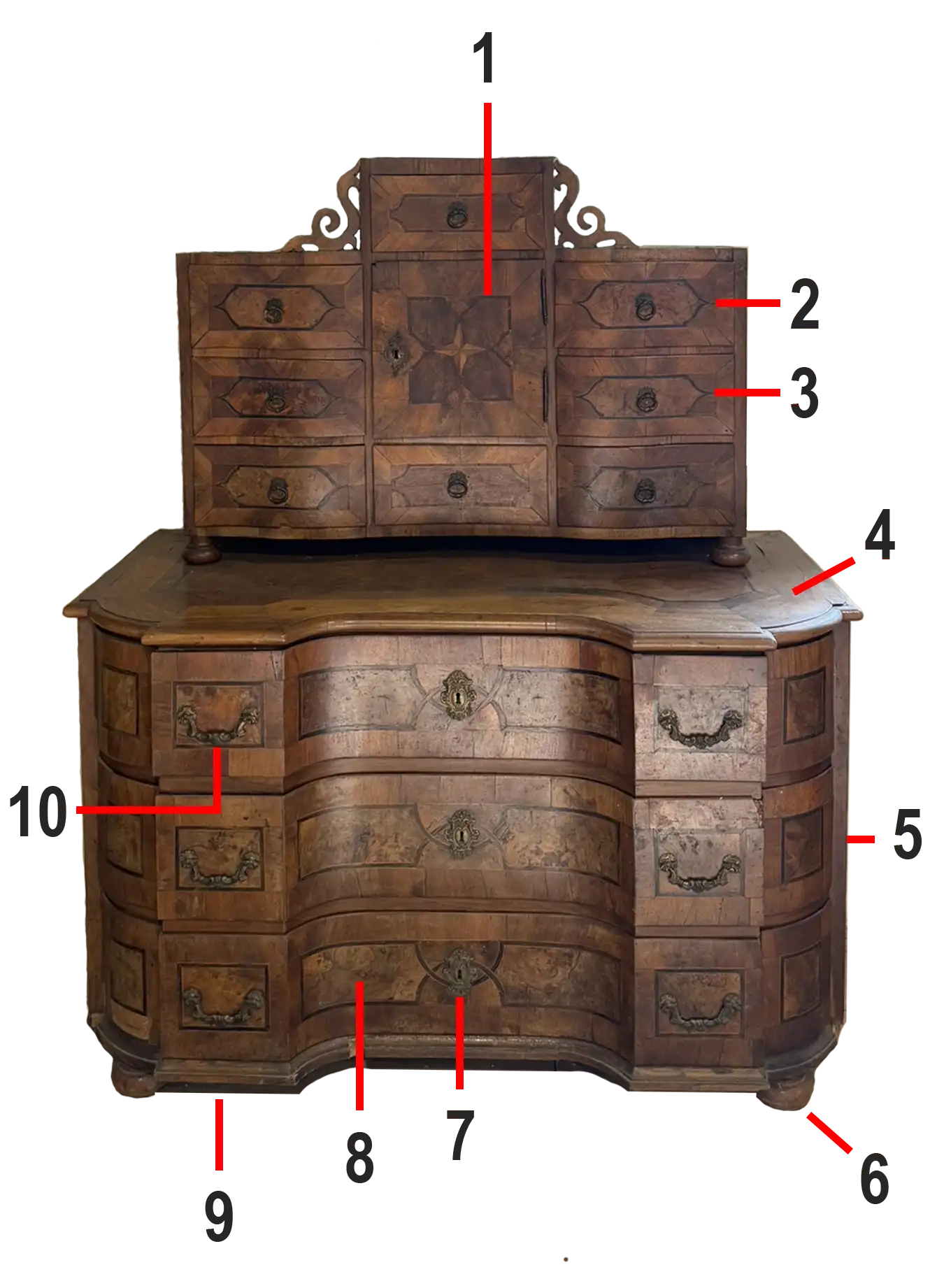
1 | central door with star inlay
2 | flanking small drawer
3 | upper tabernacle cabinet
4 | moulded top
5 | bombe-shaped lower body
6 | bun feet
7 | decorative escutcheons
8 | marquetry veneer panels
9 | moulded base
10 | brass drop handles