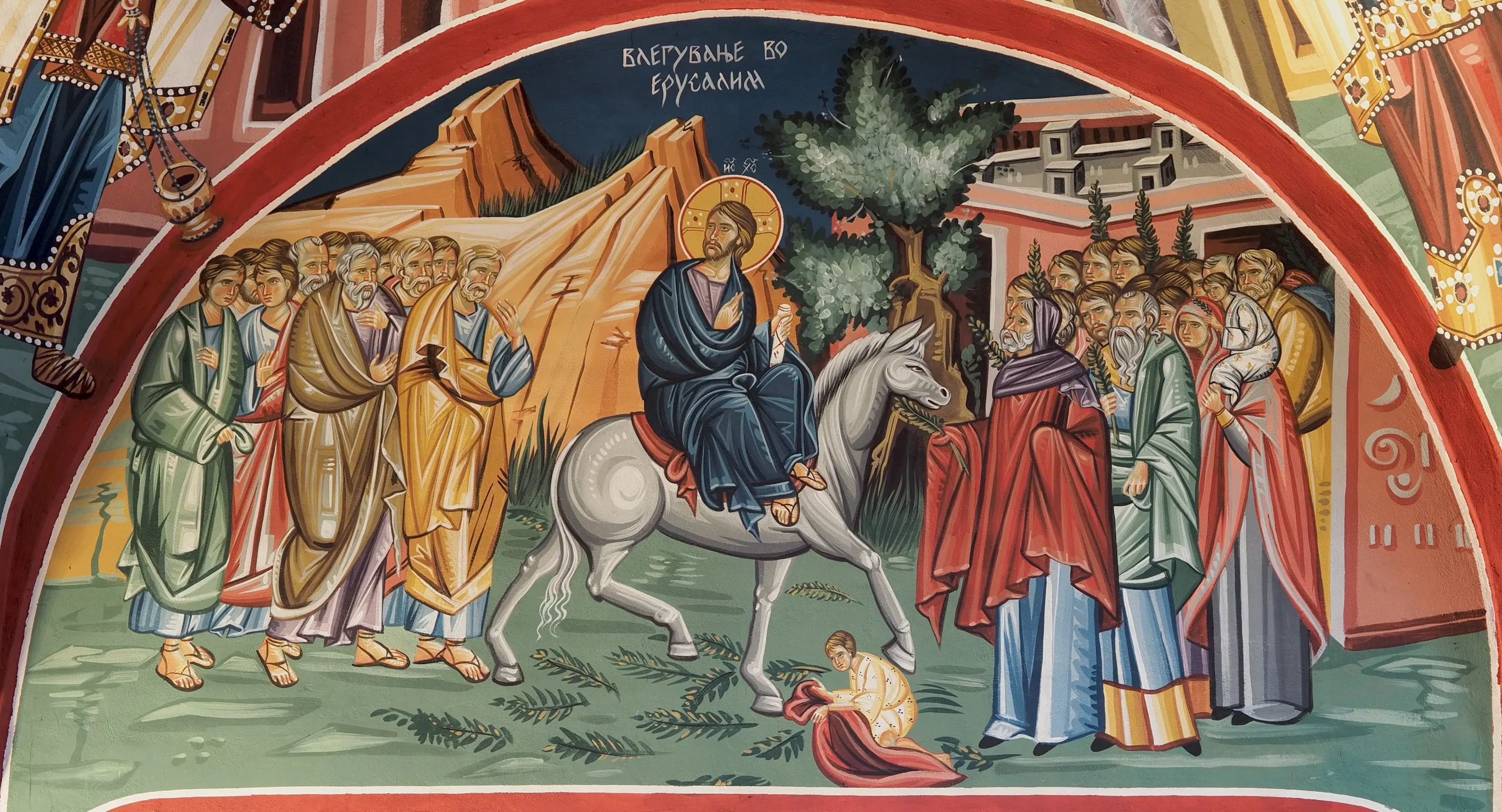
Jesus Entering Jerusalem
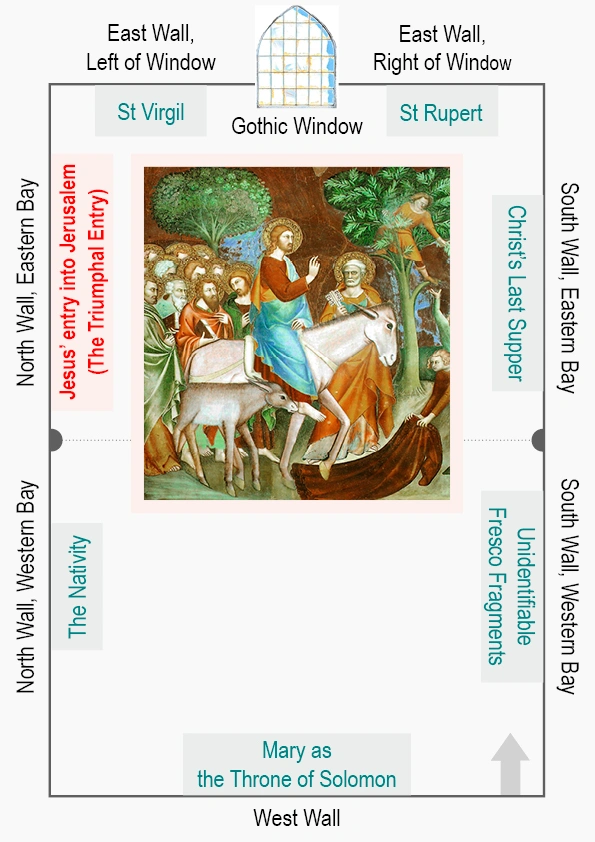
(The Triumphal Entry)
Reading Time: 1:20 min
Typical Depiction
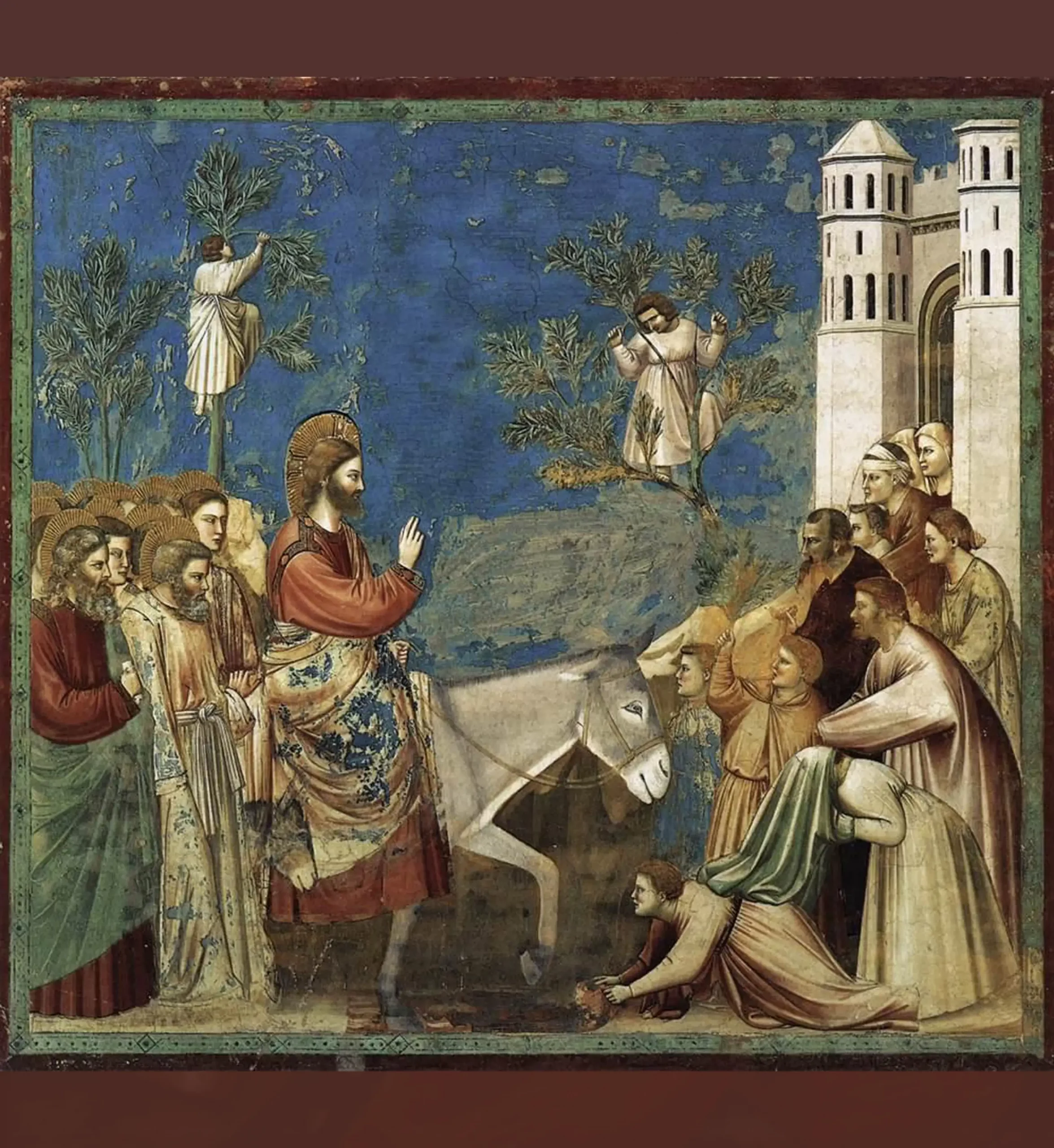
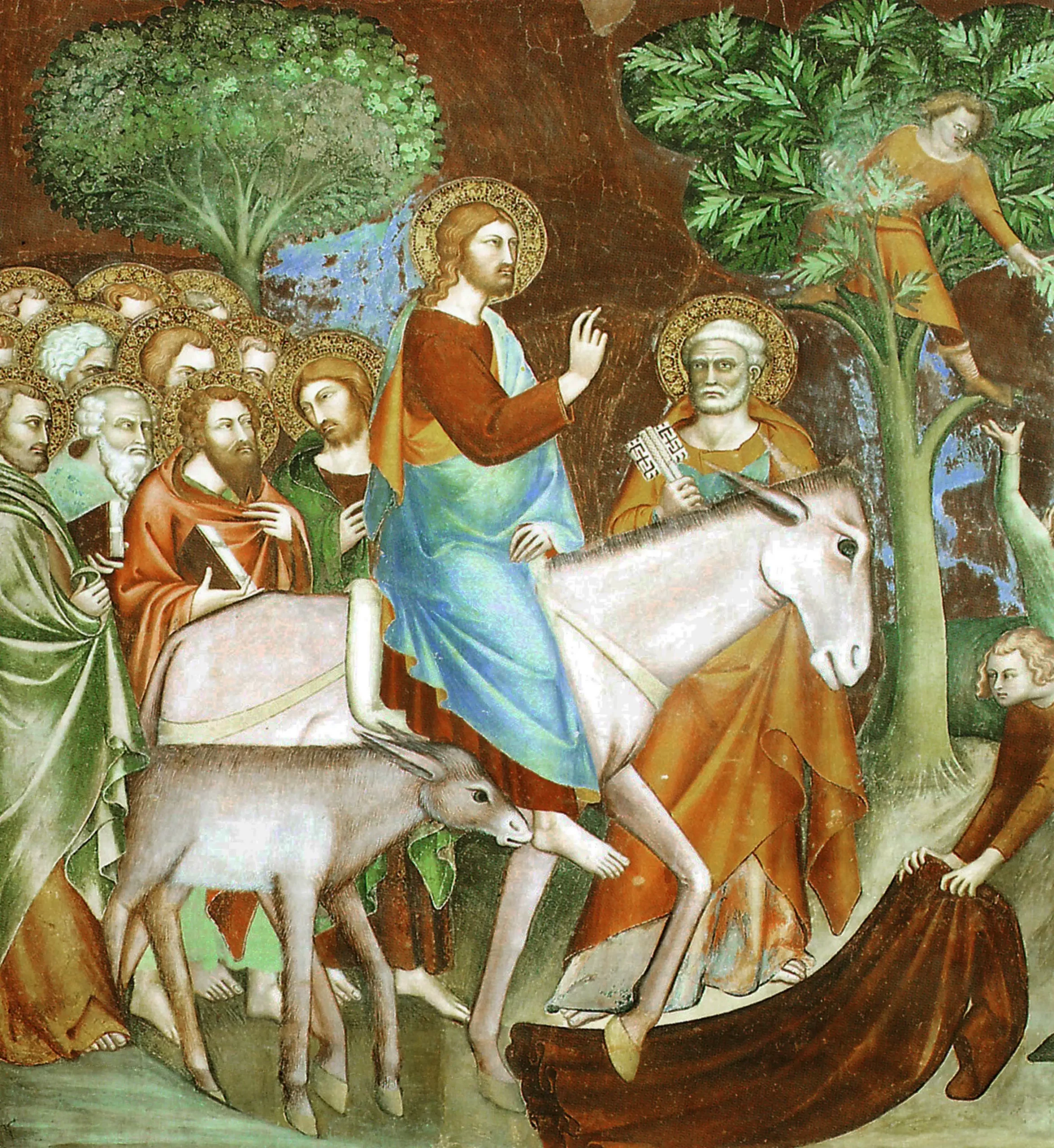
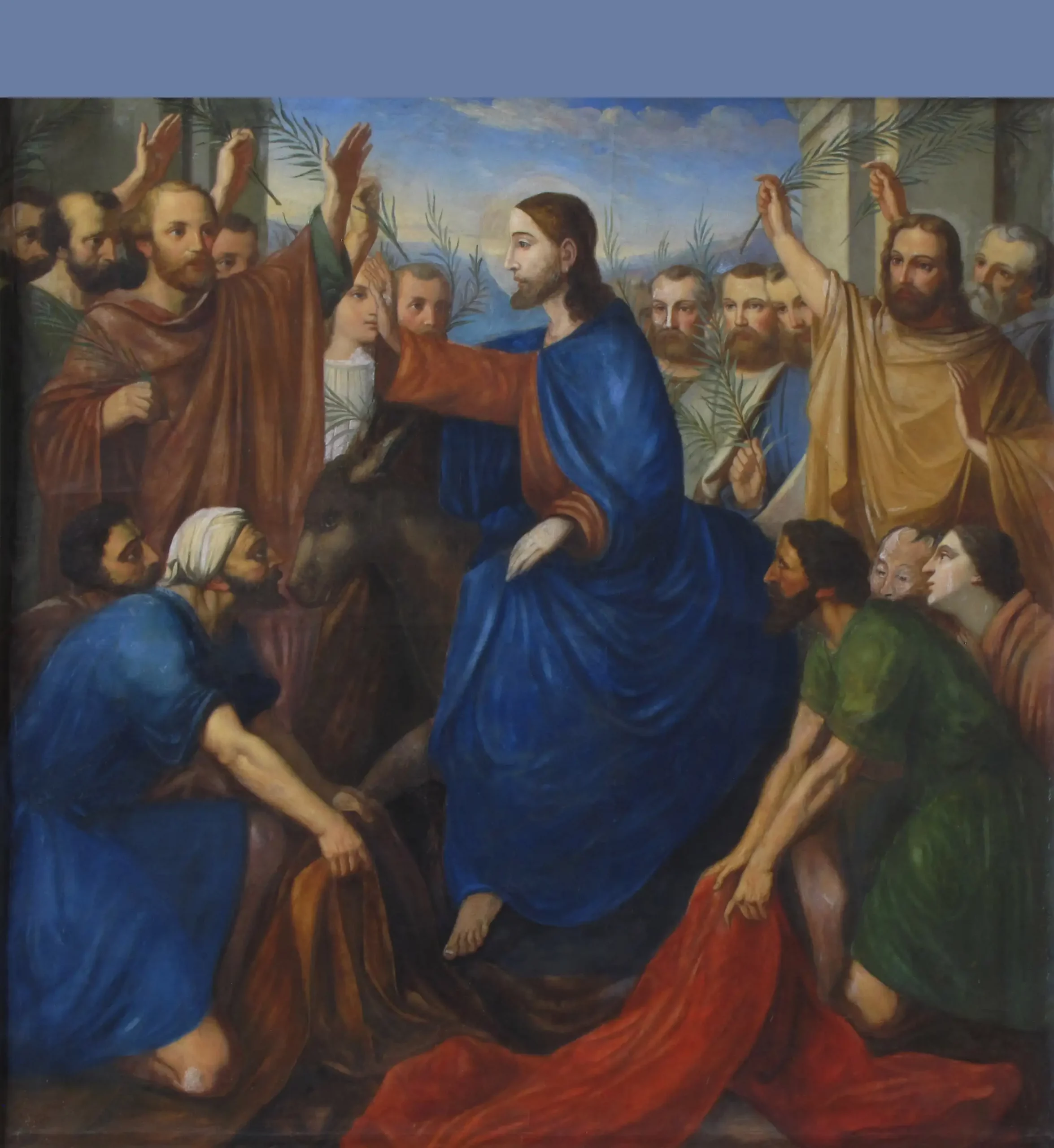
In Romanesque chapel frescoes, Christ is shown riding a donkey, approaching the gates of Jerusalem. He raises his right hand in blessing, while holding a scroll or book in his left.
The apostles follow behind him in a compact group. In front of Christ, townspeople spread cloaks on the ground or cut palm branches from trees, welcoming him as king.
The city is usually represented by simple towers or walls rather than a detailed and realistic cityscape.
Romanesque Style
The style is formal and symbolic rather than naturalistic. Figures appear flat, with strong outlines, simplified gestures, and calm, frontal poses. Perspective is minimal, and scale reflects spiritual importance, not realism. Christ is often larger than the others. Colours are clear and limited, helping the scene remain legible in dim chapel light.
Meaning for the Medieval Chapel Visitor
The scene presents Christ as a humble king, fulfilling Old Testament prophecy. Riding a donkey instead of a horse shows peace rather than military power. Medieval viewers understood this image as both a moment of joy and a warning, since the welcome would soon turn into rejection. It encouraged reflection on loyalty, humility, and true kingship.
Stage in the Life of Christ
This scene marks the beginning of Christ’s final days, immediately before the Last Supper, the Passion, and the Crucifixion. It introduces the dramatic closing phase of his earthly life.
Relation to the Christian Calendar
The Entry into Jerusalem is associated with Palm Sunday, which opens Holy Week. It stands at the threshold between Christ’s public ministry and his suffering.
Relation to Liturgical Traditions
In the medieval Church, Palm Sunday was marked by processions, blessing of palm branches, and readings of the Passion. The fresco echoed these rituals visually, allowing worshippers to connect the liturgy, the church space, and the story of salvation into a single, memorable experience.