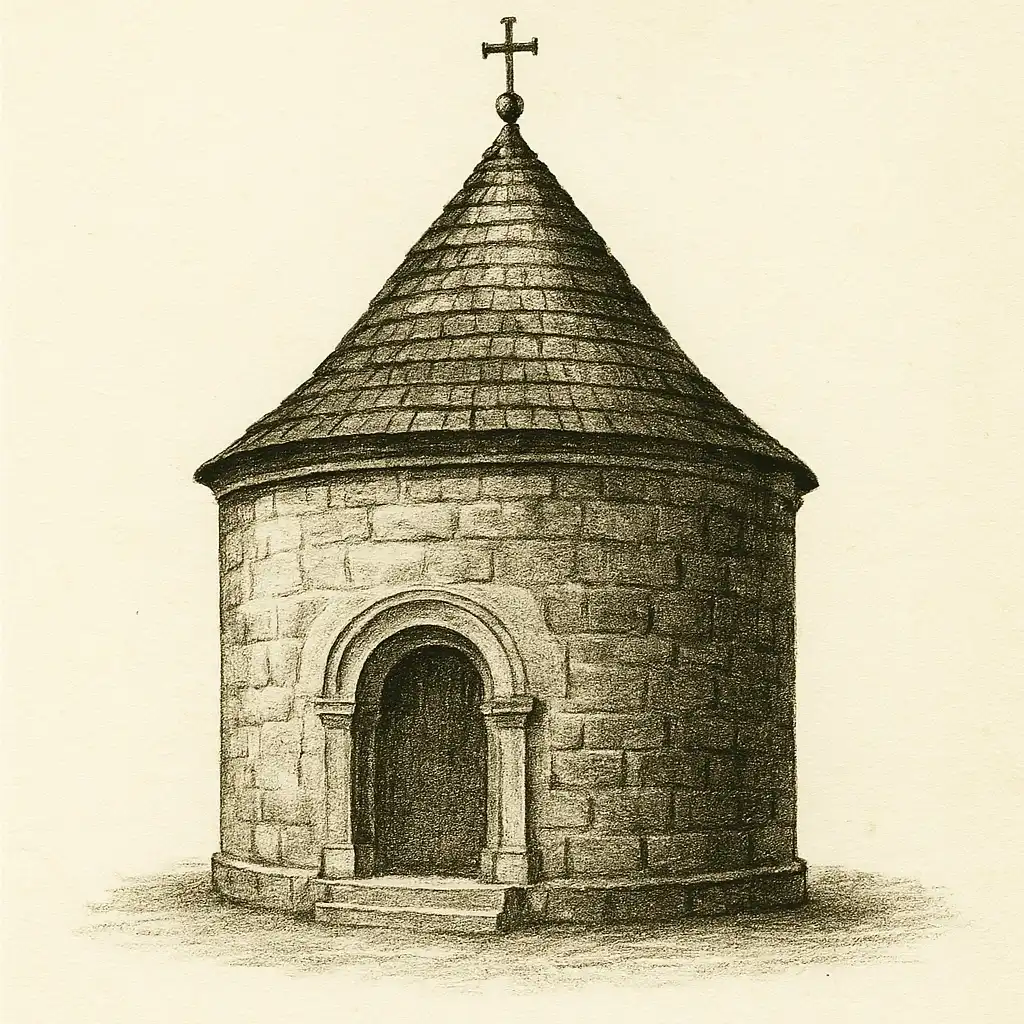
St Michael Charnel Chapel
Reading Time: 1:04 min
The St. Michael Charnel Chapel of the Parish Church of St Bartholomew was demolished in 1845 due to road construction. This photograph is based on a watercolour painting dating from around 1840.
What is a charnel house?
A charnel house is a building or vault where the bones of the dead are stored after the flesh has decomposed.
In medieval Europe, including Carinthia, charnel houses were often attached to churches or cemeteries. They provided a practical solution to limited burial space, allowing older remains to be moved to make room for new burials.
Charnel houses could be simple wooden structures, stone buildings, or small chapels, and were sometimes richly decorated with carvings, inscriptions, or murals.
What is an ossuary?
An ossuary is a container or place used to hold human bones.
The term can refer to a single box, chest, or container, but it is also applied to buildings or chambers designed for the storage of bones.
Some ossuaries display bones in patterns or ornamental arrangements, combining practical storage with artistic presentation.
Difference Between a Charnel House and an Ossuary
A charnel house is usually a building or room used to store decomposed remains, often connected to a churchyard or cemetery.
An ossuary can refer either to a container for bones or to a building housing bones.
In practice, the terms overlap: a medieval Carinthian charnel house often contained ossuaries or stacks of bones. However, “charnel house” highlights the building, while “ossuary” highlights the storage or collection of bones.