
Civic Treasury Chest (Bürgergültkassa)
Wrought Iron, 19th Century
Reading Time: 0:43 min
Introduction
This exhibit is a sturdy wrought iron chest from the 19th century that once held the town’s civic funds.
The civic treasury (Bürgergültkassa) served as the main municipal treasury, managing regular revenues such as taxes, rents, tolls, and fines.
It symbolised civic order, trust, and the continuity of municipal administration.
Civic Treasury vs. Field Treasury
While the civic treasury (Bürgergültkassa) ensured daily governance and the smooth running of the town, the field treasury (Feldkassa) was reserved for exceptional expenses.
Function
The civic treasury financed local administration, public buildings, social support, and community security.
Secure Location
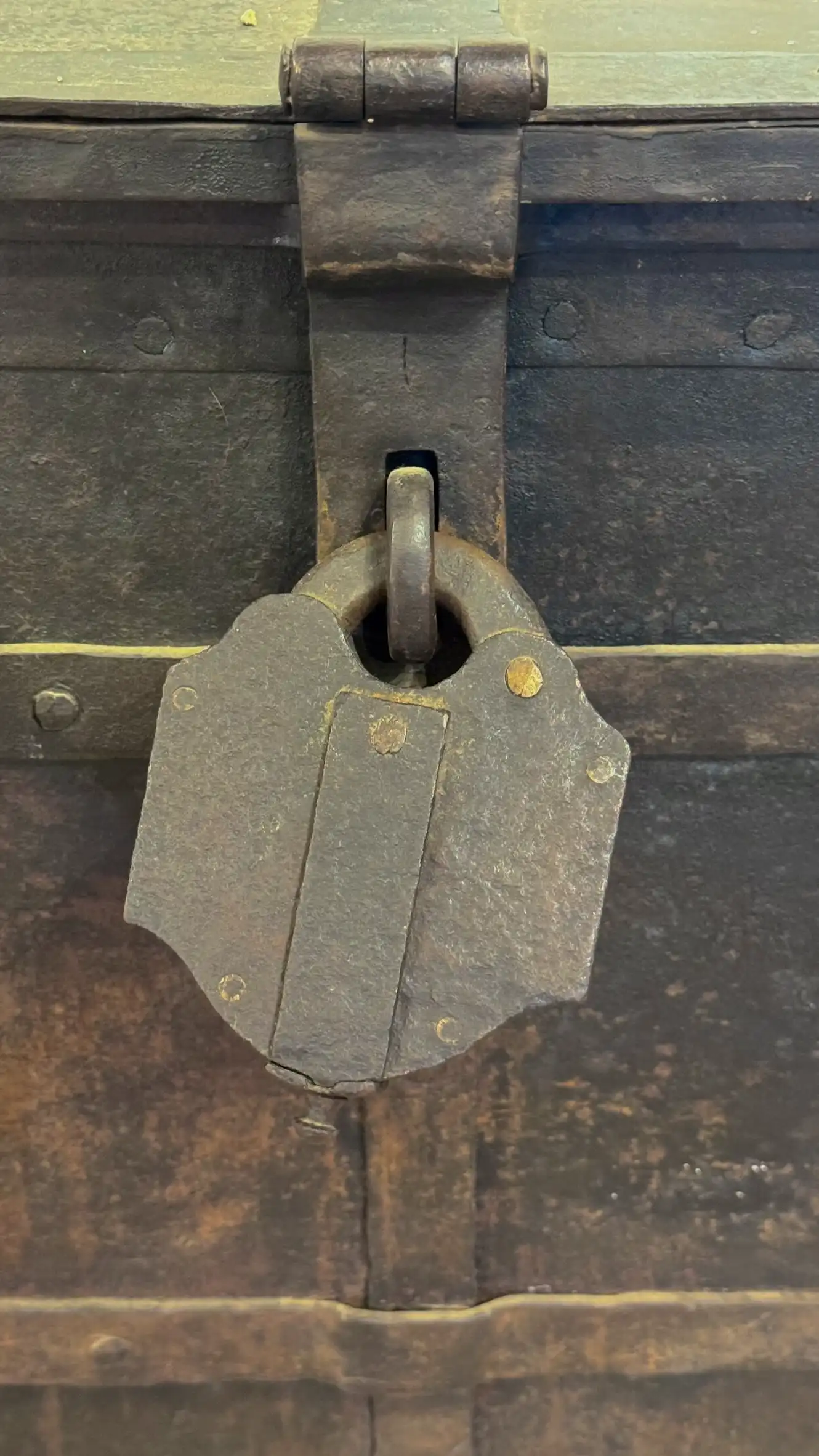
Kept in the town hall, the chest was secured with multiple locks, each held by a different official, ensuring transparency and accountability.
Symbolism
The civic treasury (Bürgergültkassa) represented civic virtue, lawfulness, and communal trust, reinforcing the identity and stability of Carinthian towns.
Typical Form
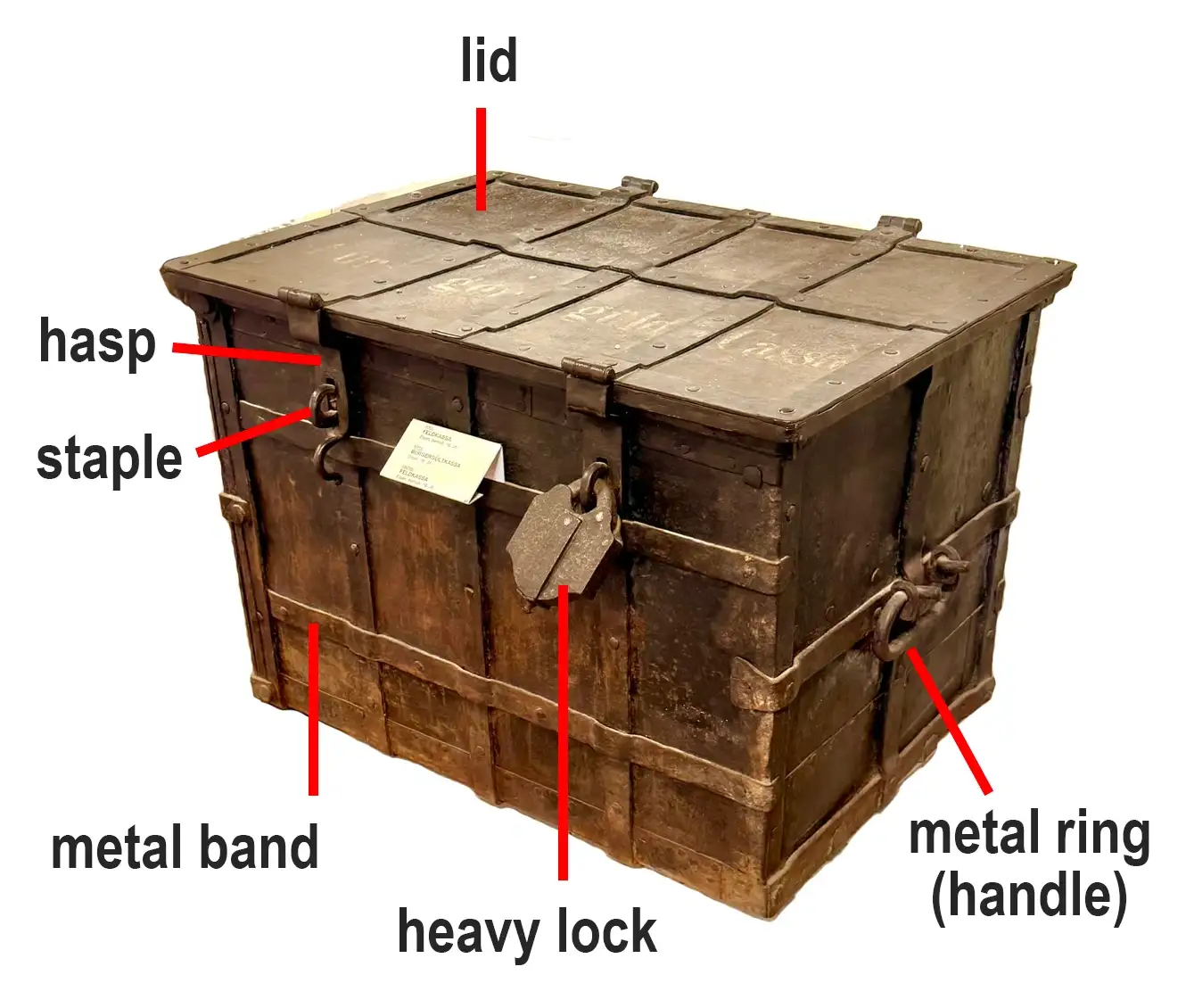
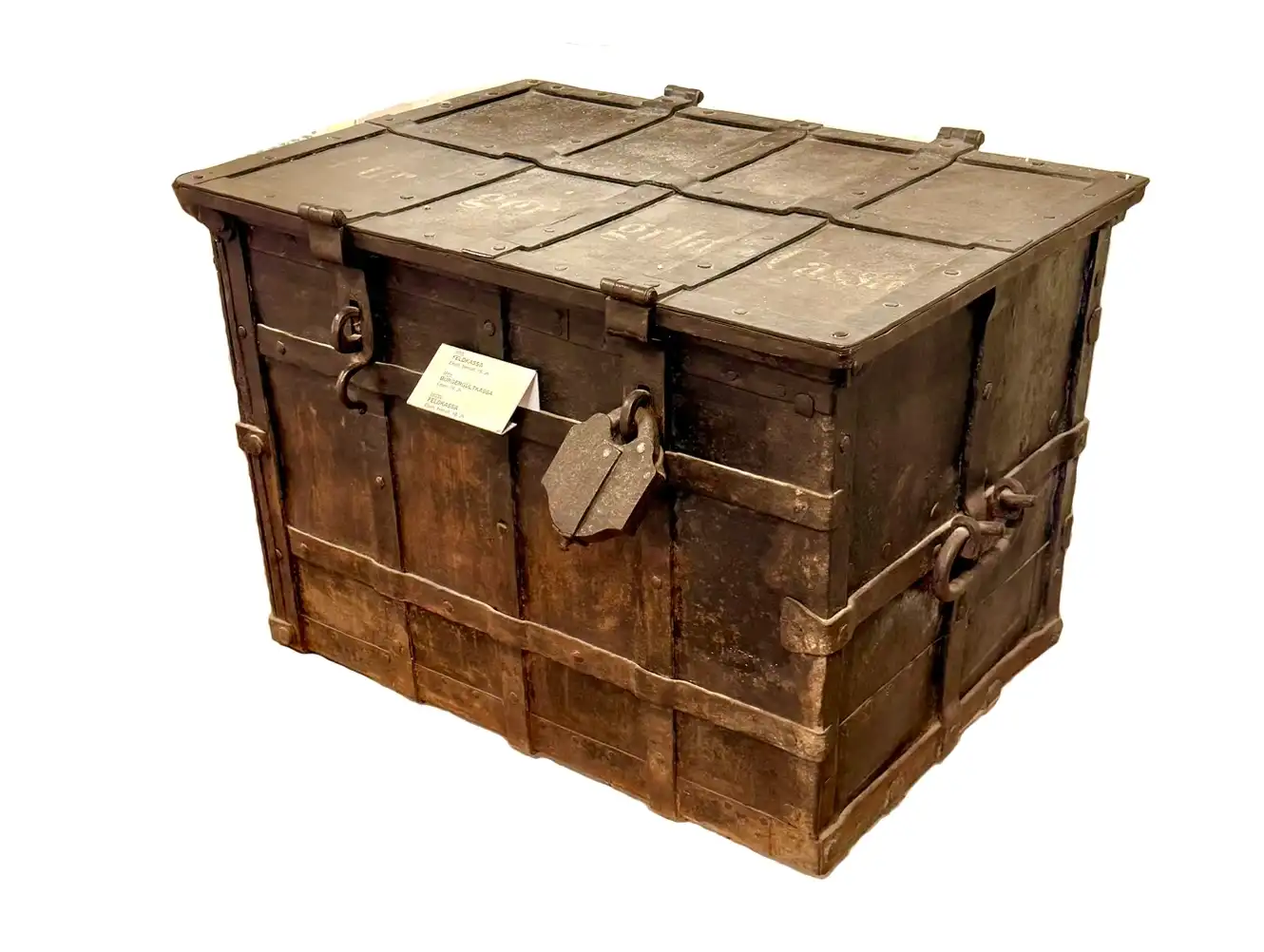
This 19th-century chest is made of wrought iron with reinforcing iron bands, riveted panels, multiple locks, and a robust, secure construction.