Four Ceremonial Daggers with Ivory Handles
Dated: 17th century CE
Ceremonial Dagger with Ivory Handle
Reading Time: 0:10 min
The ceremonial dagger in medieval Carinthia was often regarded as a symbol of status and craftsmanship. It was characterised by its intricate and ornate design, combining functionality with artistry.
Construction
Reading Time: 0:45 min
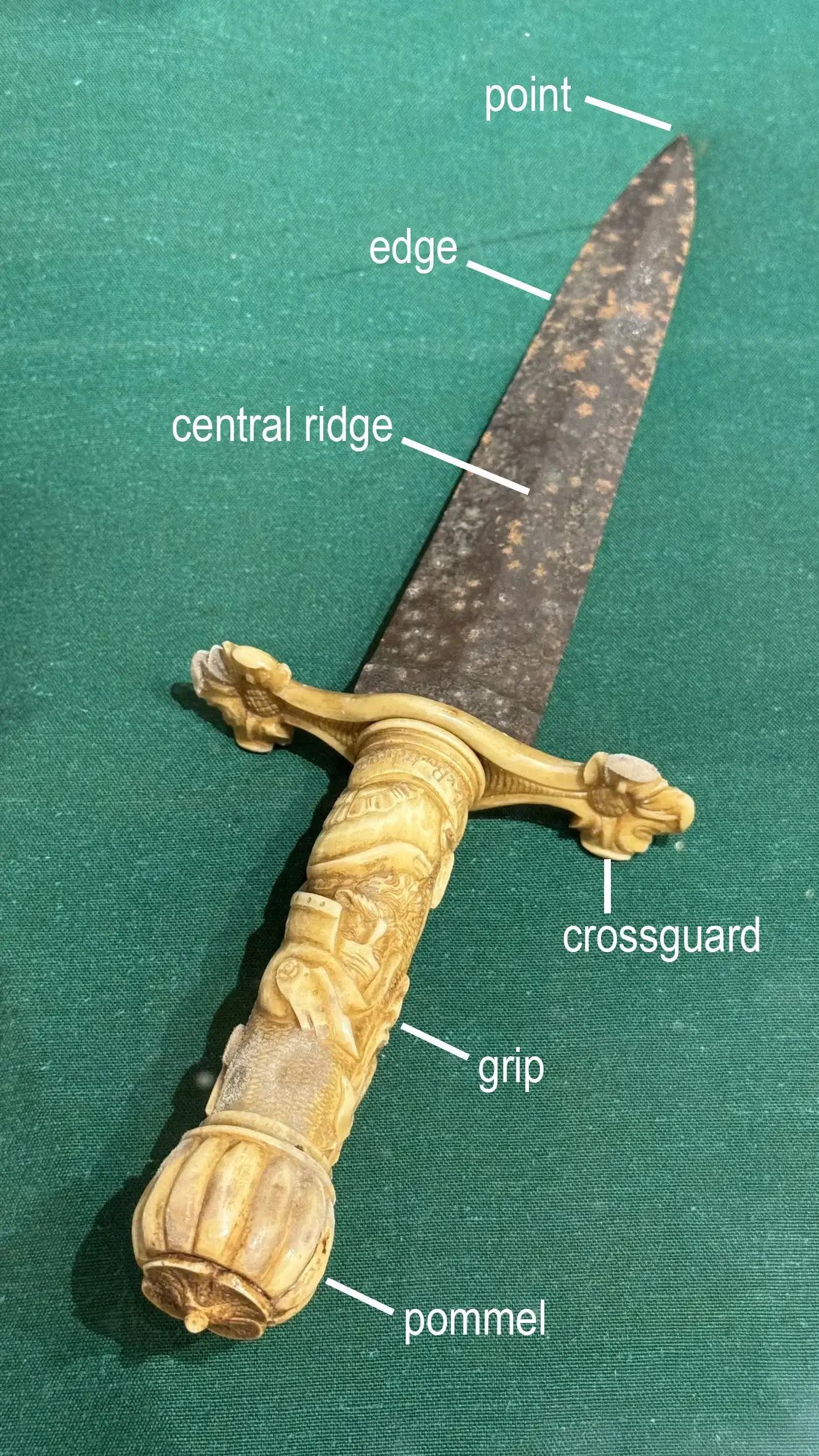
Blade
The dagger typically featured a long and slender blade, often made from steel. The blade ended in a sharp, tapered point, ideal for thrusting.
Hilt
The hilt was particularly distinctive, often crafted from ivory, which was finely carved into elaborate patterns.
Handle
The ivory handle was smooth and polished, adding a sense of opulence to the weapon, and was sometimes inlaid with precious metals or gemstones.
Crossguard
The guard (or crossguard) was often modest. Typically, it had a simple yet elegant shape, sometimes slightly curved to offer a more comfortable grip.
Pommel
The pommel was equally decorative, sometimes adorned with intricate engravings or symbolic motifs that reflected the wearer’s status or the cultural influences of the region.
The dagger was not just a weapon; it was a ceremonial item, often carried by nobility or warriors during important rituals or battles, and was a mark of prestige within Carinthian society. The overall design of the dagger emphasised both beauty and functionality, reflecting the artistry and craftsmanship of the time.