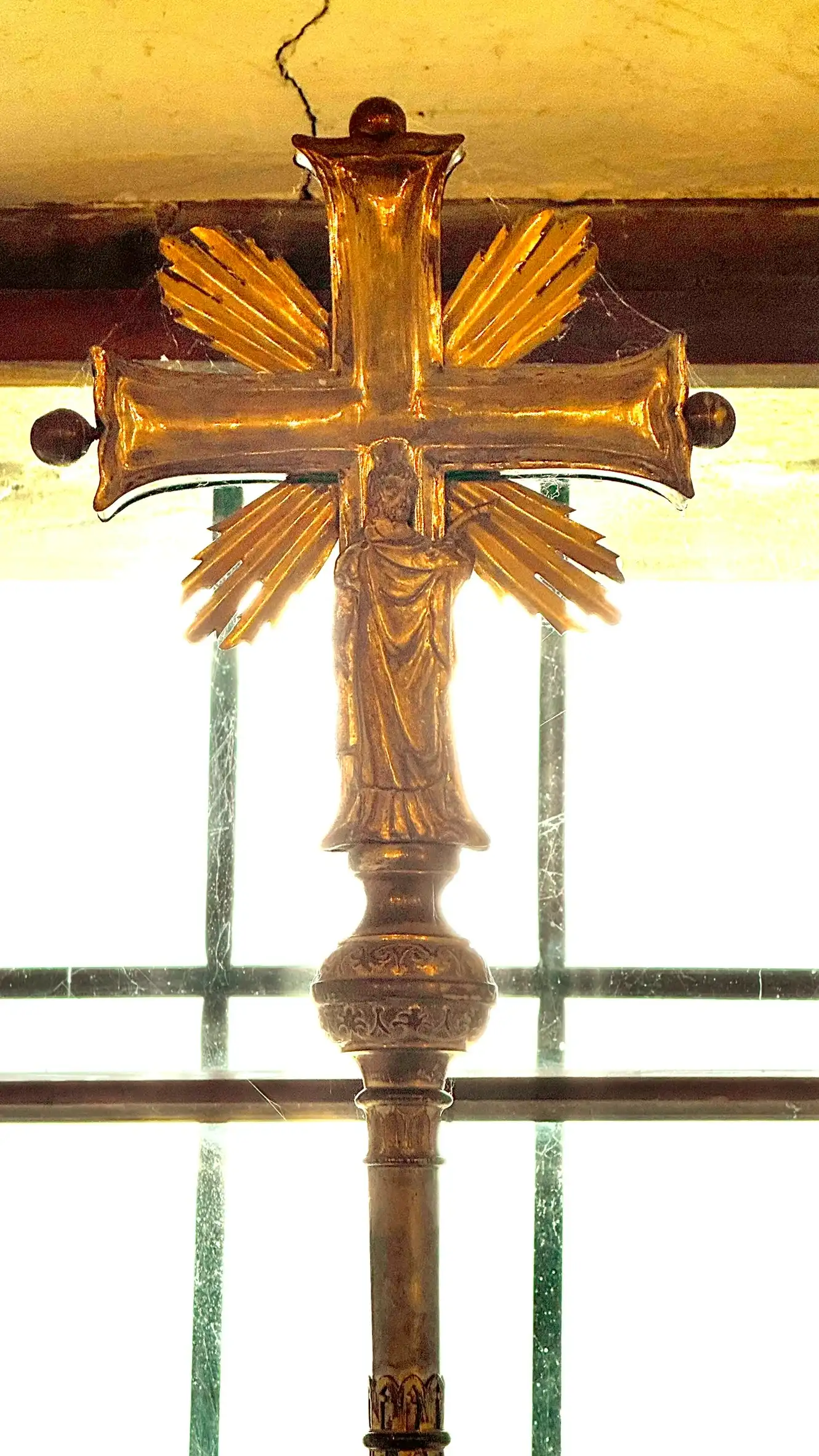
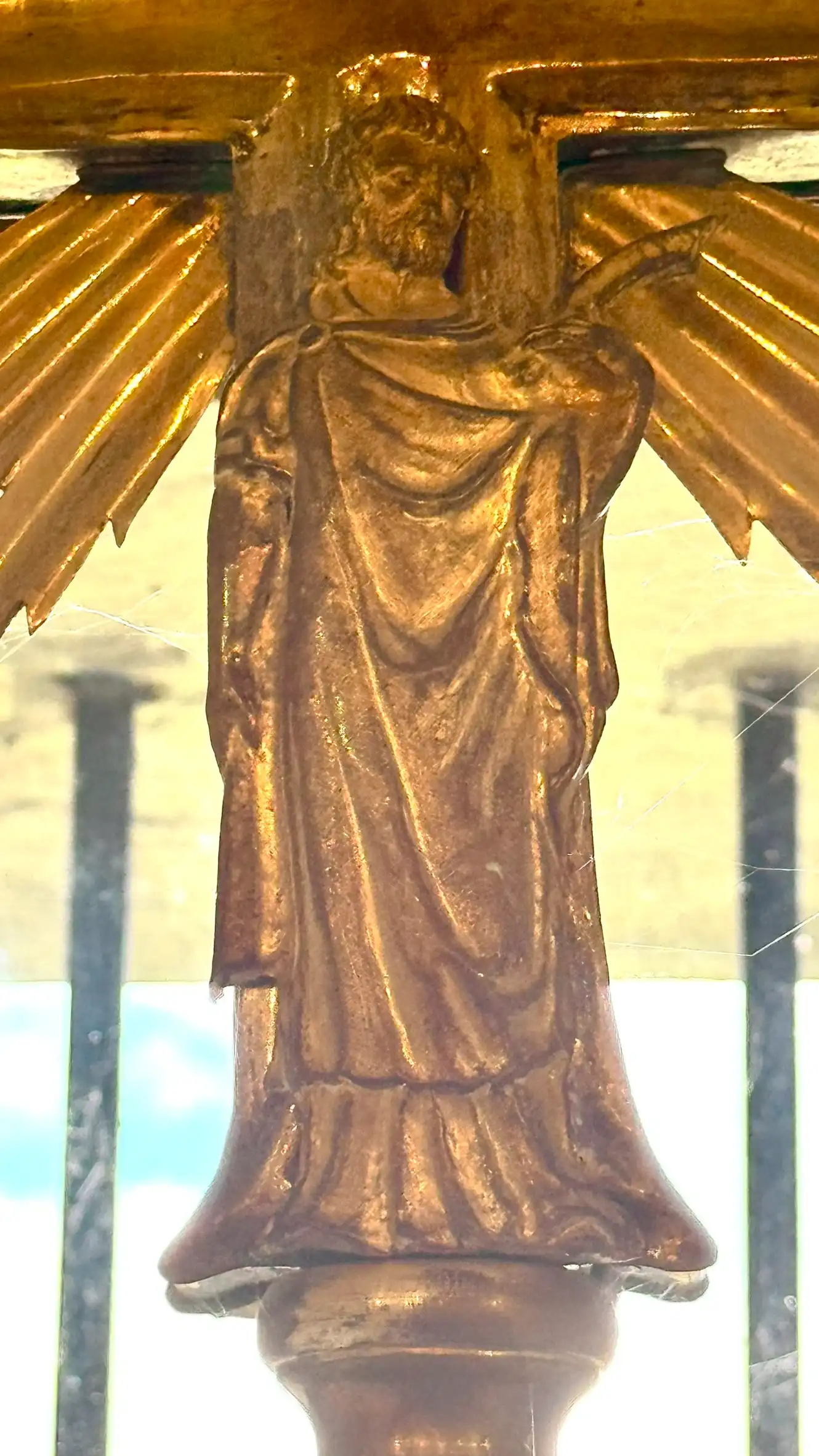
Recessed Rectangular Window
(Second Floor, West Wall)
Reading Time: 1:05 min
Architectural Description
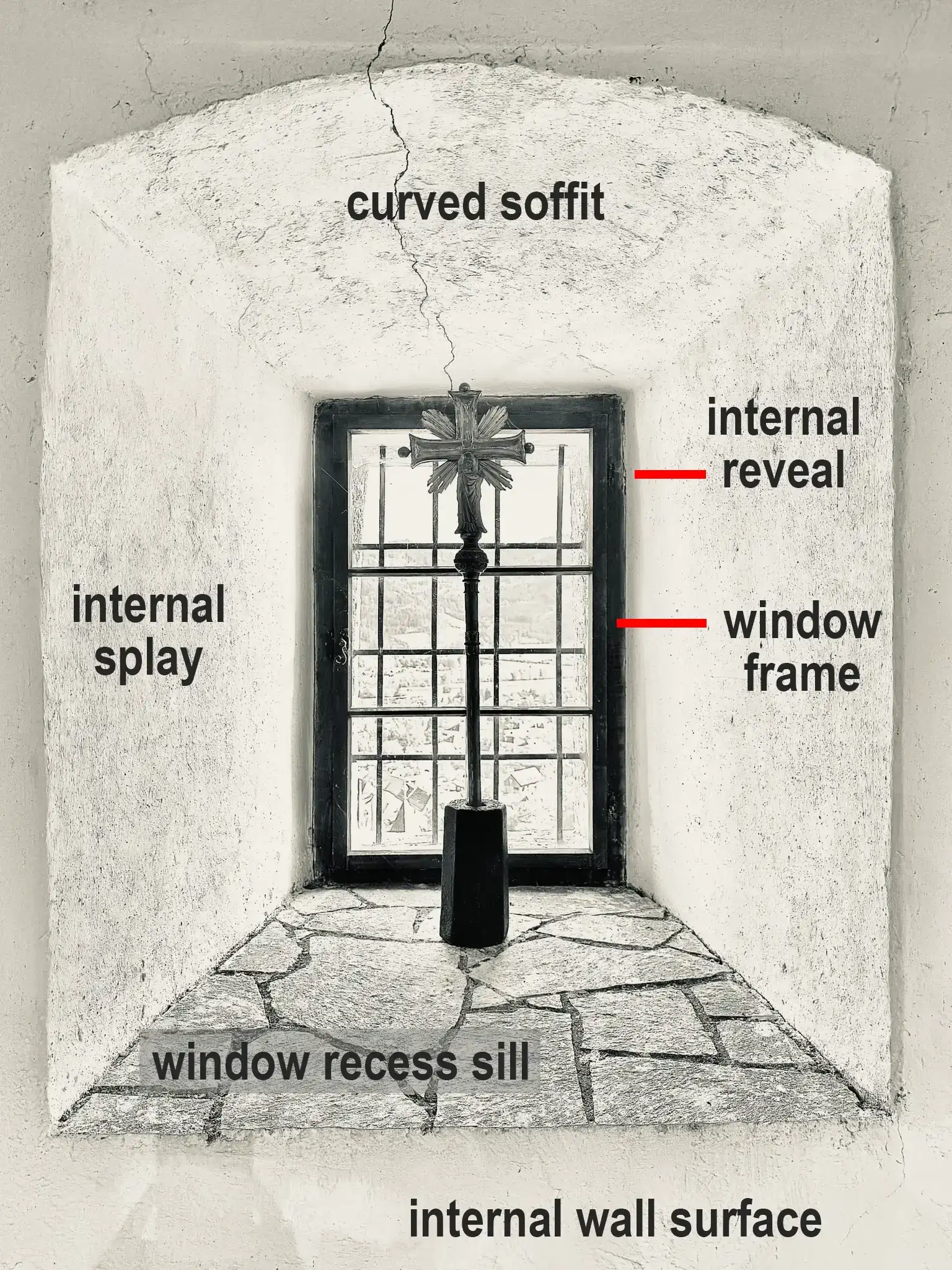
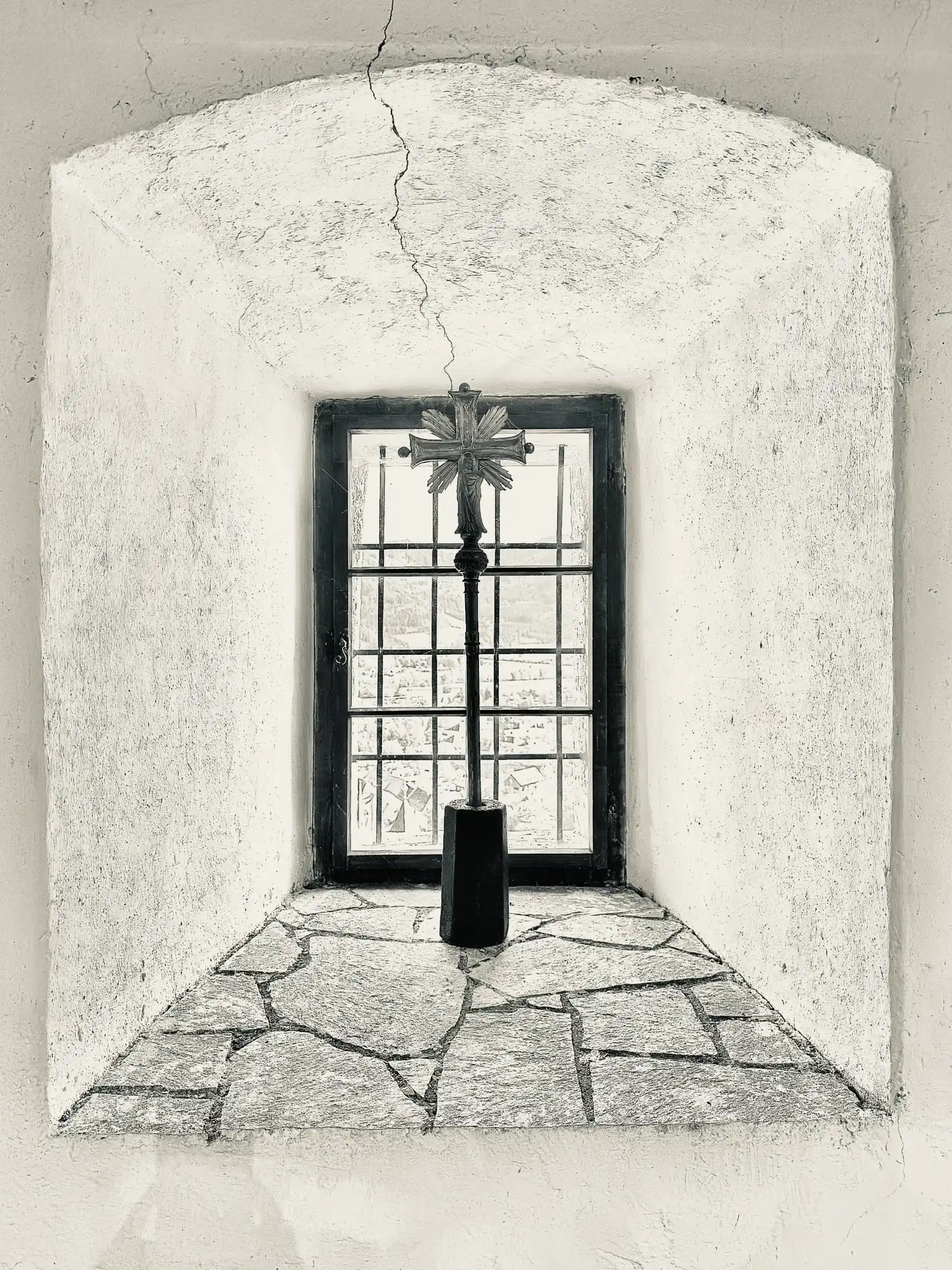
This rectangular window is deeply recessed within the tower’s massive masonry, revealing the exceptional thickness of the medieval wall.
The sides of the opening (known as internal splays) splay from the window frame to the internal wall surface, allowing more daylight to penetrate the interior.
The window frame and glazed panes are later additions.
At the base lies a broad window recess sill. This flat stone sill served both as a ledge and as a devotional space.
Architectural Evolution
The strong wall thickness and pronounced recessing are typical of medieval defensive and ecclesiastical architecture.
Originally, such openings were narrow arrow slits or embrasures, designed for shooting arrows or crossbow bolts. They allowed ventilation of the floor and the passage of limited light.
As the tower’s function shifted from defence to religious devotion, these narrow openings were enlarged into rectangular forms. The internal recess was retained for stability and to admit more light into the chapel space.
A framed window and glass panes were added later. This reflects changing architectural priorities, from fortification towards comfort and more illumination.
Stone Sill
This is the horizontal ledge at the bottom of the window opening. It is made of stone and provides support for the window frame.
Soffit
This is the underside of the arched upper part of the window opening.
Internal Splay
These are the slanted surfaces that extend from the window opening towards the interior of the room. They help direct light into the room.
Internal Reveal
This is the part of the wall immediately surrounding the window frame.