Baroque Longcase Clock, 18th C.
Reading Time: 1:35 min
Short Description
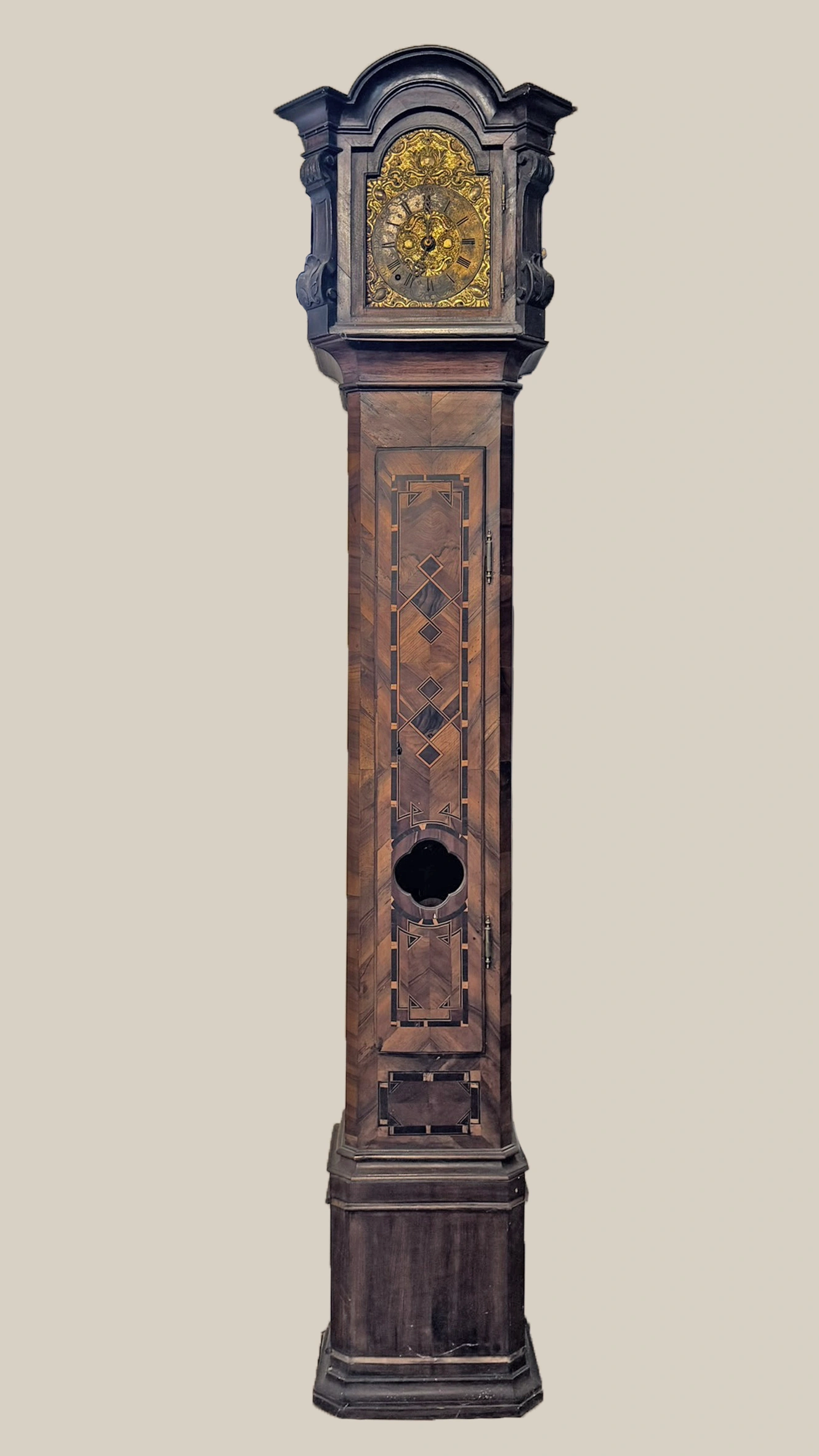
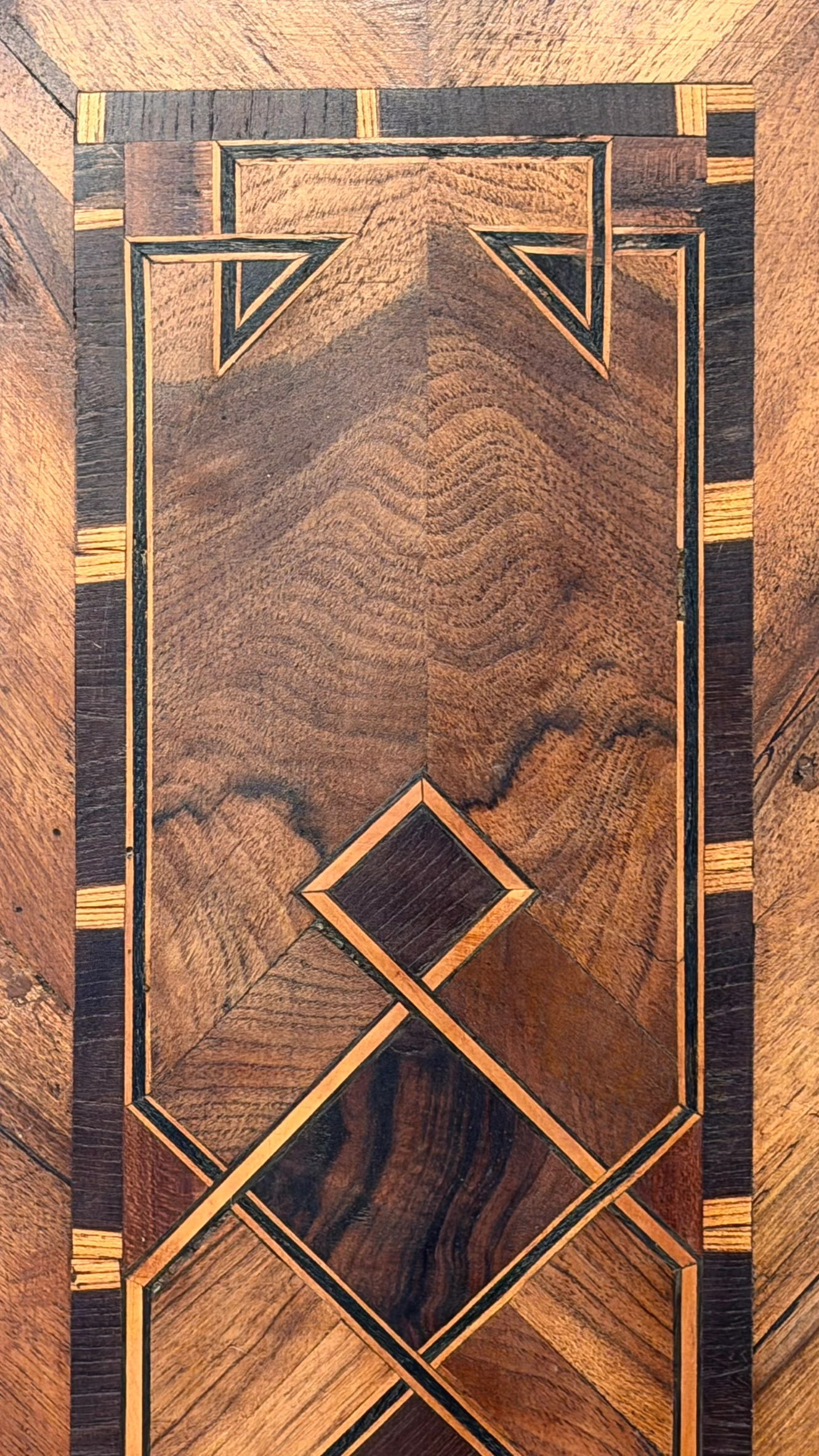
This Baroque longcase clock features a finely crafted case veneered in walnut and enriched with geometric marquetry inlay.
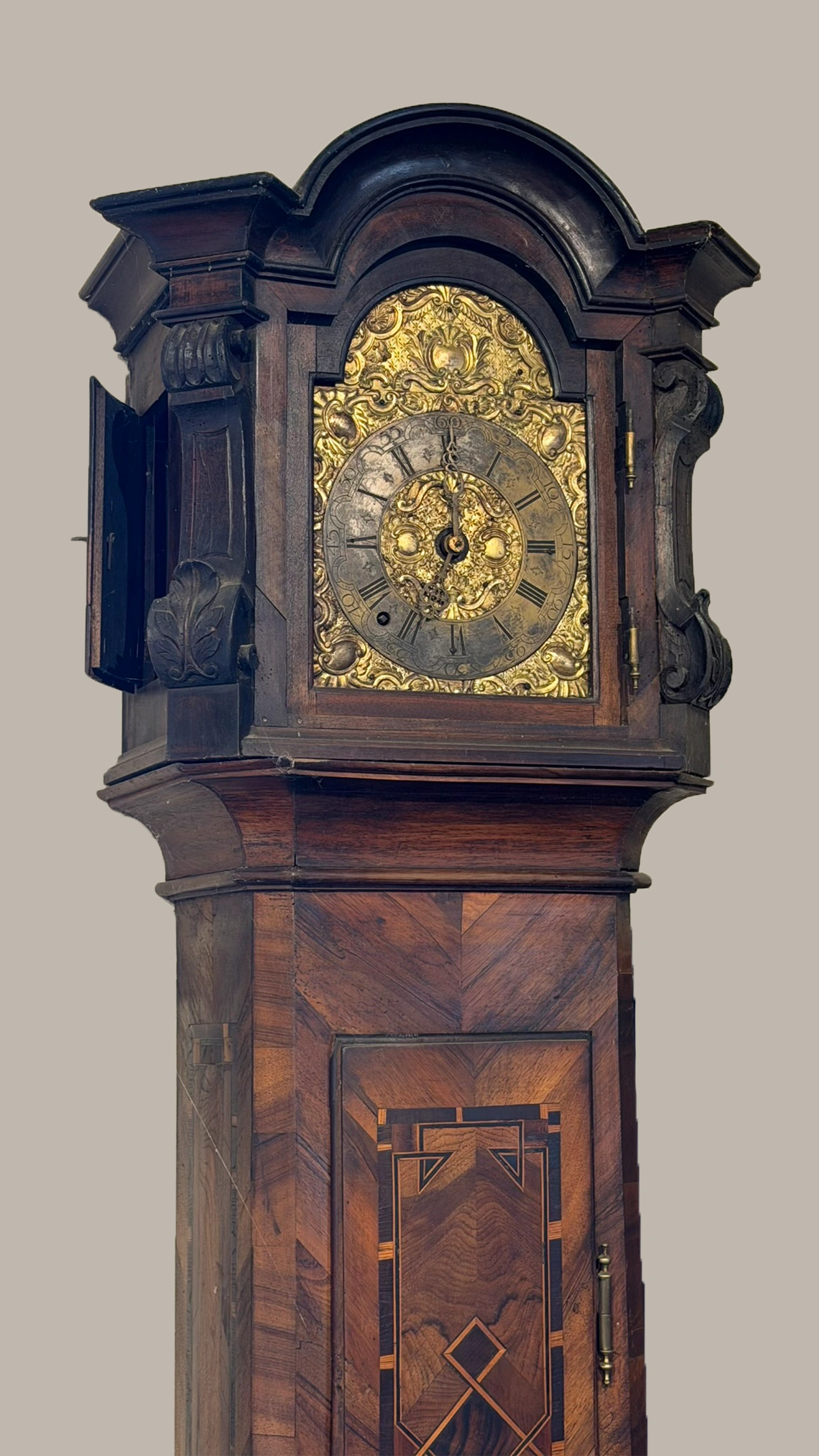
The tall, elegant form is crowned by an arched hood, framing a richly gilded dial with an applied chapter ring and Roman numerals.
Decorative details, including carved elements and ornamental brasswork, enhance its visual richness.
The trunk door displays intricate inlaid patterns, reflecting the high level of cabinet-making associated with the period.
Combining precision timekeeping with refined craftsmanship, the clock exemplifies the aesthetic and technical achievements of 18th-century furniture and horology.
Detailed Description
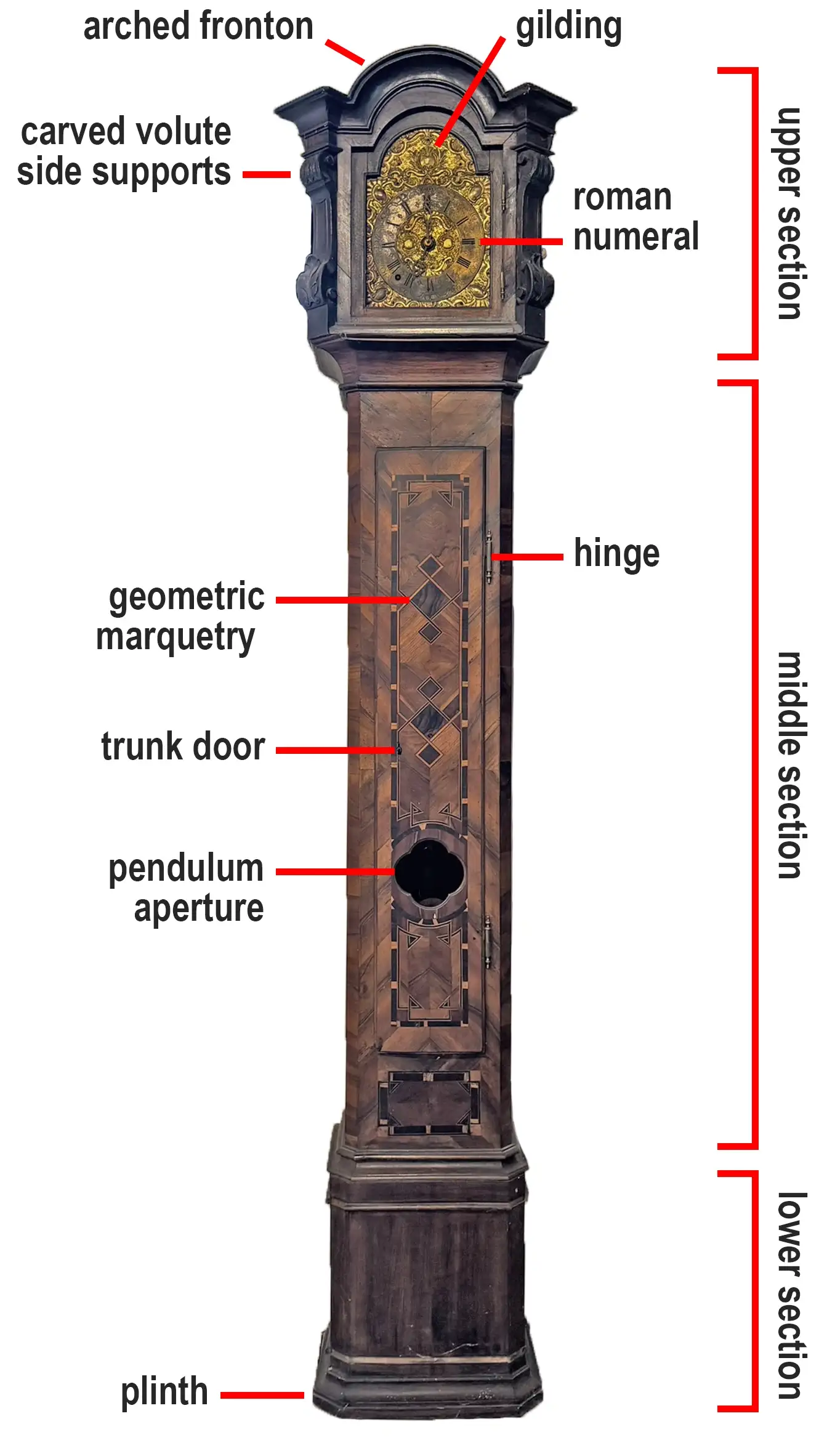
Upper Section (also known as the hood or bonnet)
The upper section forms the visual focus of the clock. It is crowned by an arched fronton, giving the case an architectural presence. The hood is framed by carved, scroll-shaped side supports (volutes), rather than classical columns. At its centre, a richly ornamented brass dial is set within a gilt surround, with an applied chapter ring bearing Roman numerals. This section houses the movement while presenting the most elaborate decoration.
Middle Section (also known as the trunk or waist)
The tall trunk encloses the pendulum and weights. Its door is faced with walnut veneer, carefully arranged to emphasise the natural grain, and enriched with geometric marquetry in contrasting veneers. A shaped pendulum aperture allows a glimpse of the swinging pendulum, adding a subtle sense of movement to the design. The refined surface reflects skilled cabinetmaking.
Lower Section (also known as the base or plinth)
The lower section forms a solid plinth that anchors the clock both visually and structurally. In contrast to the more ornate upper parts, it is comparatively restrained, with broad wooden surfaces and moulded edges that lend weight and stability. This base supports the overall height of the clock and completes its balanced, vertical composition.


Clock Mechanism
This clock is driven by a weight-powered movement, in which descending weights provide the energy to operate the mechanism. A pendulum regulates the time through its steady, rhythmic swing, ensuring consistent accuracy. The movement is controlled by an escapement, which releases the gear train in measured intervals. Together, these elements allow the clock to keep time and, where present, to sound the hours.