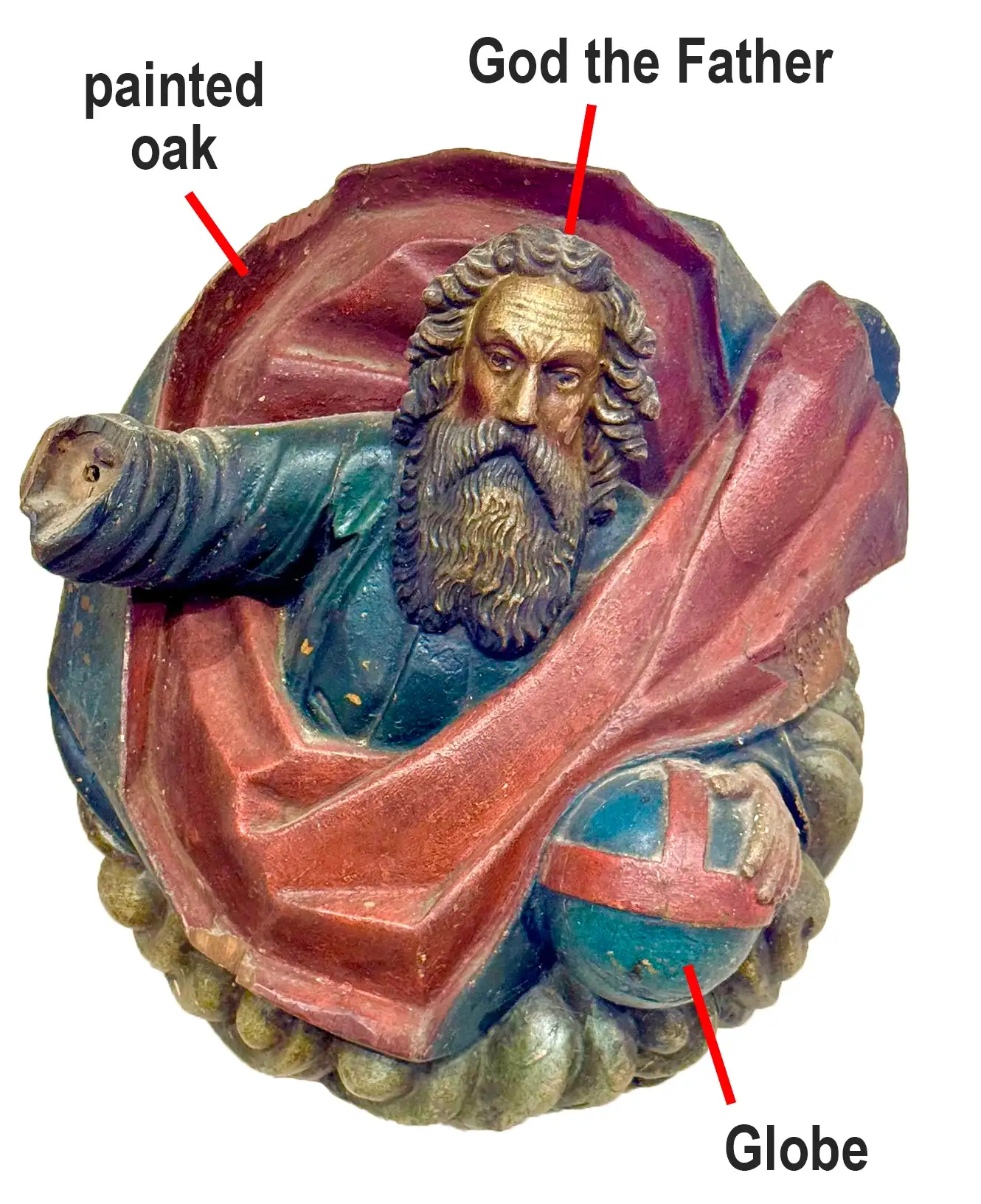
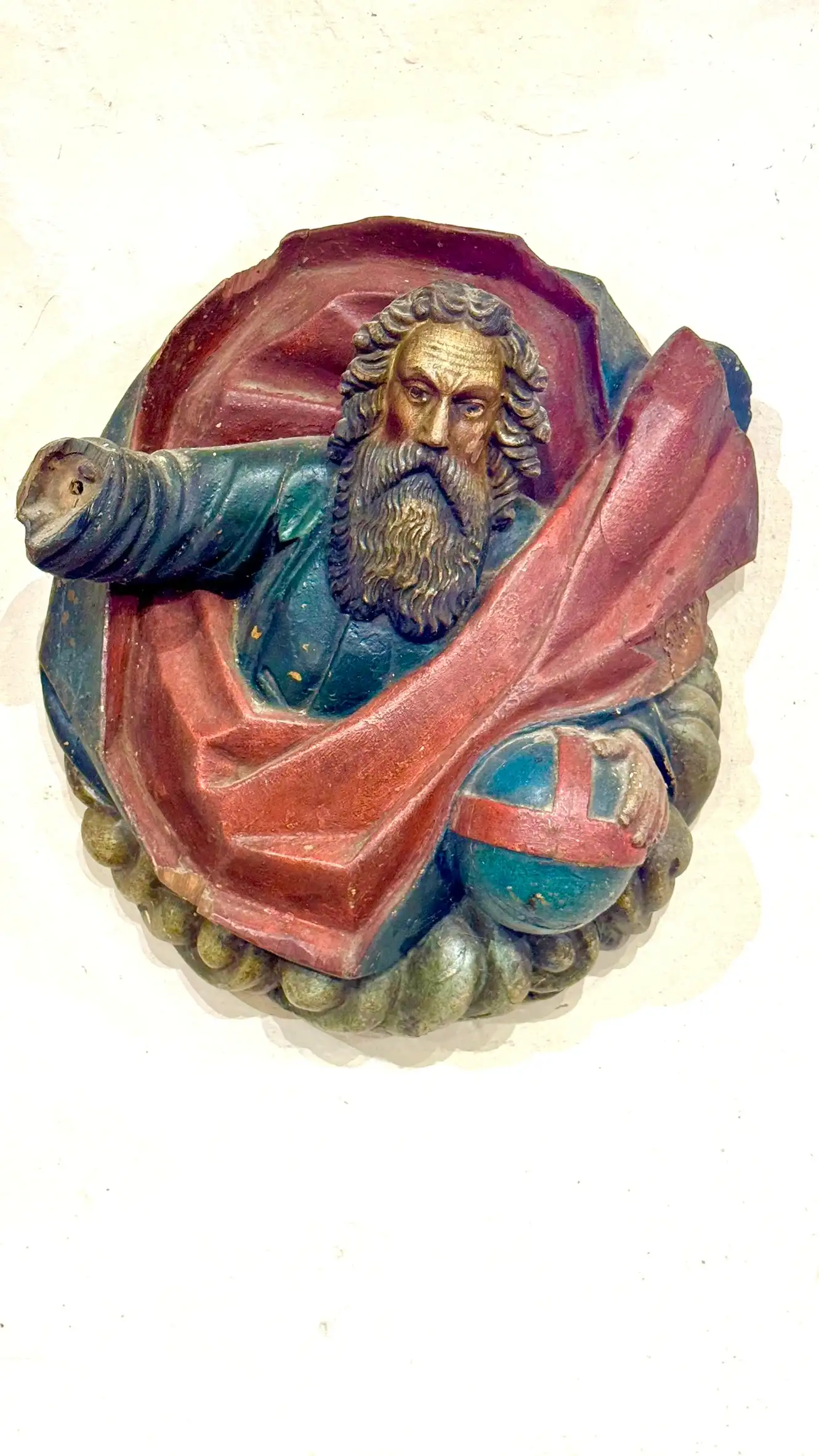
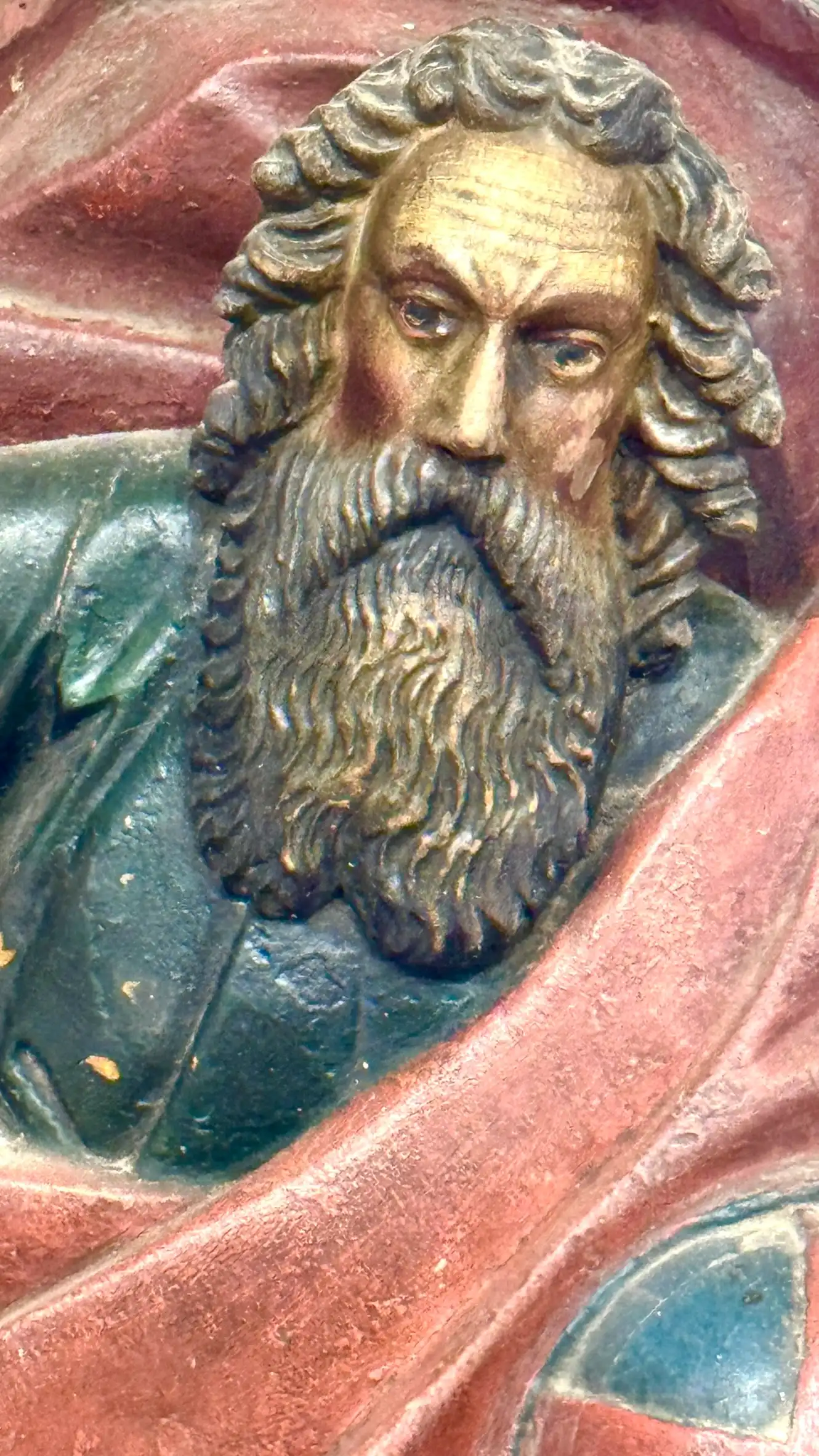
Keystone, God the Father with Globe
Reading Time: 1:10 min
Symbolism and Meaning
The image of God the Father holding a globe is a striking symbol of divine authority, creation, and care for the world.
Often portrayed as a majestic, paternal figure, He holds the globe to signify His rule over the universe and all living beings. The globe itself represents the earth in its entirety, held in God’s hand as a sign that the world is sustained by His wisdom and providence.
Frequently, the globe is topped with a cross, forming the globus cruciger, which emphasises that the world is not only created but also redeemed through Christ, linking creation and salvation in one enduring image.
Religious and Artistic Context
In churches and sacred art, this motif reminds visitors that all existence is under God’s care and that human life unfolds within a larger, divine order. It conveys a sense of balance, protection, and divine guidance, inspiring both awe and trust. The globe reflects the fragility of the world yet also its sanctity, inviting reflection on the responsibility of humans to live in harmony with creation.
Civic and Guild Usage
The motif also appeared in guild signs and civic emblems, where it symbolised that craftsmanship and labour are conducted under divine supervision. For medieval townspeople and craftsmen, it served as a reminder and blessing, reinforcing the idea that skill, honesty, and diligence are valued not only in worldly terms but also as acts within God’s plan.
Conclusion
The figure of God the Father with the globe thus combines art, faith, and moral reflection, offering a timeless message of order, protection, and divine care to all who encounter it.