Fortepiano, c. 1815
Reading Time: 2:50 min
What is a Fortepiano?
A fortepiano is the early form of the modern piano, widely used from the late 18th to the early 19th century.
The name derives from the Italian forte (loud) and piano (soft), reflecting its ability to produce dynamic contrast depending on the player’s touch.
Unlike the modern piano, the fortepiano has a lighter wooden frame, thinner strings, and smaller hammers, resulting in a sound that is clear, delicate, and highly responsive rather than powerful. Its tone is often described as transparent and speech-like, making it especially suited to the refined musical language of the Classical period.
Fortepiano | Description
Form and Structure
A typical fortepiano had a rectangular, table-like case typical of Biedermeier interiors. It was supported on four slender, tapering legs. The keyboard was set into the long side, allowing the player to sit facing the instrument.
Materials and Finish
It was veneered in warm-toned wood, likely walnut or a similar material. The smooth, polished surfaces reflected the restrained elegance of the Biedermeier style. Ornamentation was minimal, emphasising clarity of form and fine craftsmanship.
Keyboard and Mechanism
The instrument featured a light-action keyboard characteristic of Viennese instruments. It was originally equipped with knee levers or early pedals to produce tonal effects, such as dampers or a moderator.
Range Expansion
Early models had about five octaves; by c. 1815, instruments commonly extended to six octaves.
Distinct Tonal Registers
The bass was often dry and resonant, the middle was warm, and the treble was bright and singing.
Knee Levers
Instead of foot pedals, players engaged effects (such as dampers or moderator stops) using knee-operated levers.
Function and Setting
It was intended for private domestic use (salons and smaller rooms), rather than large concert halls. The instrument was well suited to chamber music, song accompaniment, and salon performance. It encouraged a style of playing that emphasised clarity, phrasing, and expressive detail.
Overall, the instrument combined furniture design with musical function, embodying the Biedermeier ideal of refined middle-class domestic culture.
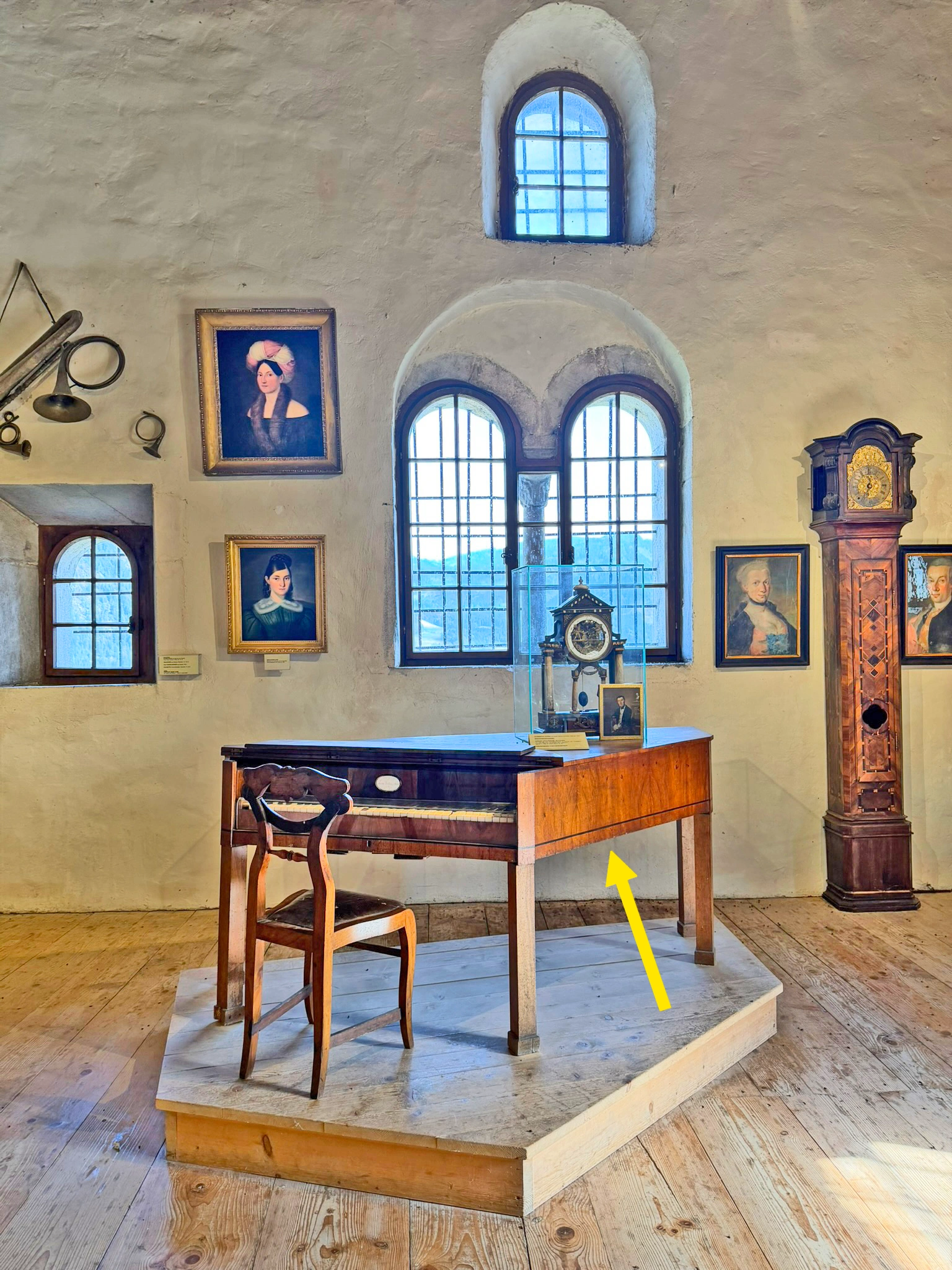
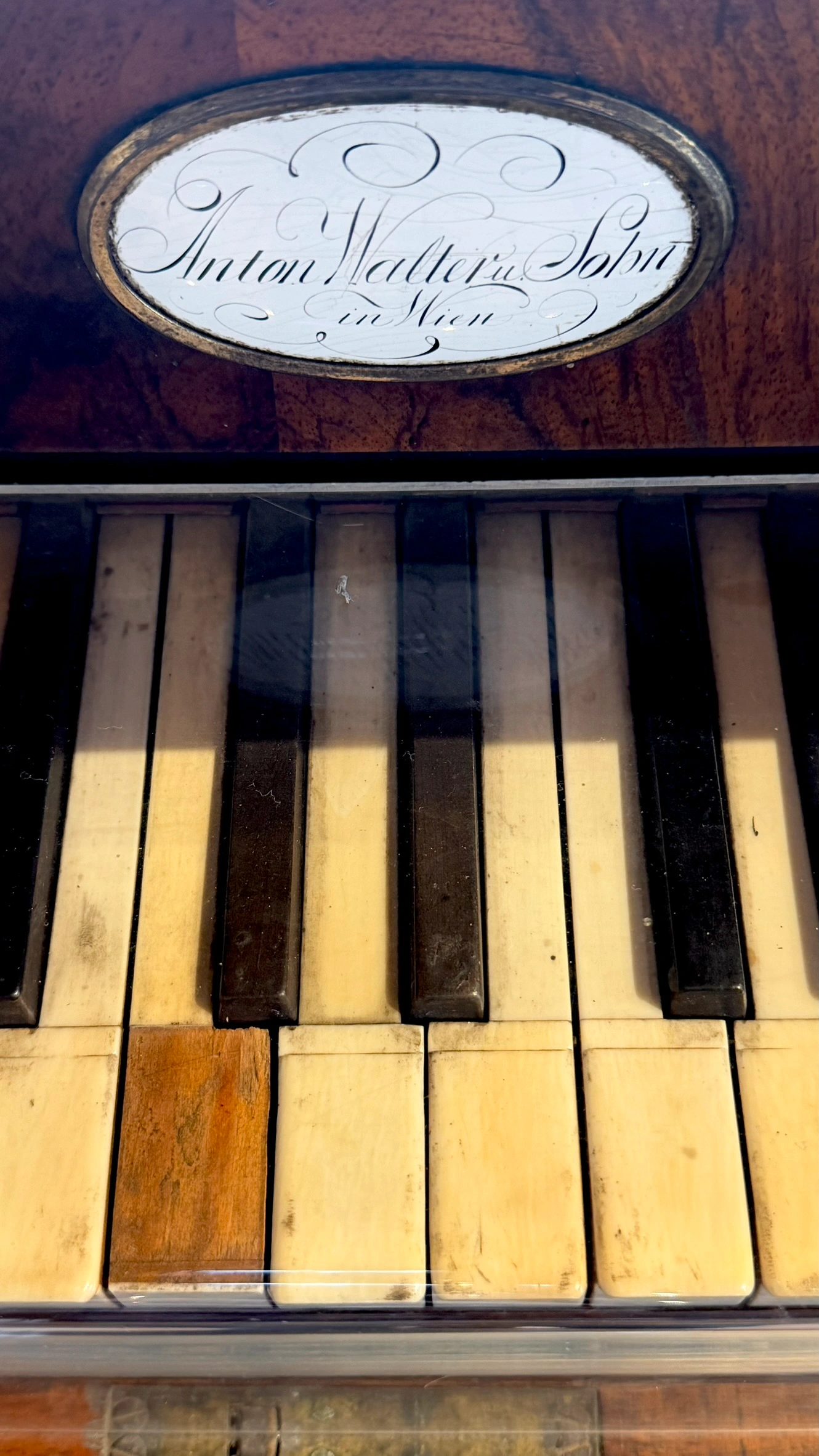
Anton Walter & Sohn, Vienna

The firm Anton Walter & Sohn in Wien was among the most esteemed piano makers of the Classical era and one of the most important piano-building workshops in Vienna. Anton Walter (1752–1826) was a leading figure in the Viennese piano school and was widely regarded as one of the finest makers of his time. He established his workshop in Vienna in the late 18th century, when the city was emerging as a major centre of piano production. Around 1800, he was joined by his stepson Joseph Schöffstoß, after which the firm’s instruments were labelled “Anton Walter & Sohn”.
Walter’s fortepianos were renowned for their precision craftsmanship, responsive touch, and clear, singing tone. They incorporated refinements to the Viennese action and influenced later developments in piano design. These instruments represent the culmination of late 18th-century Viennese piano building, combining elegance with technical sophistication, and they became a model for subsequent generations of makers.
Walter’s instruments were highly valued by leading composers of the time. Wolfgang Amadeus Mozart owned a Walter fortepiano (c. 1782), which he used for both composing and performance, and much of his mature keyboard music reflects the instrument’s clarity and expressive range. Ludwig van Beethoven is known to have played Walter instruments during his early years in Vienna, where their responsive action suited his increasingly dramatic style. Joseph Haydn, although more closely associated with other makers, was likewise familiar with Viennese instruments of this type.
By around 1815, Vienna had hundreds of piano makers, yet Walter’s firm remained among the most respected. Fortepianos of this period represent a transitional stage between the intimate elegance of the Classical instrument and the growing expressive demands of the 19th century.
Concert Grands vs. Fortepiano
Unlike later concert grands, it is characterised by:
– a lighter wooden construction
– a more delicate, transparent sound with less sustaining power
– a highly responsive action, requiring sensitive touch rather than force
– a smaller range of keys (often around five to six octaves).
Summary
This fortepiano is a refined domestic instrument of the Biedermeier period, combining elegant furniture design with advanced early piano technology. Built by one of Vienna’s most prestigious makers, it reflects both the musical culture of early 19th-century Europe and the evolution of the modern piano.