The Imperial-Royal Toll Sign of Friesach
Main Text Reading Time: 1 min 6 sec
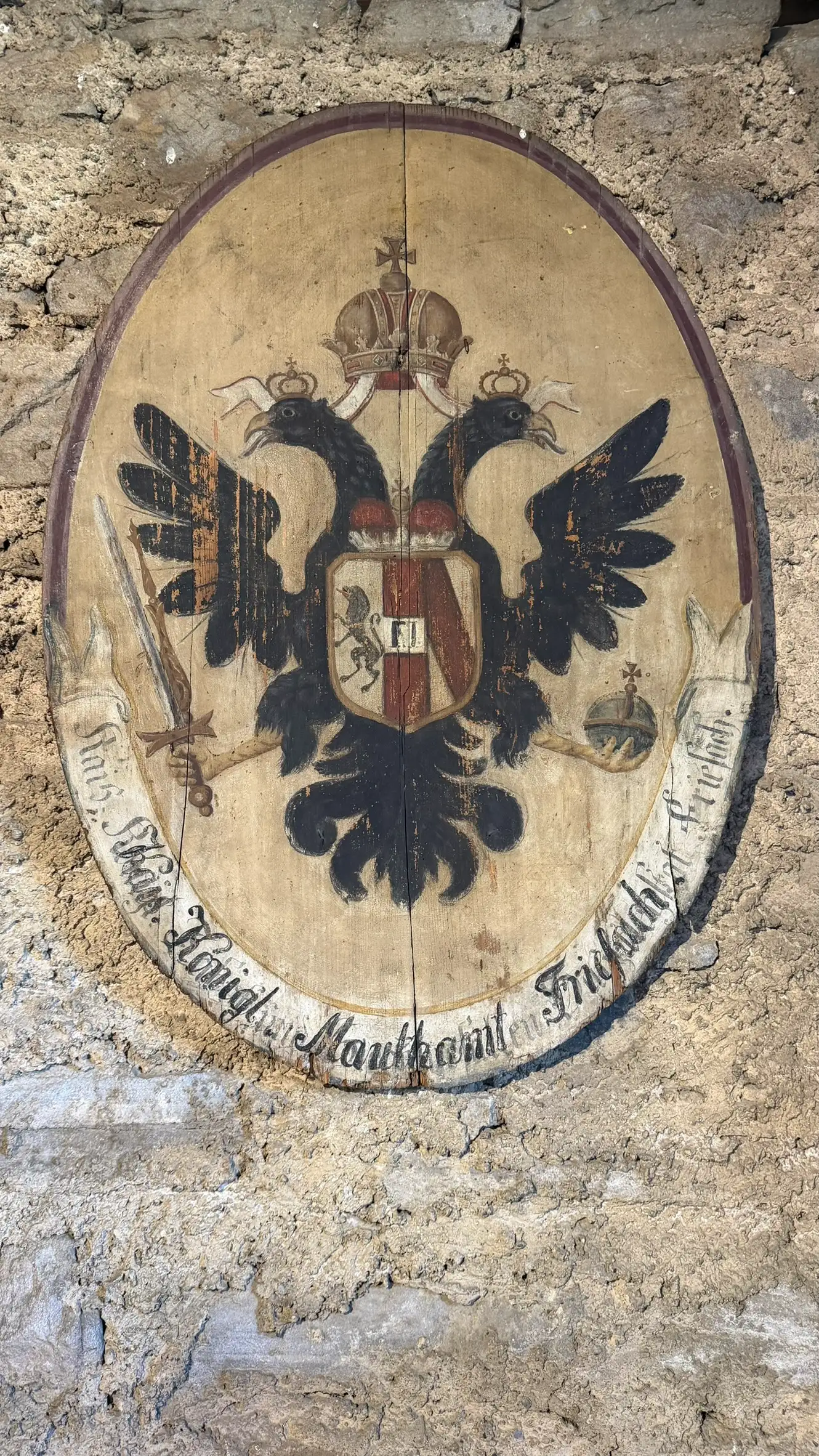
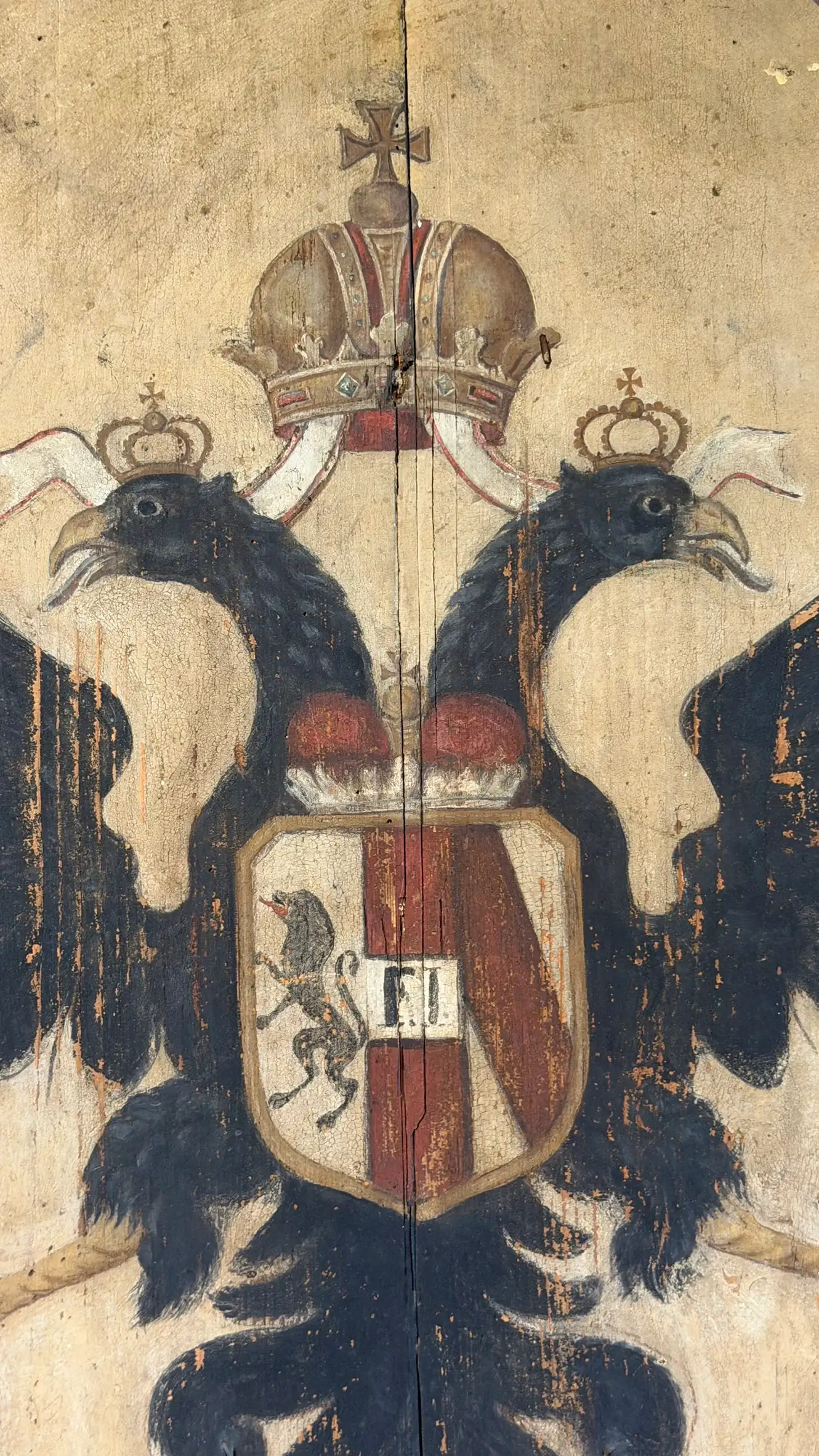
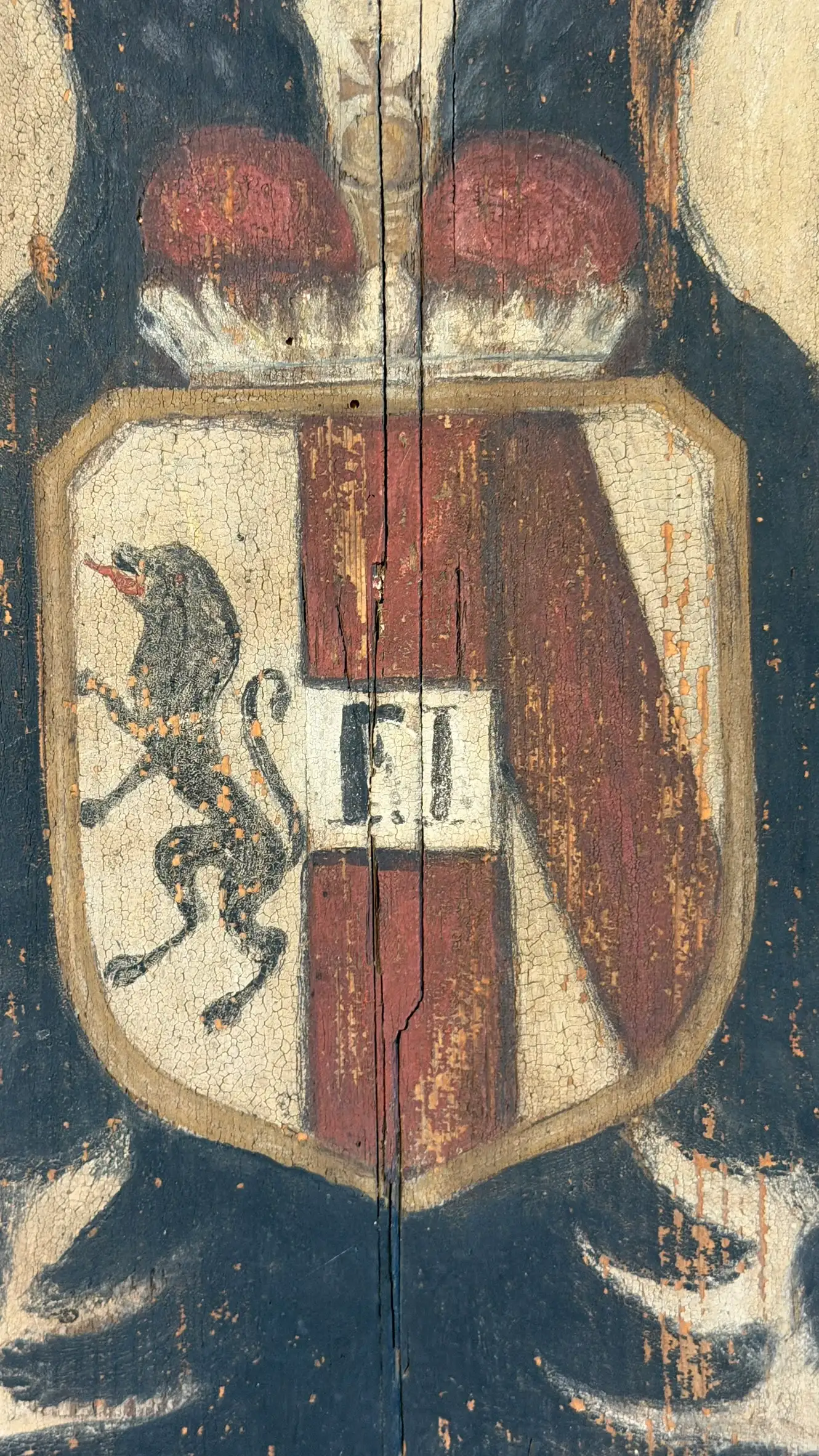
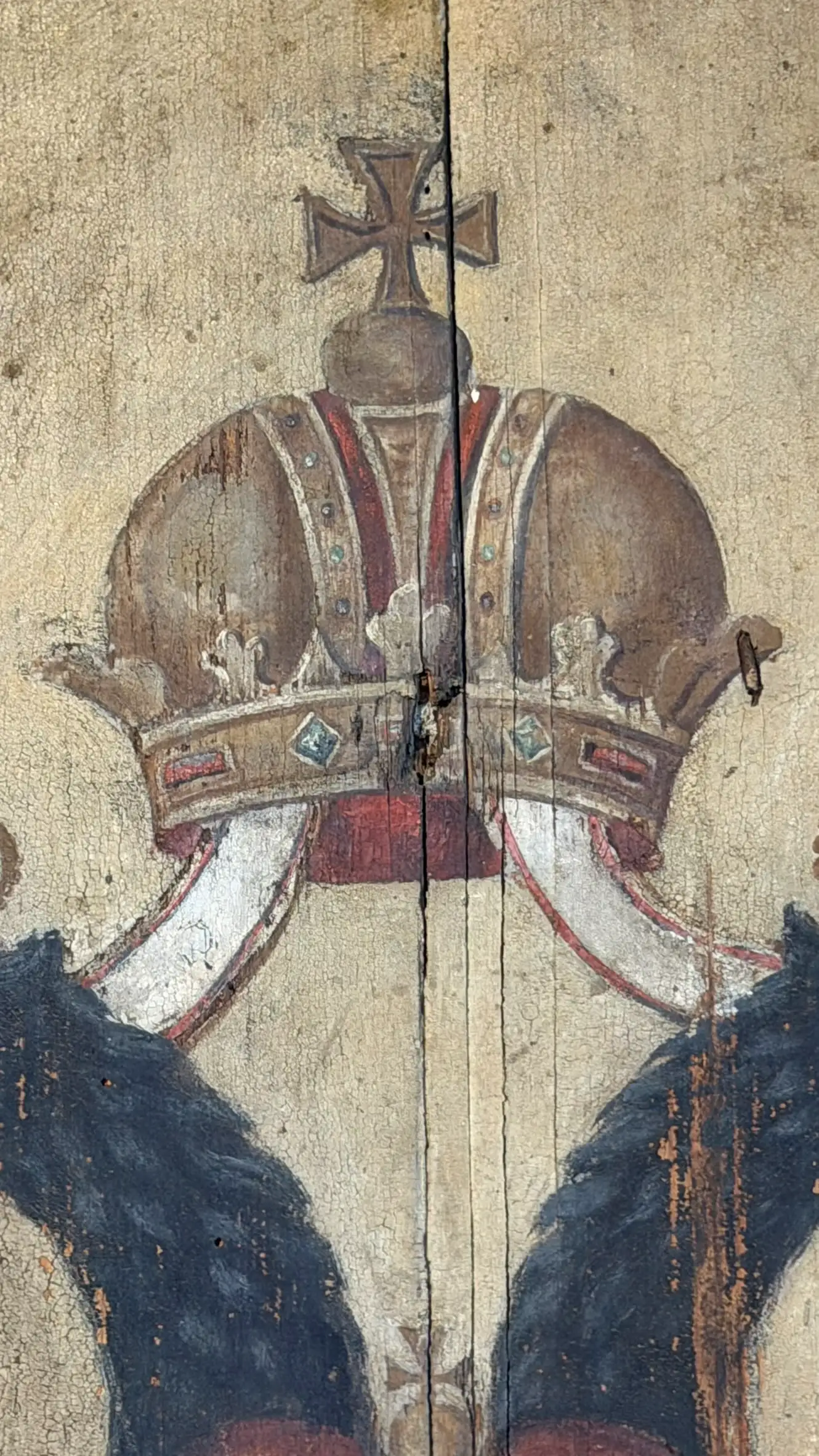
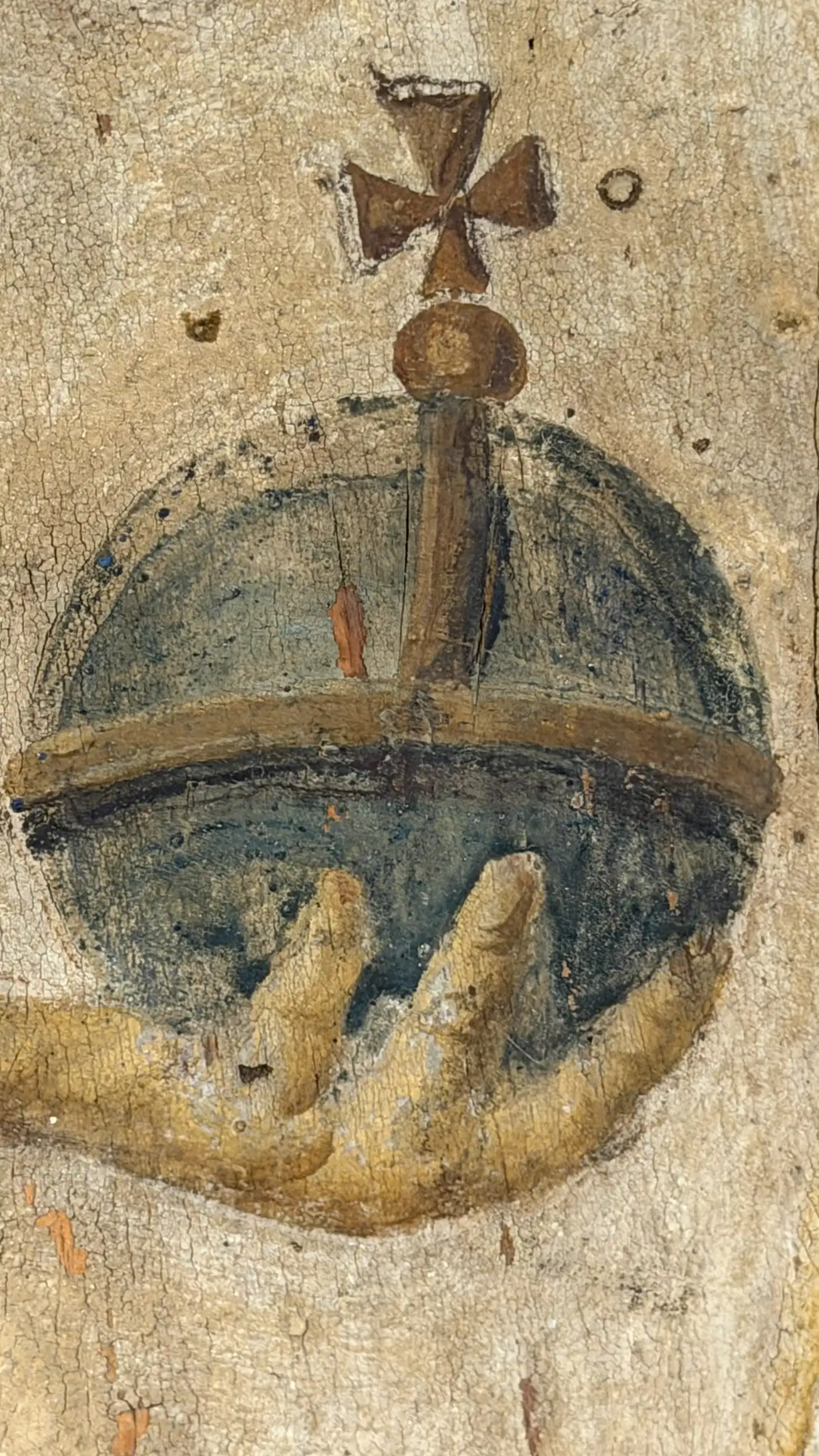
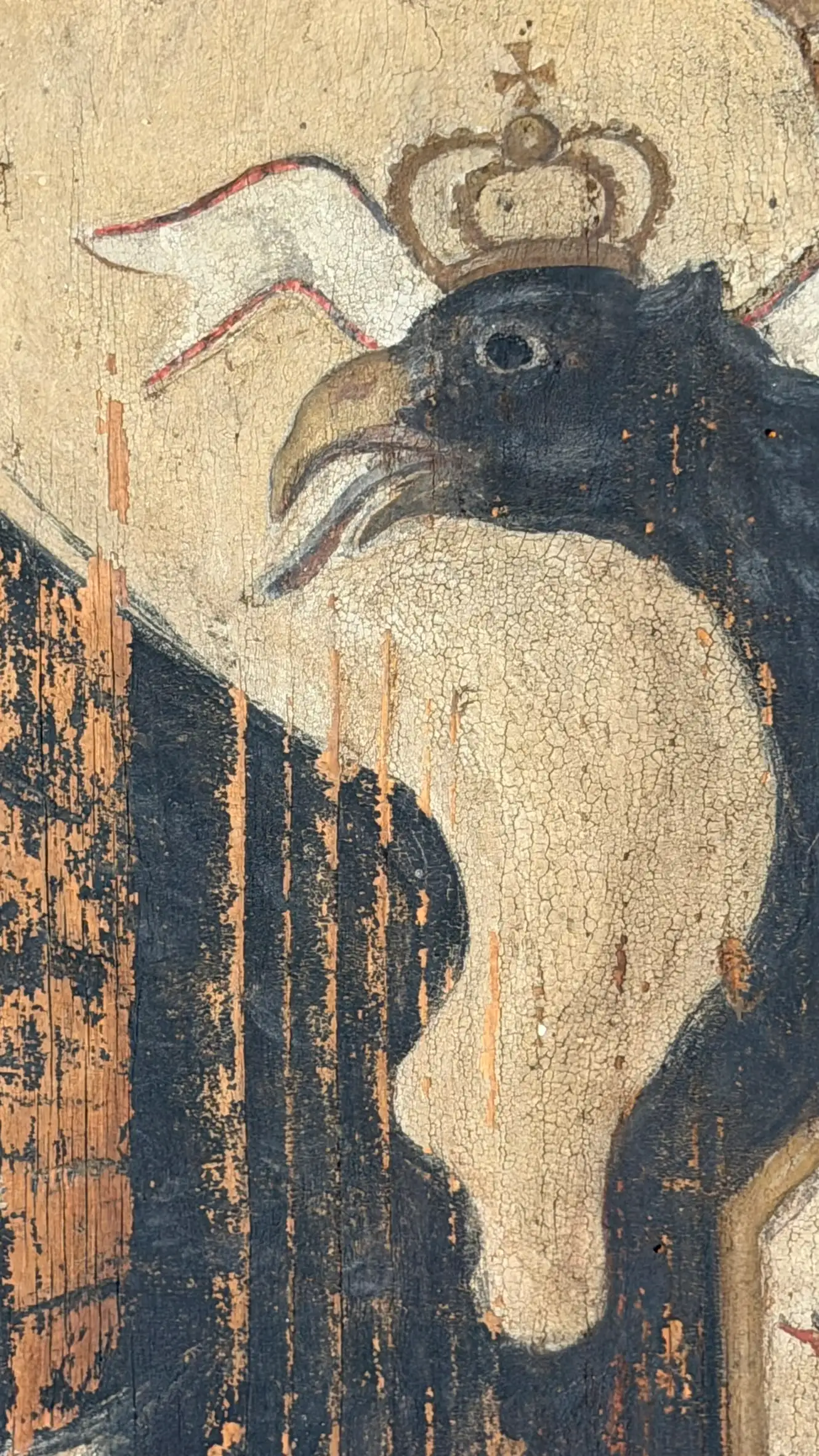
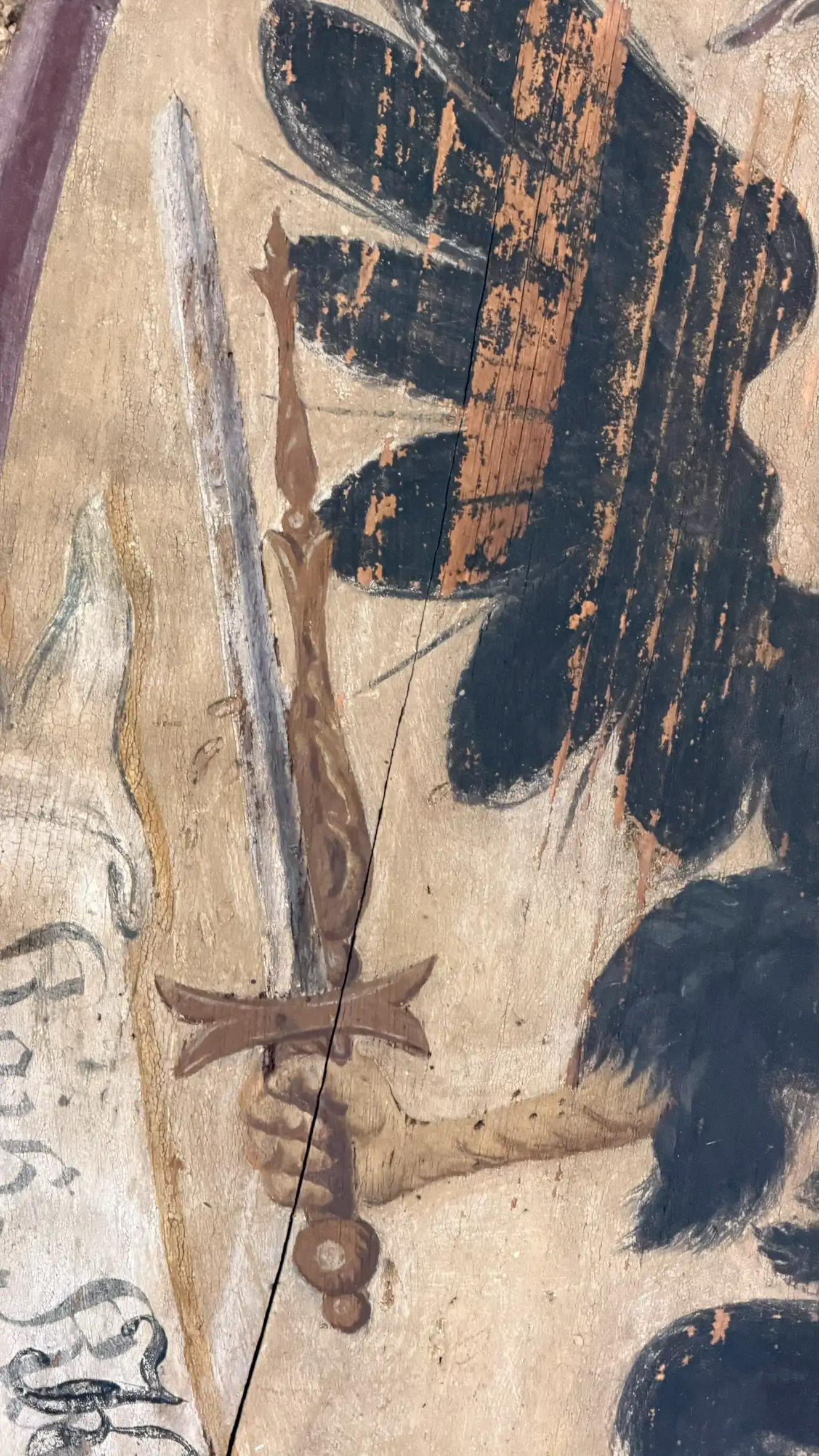
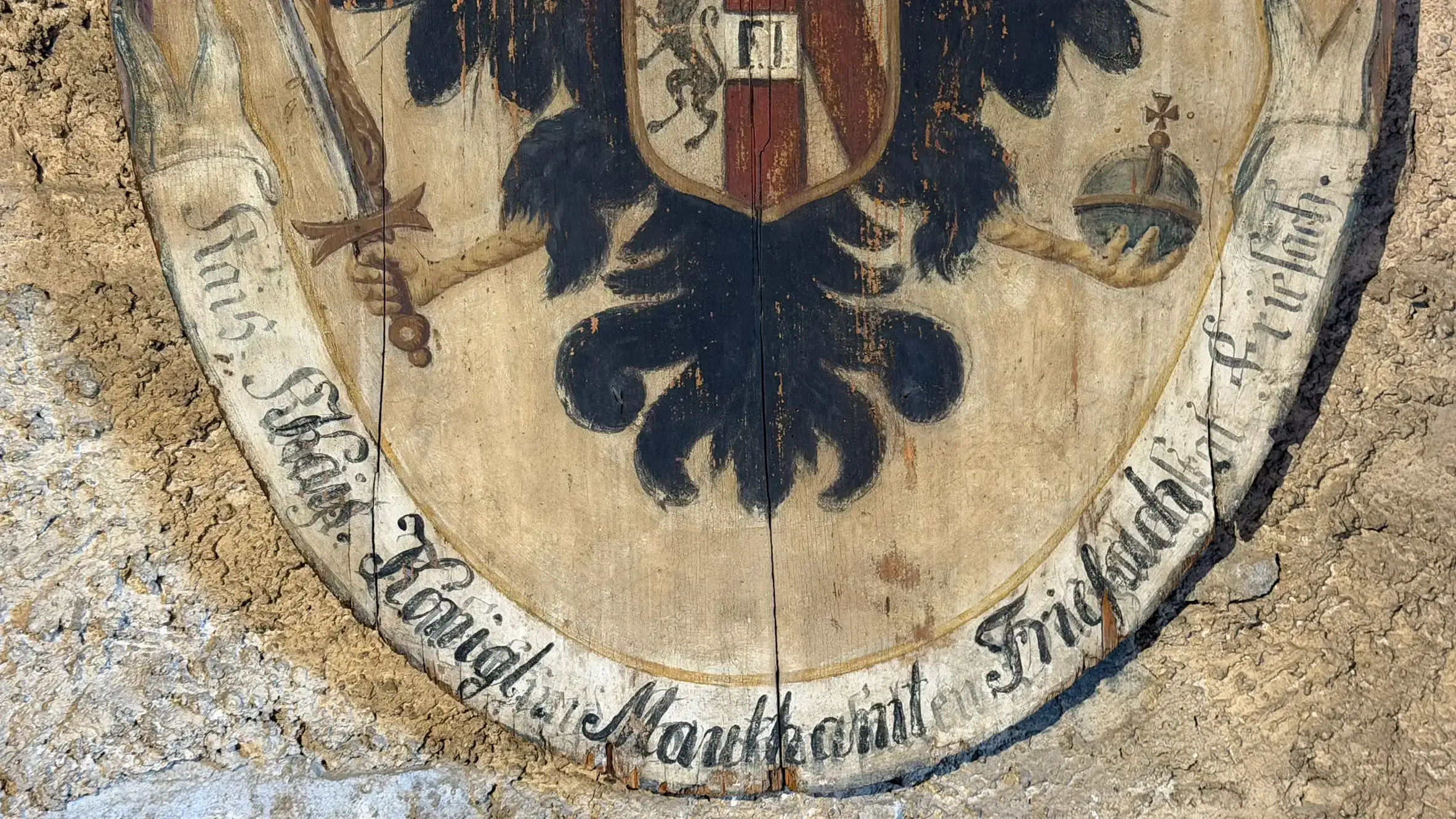
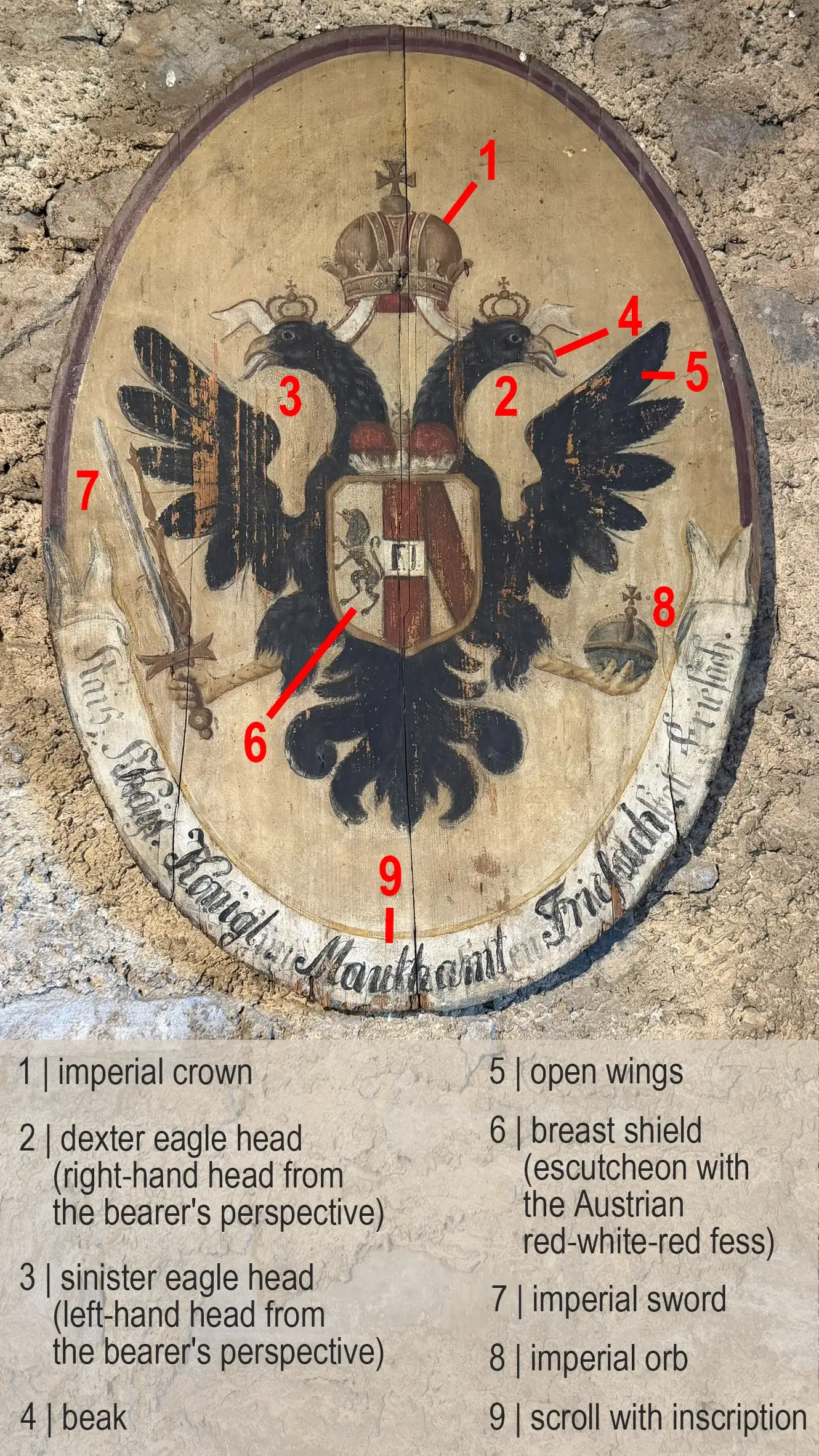
The arms consist of a crowned imperial double-headed eagle displayed sable, surmounted by the Imperial Crown. Upon the eagle’s breast is an escutcheon bearing the Austrian Bindenschild, charged with the red-white-red fess. The eagle is accompanied by the Imperial Sword and the Imperial Orb, symbols of imperial authority. A scroll beneath the eagle bears the inscription identifying the Imperial-Royal Toll Office in Friesach.
Heraldic elements visible:
– imperial crown
– imperial double-headed eagle displayed
– dexter and sinister heads
– outspread wings
– breast shield (escutcheon)
– Austrian Bindenschild
– red-white-red fess
– imperial sword
– imperial orb
– scroll with inscription
Imperial-Royal Toll Office
The Imperial-Royal Toll Office in Friesach was an Austrian government office established after Friesach passed from the Archbishopric of Salzburg to Habsburg rule in 1803. The surviving painted toll sign, displaying the imperial double-headed eagle and the Austrian coat of arms, dates from the period after 1805 and confirms that the toll office existed during the early years of the Austrian Empire.
The toll sign depicts the crowned imperial double-headed eagle with the Austrian Bindenschild on its breast. The Imperial Sword and the Imperial Orb flank the eagle as symbols of imperial authority. A scroll beneath the eagle bears the inscription “k.k. Mauthaus Friesach“.
The duties of an Imperial-Royal Toll Office included collecting tolls and administering the movement of goods and traffic on behalf of the state. As an important trading centre on a major north-south route, Friesach played a significant role in regional and long-distance commerce.