Fibula
Material: Bronze
Reading Time: 0:15 min
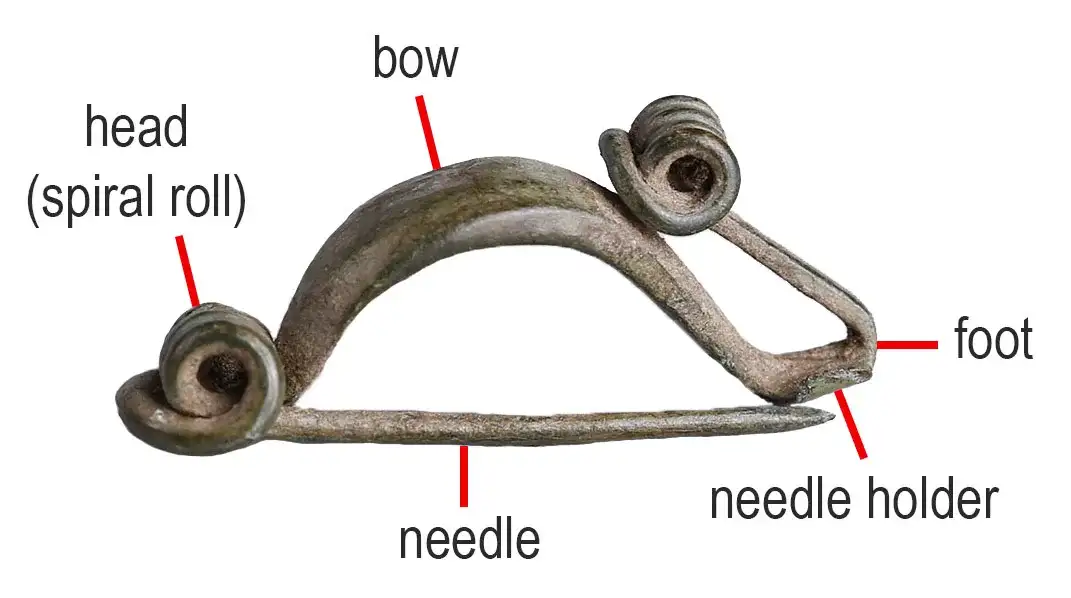
A fibula (plural: fibulae) is a pin or brooch for fastening garments, typically at the right shoulder.
The fibula developed in a variety of shapes, but all were based on the safety-pin principle.
Fibulae were not only decorative; they had a practical function to fasten clothing for both sexes, such as dresses and cloaks.
History of Clothing Fasteners in Ancient Rome
Reading Time: 0:40 min
During the early Roman period (1st century BCE – 1st century CE), fibulae were the primary fasteners used to secure garments such as cloaks and tunics. Made from materials like bronze, iron, and brass, these brooch-like clasps evolved in design, becoming more decorative over time.
In the mid-Roman period (2nd-3rd century CE), toggles and buttons began to appear, though buttons were still uncommon. Toggles, made from bone, wood, bronze or brass, were typically used for fastening certain garments, particularly at the neckline or wrists.
By the late Roman period (4th-5th century CE), buttons became more widespread, especially in military and civilian dress, often made from brass. While fibulae remained in use, buttons started to dominate as the preferred fastener, reflecting the advancements in Roman fashion and metalworking.