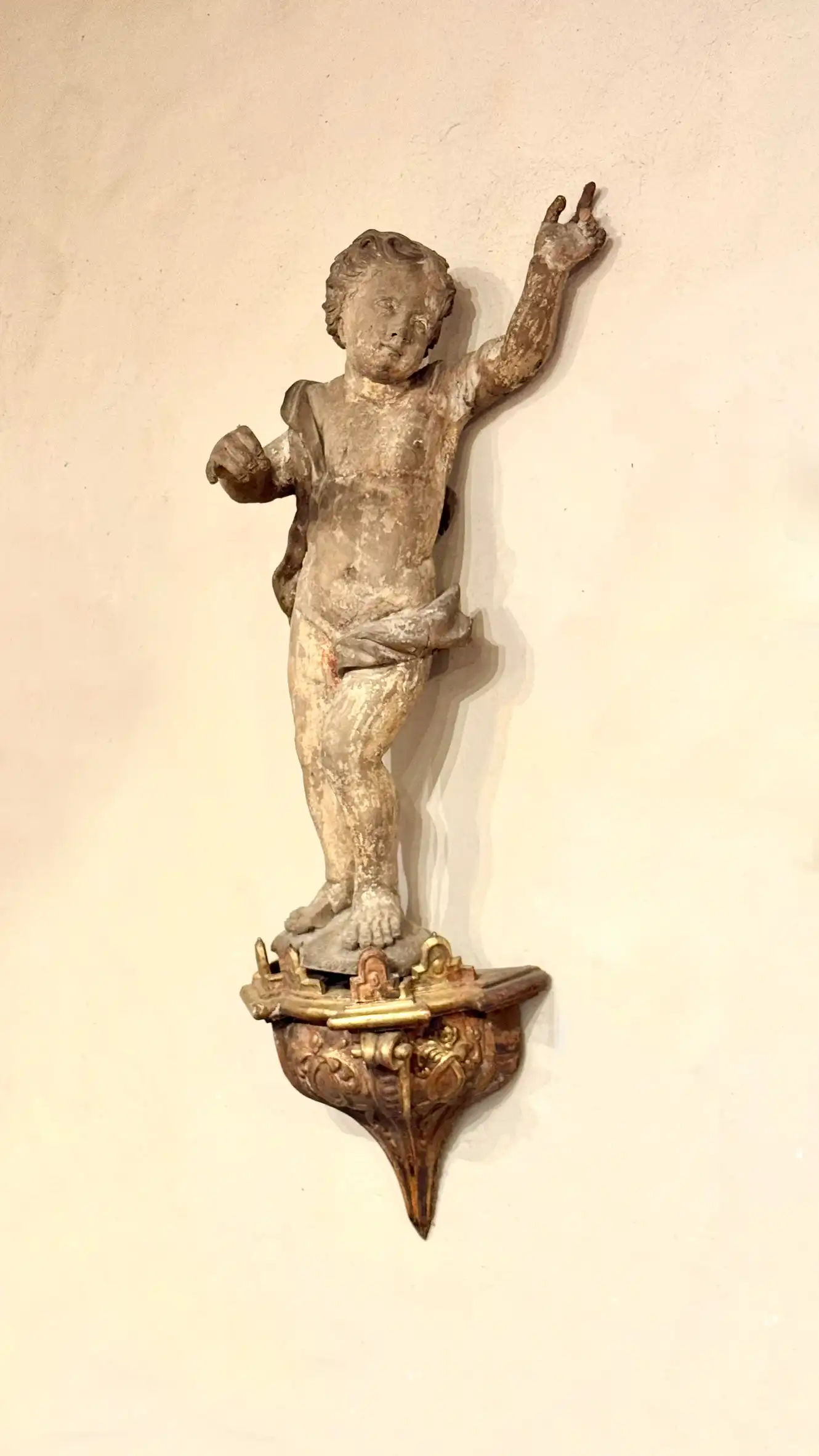
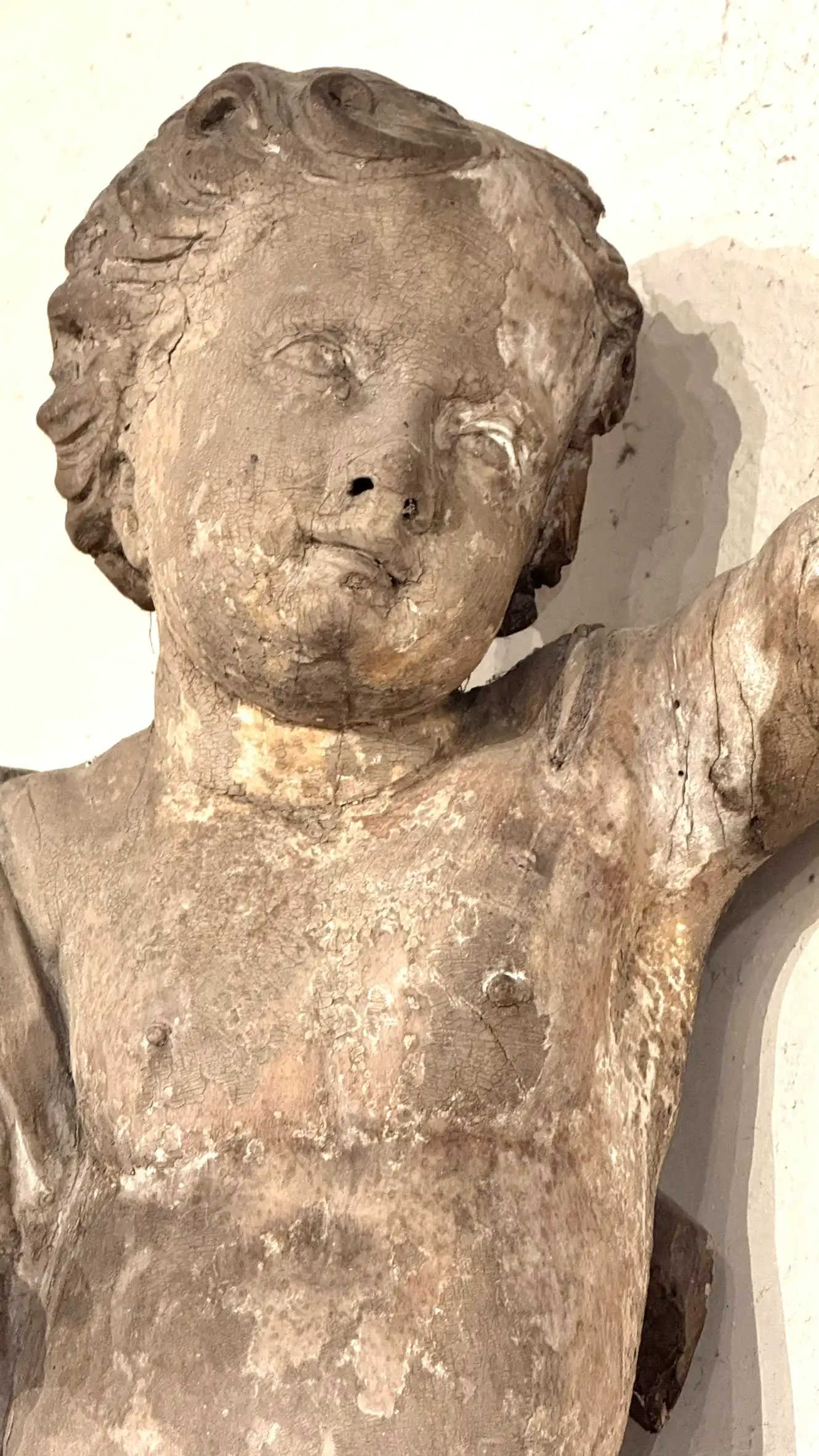
Baroque Putto, Mid-18th Century
Putto (singular) | Putti (plural)
Reading Time: 1:15 min
Putti are small, chubby, often winged child figures commonly found in European art.
They are usually depicted nude or lightly draped, with playful or contemplative expressions.
Putti are most often associated with symbolic or decorative contexts. Their innocence and charm symbolise purity, divine love, and spiritual joy.
The Artistic Evolution of Putti
Romanesque (c. 1000–1200): Putti appeared sparingly, often as small decorative motifs in manuscript illuminations or sculptural capitals. They were simple, stylised, and rigid.
Gothic (c. 1200–1500): Putti became more expressive, appearing in sculpture, stained glass, and altarpieces. Their playful or devotional gestures added emotional depth.
Renaissance (c. 1400–1600): Artists like Donatello and Raphael popularised naturalistic putti with refined anatomy, dynamic poses, and soft modelling. They became central in both secular and sacred art, often paired with mythological subjects.
Baroque (c. 1600–1750): Putti reached their most exuberant expression: voluminous, energetic, and highly emotive, often filling ceilings, altarpieces, and elaborate decorations.
What are Cherubim?
Cherub (Plural: Cherubim)
Cherubim are angelic beings, often depicted as childlike but sometimes with multiple wings.
In Christian iconography, they symbolise divine wisdom, the presence of God, and protection. Unlike playful putti, cherubs have a stronger religious or spiritual role.
What is the difference between Putti and Cherubim?
Putti are small, chubby, often winged child figures commonly seen in European art, especially during the Renaissance and Baroque periods. They usually represent love, innocence, or playfulness and are mainly decorative or symbolic rather than religious.
Cherubim, by contrast, are biblical angels associated with divine presence and protection. They symbolise spiritual power and holiness rather than earthly affection.
In short:
Putti are playful, artistic figures. A figure is a putto if the artwork is secular or mythological.
Cherubim are sacred, angelic beings. A figure is a cherub if the artwork is religious and sacred.