
Chapel Tower (Kapellenturm)
Reading Time: 2:26 min
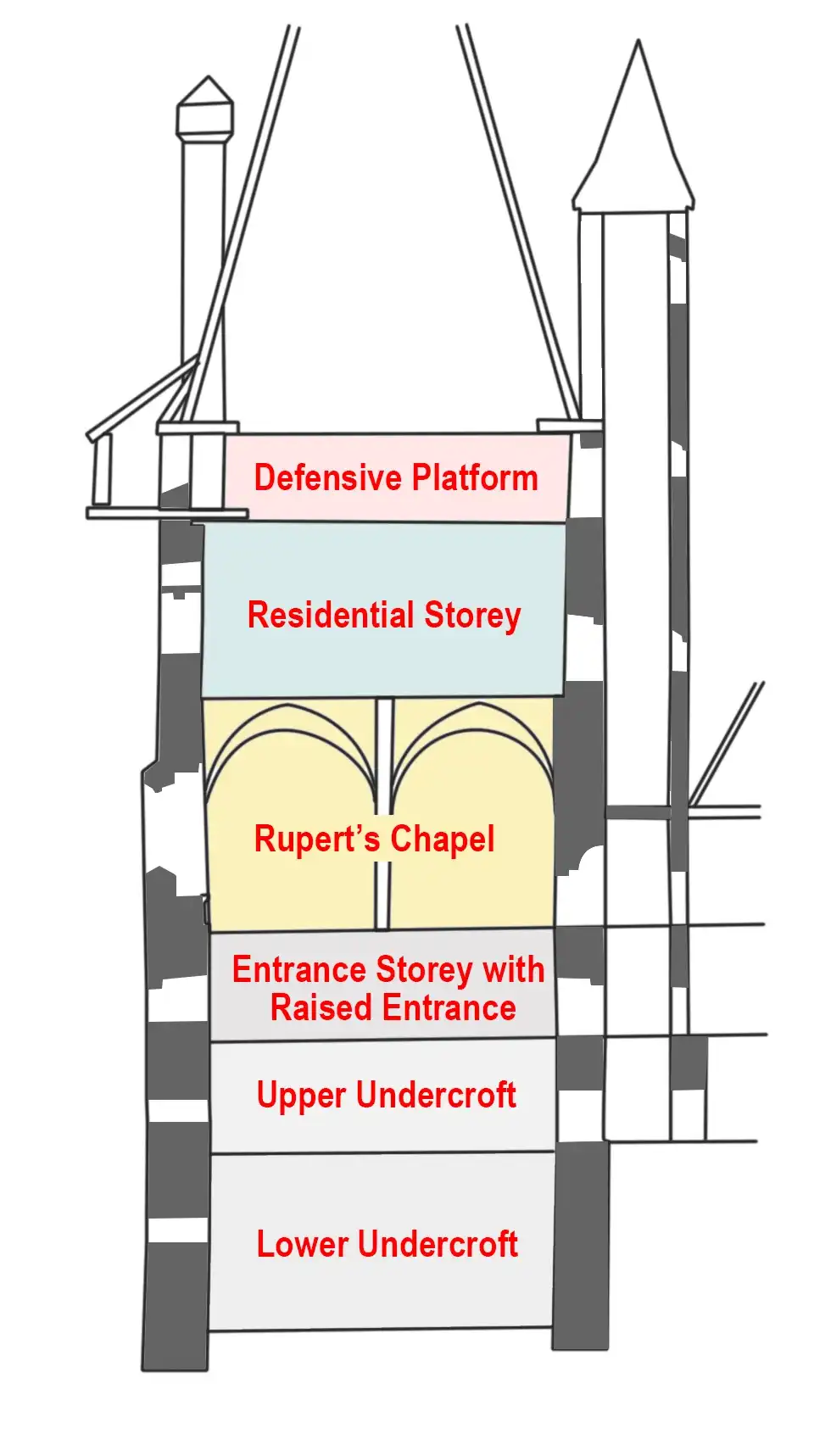
The Chapel Tower (Kapellenturm) of Petersberg Castle in Friesach exhibits a vertically stratified spatial organisation characteristic of high medieval multifunctional towers combining defensive, residential, and sacred functions.
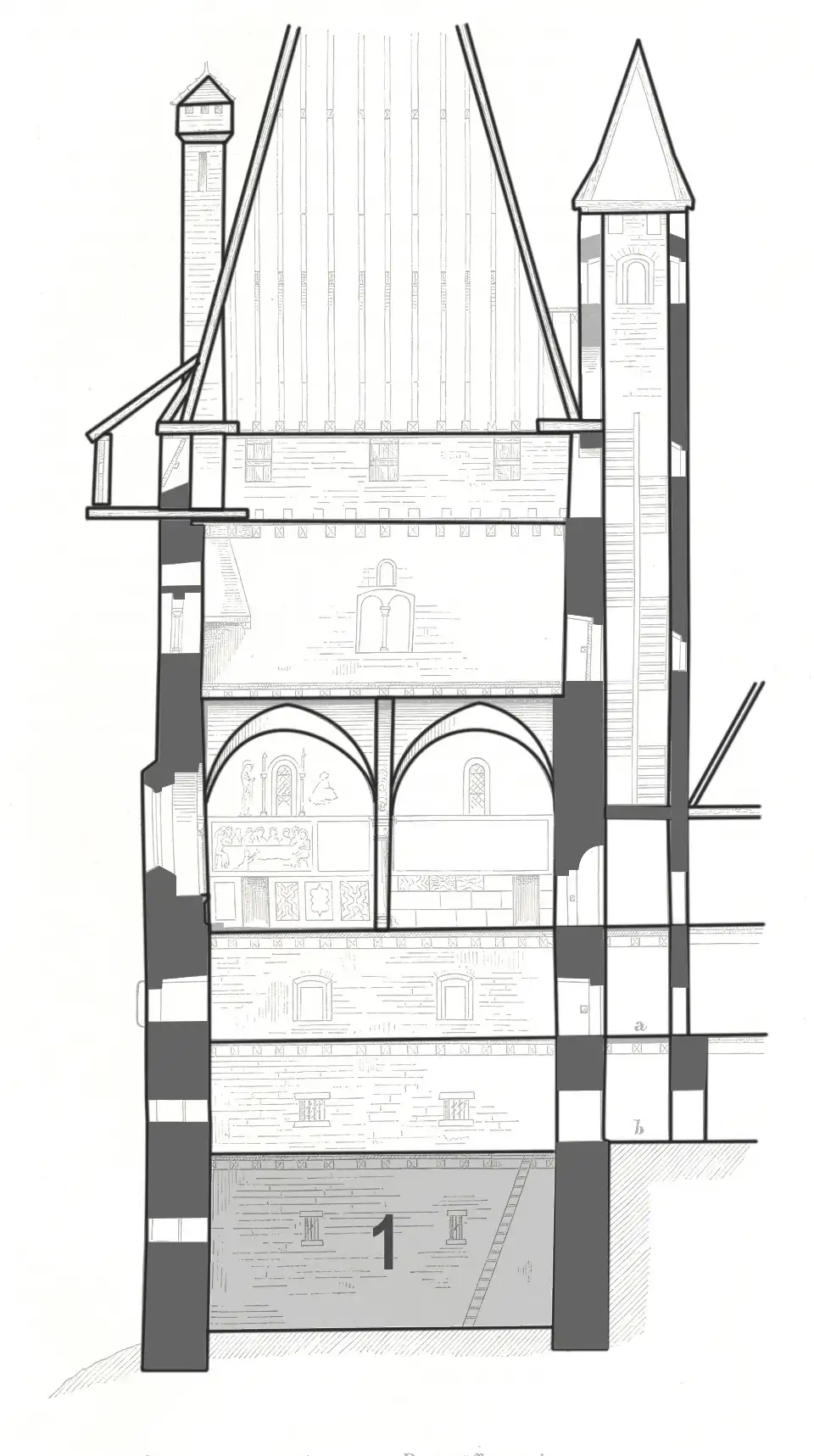
Level 1 – Lower Undercroft (Substructure)
The lowest level constitutes a massive lower undercroft forming the substructure of the tower. It was primarily devoted to storage and provisioning and may additionally have served as an armoury or place of detention. Its thick masonry and minimal fenestration provided both climatic stability and defensive security.
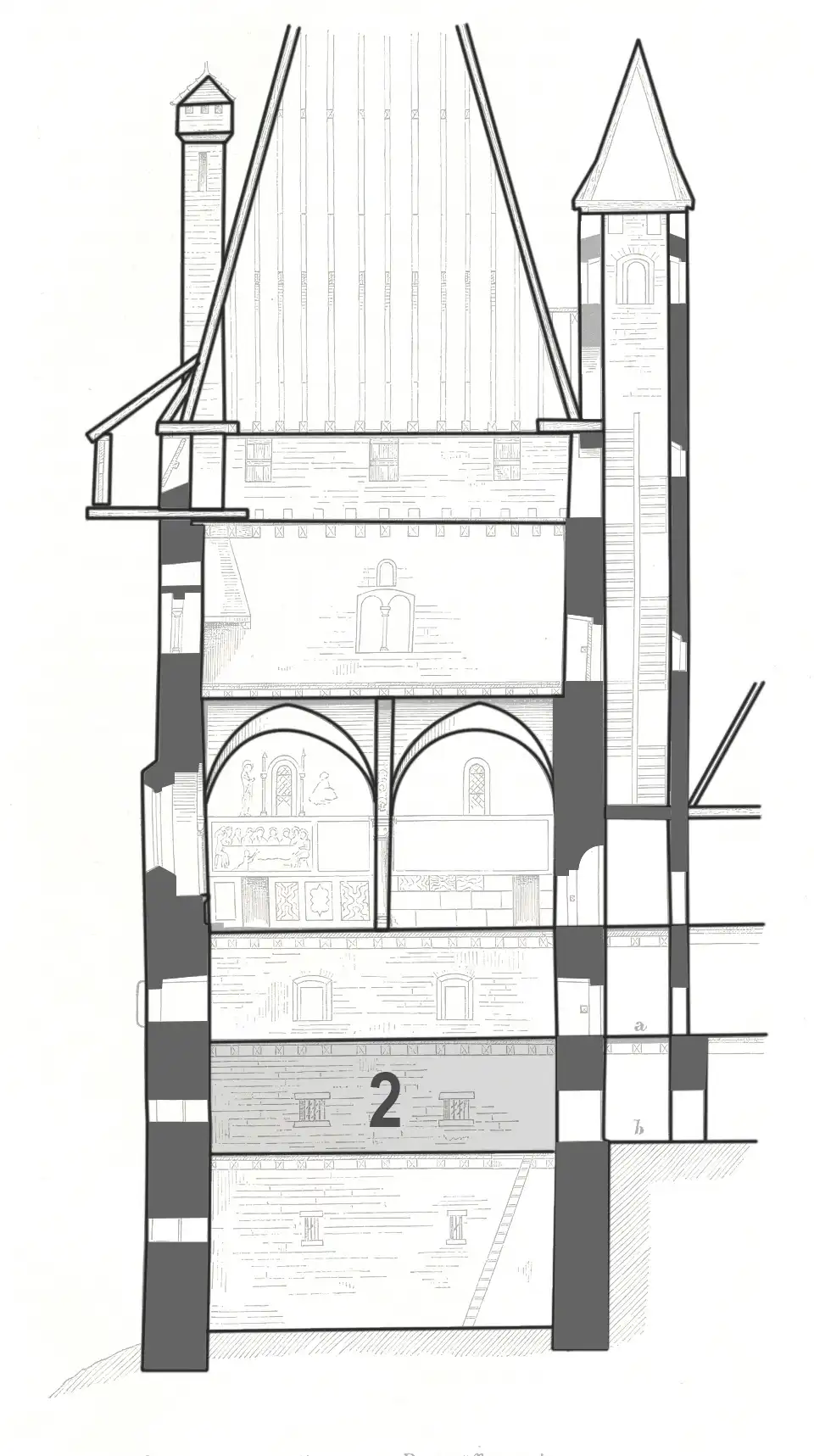
Level 2 – Upper Undercroft (Service Storey)
The second level represents an upper undercroft functioning as a service storey. It extended the storage capacity of the tower and accommodated military equipment and supplies. Architecturally, it formed an intermediary buffer zone between the substructure and the inhabited upper storeys.
Level 3 – Entrance Storey with Raised Entrance (Elevated Access Level)
This third level was designed as the principal point of access to the tower and was reached via a raised entrance (Hocheingang), ensuring controlled and defensible entry. It fulfilled administrative and reception functions and likely housed guard personnel responsible for regulating access to the upper storeys.
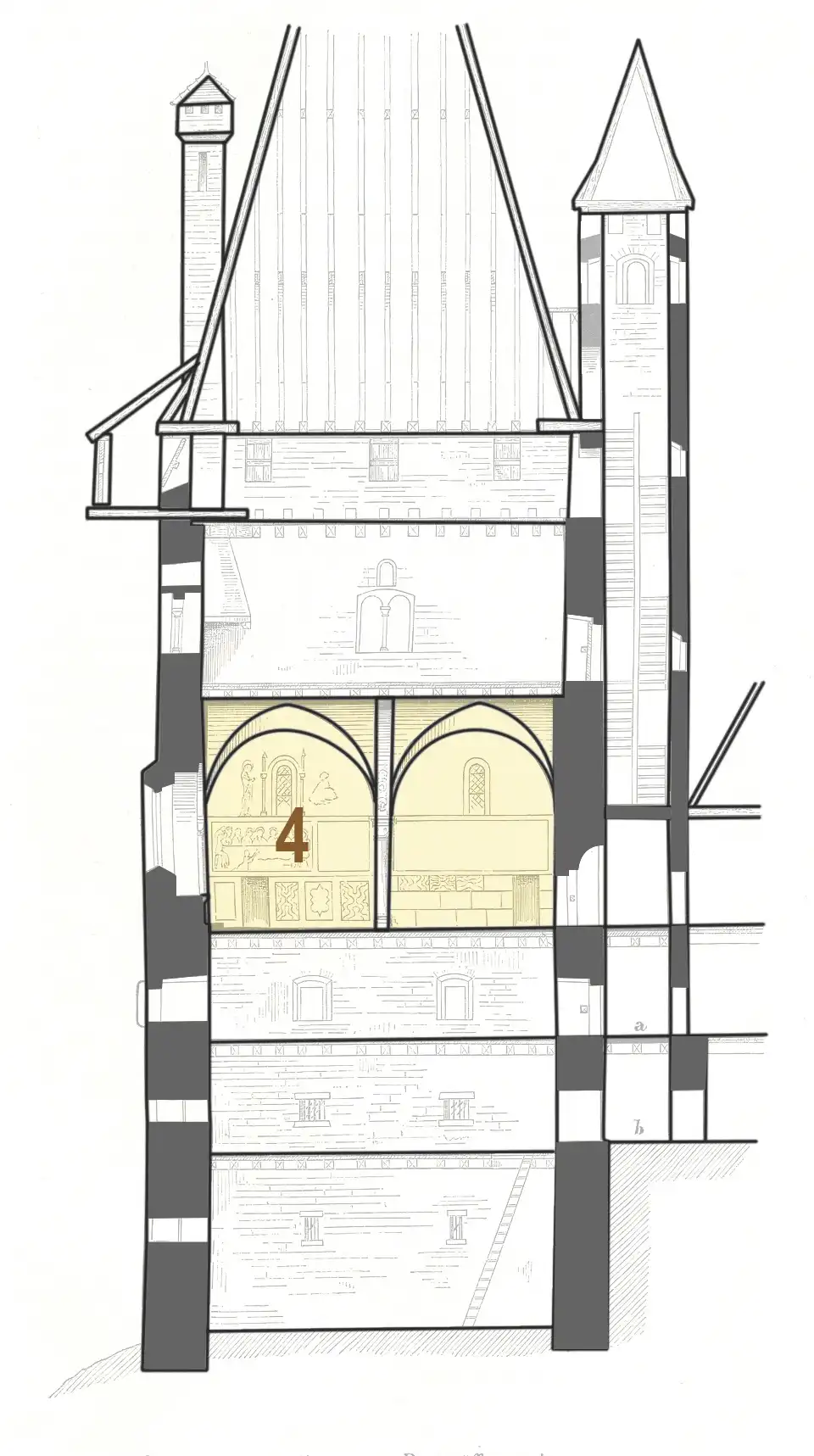
Level 4 – Chapel Storey (Rupert’s Chapel)
The fourth level contains the Romanesque chapel dedicated to Saint Rupert, characterised by a raised vaulted ceiling and extensive frescoes. This storey formed the sacral nucleus of the tower and was used for liturgical services, prayer, and ecclesiastical ceremonies, reflecting the dual sacred and defensive character of the building.
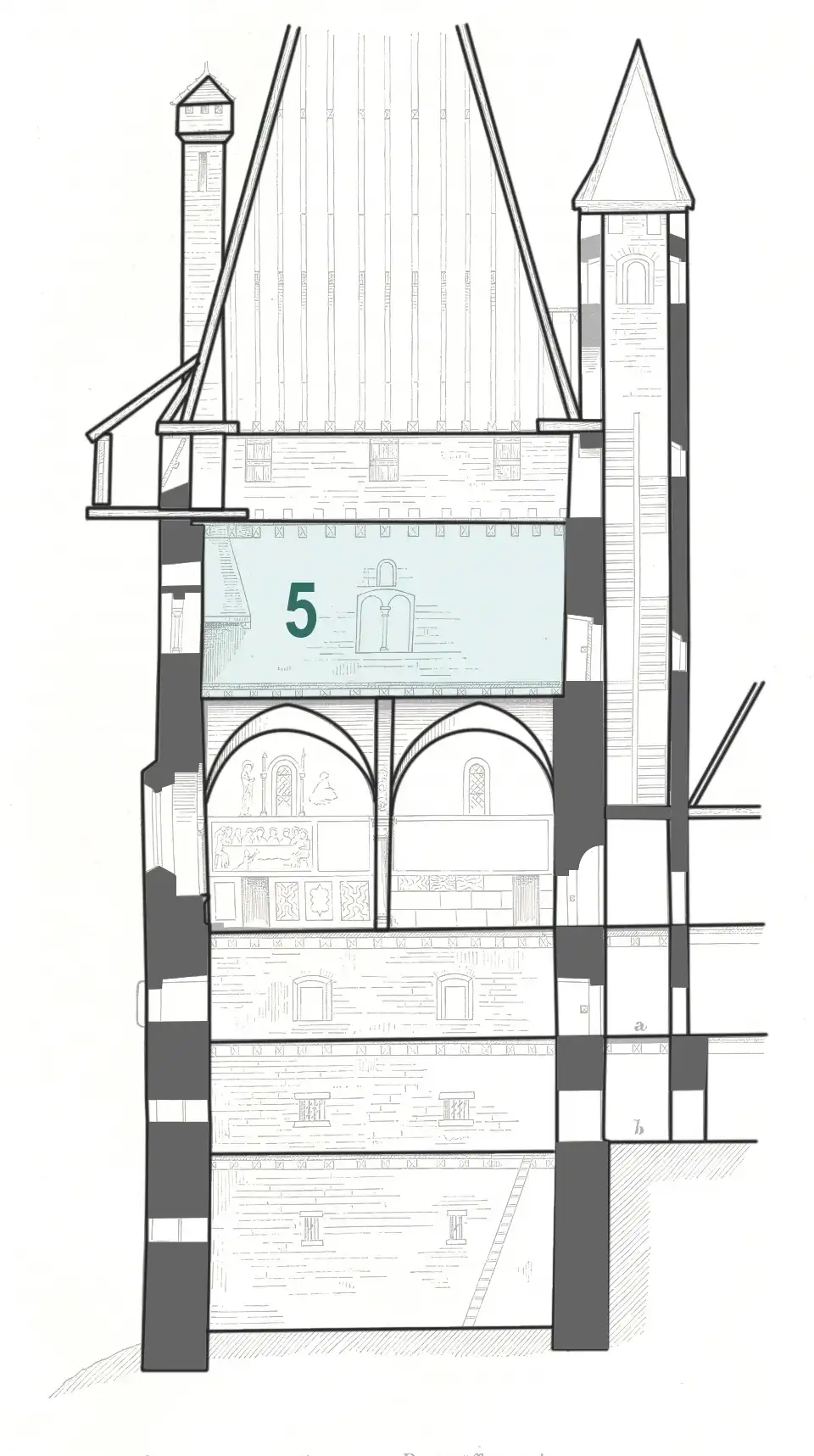
Level 5 – Residential Storey (Solar)
The fifth level served as the principal residential and representational storey of the tower. Known architecturally as the solar or private residential chamber, it provided private accommodation and combined domestic, administrative, and symbolic functions.
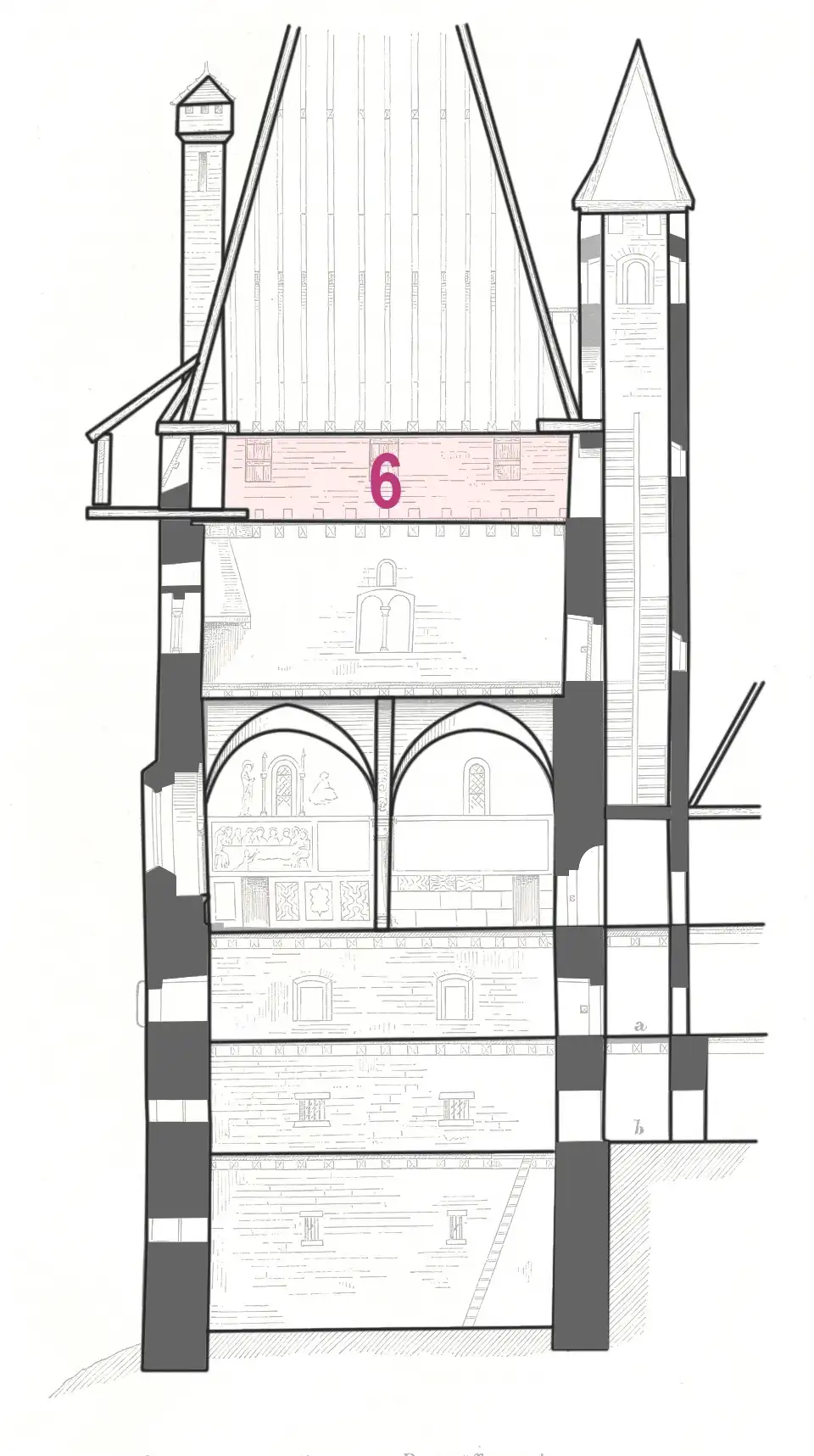
Level 6 – Defensive Platform with Timber Hoarding (Battlemented Platform)
The uppermost level constituted the defensive crown of the tower. It comprised a battlemented platform supplemented by projecting timber hoarding, enabling vertical and elevated firing positions. This storey functioned as the primary fighting and observation level within the fortification system.
Chapel Tower | Medieval Levels vs. Medieval Functions
Level 1 | The lower undercroft functioned primarily as a secure undercroft used for storage of provisions and equipment and possibly as a prison or armoury. It also served as a massive substructure supporting the upper storeys of the tower. |
Level 2 | The upper undercroft provided additional storage space for supplies and weapons and formed part of the tower’s service and defensive infrastructure. Its limited openings (narrow slits) ensured security and climatic stability. |
Level 3 | This storey formed the principal access point to the tower and was reached by a retractable ladder or external stairs that could be easily demolished. It served as a reception area for visitors, space for administrative purposes, and as accommodation for guards controlling access to the tower. |
Level 4 | This storey housed the Romanesque chapel with a raised vaulted ceiling and frescoes. It was used for prayer, liturgical services, and religious ceremonies and represented the sacred core of the tower. |
Level 5 | This storey was the private residential space, providing living quarters and domestic comfort. |
Level 6 | This uppermost storey formed the tower’s defensive platform. It enabled surveillance and active defence. The projecting wooden hoarding provided additional protection and vertical and elevated firing positions. |