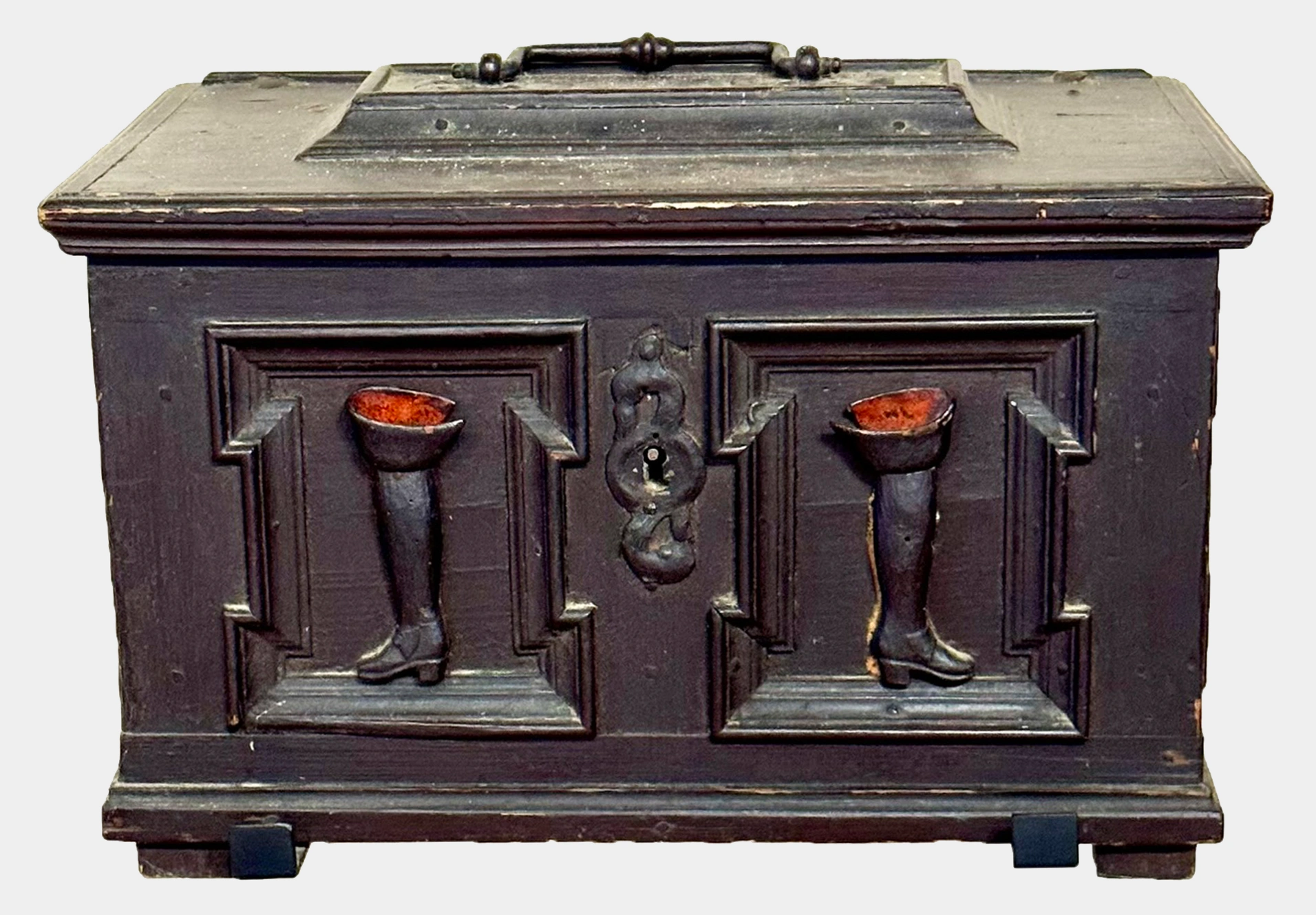
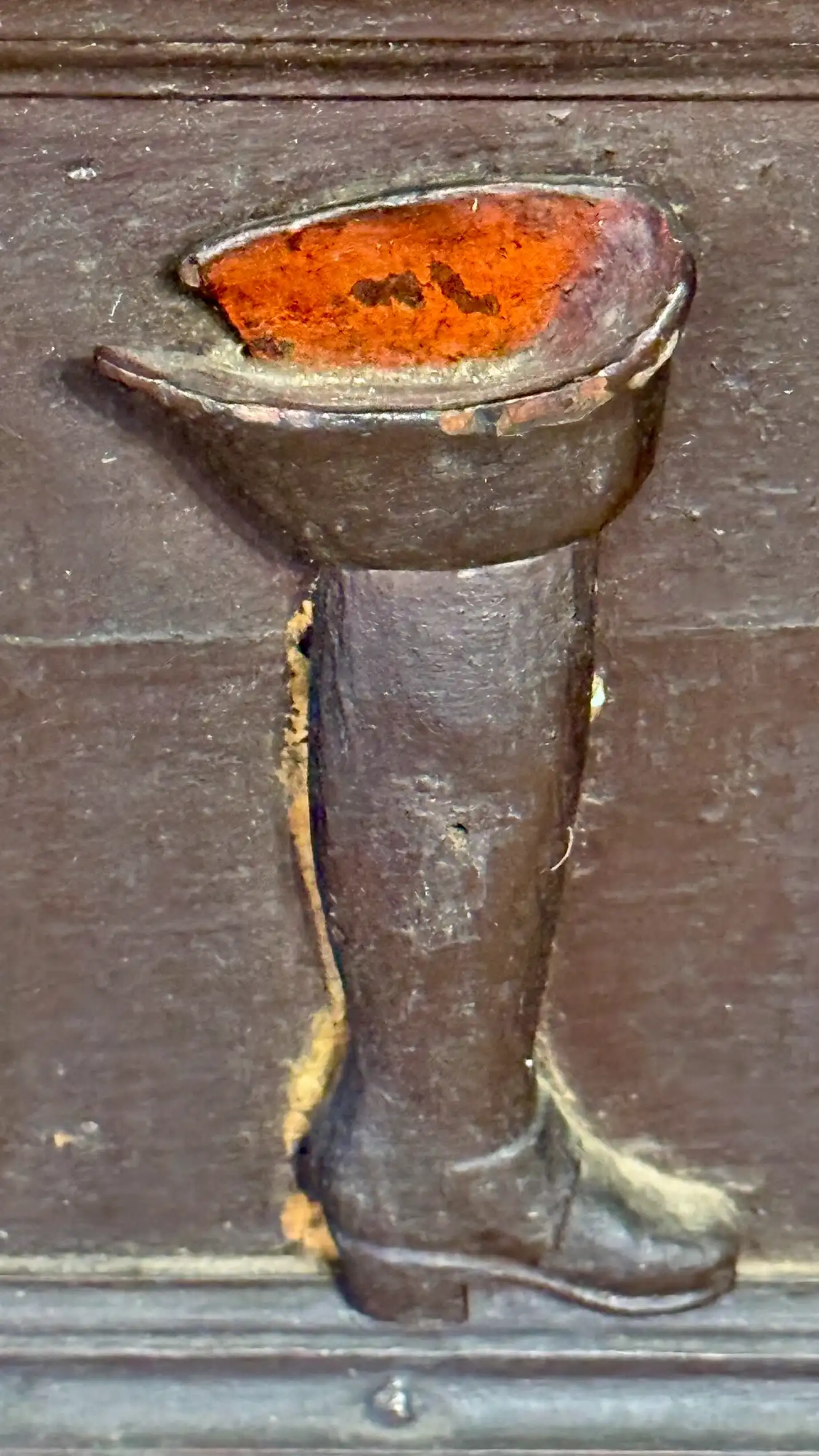
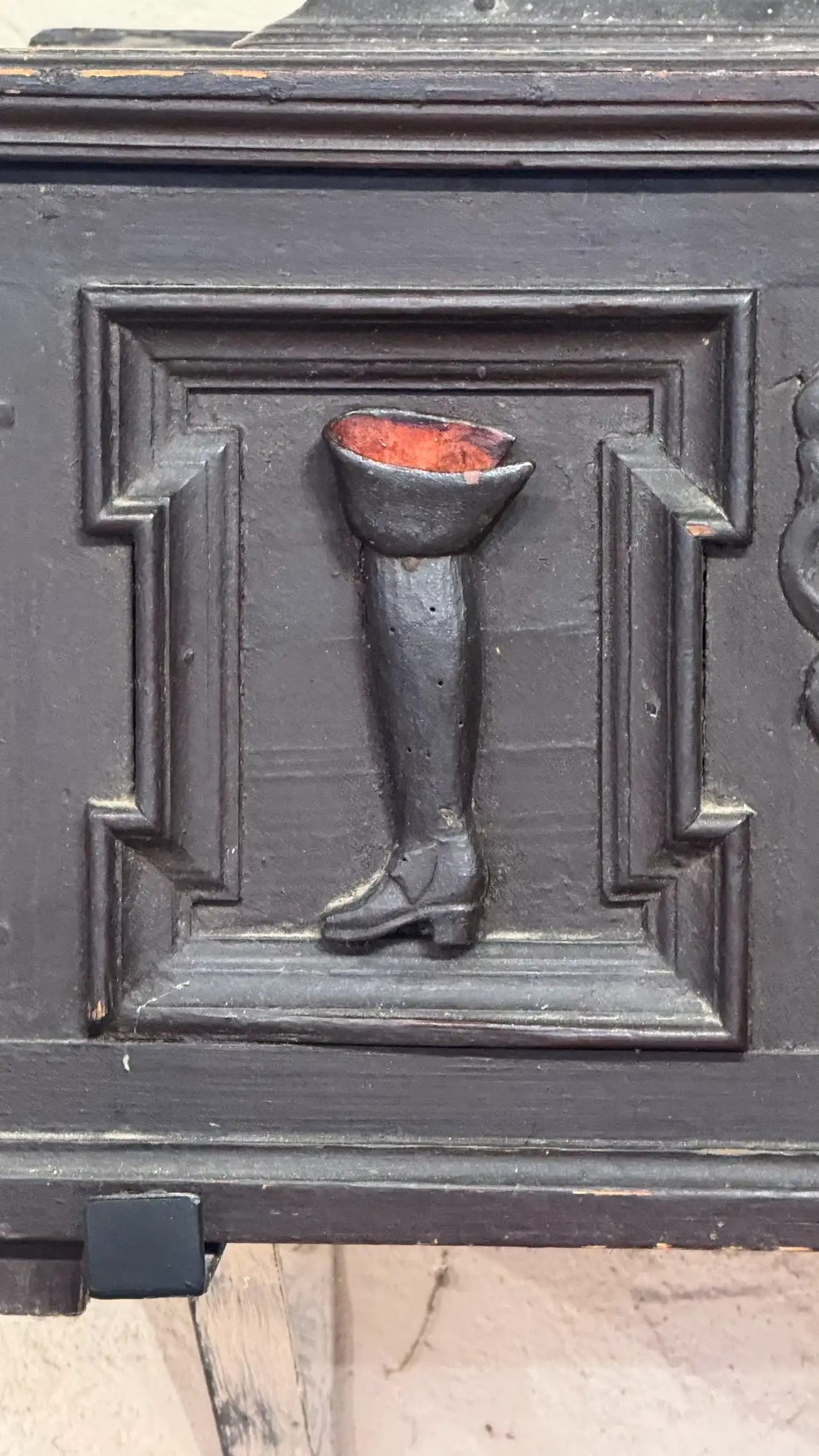
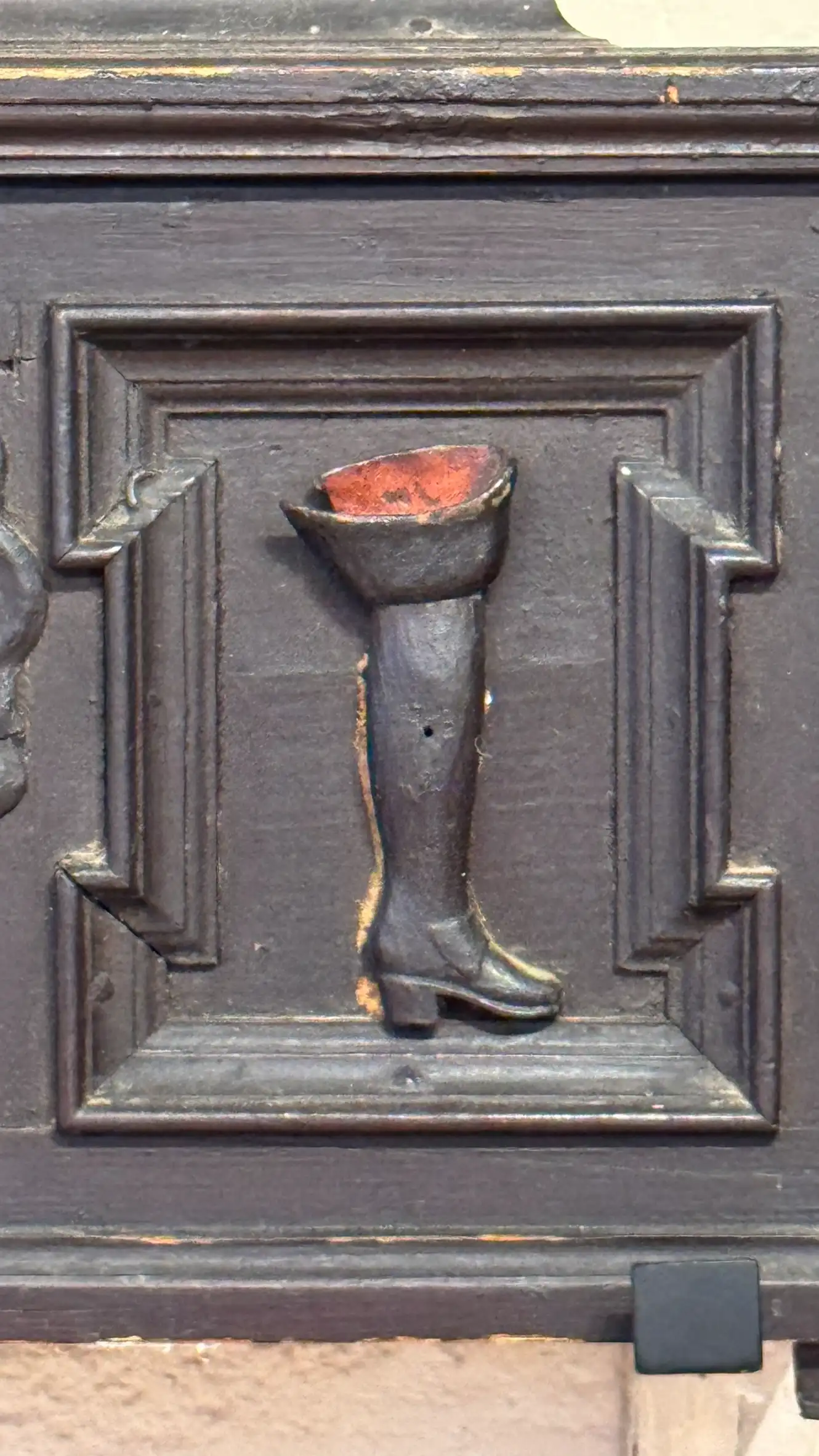
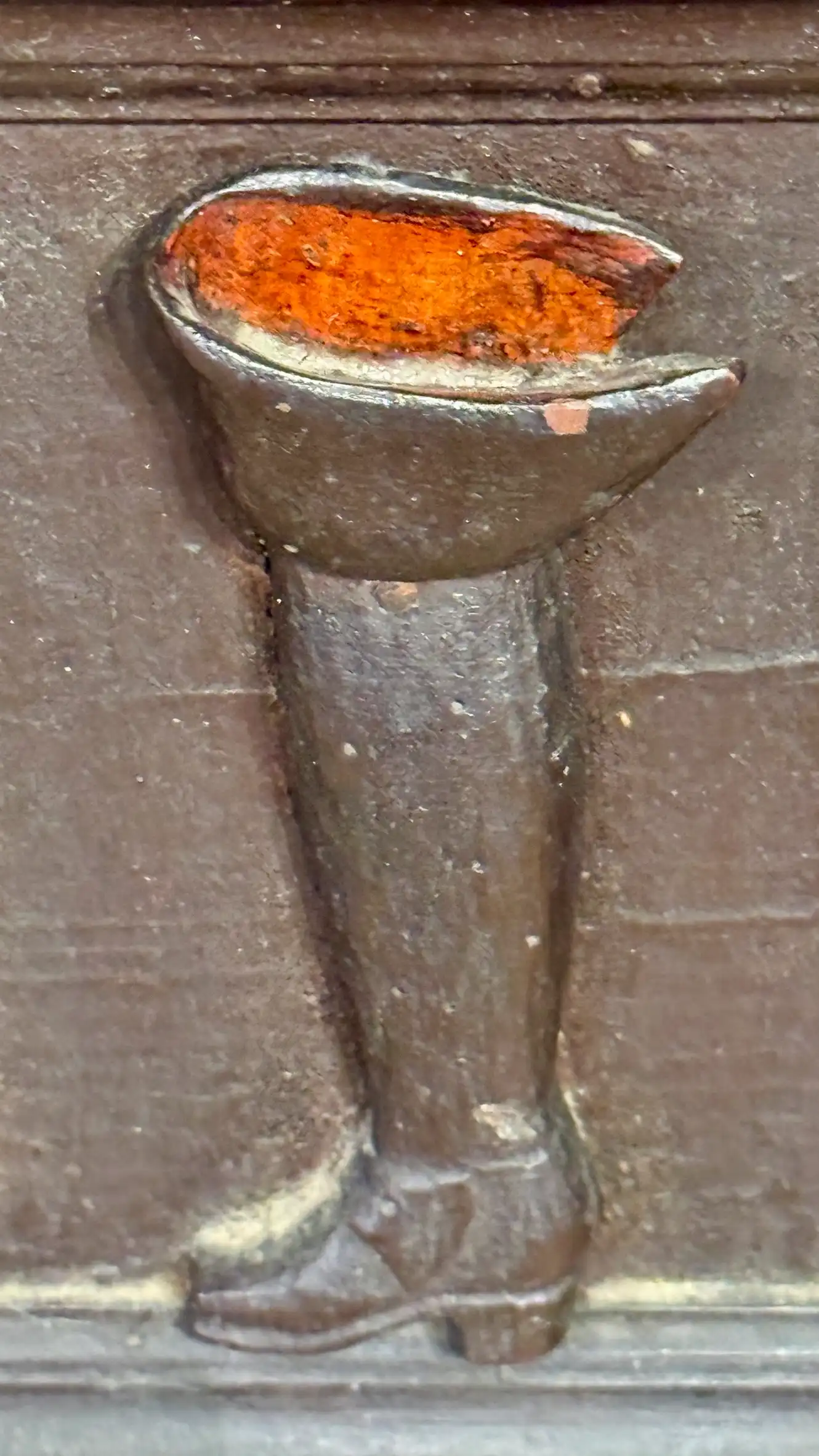
Guild Chest of the Shoemakers
Reading Time: 1:05 min
History
Shoemaker guilds in Carinthia date back to the Late Middle Ages, often first mentioned in municipal records of the 14th century. They developed to regulate the production and sale of footwear, ensuring quality and protecting local craftsmen from outside competition. Key centres included Klagenfurt, Villach, and Friesach.
Organisation
The guild was led by a master shoemaker, often elected annually, assisted by senior journeymen.
Membership was divided into apprentices, journeymen, and masters. Regular meetings set standards, resolved disputes, and organised training.
Functions
The guild controlled apprenticeship, maintained quality standards, regulated pricing, and monitored competition. It also played a social role, supporting members in times of illness or bereavement, and often contributed to local festivals and religious events.
Benefits for Members
Members enjoyed economic protection, access to communal workshops, training, and tools. They could participate in the social and religious life of the guild, receive aid during hardship, and gain prestige in their community.
Guild Signs
Shoemakers often displayed a sign outside their workshop showing a boot or shoe, sometimes decorated with initials or symbols of the guild. These signs identified the workshop and asserted membership.
Guild Treasury Chests
The guild maintained treasury chests—sturdy, lockable wooden chests reinforced with wrought iron. They stored membership fees, fines, donations, and funds for communal projects, festivals, or support of members in need. The chests were often painted and decorated to display the guild’s emblem.
Function of the Treasury Chests
Beyond mere storage, the chests symbolised the financial integrity and independence of the guild. They were central to guild administration, safeguarding funds, authorising expenditures, and sometimes acting as a tangible record of wealth and community solidarity.