Baroque Commode Clocks
18th C.
Reading Time: 4:10 min
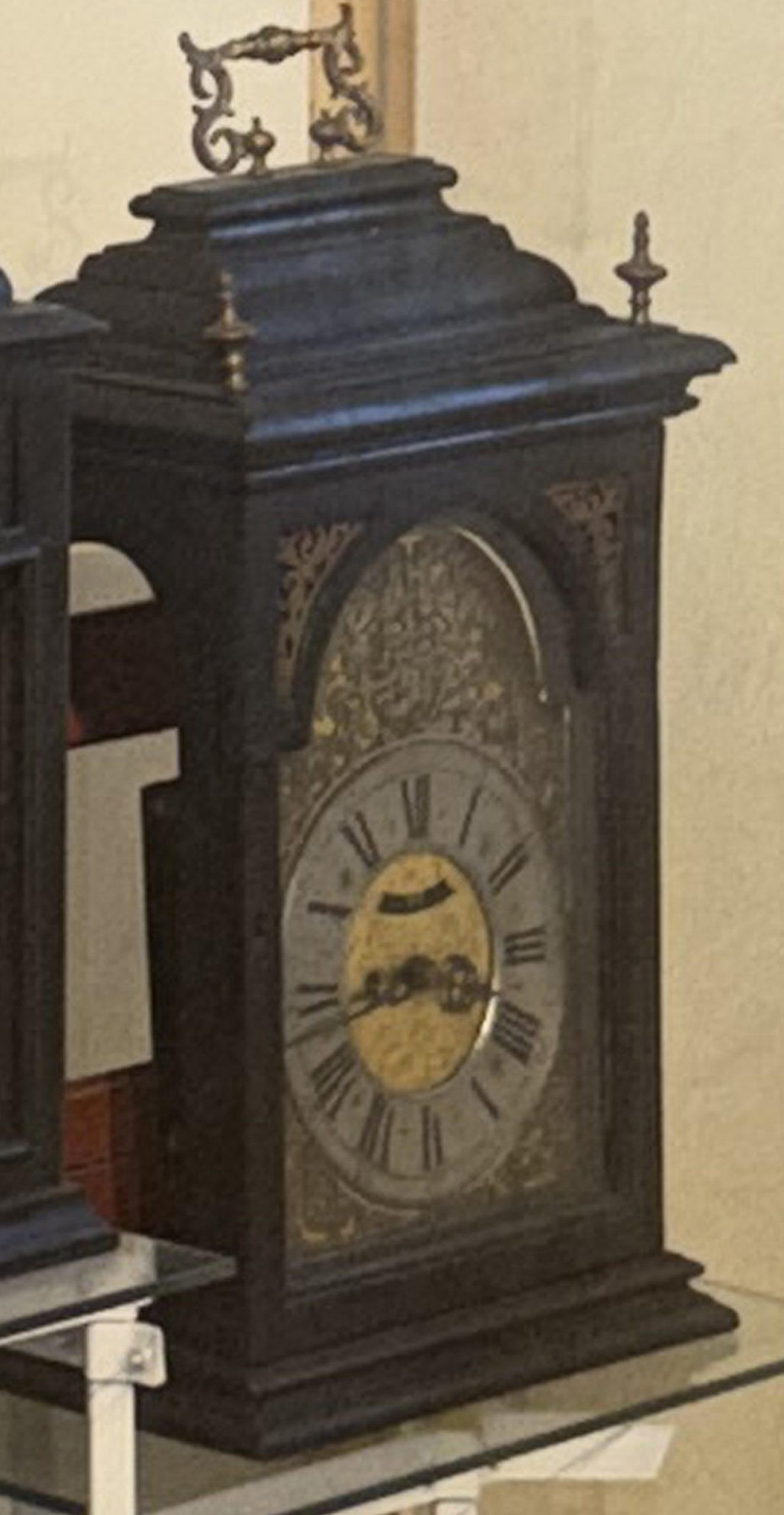
Small Baroque Commode Clock (Stockuhr)
First Half of the 18th Century
General
Small Baroque commode clock (Stockuhr), first half of the 18th century. The exact place of production is not recorded, but the type is characteristic of the southern German–Austrian region.
Case – Overall Form
The case is compact and architecturally articulated, with a gently curved upper section. Its reduced scale suggests a more intimate object suited to smaller interiors.
Front
The front is defined by a round-arched glazed door, allowing a clear view of the dial. The framing is relatively restrained, directing attention to the metal ornament.
Main Body
The case is made of dark-stained wood with softly rounded edges. The sides are partially glazed, offering glimpses into the internal mechanism.
Base and Plinth
The clock stands on small, slightly splayed feet. A moulded base provides a stable and visually balanced foundation.
Fronton (Crest)
A chased brass fronton forms the crowning element. Its surface has been worked in relief, demonstrating skilled metalworking and adding an elegant accent to the overall form.
Decoration and Materials
The visual character is defined by the contrast between dark wood and brass. The brass elements are chased and stand out clearly against the case.
Dial
The dial is decoratively designed, with an ornamented central field.
Chapter Ring
An applied brass chapter ring with Roman numerals encircles the dial and contrasts with the decorative centre.
Movement
One-day verge movement, requiring daily winding and typical of early 18th-century clockmaking.
Striking Mechanism
Hour striking on a single bell, providing a simple audible signal on the hour.
Use and Placement
Intended for domestic use, the clock would have been placed on a commode, table, or mantelpiece. Its smaller size made it particularly suitable for more modest interior settings.
Timekeeping
12-hour display with a running duration of approximately one day.

Baroque Commode Clock (Stockuhr)
18th Century
General
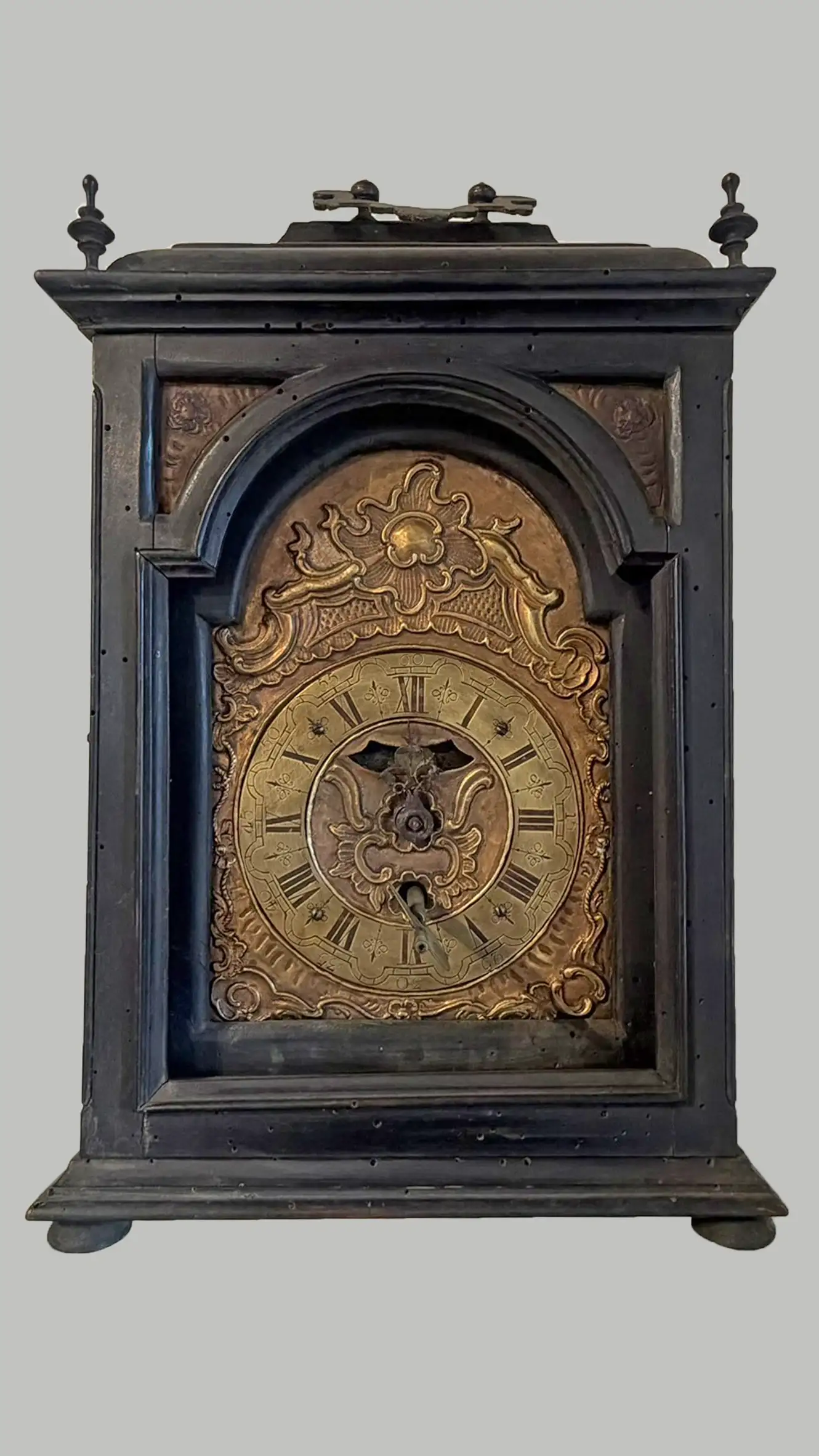
Baroque commode clock (Stockuhr), 18th century. The exact place of production is not recorded, but the type is characteristic of the southern German–Austrian region.
Case – Overall Form
The case is conceived as a compact, architecturally articulated form, echoing Baroque furniture and facade design. Its clear articulation gives the clock a dignified and balanced presence.
Front
The front is defined by a round-arched opening that reveals the dial. The relatively restrained framing directs attention to the richly decorated interior elements.
Main Body
The case is made of dark-stained wood with finely moulded edges. Its solid and enclosed form is typical of Baroque table clocks of this kind.
Base and Plinth
The clock rests on a slightly projecting base with a moulded plinth, providing both visual stability and a firm footing.
Fronton (Crest)
The chased fronton forms the crowning element of the case. This metal ornament is shaped and detailed by chasing, creating a refined relief surface that enhances the clock’s prestigious character.
Decoration and Materials
Decorative emphasis is placed on the metalwork around the dial. The contrast between the dark wooden case and the gilded metal elements is visually striking.
Dial
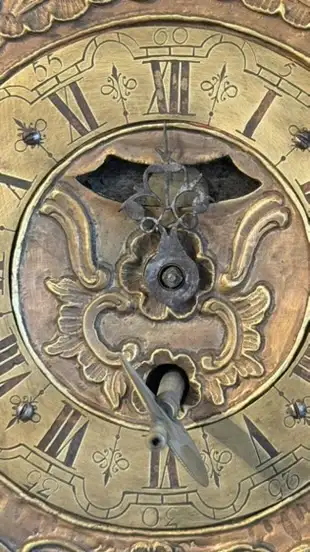
The dial is elaborately decorated, featuring pierced and ornamented areas in the centre.
Chapter Ring
An applied chapter ring with Roman numerals encircles the dial and stands out clearly from the decorative centre.
Auxiliary Dial
A small subsidiary dial allows the striking mechanism to be stopped manually, representing a functional refinement.
Viewing Pendulum
An opening in the lower section of the case provides a view of the pendulum in motion.
Pendulum Aperture
This aperture is an integral part of the design, combining technical function with visual interest.
Movement
Mechanical movement (exact type not specified), typical of 18th-century Baroque commode clocks.
Striking Mechanism
Quarter striking (4/4) on two bells, sounding at each quarter hour and on the hour.
Use and Placement
This commode clock was intended for domestic use, typically placed on a commode, table, or mantelpiece, serving both as a timekeeping device and a status object within the interior.
Timekeeping
12-hour display with additional quarter-hour striking.
Baroque Commode Clock (Stockuhr)
18th century
General
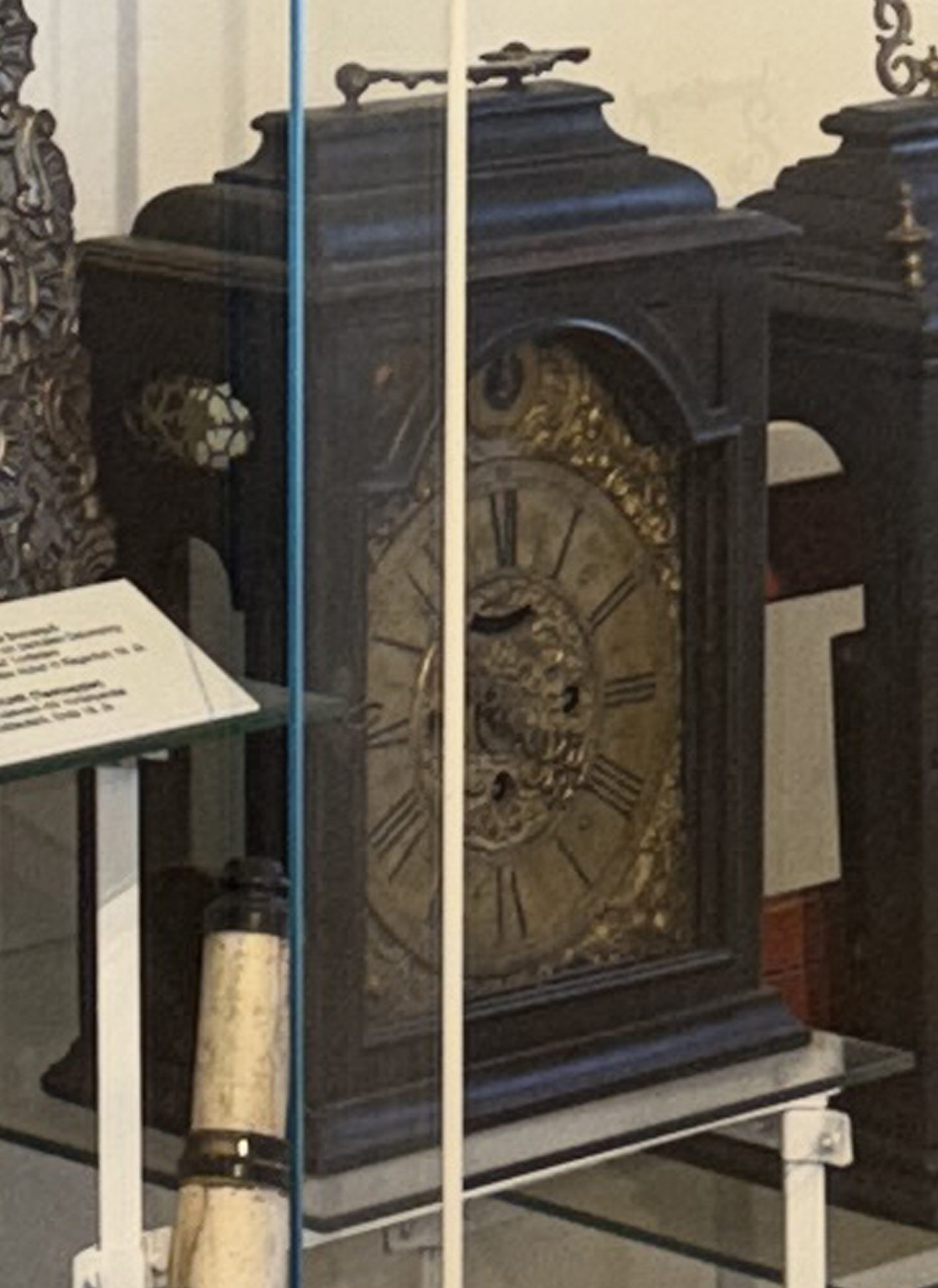
Baroque commode clock (Stockuhr), 18th century. The exact place of production is not recorded, but the type is characteristic of the southern German–Austrian region.
Case – Overall Form
The case is conceived as a tall, architecturally articulated structure, reflecting Baroque furniture and facade design. Its tiered upper section enhances its imposing and representative character.
Front
The front is defined by a round-arched opening framing the dial. Pierced ornamental panels in the upper spandrels add decorative refinement.
Main Body
The case is made of dark-stained wood with finely moulded edges and a solid, enclosed construction typical of Baroque table clocks.
Base and Plinth
A projecting base with a moulded plinth provides both structural stability and a clear visual foundation.
Fronton (Crest)
The pierced and engraved brass fronton, incorporating a coat of arms, forms the crowning feature. Its openwork design and fine engraving demonstrate a high level of craftsmanship and decorative sophistication.
Decoration and Materials
The combination of dark wood and richly worked brass elements defines the visual character. Engraved and pierced metalwork enhances the ornamental richness.
Dial
The dial presents a clearly structured composition with a decorative ground and a central field.
Chapter Ring
A chapter ring with Roman numerals surrounds the centre and stands out distinctly from the background.
Viewing Pendulum
The pendulum is visible within the dial field.
Integration within the Dial
The viewing pendulum is positioned within the chapter ring, directly integrated into the dial design.
Movement
Verge movement, typical of 18th-century clockmaking.
Striking Mechanism
Carillon striking mechanism with a chime on five bells, producing a more elaborate tonal sequence.
Coat of Arms
A coat of arms is incorporated into the fronton as part of the decorative programme.
Use and Placement
This commode clock was intended for domestic use, typically placed on a commode, table, or mantelpiece, serving both functional and representational purposes.
Timekeeping
12-hour display with an elaborate multi-bell chime.