Gothic Iron Door and Key
Reading Time: 0:00 min
Gothic Iron Door | Material
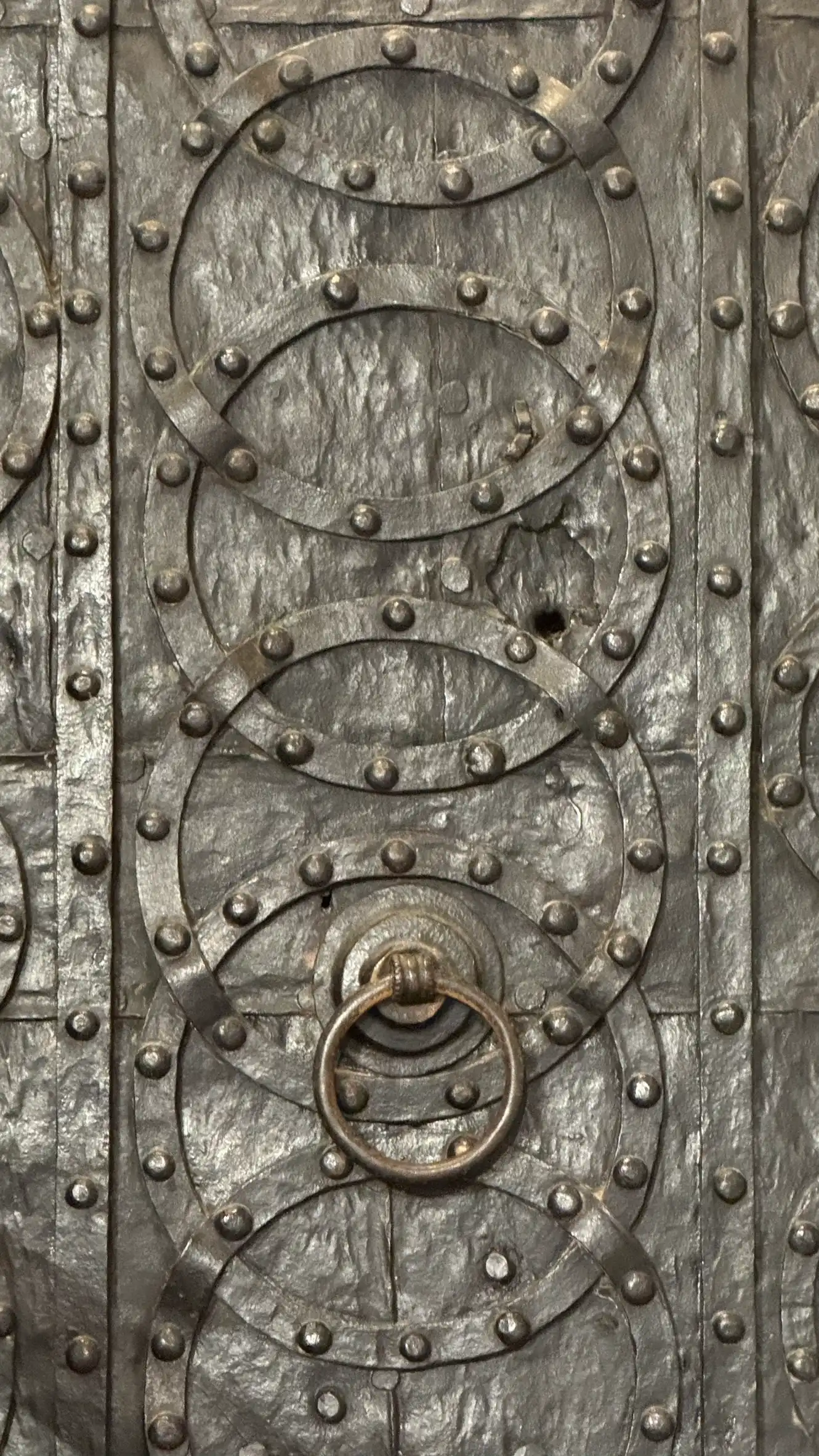
A typical Gothic Carinthian iron door consisted entirely of wrought iron, without any wooden backing.
Construction
The door was constructed from large, solid iron sheets carefully hammered and riveted together.
Decorative iron straps reinforced the structure, forming geometric or floral patterns across the surface.
Prominent rivets not only secured the plates but also created a rhythmic visual design.
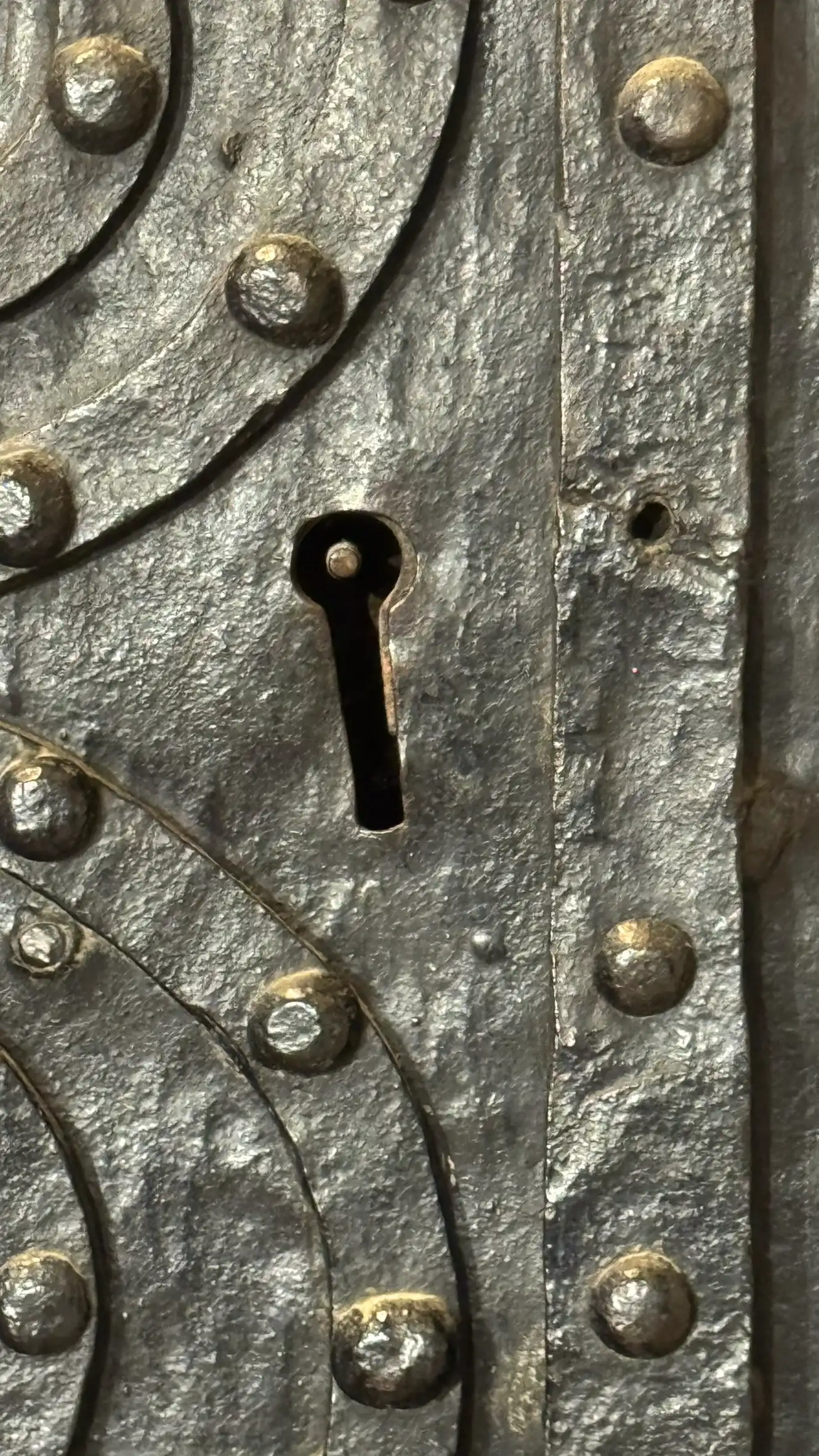
A central keyhole, often framed by an ornate escutcheon, allowed access with a heavy iron key.
Some doors featured small peepholes with sliding covers, while hinges were robust, fixed to the masonry with massive iron pins.
Such doors were both functional – providing formidable security – and symbolic, reflecting the wealth and status of the building’s owner.
Gothic Iron Ward Lock and Iron Key
This small yet essential feature of a Gothic iron door had an important security function.
The keyhole, typically reinforced with wrought iron, allowed a bespoke iron key to operate the complex locking mechanism hidden within the door. Keys were hand-forged, often with a long stem and a bit shaped precisely to match the internal wards of the lock.
In Gothic Carinthia, such keyholes and keys were part of the elaborate craftsmanship of doors that protected churches, manors, and town buildings, reflecting both technical skill and artistic refinement.