


Fireplace
Reading Time: 0:00 min
Corner Fireplace
(Condition Before the Restoration of the Chapel Tower)
The fireplace was located on an upper residential floor of the chapel tower and built directly into the corner of the masonry wall.
Construction and Form
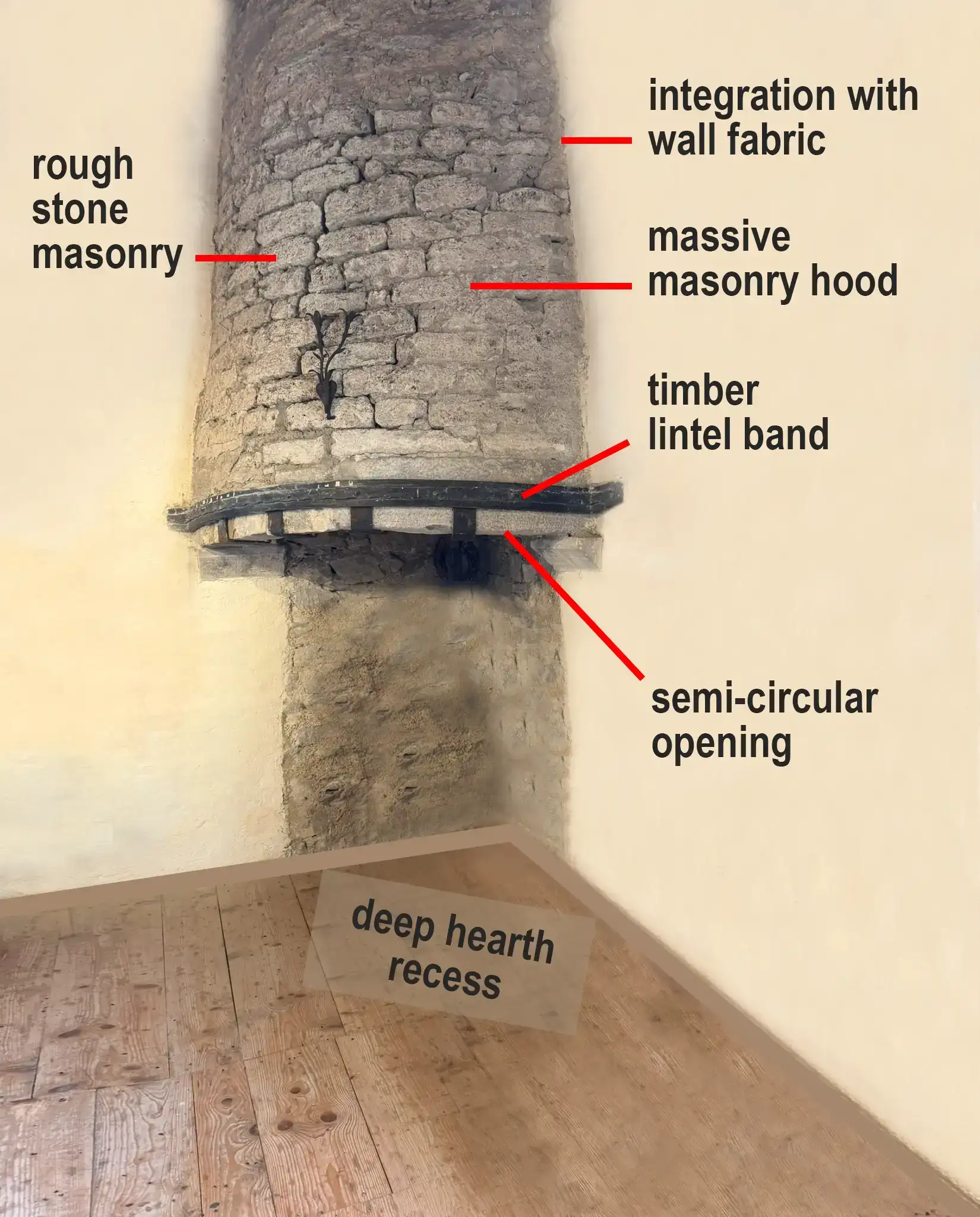
Set within a deep arched recess, the fireplace was constructed of roughly hewn stone, forming a solid, heat-resistant structure.
A projecting hooded smoke chamber channelled smoke upwards, while the corner placement allowed efficient use of space and improved heat distribution.
Architectural Features
Arched Opening
Round-arched in form, derived from Romanesque tradition, with possible later Gothic modification.
Deep Hearth Recess
Firebox set well back into the wall for improved draught and safety.
Massive Masonry Hood
Curved smoke hood, typical of Romanesque enclosed fireplaces.
Integration with Wall Fabric
Structurally bonded into the tower wall, indicating an early construction phase.
Function
Provided heating for the upper residential chamber, reflecting the transition from open hearths to enclosed heating systems.
Period and Dating
Late 13th to 15th century
The form combines Romanesque structural features with Late Medieval developments, typical of fireplaces in fortified and ecclesiastical buildings.
Summary
A deeply recessed, arched masonry fireplace integrated into the tower wall and crowned by a substantial smoke hood, representing a Late Medieval evolution of earlier Romanesque traditions.
Corner Fireplace
Round Corner Fireplace on the Upper Residential Floor of the Chapel Tower (Condition After Restoration)
This historical corner fireplace is constructed of irregularly coursed stone, forming a pronounced semi-cylindrical mass that projects into the room.
Its rugged masonry contrasts with the smooth lime-plastered walls, while a dark timber band encircling the structure visually defines the hearth zone.
The deeply recessed fire opening emphasises its function as a practical heating feature, typical of domestic interiors of earlier centuries.
Above, exposed timber beams reinforce the rustic character, creating a cohesive interplay of stone and wood that reflects regional building traditions in Carinthia.