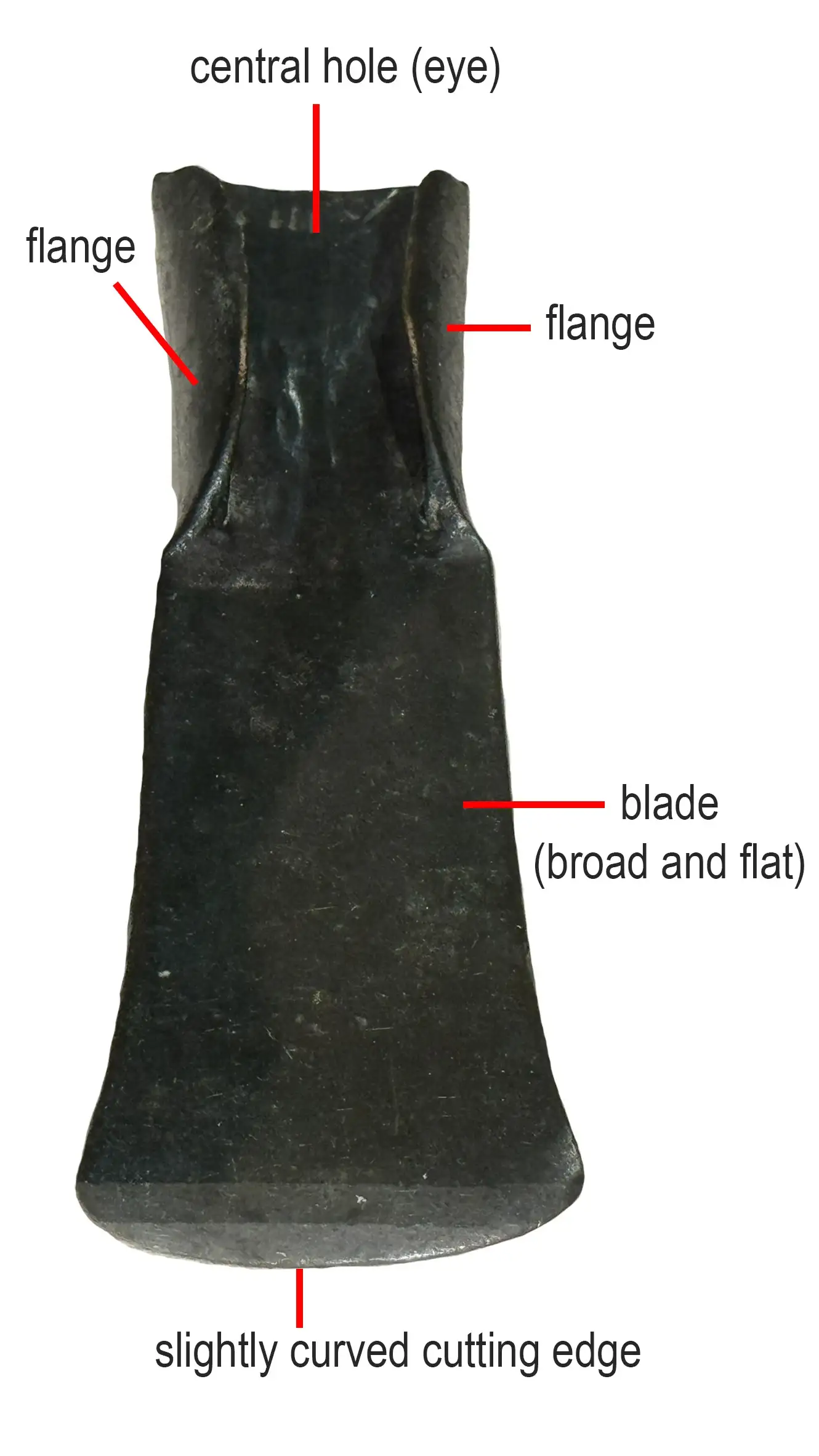
Bronze Flanged Axe (Lappenbeil)
Material: Bronze
Axe Type: Hallstatt type with the inscription “VIIIV”
Dated: Late Urnfield / Early Hallstatt period, 8th–7th century BCE
Bronze Flanged Axe (Lappenbeil) | Hallstatt Type | 8th – 7th century BCE
Reading Time: 0:35 min
A bronze flanged axe (Lappenbeil) of the Hallstatt type, dating to the Late Urnfield / Early Hallstatt period (8th – 7th century BCE), is characterised by its distinctive, broad, flat blade with prominent lateral “flanges” extending from the hafting hole.
These flanges are not only functional for securing the axe to a wooden handle but also serve a decorative purpose, often featuring refined patterns.
The blade is typically leaf-shaped, with a sharp edge designed for both cutting and combat.
The Hallstatt-type flanged axe (Lappenbeil) reflects the technological advancements of the time, showcasing the skilled craftsmanship in bronze working.

More Information
Axe-Head of a Bronze Flanged Axe (Hallstatt Culture)
Reading Time: 0:35 min
The axe-head of a bronze flanged axe from the Hallstatt culture typically exhibits a robust and functional design, reflecting the advanced metallurgical skills of the period. The blade is broad and flat, tapering towards the cutting edge, making it ideal for chopping or hewing tasks. The flanges, raised projections along the sides of the axe-head, serve both structural and decorative purposes. They help to secure the haft, ensuring a firm attachment to the handle, while also adding a distinctive visual appeal to the axe.
Early Hallstatt Period | 8th – 7th Century BCE
Reading Time: 0:30 min
The early Hallstatt period (8th – 7th century BCE) marks the beginning of the Iron Age in Central Europe. It is characterised by significant advancements in metalworking and the crafting of ornaments. This period is associated with the widespread use of iron for tools and weapons.
This period also saw the development of fortified hilltop settlements, indicating increasing social complexity and defensive concerns. Grave goods, such as weapons, ceramics, and decorative items, suggest a growing elite class and emerging hierarchical structures. The early Hallstatt culture is also noted for its distinct artistic style, including geometric patterns and the use of bronze and iron for creating functional and ritual objects.