

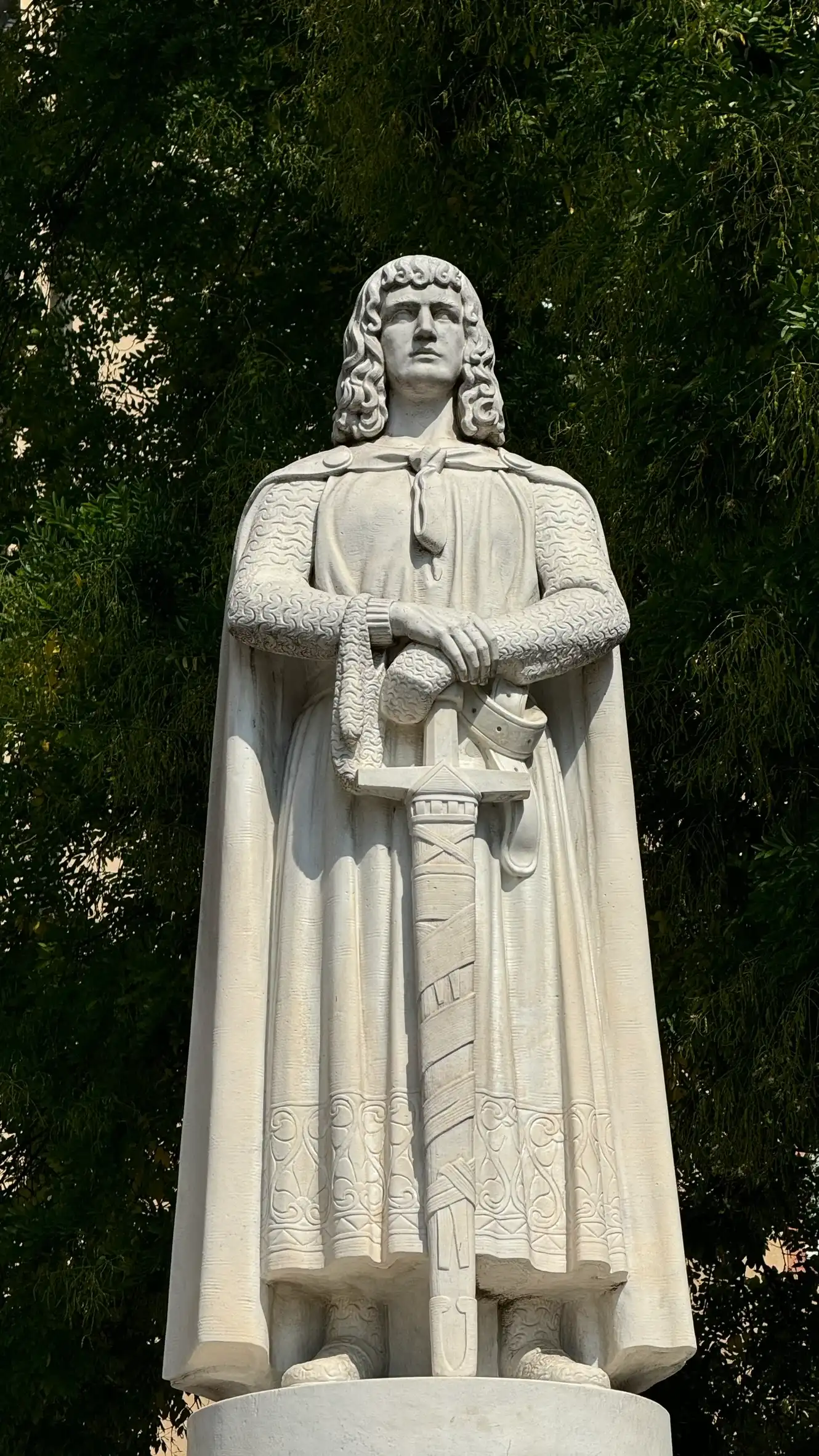
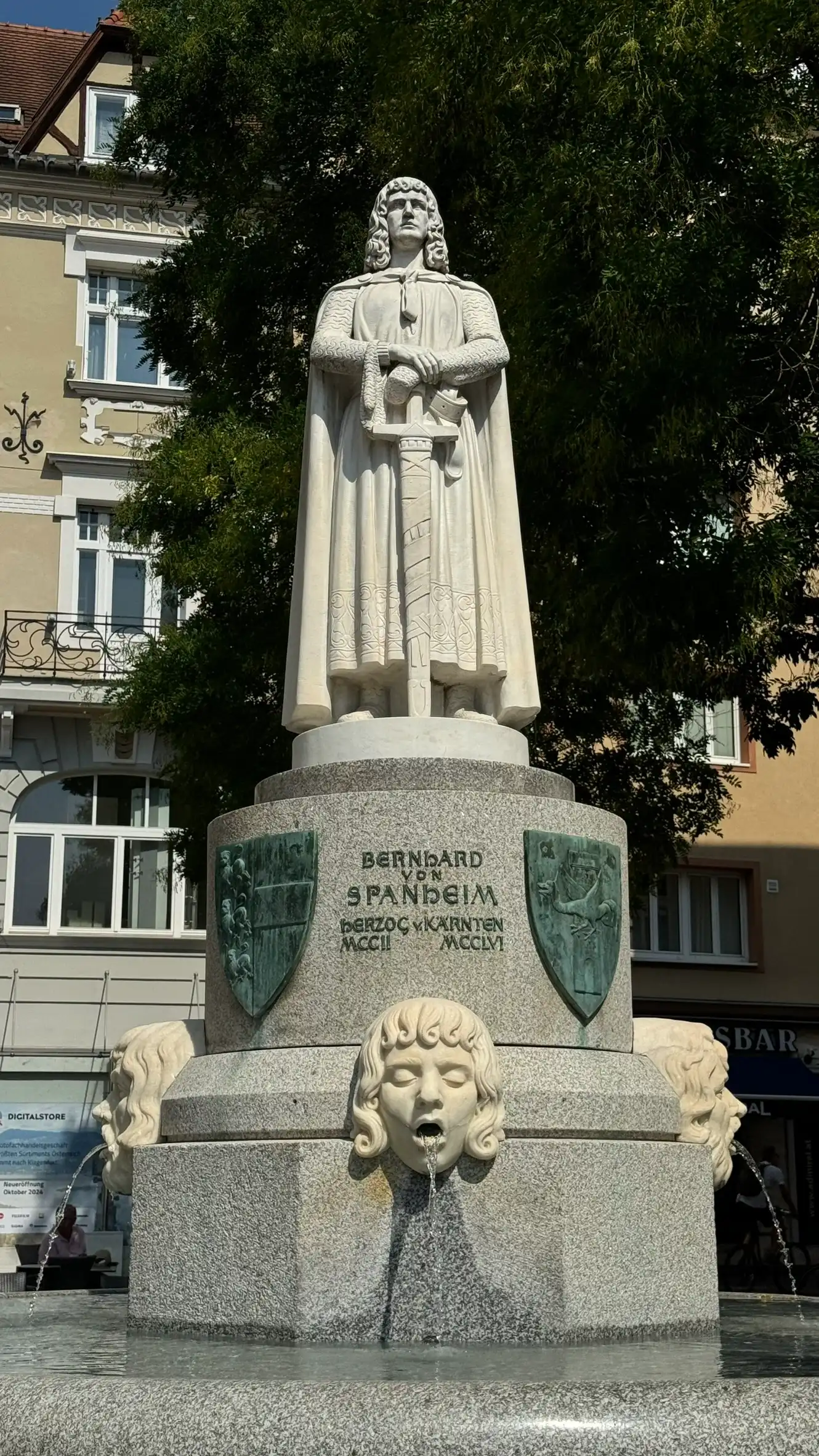
Bernhard von Spanheim
(c. 1176 – 1256)
Duke of Carinthia
Reading Time: 1:15 min
Early Life and Background
Bernhard von Spanheim (also known as Sponheim) was born between 1176 and 1181, the son of Duke Hermann II of Carinthia and Agnes of Austria, a member of the Babenberg dynasty. He belonged to the noble House of Sponheim and inherited the Duchy of Carinthia in 1202 after the death of his brother Ulrich II.
Reign and Political Career
Bernhard ruled as Duke of Carinthia from 1202 until his death on 4 January 1256. Initially he supported Philip of Swabia, then Otto IV, before joining the Hohenstaufen emperor Frederick II in 1212. He styled himself “princeps terre” (prince of the land) and sought to strengthen Carinthia as a territorial principality rather than a feudal duchy. Bernhard secured key Alpine passes and developed the urban triangle of St Veit an der Glan – Klagenfurt – Völkermarkt, earning a reputation as a city founder.
Patronage, Foundations and Legacy
Around 1234 Bernhard founded the Cistercian abbey of Mariabrunn (Kostanjevica) near Landstraß in Carniola. He was buried in the Abbey of St Paul in the Lavanttal, the traditional family mausoleum of the Spanheims. His marriage to Judith of Bohemia in 1213 linked the house with the Přemyslid dynasty and strengthened Carinthia’s standing in Central Europe.
Death and Historical Significance
Bernhard died on 4 January 1256, probably in Völkermarkt, and was succeeded by his son Ulrich III. His long and stable reign brought urban growth, territorial consolidation, and stronger dynastic ties for Carinthia. He is remembered as one of the most able rulers of the medieval Duchy.
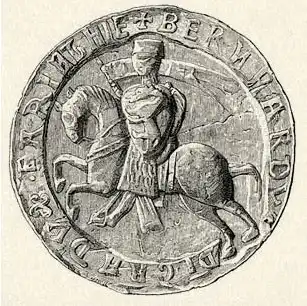
Equestrian Seal of Bernhard of Spanheim
The equestrian seal of Bernhard of Spanheim, Duke of Carinthia, bears his personal insignia.
Bernhard of Spanheim held the ducal title in the 13th century.