Renaissance Bust
Reading Time: 2:20 min
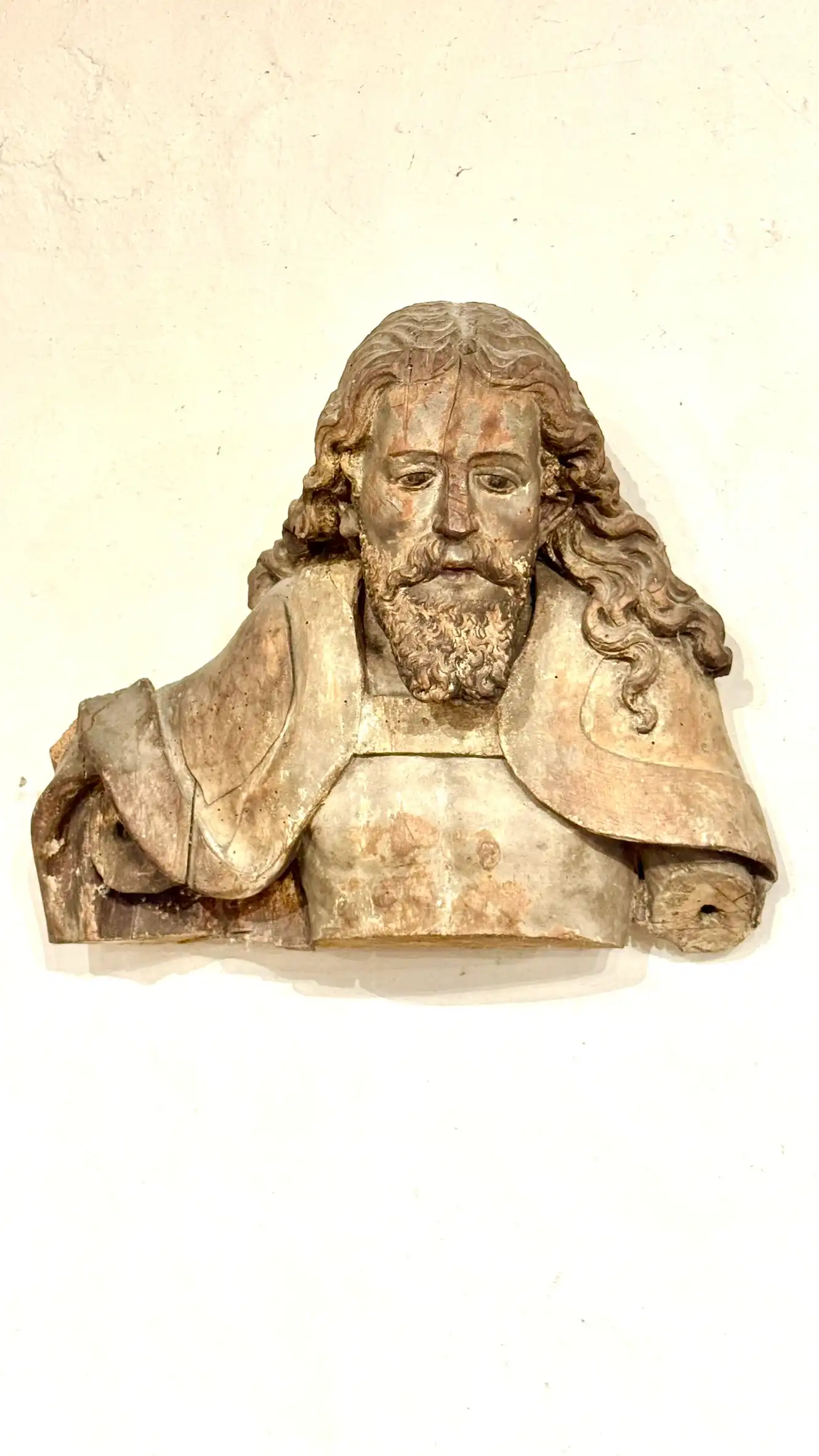
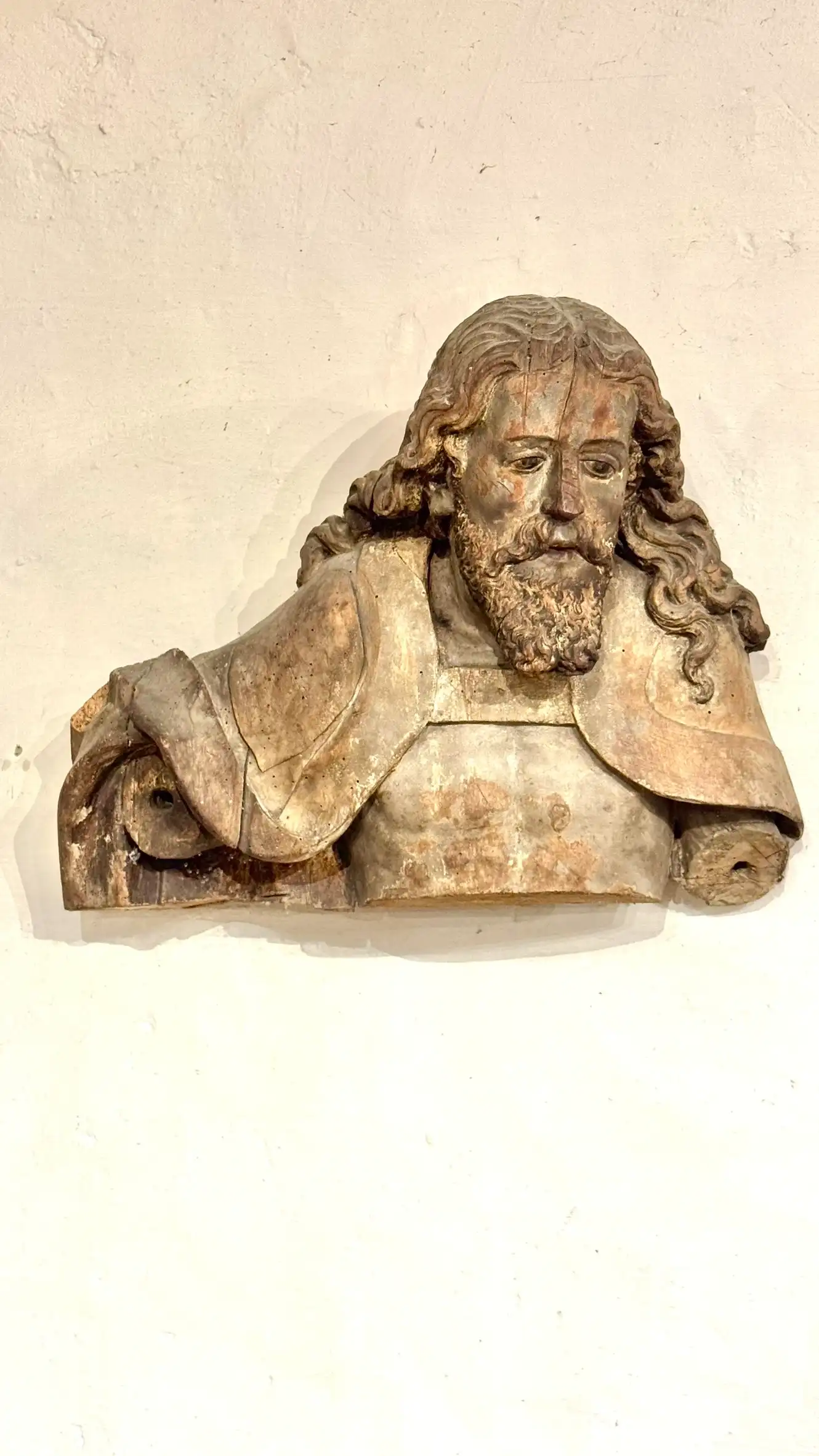
This exhibit is a Renaissance bust depicting either Christ or God the Father.
The bust is made of wood and dates to the mid-16th century.
Renaissance Bust
Key Features
Hair
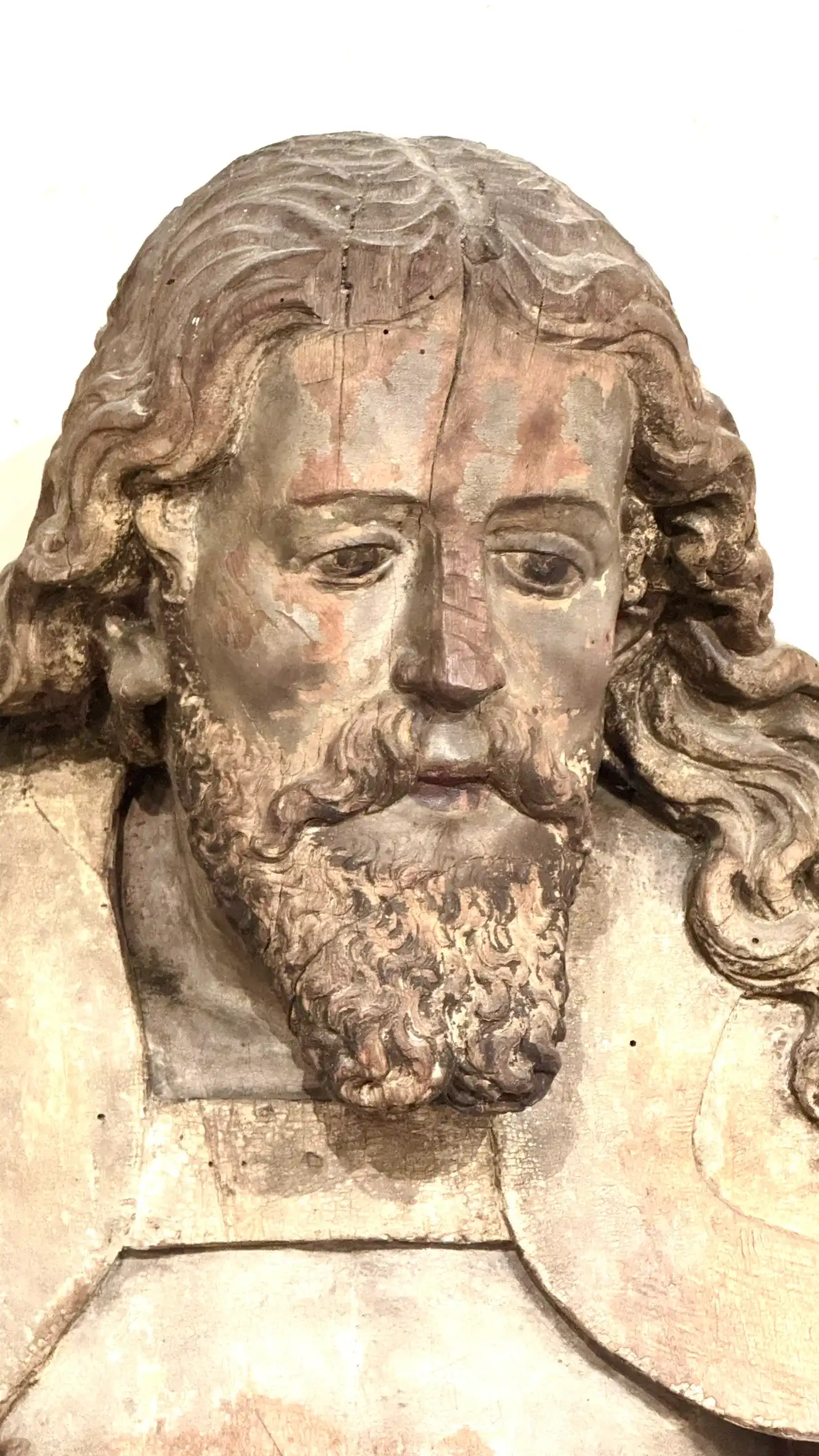
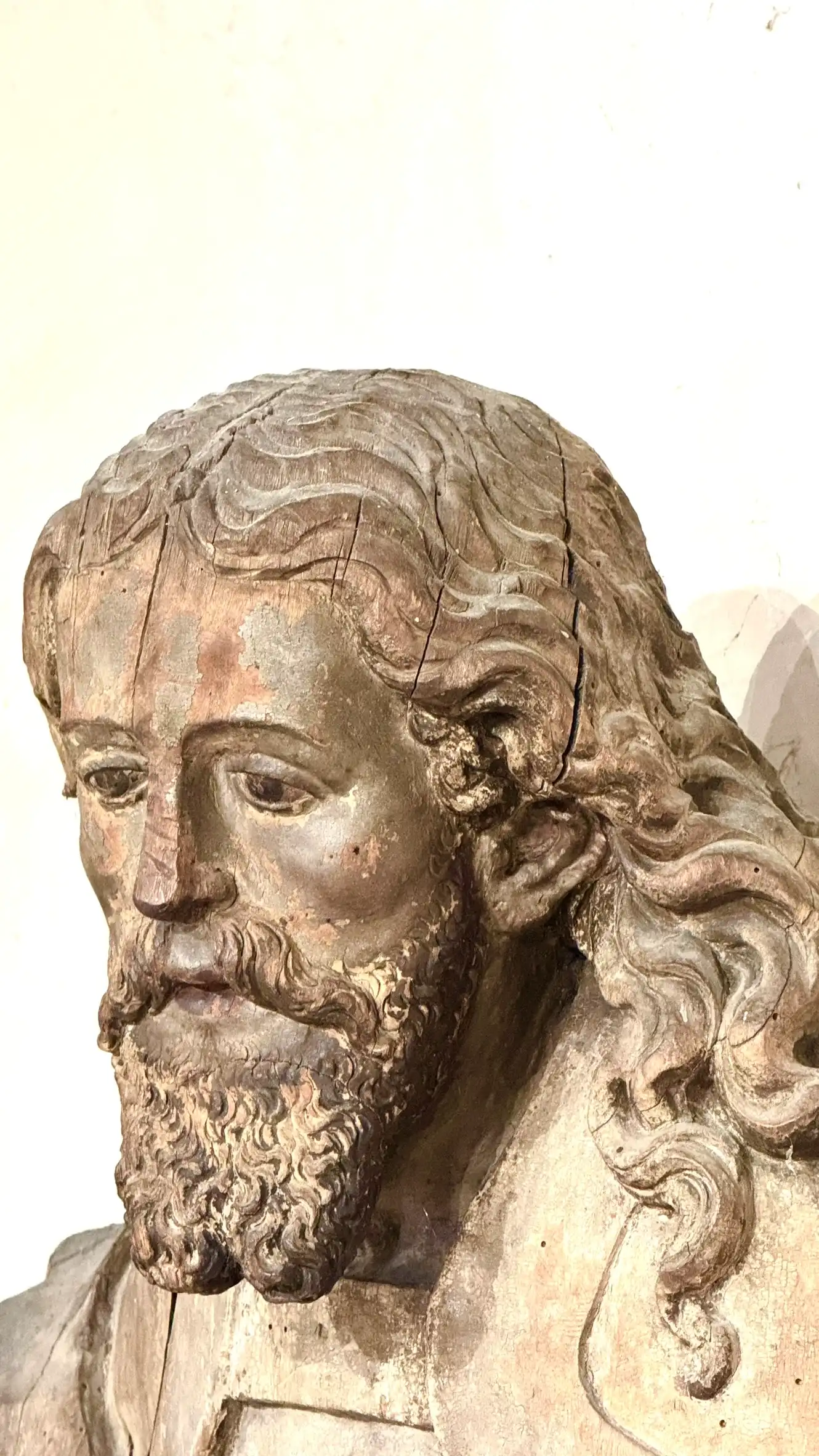
The hair is flowing and wavy, typical of mid-16th-century wood carving. It falls naturally in curls down the sides. It symbolises nobility and divinity.
Moustache and Beard
The beard is full and tapers slightly at the chin. Thick curls blend with a well-defined moustache. These features suggest wisdom and maturity.
Facial Features
The eyes are deep-set and serene. The eyebrows are slightly arched. The nose is straight, the lips gently pursed, and the cheeks slightly hollowed. The face reflects a divine figure.
Garments
The figure wears a robe or tunic, with a mantle. The garments convey authority and dignity.
The Identity of the Bust
Christ vs. God the Father
This wood-carved bust may represent either Christ or God the Father.
In Christian Art:
Jesus Christ is often shown as youthful, with softer, approachable features. Expressions are usually compassionate or sorrowful, reflecting his humanity. Distinguishing attributes can include the crown of thorns or the wounds of the Crucifixion.
God the Father is typically depicted as an older man with a long beard, symbolising wisdom and eternity. He appears more regal and commanding, sometimes with symbols of authority like a globe or heavenly rays. The dignified, severe expression of this bust aligns with this tradition.
Detailed Analysis of the Identity of the Bust
Features Suggesting that the Bust Could Be Jesus Christ
The face, though mature, does not appear aged or heavily lined. The absence of pronounced signs of age could therefore point towards Christ. The expression is gentle and introspective rather than authoritative or commanding. Such serenity is often associated with depictions of Christ.
Christ is frequently shown with long but not excessively aged or ungroomed hair, and a full but orderly beard. This naturalistic hairstyle and beard are consistent with Renaissance portrayals of Christ, particularly in Northern and Central European art.
The softer modelling of the cheeks and lips suggests a degree of warmth and humanity. This human tenderness was a hallmark of mid-16th century representations of Christ, reflecting Renaissance humanist ideals that emphasised his approachable, merciful nature.
There are no explicit signs of divine authority such as a crown, orb, or rays of light – attributes that are more commonly associated with God the Father.
Features Suggesting that the Bust Could Be God the Father
The figure’s full, heavy beard and long flowing hair are often used to signify the eternal wisdom and majesty of God the Father.
The mantle-like garment, possibly resembling a form of armour or celestial robe, could imply sovereignty and divine rule. God the Father was frequently represented wearing regal or patriarchal garments to distinguish him from the Son.
There are no wounds, cross motifs, or emblems related to Christ’s Passion, which would otherwise identify him as Jesus. The lack of such signs could support the interpretation that this figure represents God the Father rather than the Son.
Wood-Carving Art in Mid-16th Century Carinthia
In mid-16th-century Carinthia, wood carving was strongly influenced by the Renaissance, blending medieval and Gothic traditions with humanist ideals.
Churches and monasteries commissioned detailed, expressive sculptures to convey religious themes.
Artisans were highly skilled, creating realistic and emotive figures of Christ, God the Father, and other sacred subjects. Facial features and flowing garments were often emphasised to highlight divinity.
Local hardwood was typically used, with fine carving tools producing intricate details such as hair and folds in the robes. Some works were painted or gilded.