Guild Signs
Reading Time: 1:20 min
A Short History of Guild Signs in Europe
Guild signs have their origins in the Late Middle Ages, when trade and craftsmanship became organised under guild systems across European towns and cities. From the 12th century onwards, these associations regulated quality, training, and commerce within each craft.
As literacy was limited, craftsmen and merchants used visual symbols to represent their trade. These signs were displayed on workshops, taverns, and guildhalls – carved in wood or stone, painted on boards, or crafted from wrought iron.
By the 14th and 15th centuries, guild signs had become an integral part of urban life, guiding customers through busy market streets. Each symbol was both practical and emblematic, expressing professional pride and belonging.
With the decline of the guild system in the 18th and 19th centuries, many of these signs disappeared, yet some survived as part of Europe’s architectural and artistic heritage. Today, preserved or restored guild signs remain visible reminders of the continent’s rich craft traditions and civic history.
Guild Signs
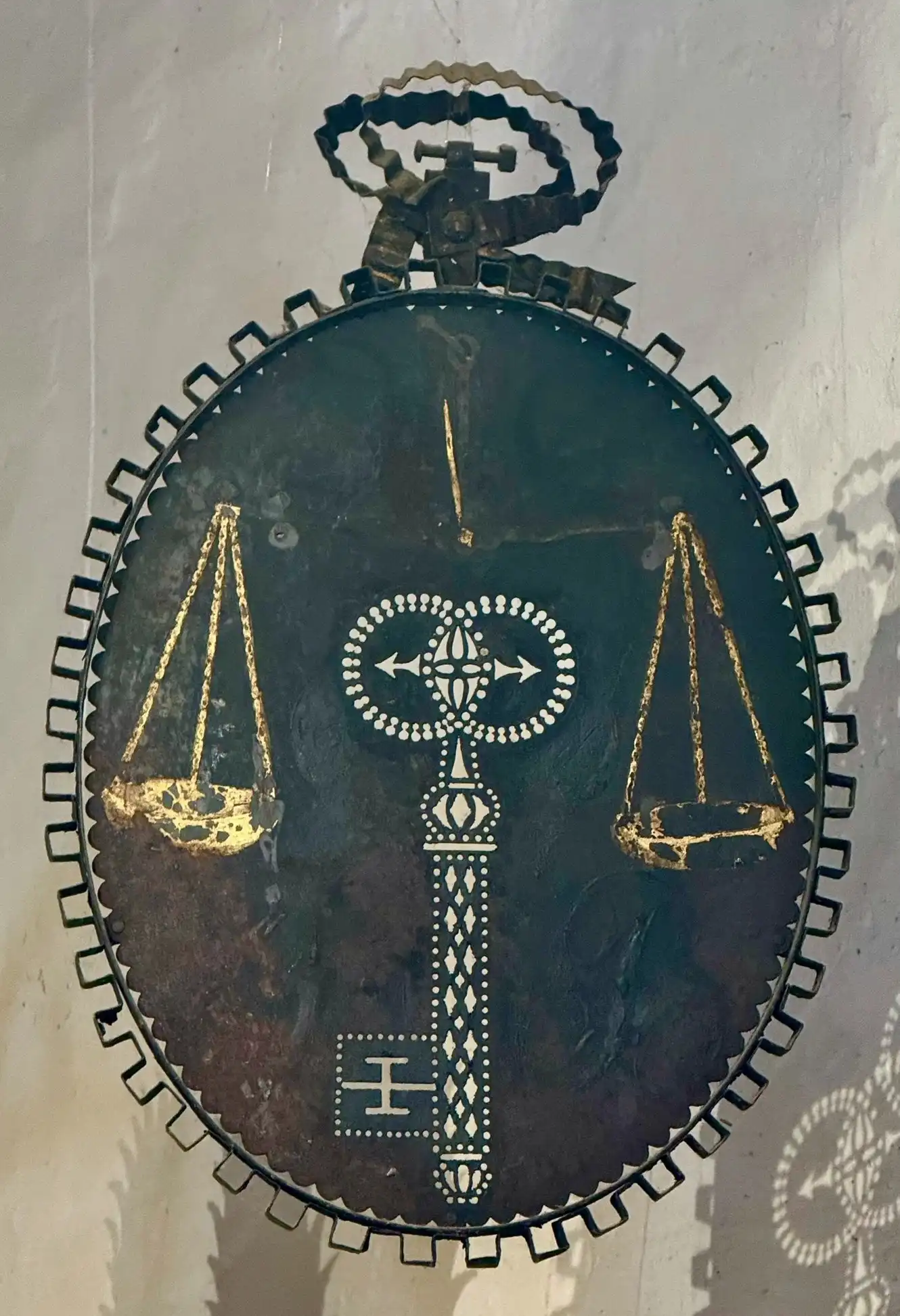
Guild Sign of the Locksmiths
The guild sign of the locksmiths bears the initials I.B. and dates to the second half of the 19th century.
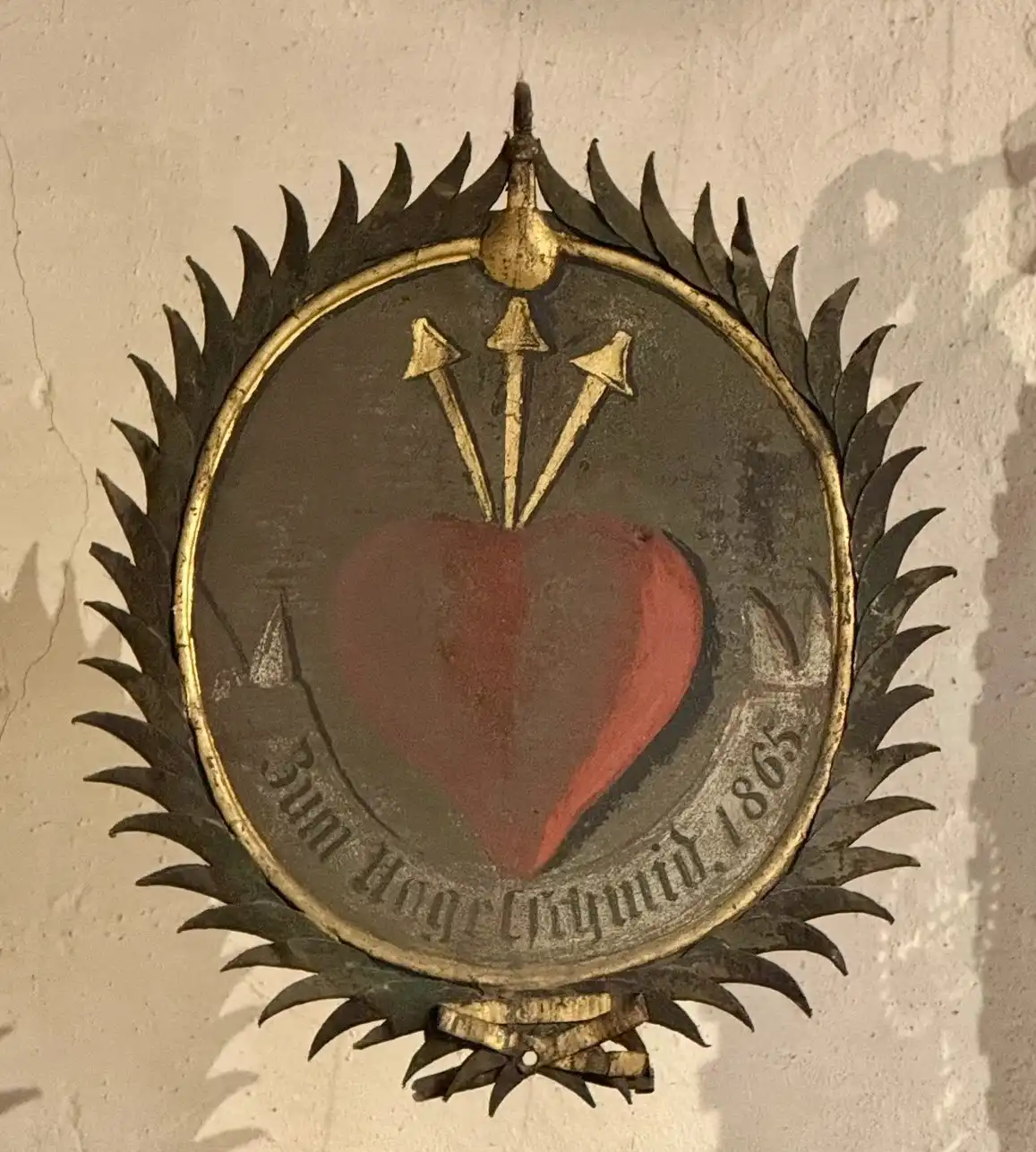
Guild Sign of the Nailers
The guild sign of the nailers is made of iron sheet and painted in colour. It depicts the Sacred Heart with three nails and is dated 1865.
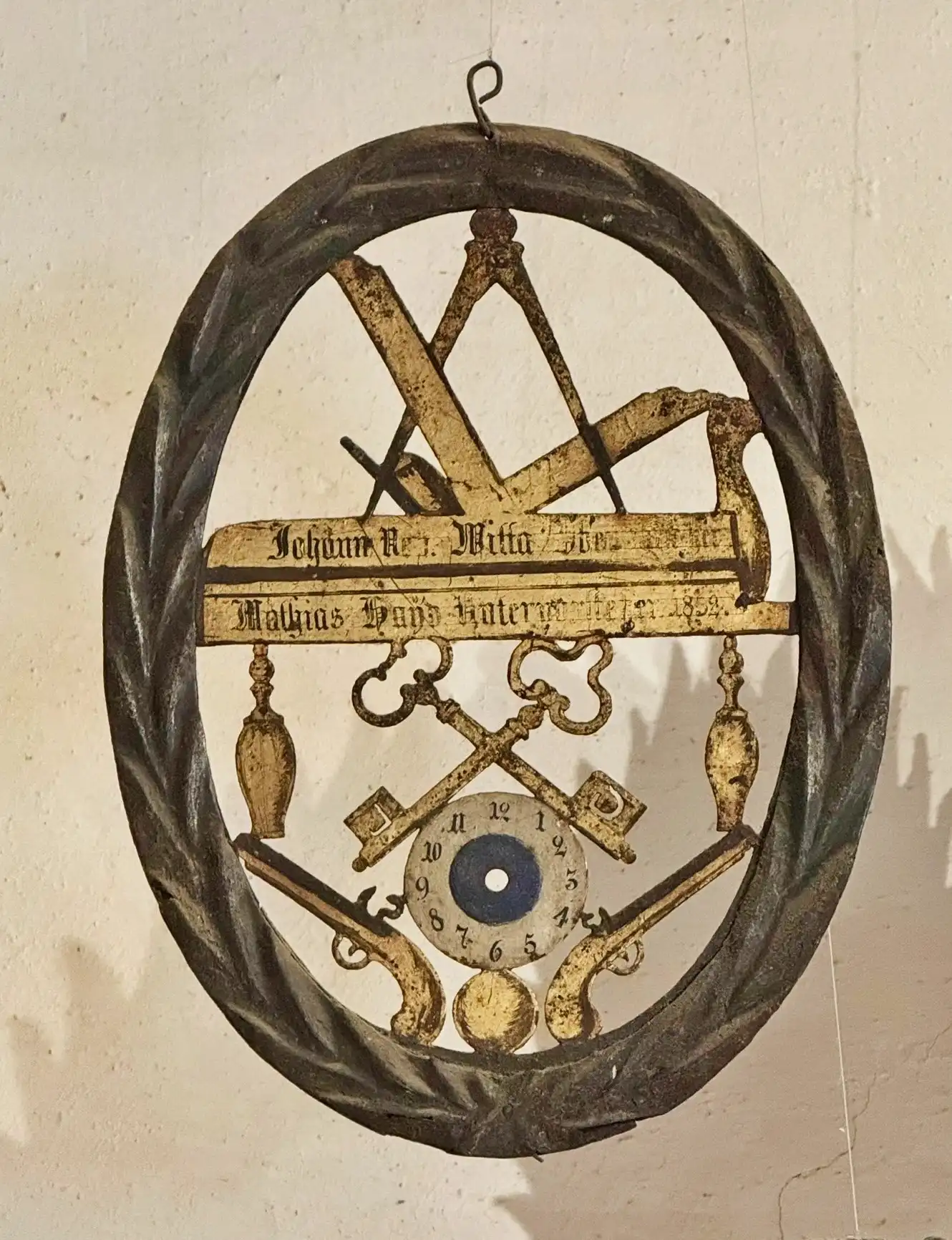
Collective Guild Sign of the Carpenters, Turners, Locksmiths, Gunsmiths and Watchmakers
The collective guild sign of the carpenters, turners, locksmiths, gunsmiths and watchmakers is made of iron sheet and painted in colour on both sides.
It bears the inscriptions Johann Nep. Witta, Obervorsteher and Matthias Hayd, Untervorsteher. The guild sign is dated 1852.
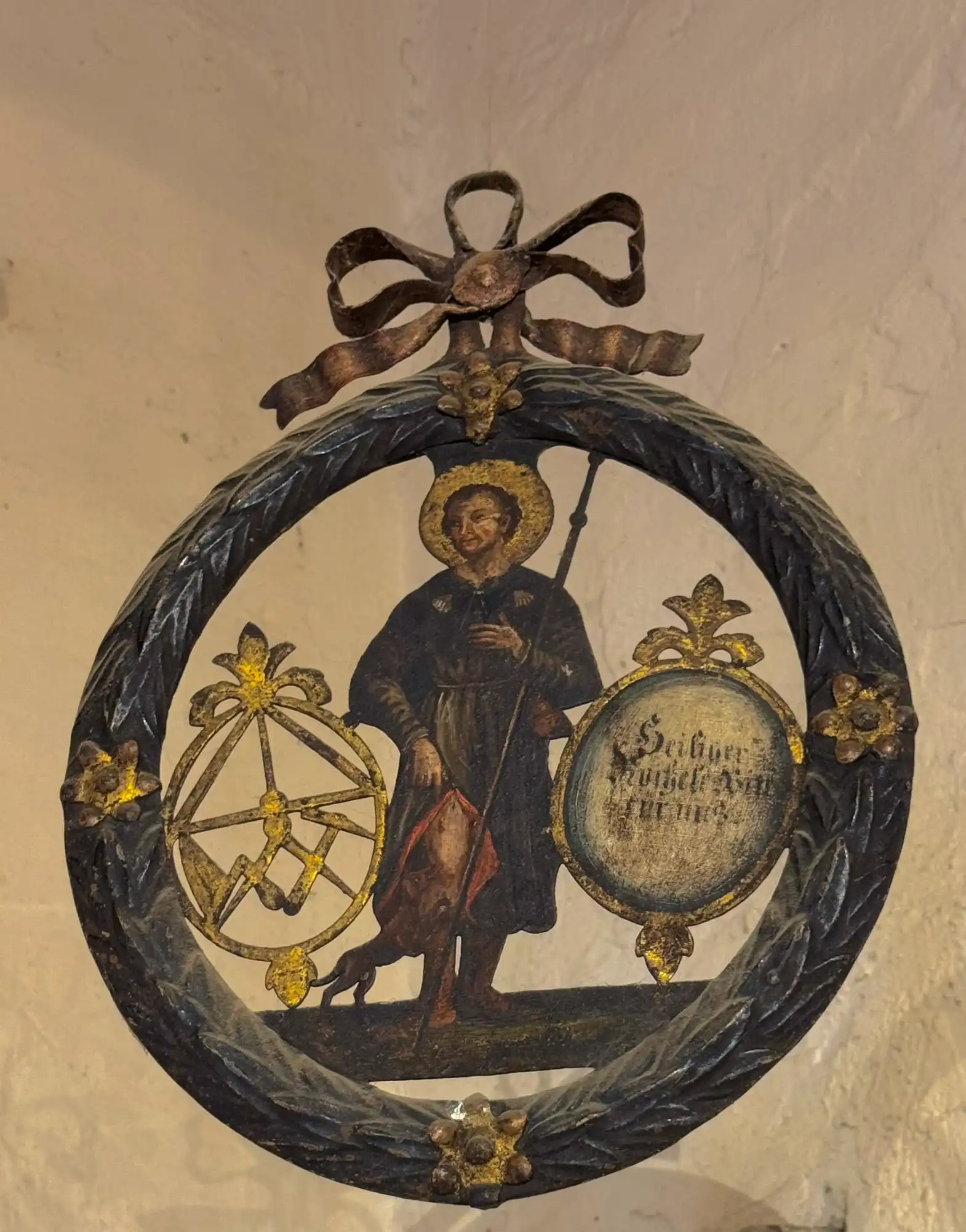
Guild Sign of the Masons
The guild sign of the masons is made of iron sheet and consists of oval medallions painted in colour, featuring the tools of the guild and the inscription Die Ersame Maurer Ihnung zu Friesach.
The central figure depicts Saint Roch with the inscription Heiliger Rochele bitt für uns. The guild sign dates to the second half of the 19th century.