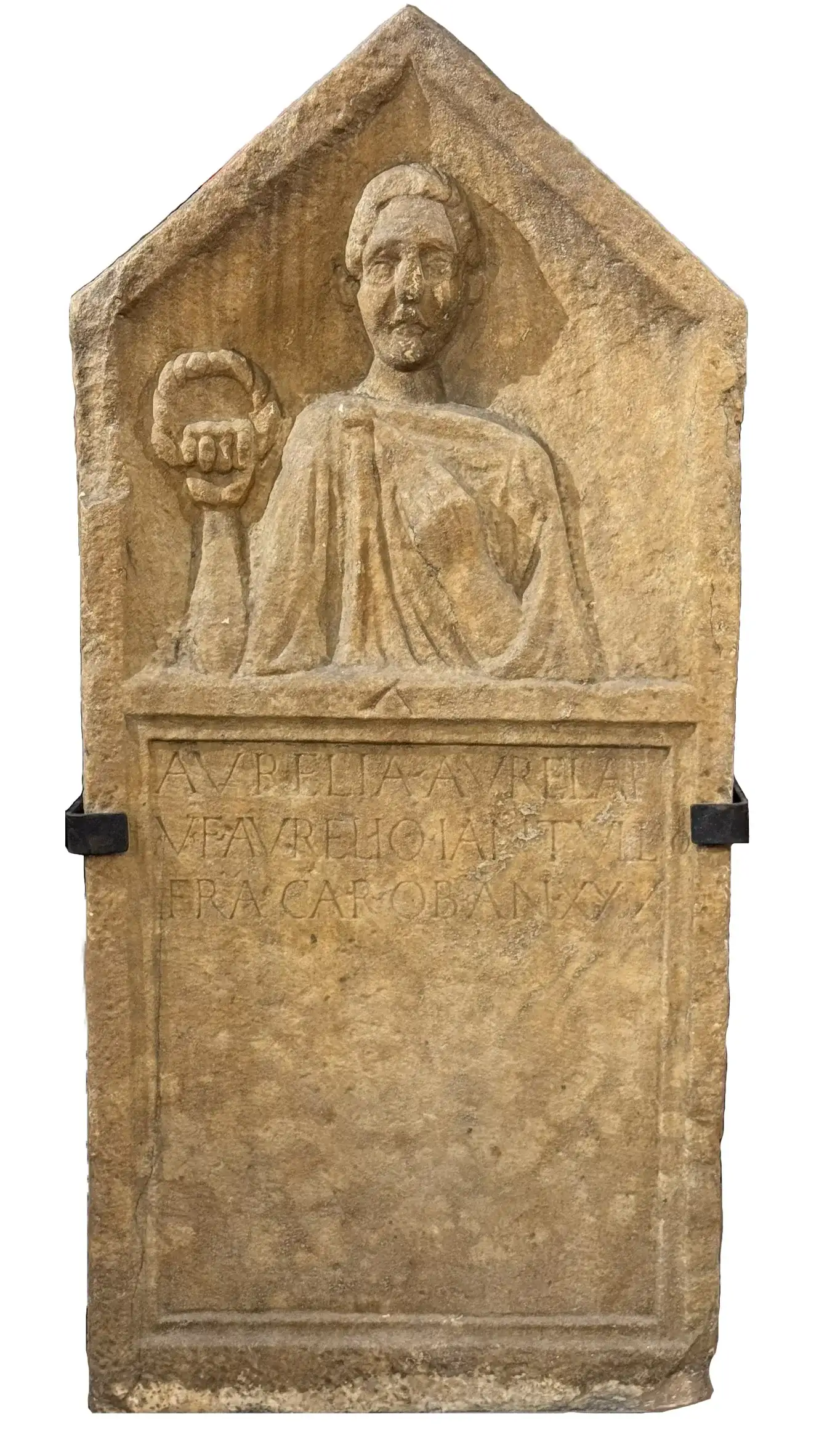
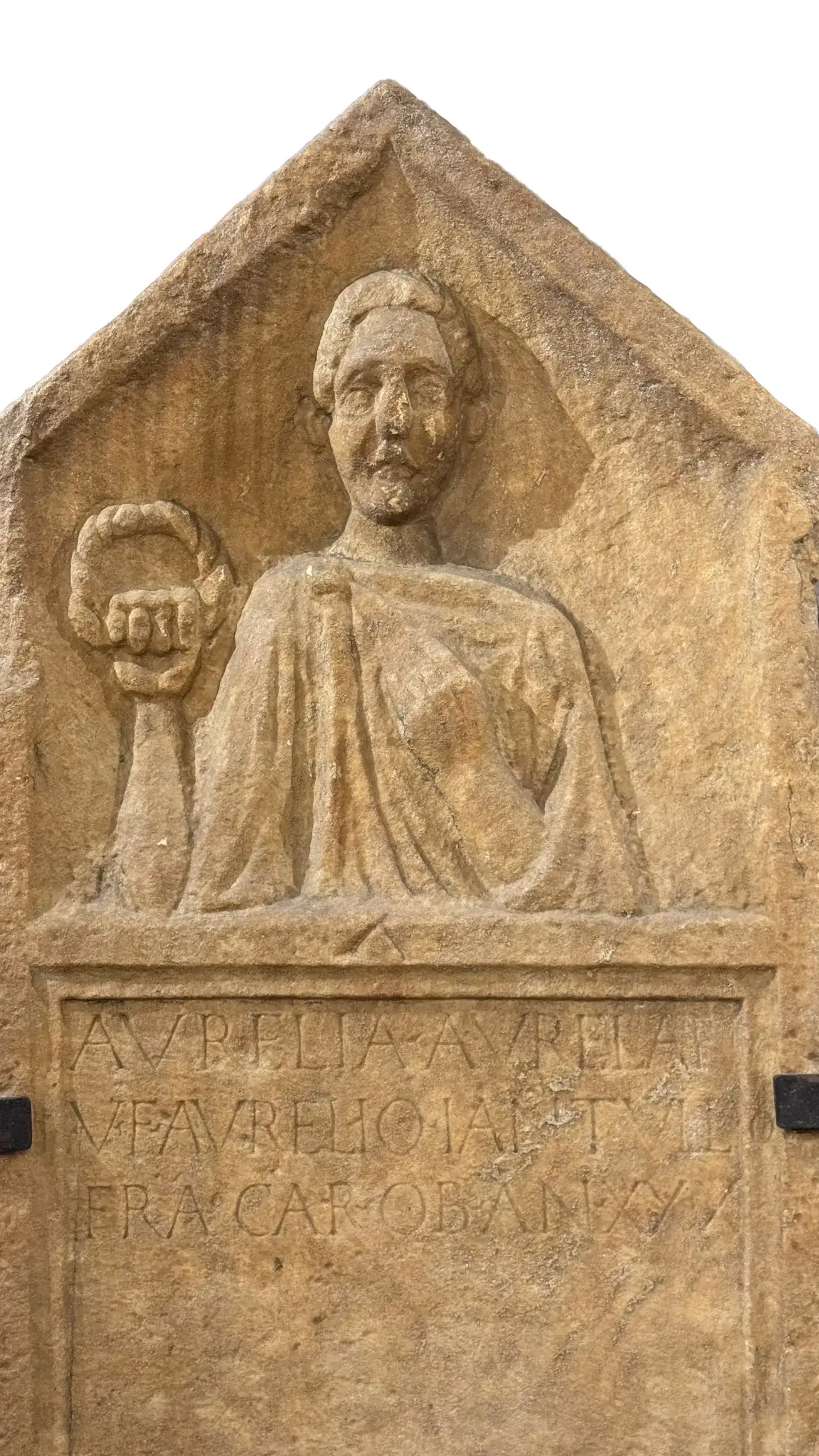
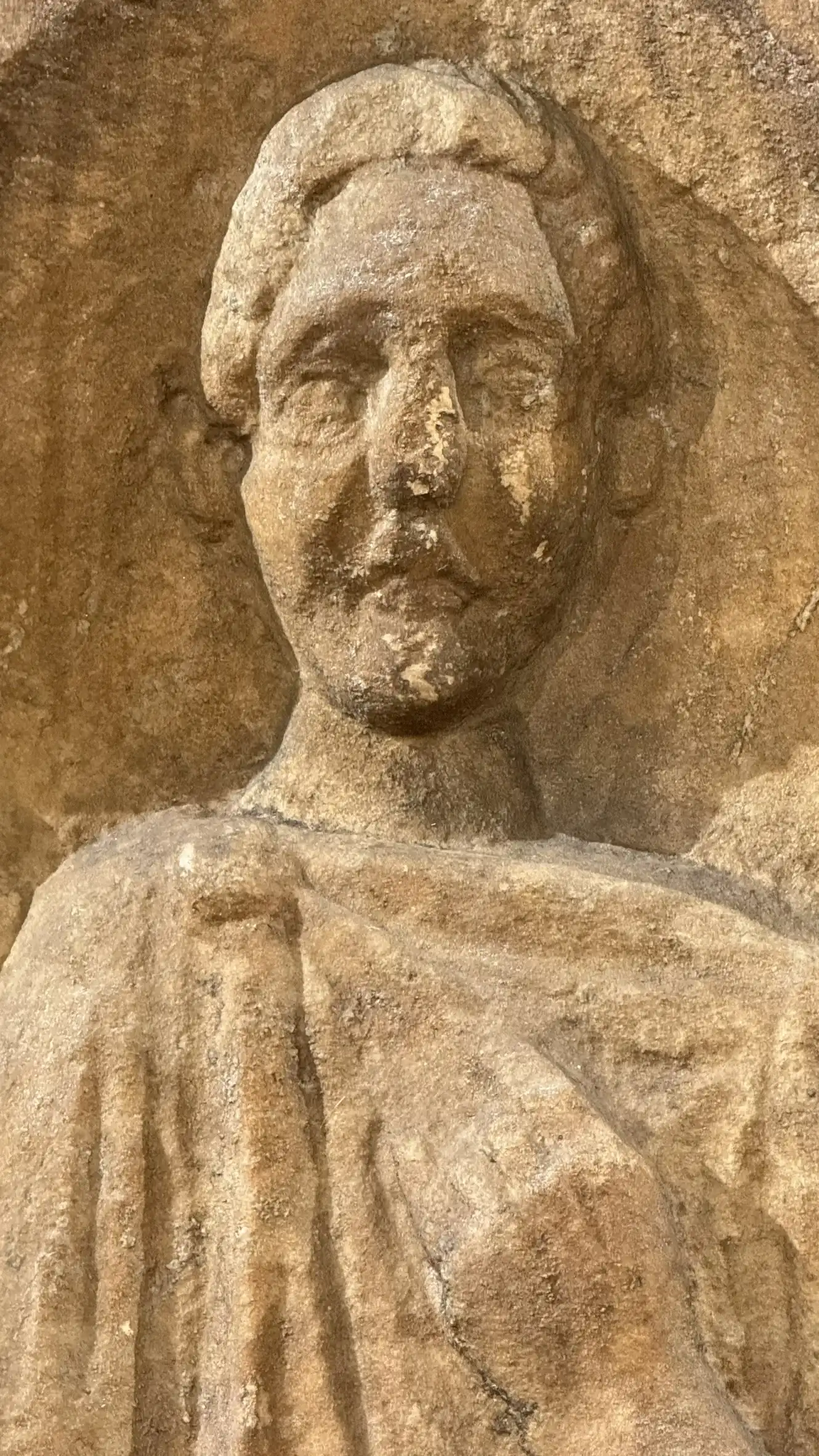
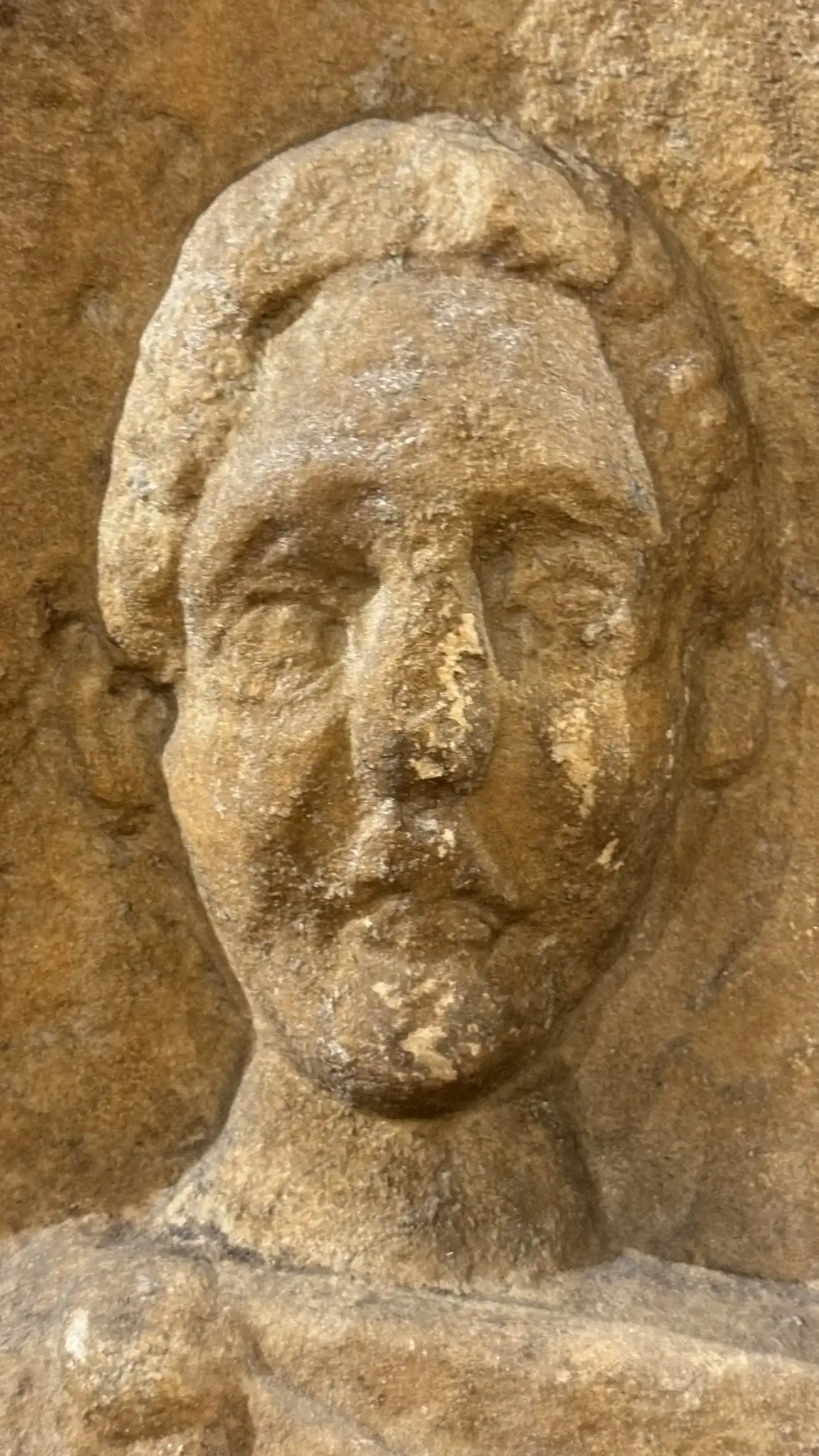
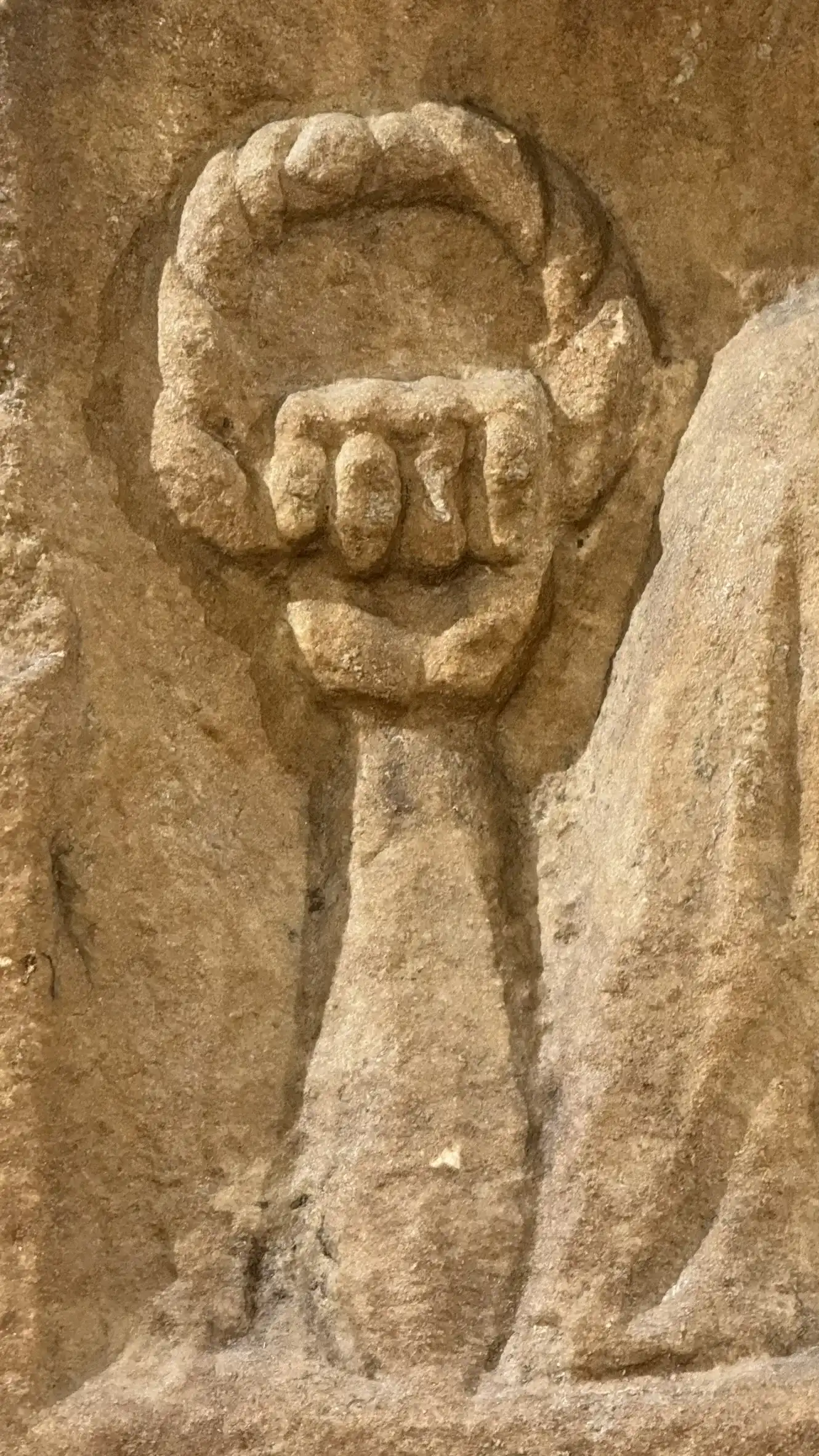
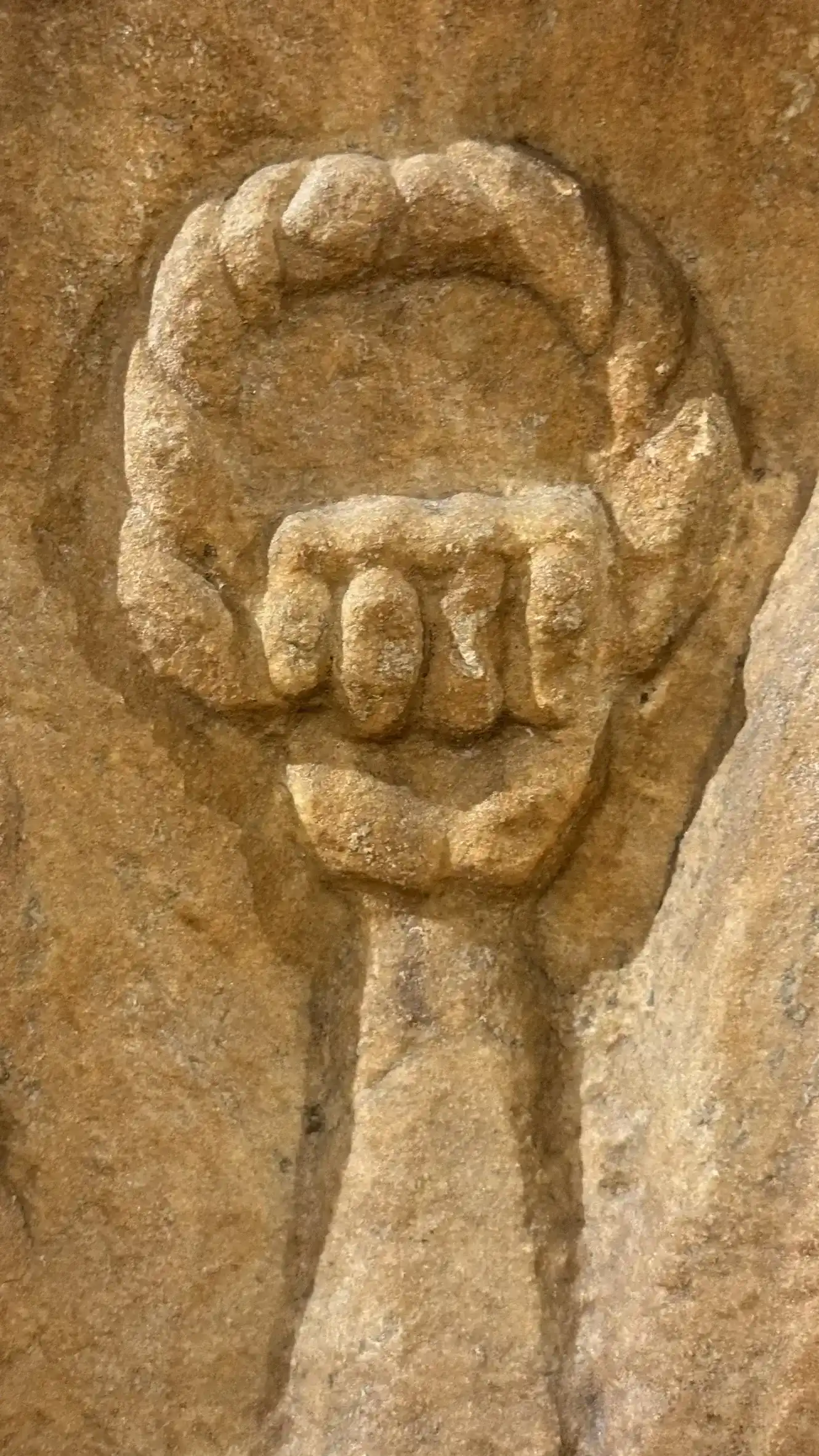
Tomb Stele with Niche Portrait
Wildbad Einöd
Dated: 3rd century CE
Roman Tomb Stele
Reading Time: 0:45 min
An ancient Roman tomb stele was a stone or marble slab, often upright, that was used as a marker for a grave. It typically featured an inscription, which included details about the deceased (name, age and social status). The stele could also display images or symbols associated with the person, such as a depiction of their profession or personal life.
Tomb stelae were commonly placed at the head of a grave and served as a permanent memorial to the deceased. They could be quite simple or highly decorative, depending on the wealth and status of the person buried. Some stelae were plain, with just a brief inscription, while others had relief carvings or portraits of the deceased, making them more personal and elaborate.
These stelae were important in Roman funerary practices, providing a way for families to remember and honour their loved ones, while also allowing others to learn about the deceased’s life and identity. They were typically found in cemeteries along Roman roads or in burial grounds outside the city.