The Keep
Reading Time: 2:30 min
Origins and Construction
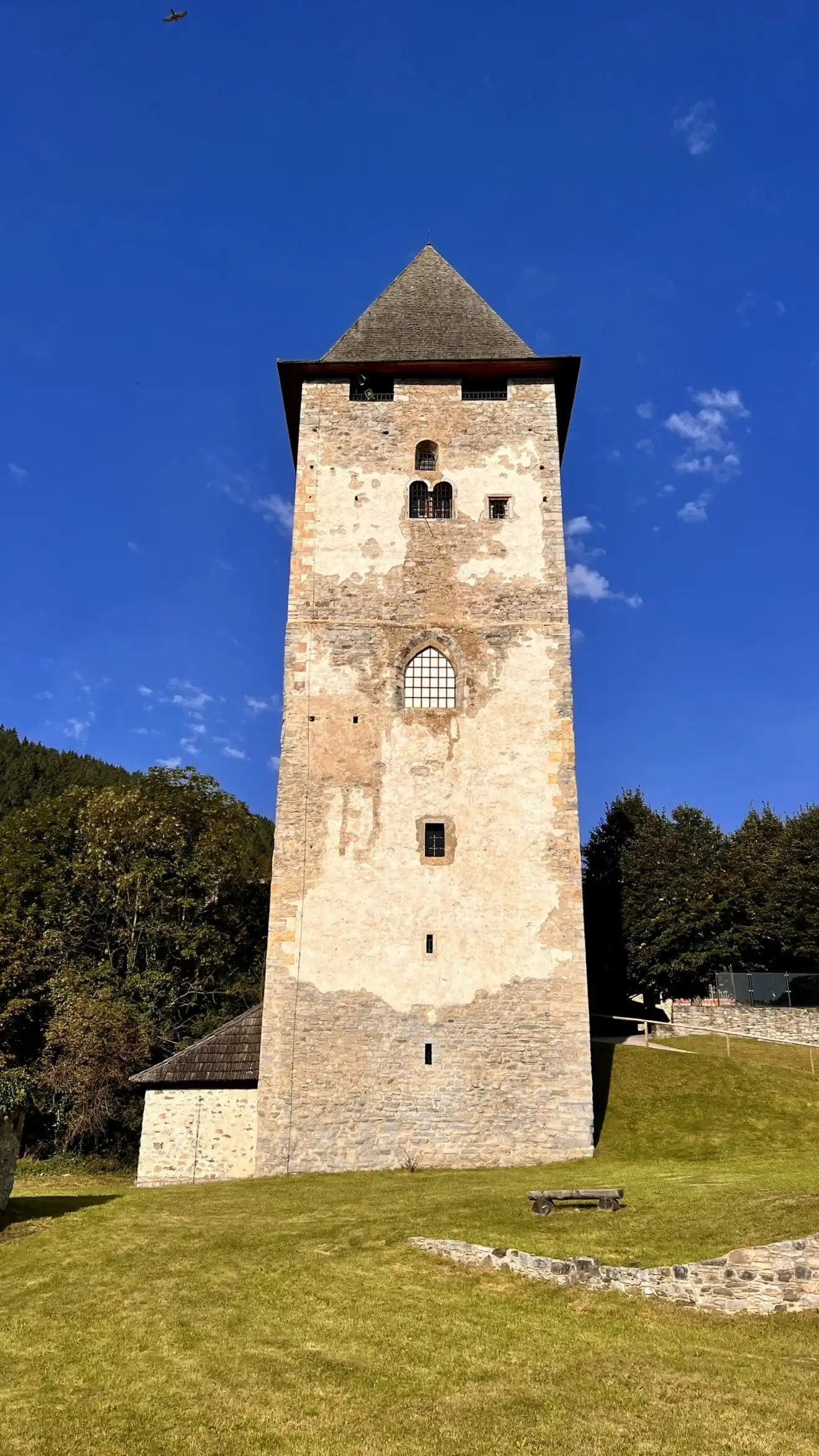
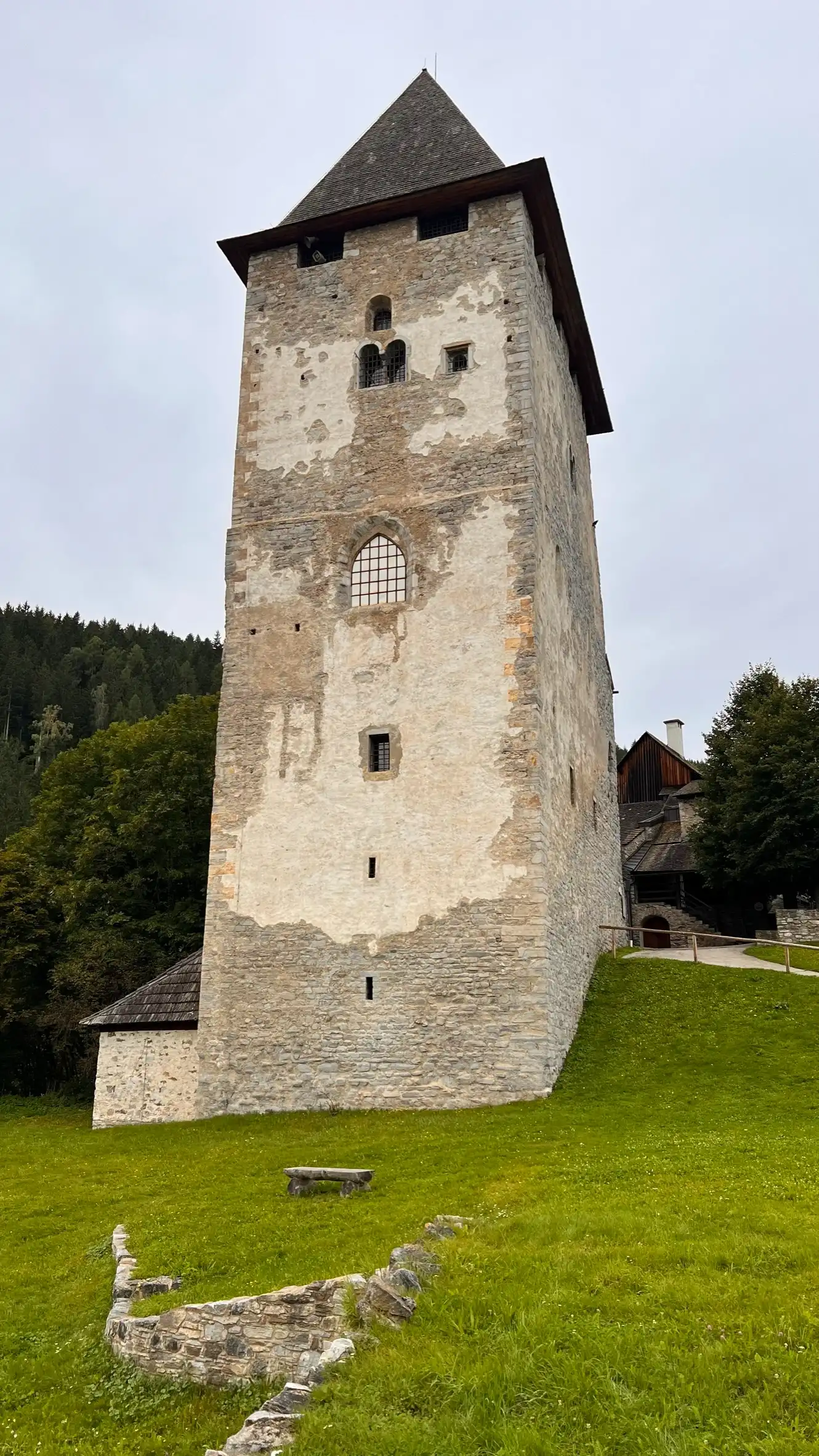
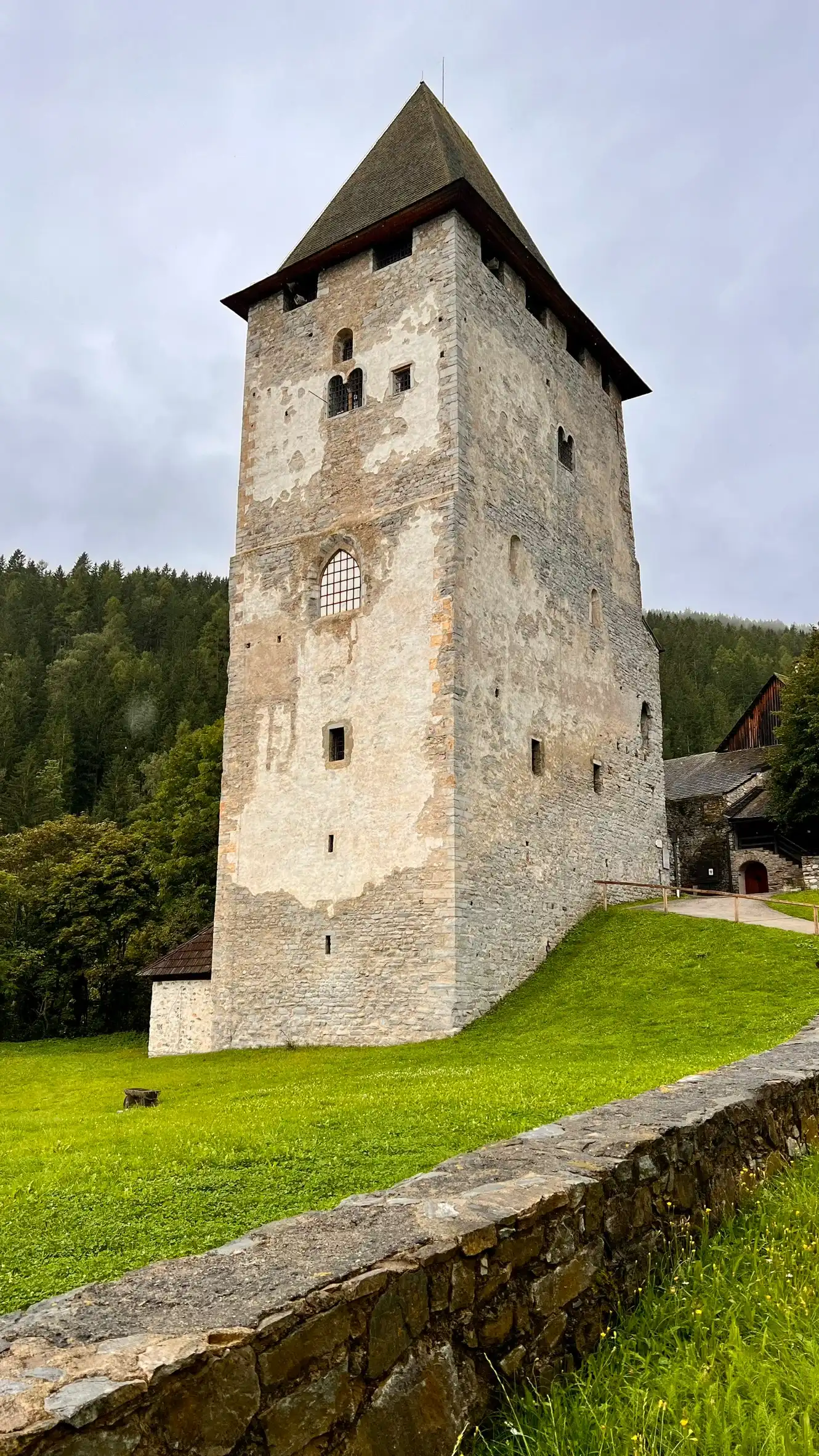
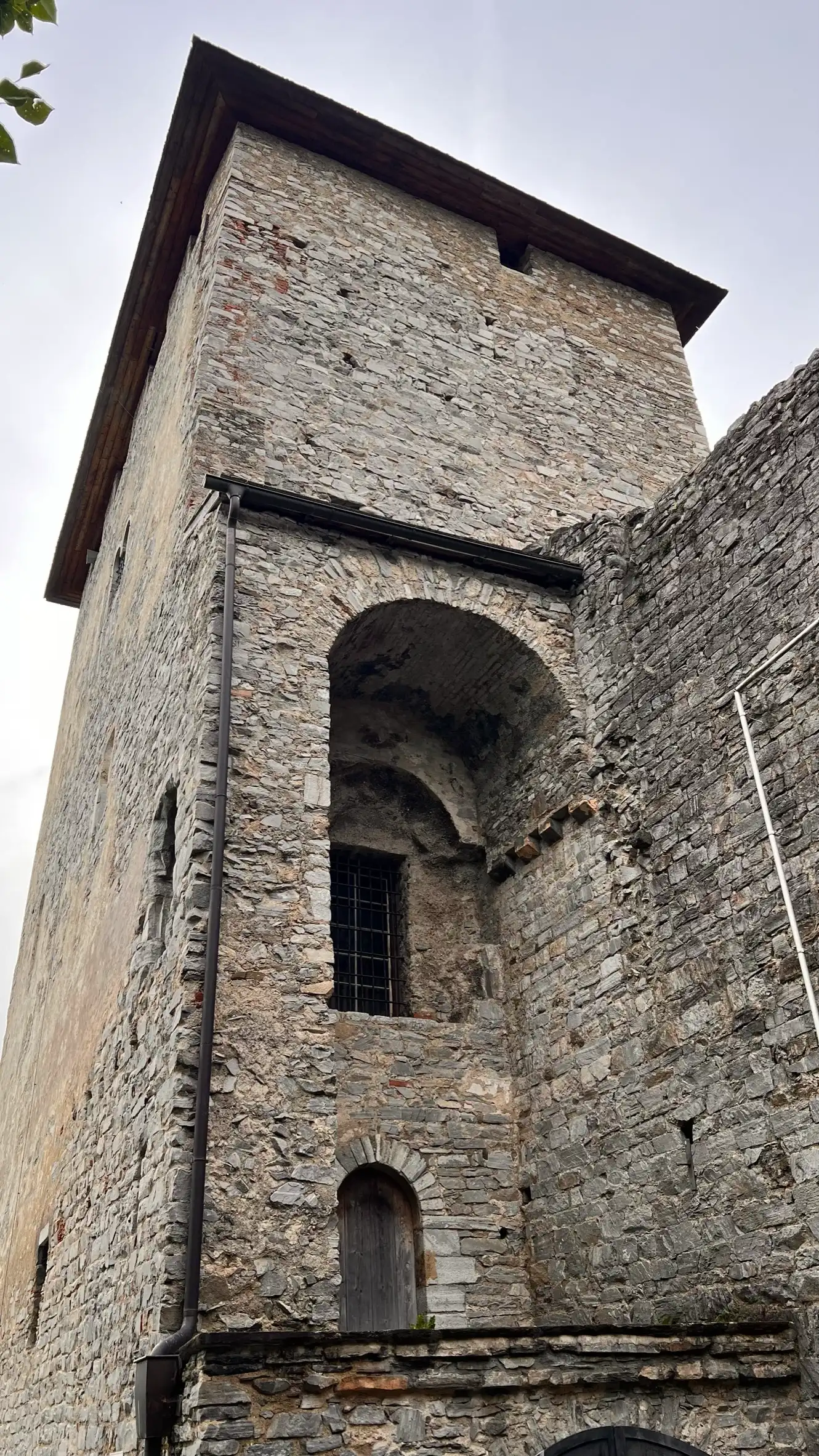
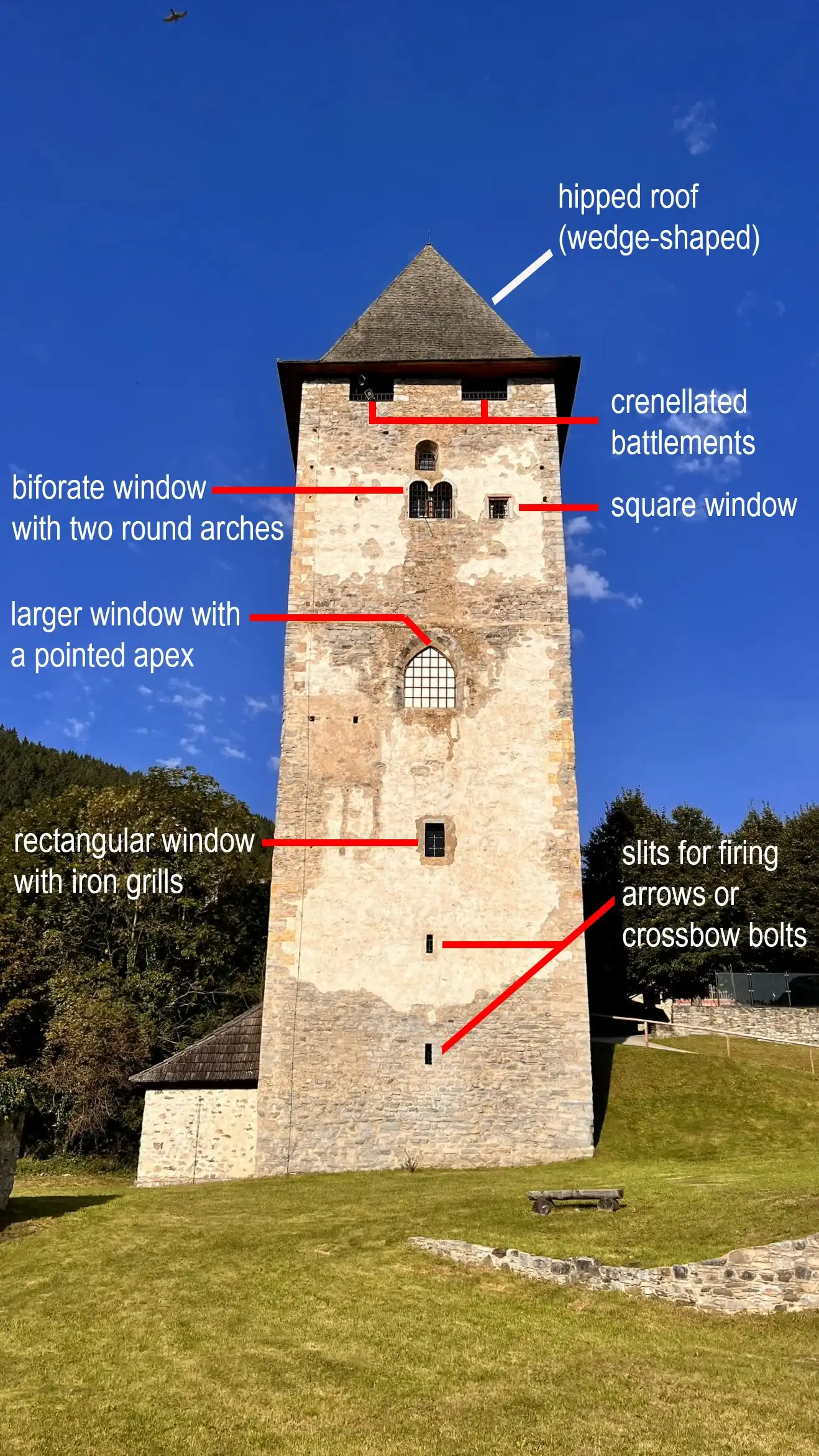
After the earlier keep (or donjon) had been destroyed by fire, the Archbishop commissioned a new residential and defensive tower around 1180–1190.
The first four storeys were completed by about 1200, forming the solid Romanesque core of the structure. Around 1225–1230, the residential floor and the raised defensive platform were added, giving the tower its commanding height and fortified character.
Decay and Abandonment
The building was abandoned in 1803, marking the beginning of a long period of decline. By 1826, the keep – already roofless – was stripped of all its remaining wooden elements during early clearance works.
Only a few decades later, in 1844, the vaults collapsed, and the once splendid Romanesque wall paintings and stucco decoration of the Ruperti Chapel were largely destroyed.
Rescue and Restoration
In 1892, the keep was officially listed for demolition. Its fate changed when the Friesach Town Beautification Society, founded in 1881 by Hubert Hauser, purchased the valuable remains on Petersberg for 2,800 gulden.
With the assistance of the Imperial and Royal Central Commission and a government grant, the society undertook an extensive restoration, guided by Matthäus Merian’s engraving of 1649, which served as a historical reference for the reconstruction of the tower’s appearance.
Documentation
A wealth of drawings, reconstruction proposals, engravings, and photographs – displayed today in the stairwell – illustrates the architectural evolution of this remarkable Romanesque fortress tower, ensuring that the story of the keep remains both visible and comprehensible to modern visitors.
The Chapels
Gebhardskapelle (aka Konradskapelle) | Rupertikapelle
Gebhardskapelle (Gebhard’s Chapel)
Building-historical research has shown that the Kapellenturm (built later than the Gebhardskapelle) incorporates earlier masonry on its western side.
This earlier fabric belongs to a structure identified in the sources as the Gebhardskapelle.
The Gebhardskapelle was originally a tower-like building with three storeys.
The chapel space was located on the second upper floor.
Parts of this structure are preserved within the fabric of the Kapellenturm.
Scientific analysis has clarified the dating of the structure.
Dendrochronological examination of surviving timber elements indicates that the structure was erected after 1089, that is, after the death of Archbishop Gebhard (d. 1088).
The preserved fragments of wall painting within the former chapel space are stylistically dated to around 1130–1140 and are attributed to the period of Archbishop Konrad I.
The designation “Gebhardskapelle” therefore does not indicate that the chapel was built during Archbishop Gebhard’s lifetime.
The name reflects a later attribution rather than direct evidence of his patronage.
Historical descriptions further record that the chapel once contained an important Romanesque wall painting, including a depiction of St Romanus of Rouen.
The fresco is no longer preserved in situ.
It was removed from the Gebhardskapelle and is now kept in the Stadtmuseum Friesach.
Taken together, the archaeological findings and historical sources identify the Gebhardskapelle as an early sacral building within the Burg Petersberg complex and as part of the Romanesque building history of Friesach.
Rupertikapelle (Rupert’s Chapel)
The Rupertikapelle is the later and larger chapel incorporated into the fourth floor of the keep (Bergfried), built around 1200.
This monumental chapel space was adorned with Romanesque frescoes depicting St Rupert, St Virgil, and scenes of the Last Supper.
The chapel was originally covered by a cross-ribbed vault.
Under Archbishop Eberhard II of Salzburg (1200–1246), the chapel underwent further expansion and decoration.
The frescoes and stucco work were largely destroyed in the 19th century, but drawings and photographs preserve their appearance.
The Rupertikapelle thus represents the principal chapel within the keep and the culmination of Romanesque architecture on the Petersberg.
Summary | Chapels
Gebhard’s Chapel (aka Konrad’s Chapel): This was the earliest chapel (11th–12th century), associated with Archbishops Gebhard I and Konrad I of Salzburg. Parts of the masonry of the Gebhardskapelle were later incorporated into the western wall of the Kapellenturm.
Rupert’s Chapel: This principal and later chapel within the Bergfried (c. 1200–1230) was richly decorated with Romanesque frescoes. It represents the culmination of sacred architecture on the Petersberg.