

The Nativity (Romanesque Fresco Motif)
Reading Time: 1:20 min
Description of the Motif
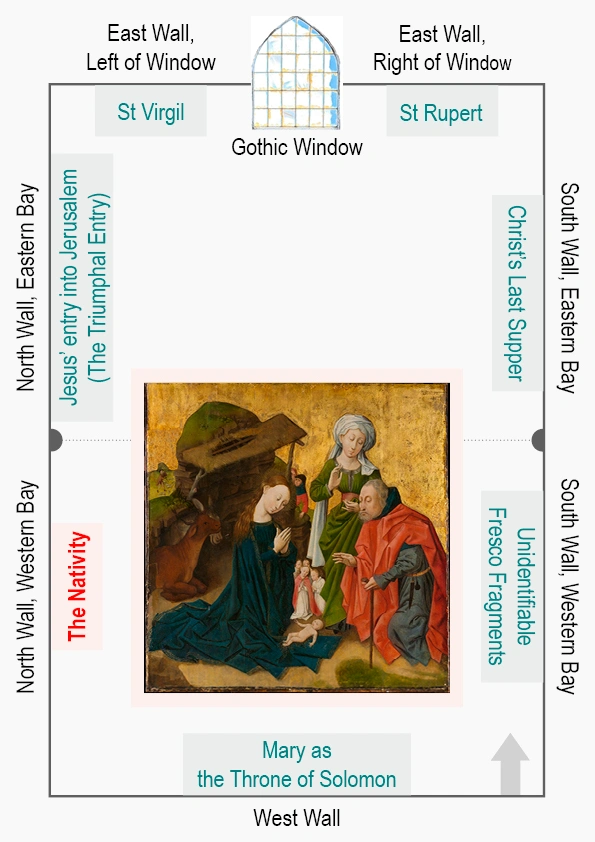
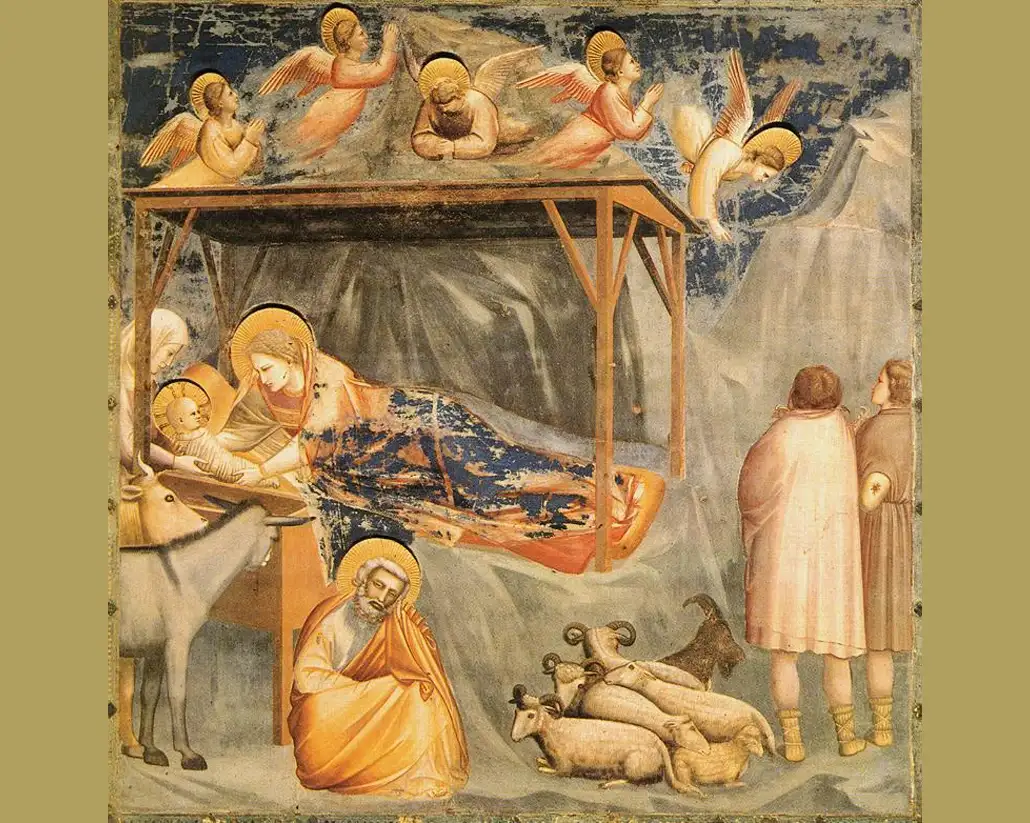
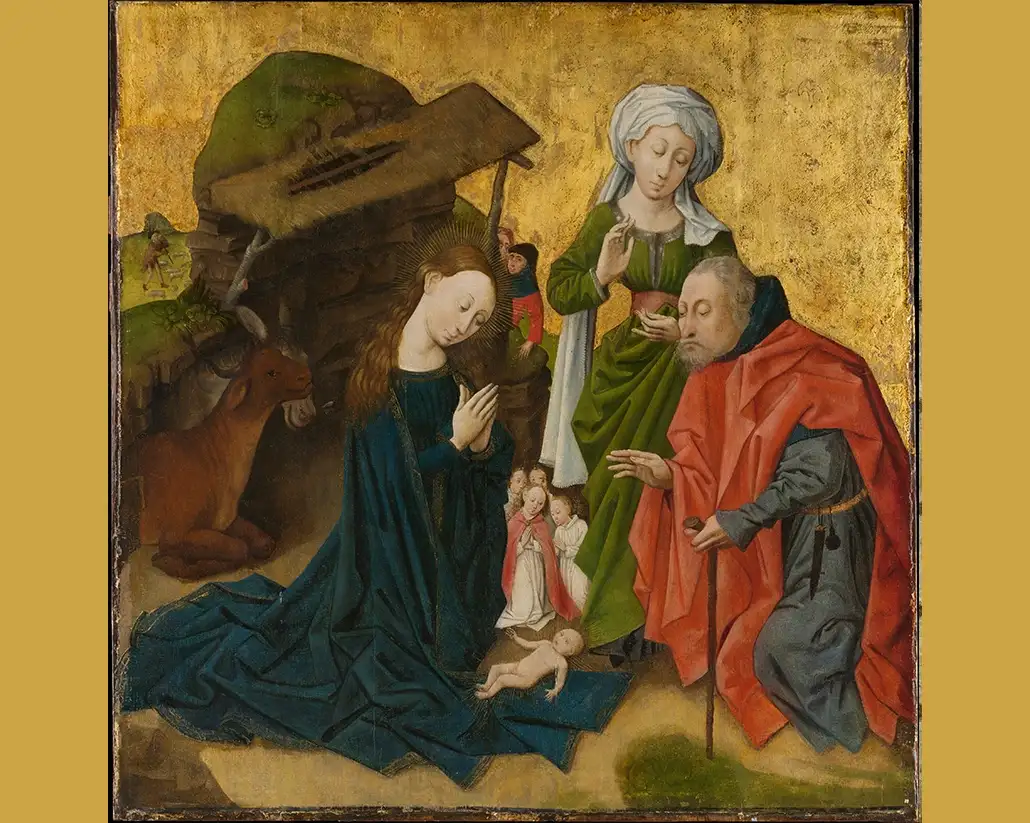
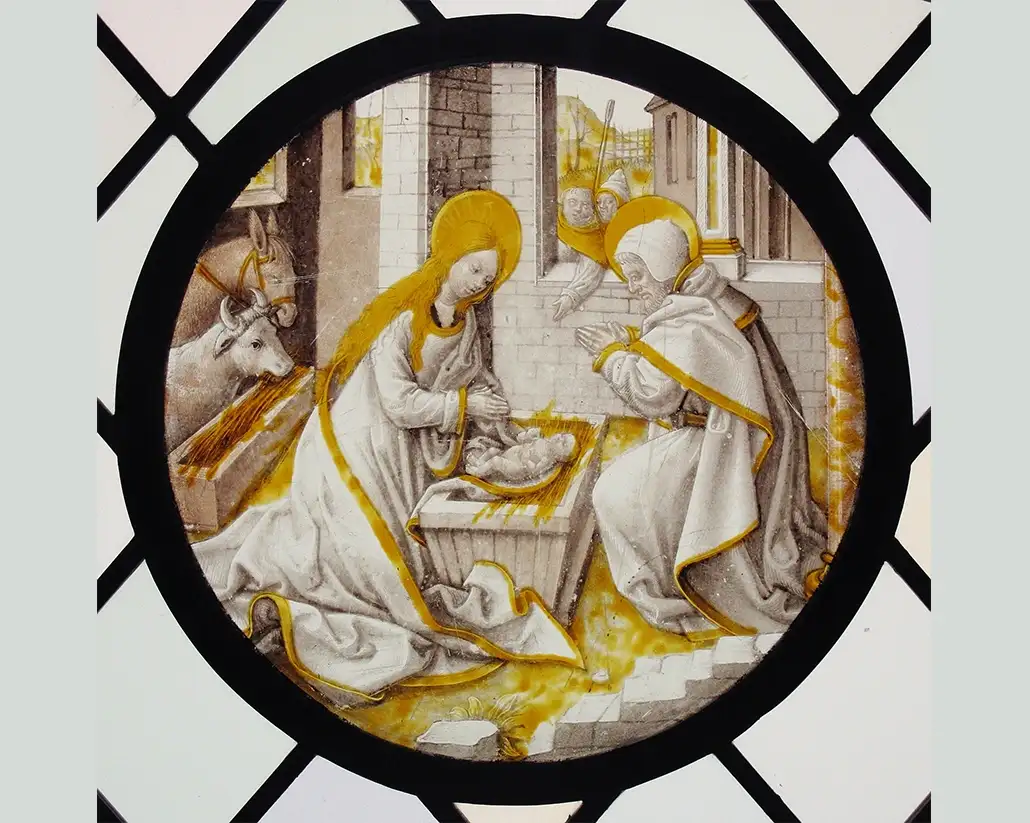
In Romanesque frescoes, The Nativity shows the birth of Christ in a simple, symbolic setting. Mary usually lies or reclines on a couch, emphasising the reality of the Incarnation, while the Christ Child is placed in a manger. An ox and an ass often bend towards the child, recalling biblical prophecy. Joseph sits slightly apart, shown in thought or quiet contemplation. Angels may appear above, announcing the birth, and the stable is rendered as a shallow, architectural frame rather than a realistic landscape.
Common Elements in Romanesque Chapel Frescoes
Romanesque Nativity scenes focus on essential figures and clear meaning rather than detail. Figures are frontal, hieratic, and carefully ordered. Backgrounds are plain or lightly coloured, keeping attention on the sacred event. Narrative clarity mattered more than naturalism.
Style of Romanesque Frescoes
The style is linear and stylised, with strong outlines, flat areas of colour, and limited depth. Proportions are symbolic rather than realistic, and gestures are restrained. The composition is calm and timeless, suitable for contemplation.
Meaning for the Medieval Chapel Visitor
The scene taught that Christ was both fully human and fully divine. Mary’s prominent position affirmed her role as Theotokos, the Mother of God. The humble setting reminded viewers that salvation entered the world in simplicity, accessible to all.
Stage in the Life of Christ
The Nativity marks the beginning of Christ’s earthly life and the moment of the Incarnation, when God became man.
Relation to the Christian Calendar
The scene corresponds to Christmas, celebrated on 25 December, and introduces the cycle of Christ’s life that unfolds through the liturgical year.
Relation to Liturgical Traditions
During the Christmas season, the Nativity image supported readings, hymns, and prayers centred on the Incarnation. In chapels, it functioned as a visual sermon, reinforcing the message proclaimed at Mass for an illiterate congregation.