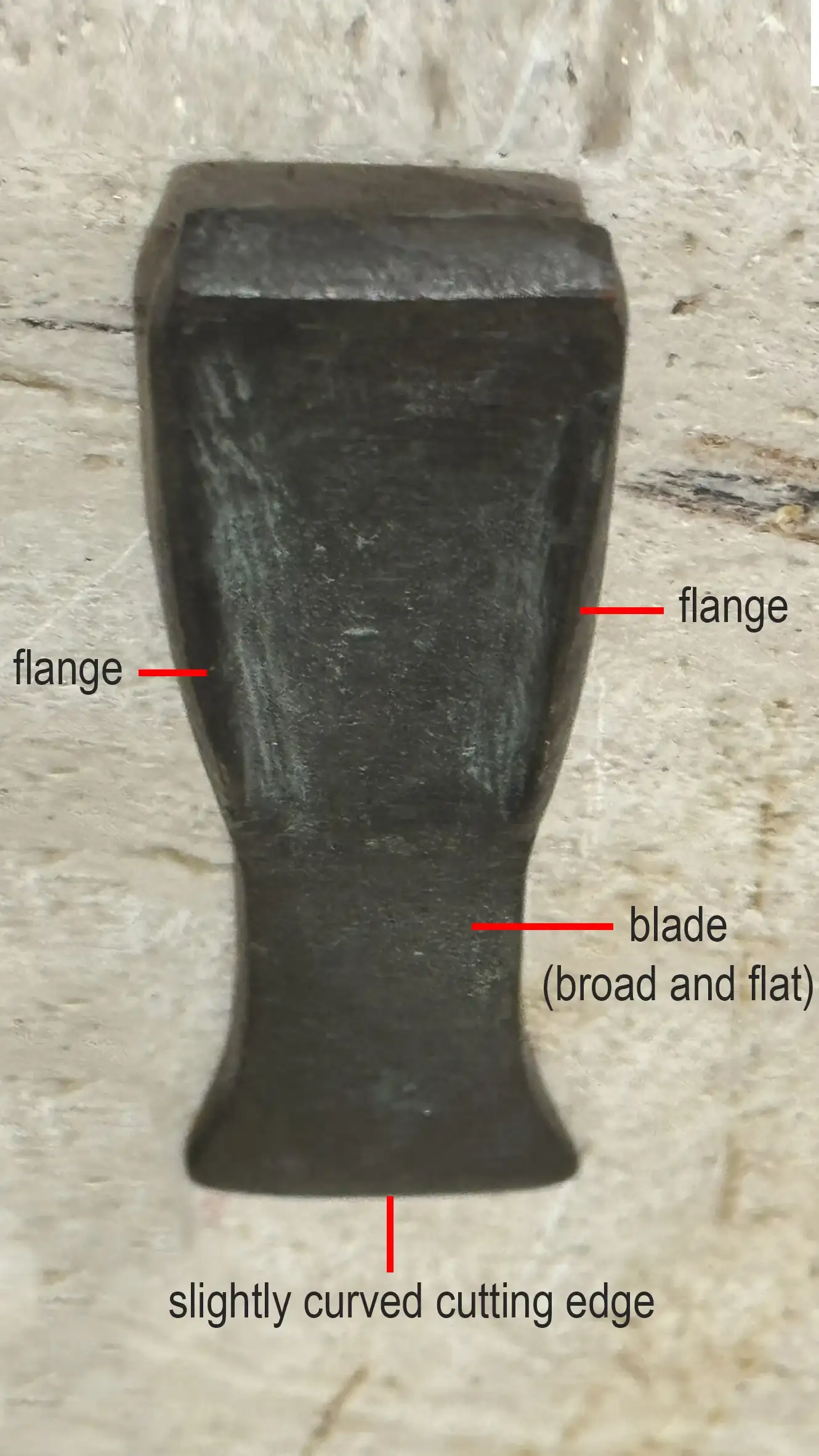
Bronze Flanged Axe (Lappenbeil)
Material: Bronze
Axe Type: Freudenberg
Dated: Early Urnfield culture, c. 1350–1150 BCE
Bronze Flanged Axe | Freudenberg Type | c. 1350–1150 BCE
Reading Time: 0:20 min
The bronze flanged axe (Lappenbeil) of the Freudenberg type, dating to the early Urnfield culture (c. 1350–1150 BCE), features a broad, leaf-shaped blade with distinct “flanges” extending from either side of the hafting hole. The flanges (wings) are both functional for hafting and decorative, often displaying intricate patterns. Crafted with skilled bronze metallurgy, this axe was used for both practical and ceremonial purposes, reflecting the advanced craftsmanship and societal complexity of the period.

More Information
Axe-Head of a Bronze Flanged Axe (Urnfield Culture)
Reading Time: 0:35 min
The axe-head of a bronze flanged axe from the Urnfield culture typically has a distinctive, robust shape. It features a broad, flat blade that tapers towards the edge, ideal for chopping or cutting. The flanges, which are raised projections along the sides of the axe-head, serve both a functional and decorative purpose, helping to strengthen the hafting point where the handle is attached.
Hafting Hole of an Axe
Reading Time: 0:20 min
The hafting hole of an axe is the hole in the blade or head of the axe where the handle (or haft) is inserted. This hole allows the axe to be securely attached to the wooden shaft, enabling the tool or weapon to be used effectively. The design and placement of the hafting hole can vary, influencing how the axe is held and balanced during use.
Urnfield Culture | Early Phase | c. 1350–1150 BCE
Reading Time: 0:30 min
The beginning of the Urnfield culture (c. 1350–1150 BCE) marks a phase in the Late Bronze Age in Central Europe, particularly in regions of present-day Germany and Austria. This culture is characterised by the development of distinct metalworking techniques, particularly in bronze, and the emergence of specific burial practices. The Urnfield culture is associated with the use of weapons and tools such as bronze flanged axes (Lappenbeil), as well as the growth of settlement structures. This period also shows signs of increased social complexity and regional trade, reflecting a transitional phase in European prehistory.
Composition of Bronze used in the Bronze Age
In the Bronze Age, bronze was primarily composed of copper (about 90-95%) and tin (about 5-10%). The ratio of tin to copper varied, but typically, it was around 1 part tin to 9 parts copper. This combination created a strong, durable alloy that was more resistant to corrosion and easier to cast than pure copper.
Bronze was widely used for tools, weapons, and decorative items during this period.