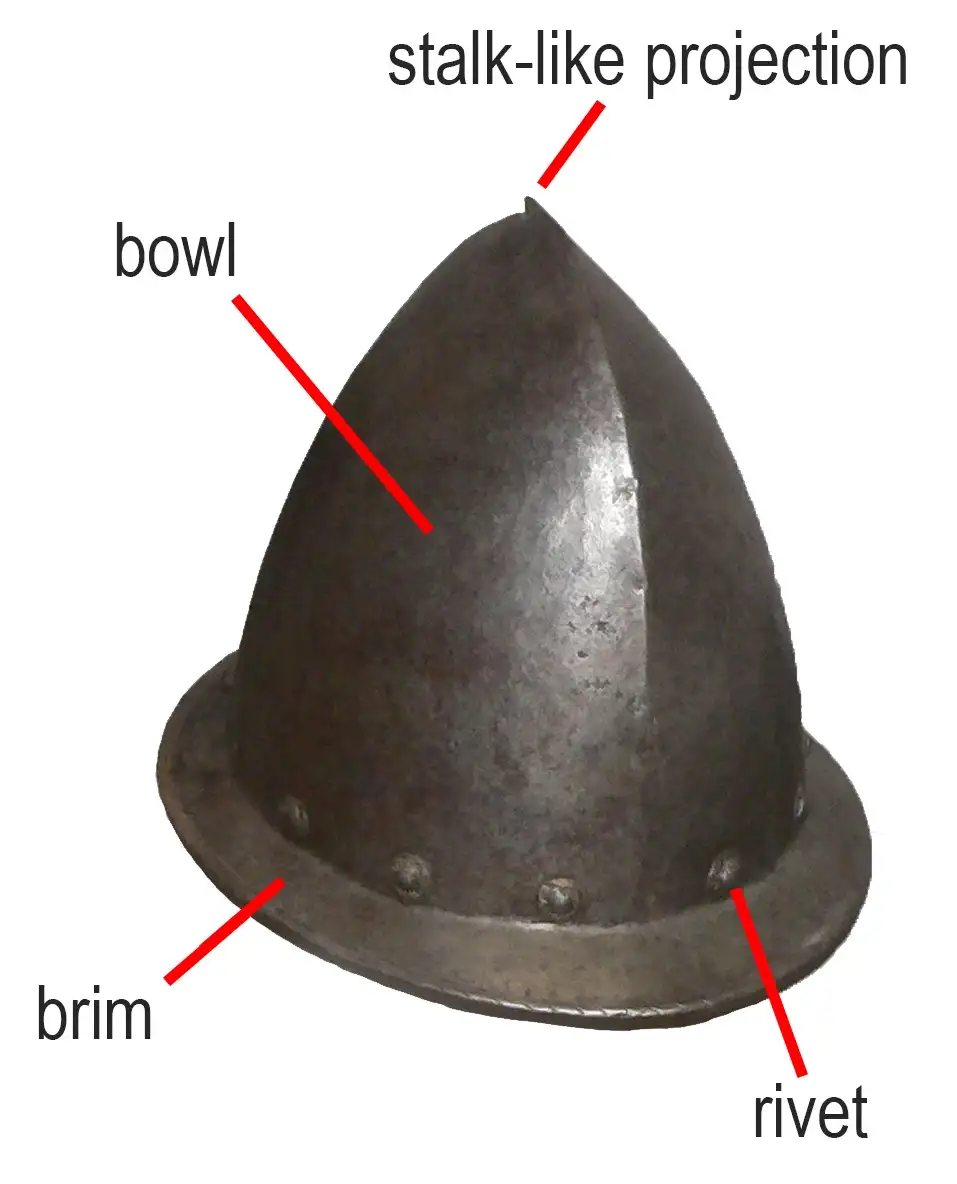
Cabasset (or Pear Helmet)
Dated: End of the 16th century CE
Reading Time: 0:50 min
The cabasset was a metal helmet that originated in Spain and was worn by infantry soldiers in the 16th century.
The helmet had a narrow, stalk-like projection at the top of the bowl. This projection, along with the round form of the bowl, made it resemble a pear.
The bowl of the cabasset had a narrow brim.
Its simple, rounded design made it easy to wear. Although the design was simple, the helmet offered good protection.
The Cabasset was known for its simple yet effective design, providing full coverage while maintaining relatively light weight and ease of use.
The main parts of a Cabasset helmet:
– Bowl: The rounded, dome-shaped part that covered the top and sides of the head.
– Brim: The narrow rim at the bottom of the helmet.
– Rivets: Metal fasteners that secured the components of the helmet together, often visible on the surface.
– Ventilation Holes: Small perforations, often near the top or sides, that allowed airflow and reduced heat buildup inside the helmet.