Seals and Stamps
Reading Time: 1 min 25 sec
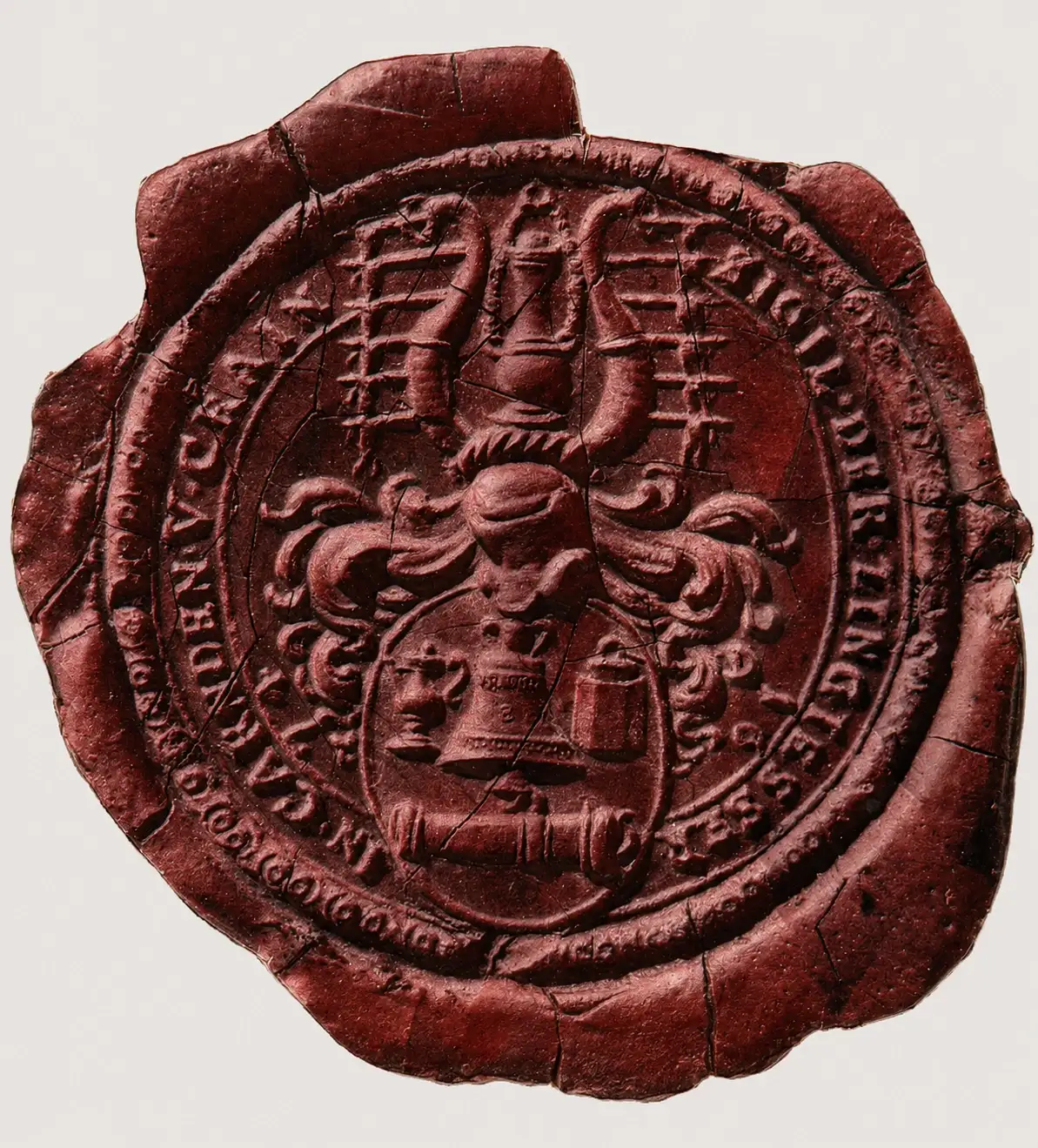
Seal of the Tin Casters
in Carinthia and Carniola, 1674
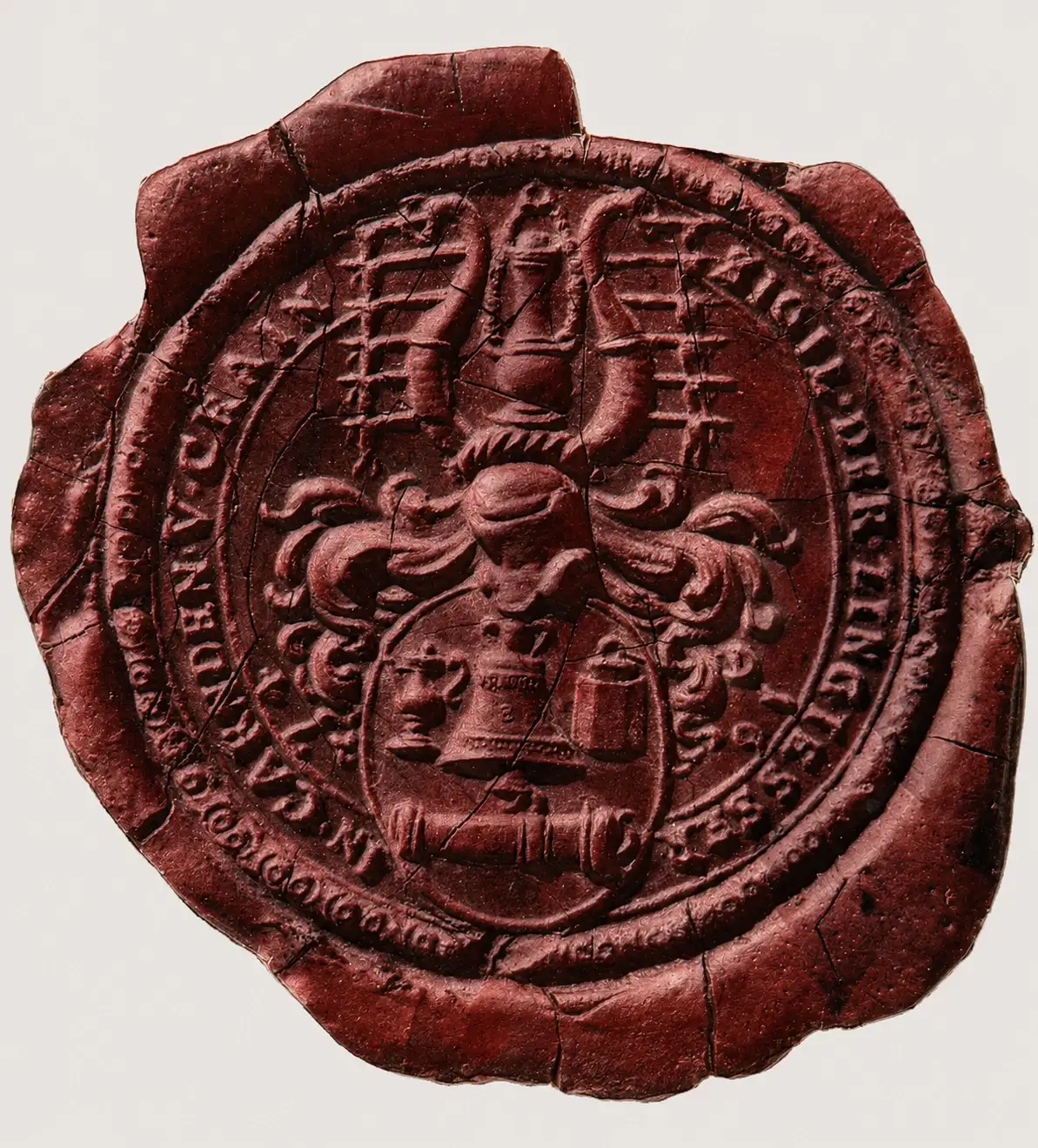
The seal is shown as a dark red wax impression with an irregular circular outline. Its outer edge is uneven because the soft wax spread when the stamp was pressed into it. Fine cracks, worn areas and darker recesses suggest age and handling.
At the centre is a coat of arms with a shield, helmet and flowing mantling. The shield contains symbols connected with the craft of tin casting or pewter working. Around the central design is a circular inscription identifying the guild.
The raised parts catch the light, while the deeper lines appear darker. This contrast makes the heraldic design, inscription and craft symbols stand out clearly.
The seal was used to authenticate guild documents. It represented the authority, identity and official status of the tin casters in Carinthia and Carniola.
Stamp of the Tin Casters
in Carinthia and Carniola
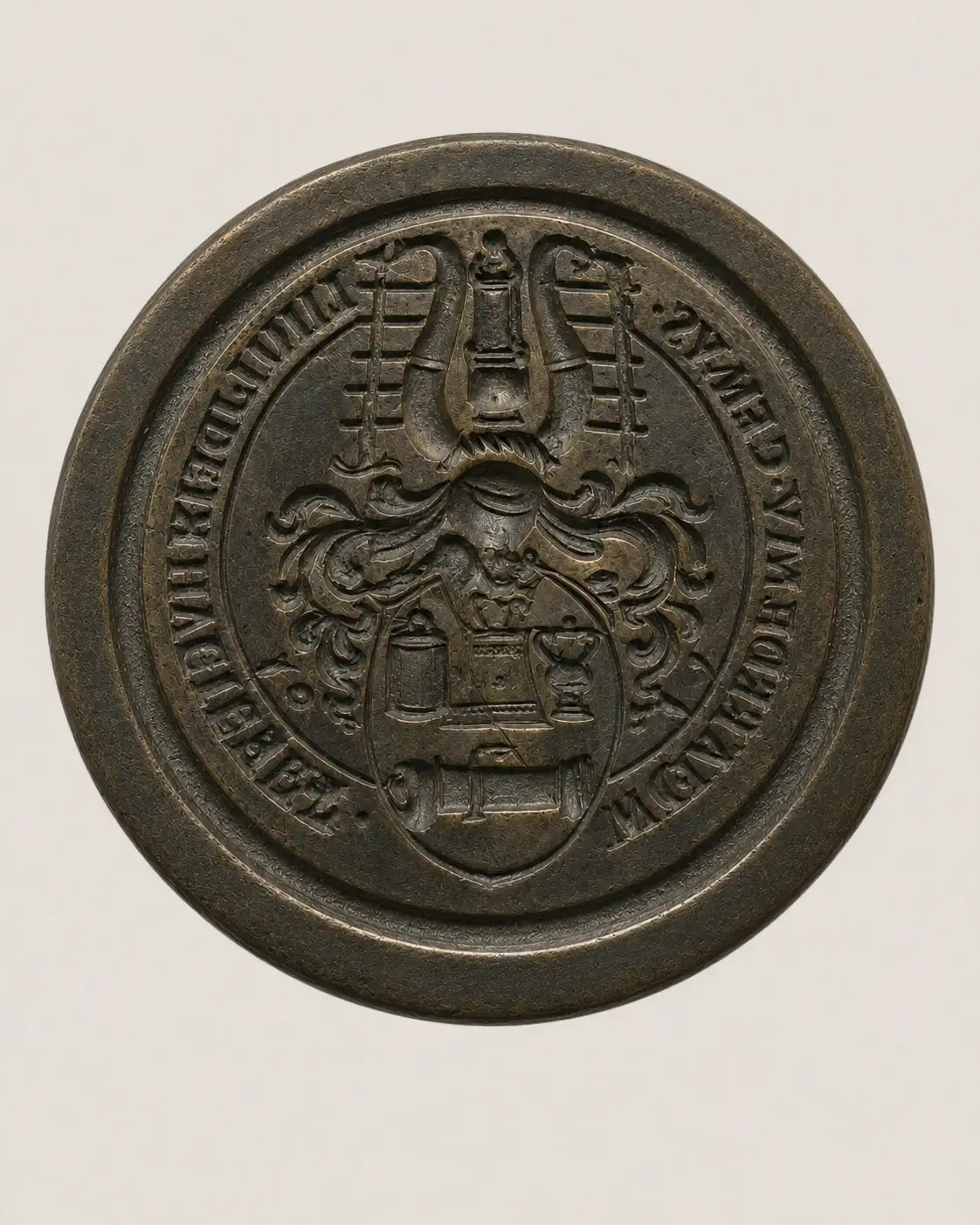
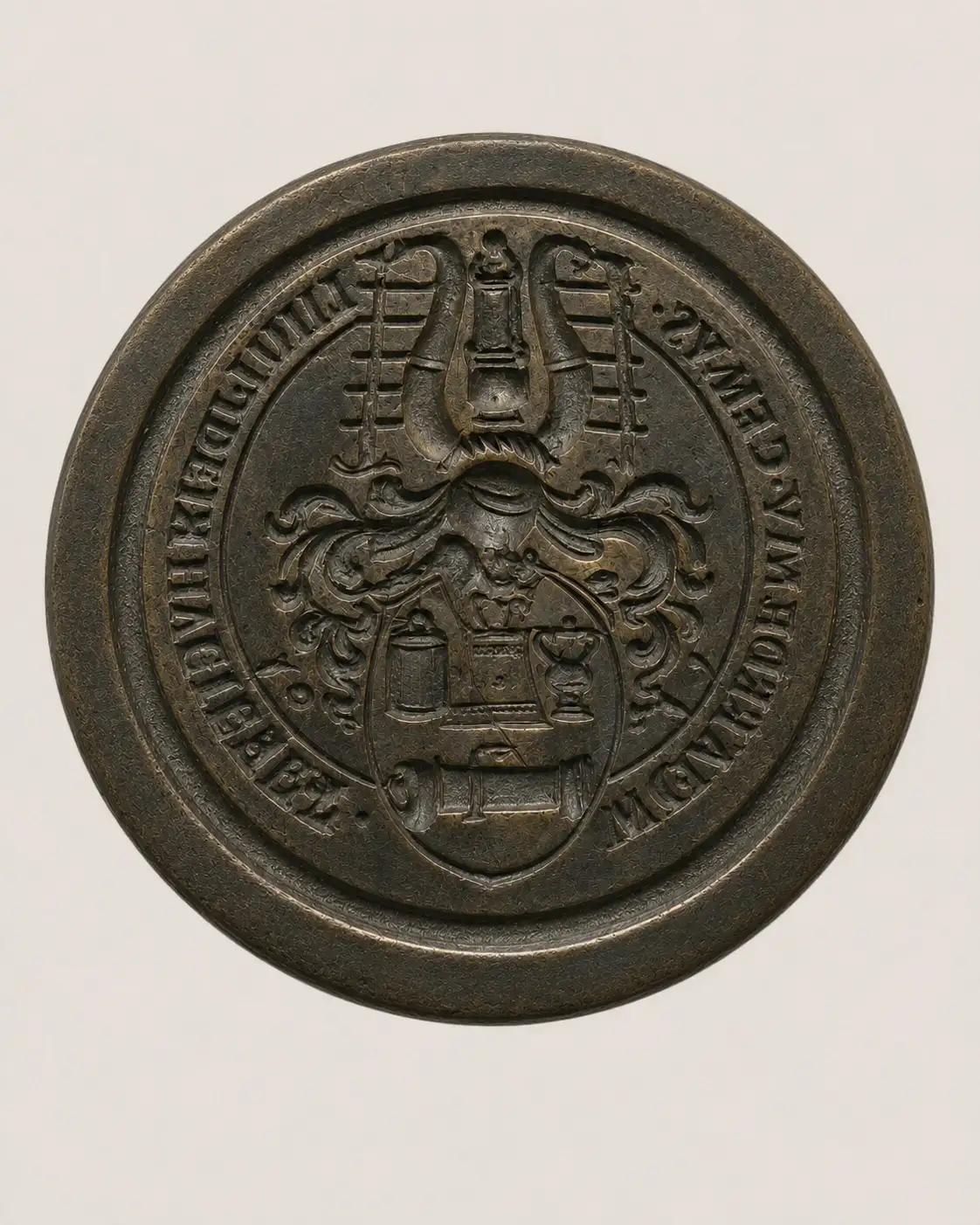
The stamp is a circular metal matrix with a broad, smooth outer rim. Its surface is dark bronze or iron-grey, with worn highlights on the raised edges and darker tones in the recessed areas.
The design is cut in reverse, because it was made to press an impression into soft sealing wax. At the centre is a coat of arms with a shield, helmet and flowing mantling. The shield shows objects connected with the craft of tin casting or pewter working. Around the centre is a circular inscription identifying the guild.
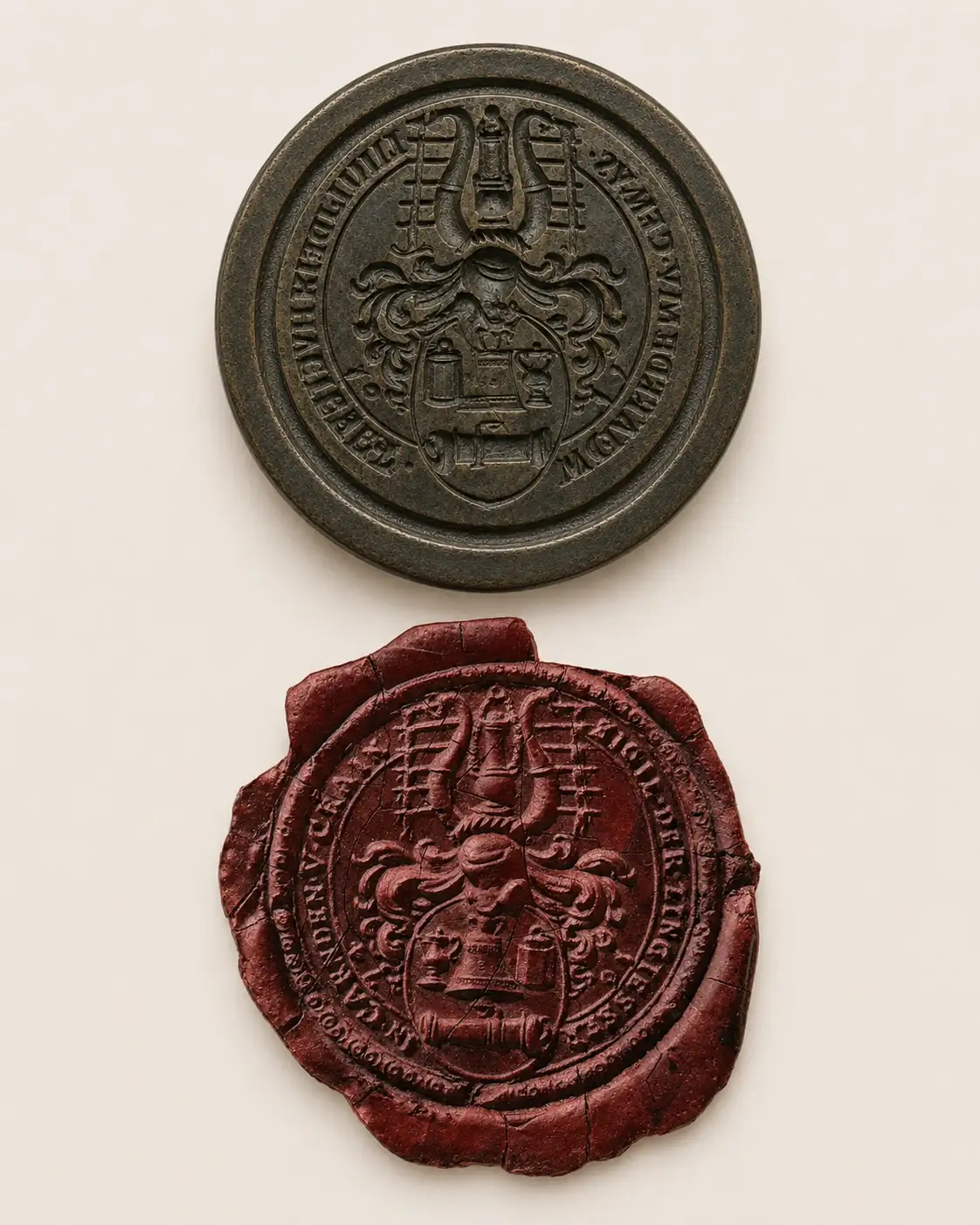
Unlike the wax seal, the stamp has a regular circular form. The irregular outline appears only on the wax impression, where the soft wax spread beyond the edge of the stamp.
The stamp was used to authenticate documents. When pressed into warm wax, it left the official seal of the tin casters’ guild.