
Gothic Wooden Chest for Liturgical Vestments
Reading Time: 2:00 min
Introduction
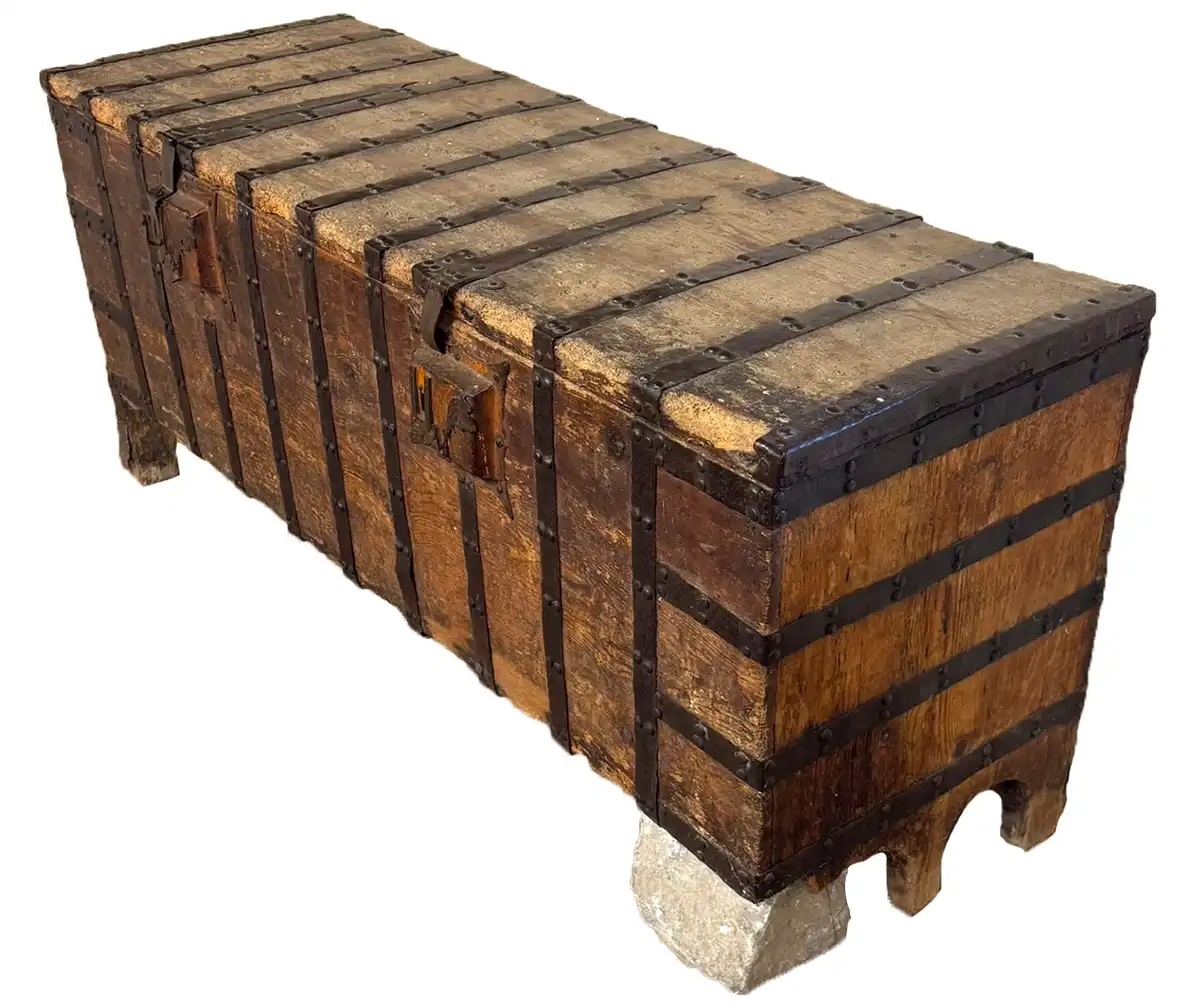
This long Gothic chest, crafted from solid oak, was designed to store and protect liturgical vestments and church textiles. The cuboidal body rests on sturdy block feet, lending both stability and visual weight.
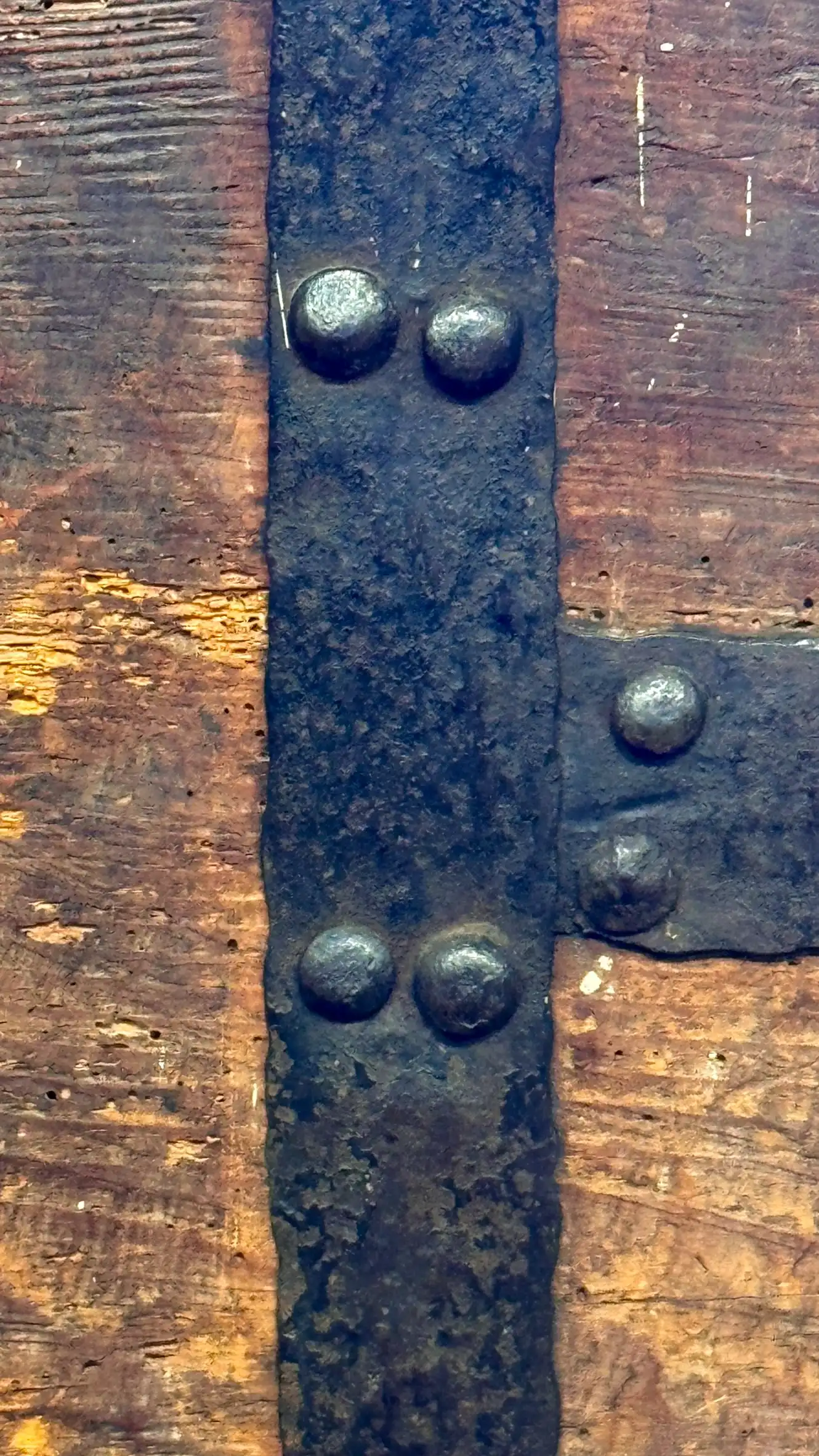
This type of wooden chest was reinforced by wrought-iron straps that ran across the lid and sides, each fastened with hand-forged rivets. These metal straps not only strengthened the structure against warping and wear but also served an ornamental purpose, creating rhythmic patterns typical of late medieval metal craftsmanship.
The hinged lid opened to reveal a spacious interior. The fine fabrics were protected from damp and pests by lining the interior with linen or lightly treating the wood.
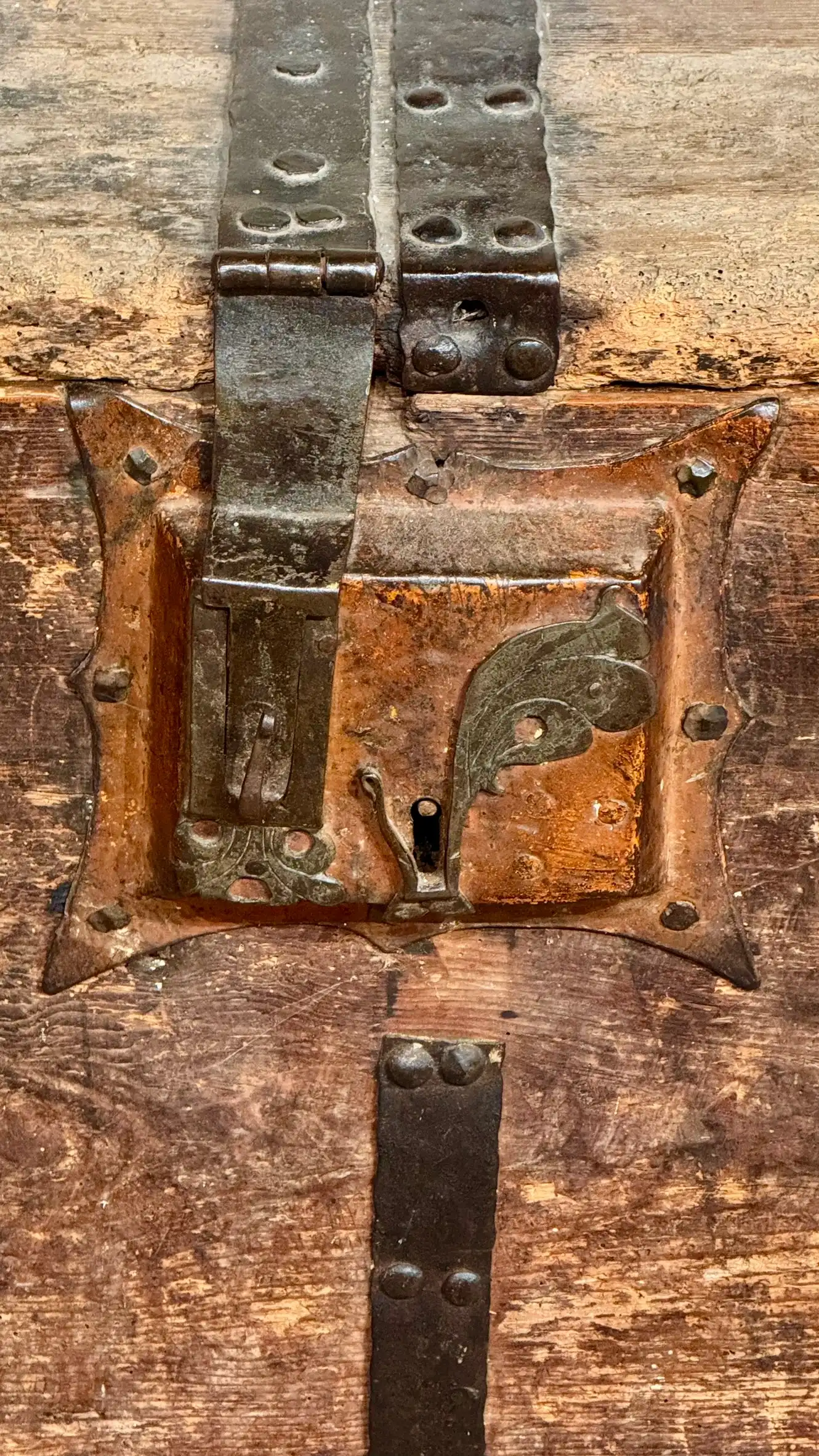
A heavy iron lock plate with a hasp and lock mechanism secured the sacred garments.
Such chests were common in sacristies and monastic treasuries during the Gothic period, where they combined practical durability with austere, ecclesiastical elegance.
Six Faces
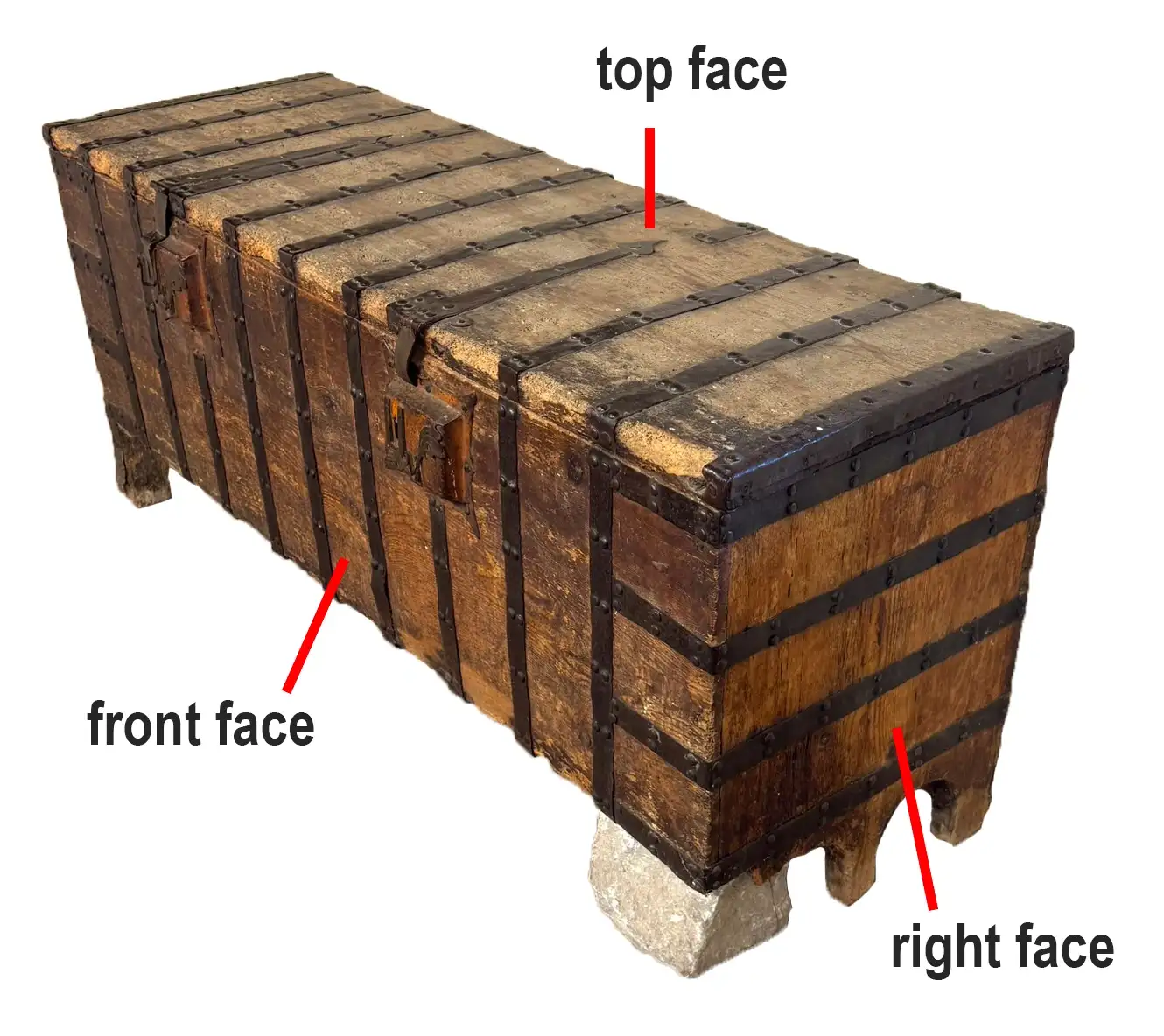
The cuboidal wooden chest has six faces. Three are visible and three are hidden from our view.
Top Face | Visible | Lid Face
Bottom Face | Not Visible
Front Face | Visible
Back Face | Not Visible | Against the Wall
Left Face | Not Visible
Right Face | Visible
Wrought-Iron Strapping
The solid oak panels of the chest are reinforced by wrought-iron straps.
Iron Strapping on the Lid (Top Face):
Iron straps secured by rivets run along the width of the lid.
Iron Strapping on the Front Face:
Iron straps are secured vertically on the front face.
Iron Strapping on the Right Face:
Iron straps are secured horizontally on the front face.
Rivets
Hand-forged rivets secure the iron straps to the solid oak panels.
Hasp and Lock Mechanism
Description
The hasp is a long, hinged iron strap fixed to the lid of the chest. It pivots downward to cover the lock plate mounted on the front panel.
The lock plate is elaborately shaped and decorated with engraved and cut-out motifs, a hallmark of Gothic ironwork.
Beneath the plate lies the built-in keyhole and internal spring-bolt mechanism. When the key is turned, a spring or lever withdraws the bolt to release the hasp.
The hasp end engages directly with the lock bolt rather than a separate staple – an integrated system common on secure travel or church chests.
Riveted fittings reinforce both lid and front panel, showing practical craftsmanship as well as decorative intent.
Function
When closed, the hasp drops into a slot on the lock plate and is held fast by an internal bolt. Turning the key retracts the bolt, freeing the hasp so the lid can be lifted.
Summary
This type of internal key-operated hasp lock offered a strong and compact security solution for Gothic chests, combining ornamental wrought-iron design with functional durability.