
Burgonet (Sturmhaube)
Dated: Second half of the 16th century CE
Burgonet (Sturmhaube)
Reading Time: 1:10 min
The “Sturmhaube” was introduced in the early 16th century CE.
It featured:
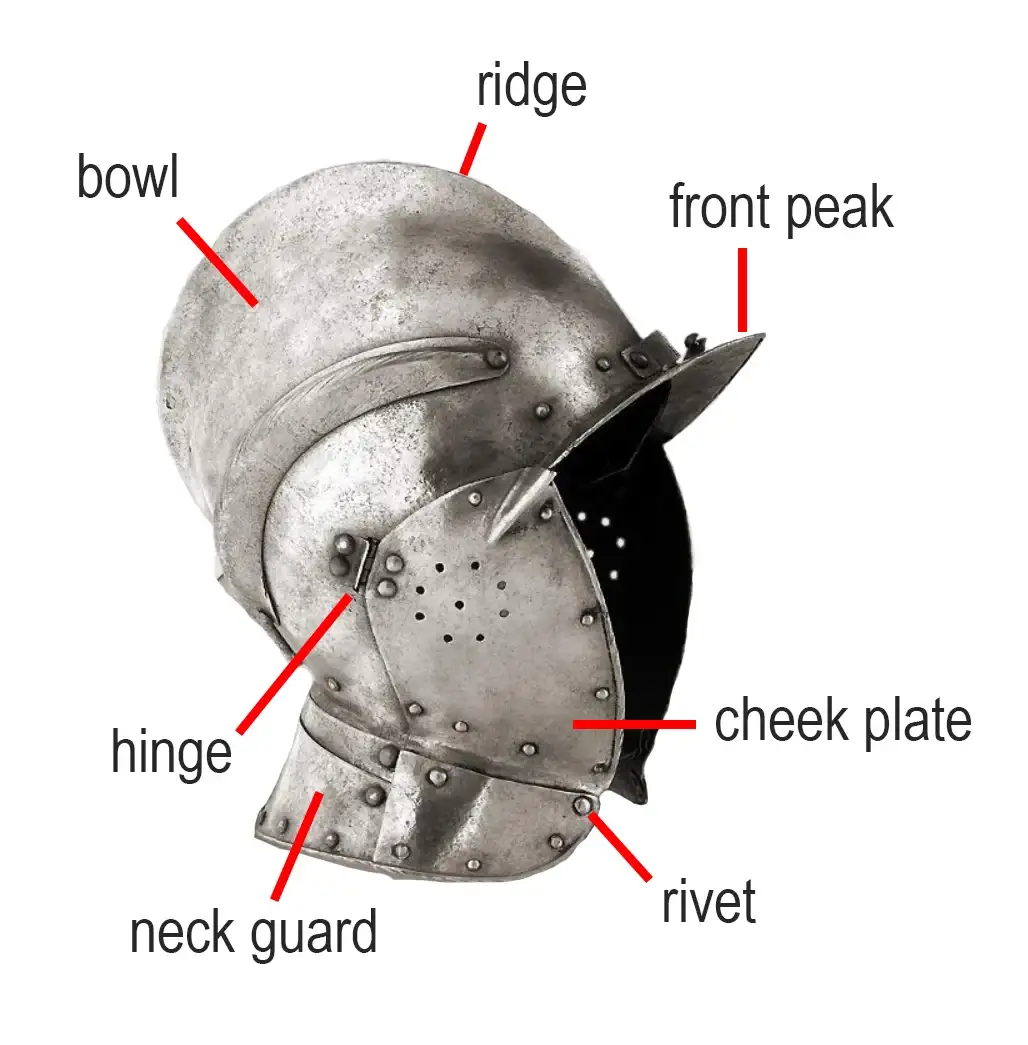
– a simple hemispherical bowl
– a short bill or peak to defend the face without restricting vision or breathing
– a collar to defend the neck
– hinged cheek plates to protect the sides of the head and face.
Design
The burgonet offered better peripheral vision and air supply without sacrificing protection for the head and neck. This appealed to soldiers of all ranks in early Renaissance. Therefore, the burgonet served at all levels of Renaissance military society, from the lowest infantrymen to kings, and proved especially popular for cavalry use.
About the Helmet
Weight
Initially, the burgonet was a light helmet. Later, cheek plates and face protection were added. This made the burgonet heavier.
Construction
Typically, burgonets were raised from a single sheet of steel, though some were made of two plates joined along a central ridge.
Hinged Cheek Plates
When present, the cheek plates were attached to the sides of the bowl with hinges.
Frontal Peak
The peak of the burgonet defended the wearer’s face from vertical attack and shielded his eyes from sun and rain.
Closed Burgonet
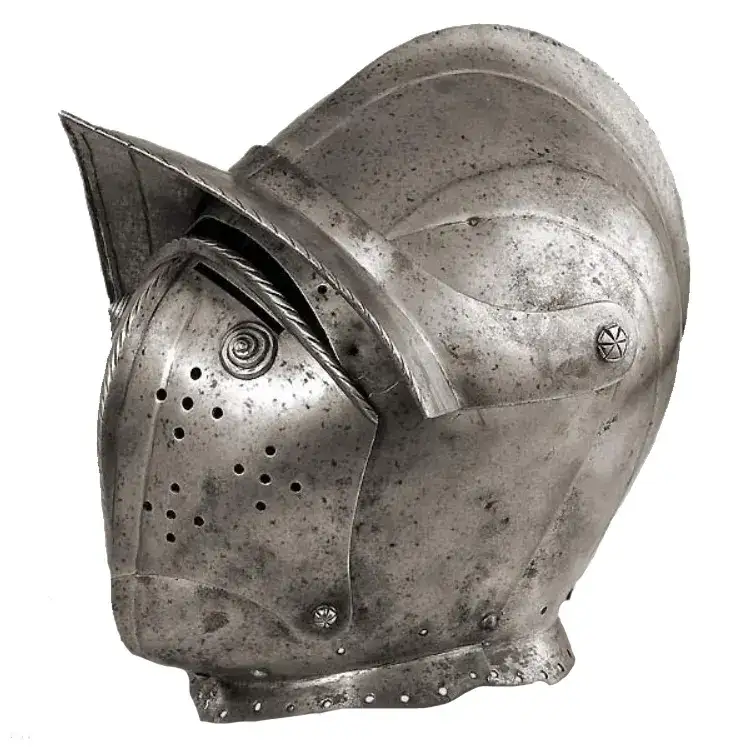
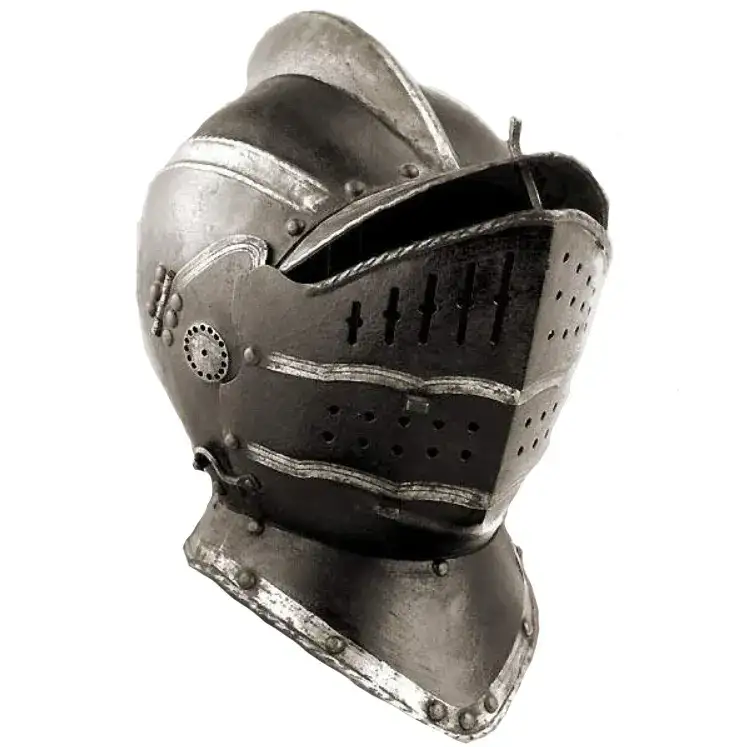
When full-face protection was permanently attached to the bowl, the helmet was called a “closed burgonet”.
Skull Helmet (Todenkopf)
A late form of the closed burgonet was commonly used by 17th century heavy cavalry. This grim-looking helmet with cutouts for eyes, nose and mouth, resembled a human skull. Austrians and Germans referred to it as a skull helmet (Todenkopf).
Nomenclature
This helmet was known as “Sturmhaube” in Austria and Germany. In the English-speaking world, this helmet was known as burgonet.
Labelled Parts
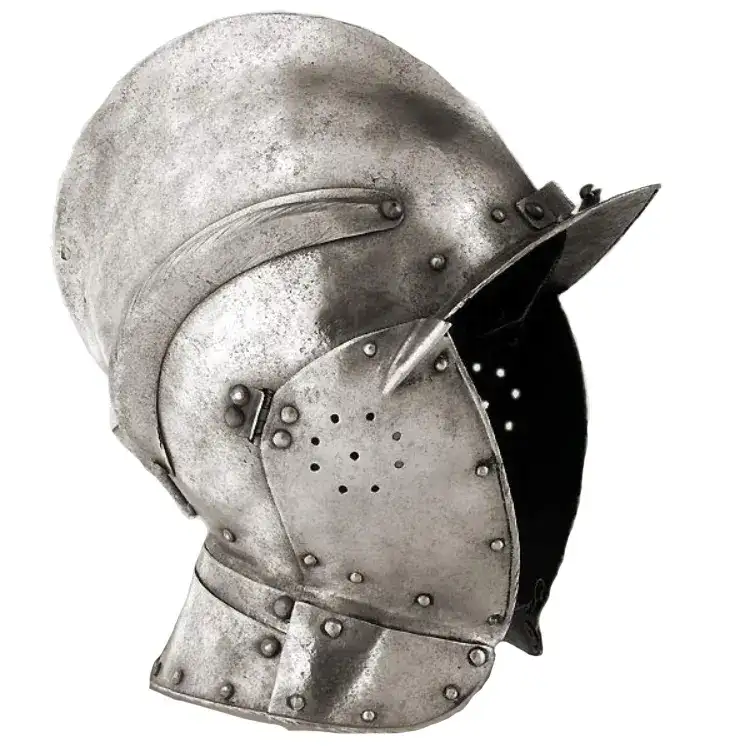
Gallery